 Fusion Korean
Medium · Hot
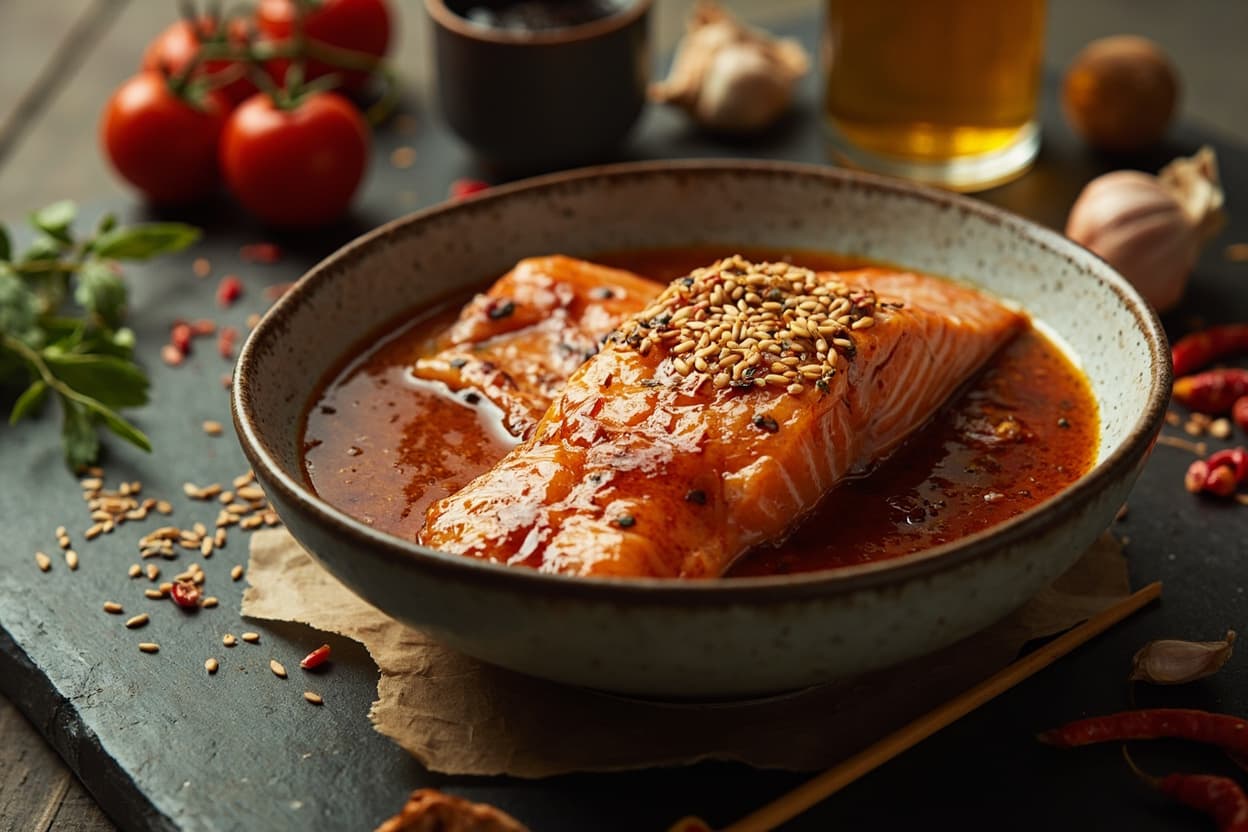
Honey-Chili Salmon with Toasted Sesame
The glaze here is built on a familiar Korean tension — the natural sweetness of honey running straight into cayenne heat, held together by soy and the deep, sharp warmth of garlic. Salmon takes to this combination quickly, needing only a few minutes of contact before its surface lacquers and caramelizes at the edges. Sesame seeds applied just before serving hold their crunch and announce each bite before it even reaches the palate.

Prep
10 min
Cook
15 min
Total
25 min
Method
Prepare the Honey-Chili Glaze
1
Mince the garlic cloves finely and combine them in a small bowl with the honey, cayenne pepper, and soy sauce.
2
Stir the glaze mixture until all ingredients are thoroughly incorporated. Set aside for later use.
Season and Cook the Salmon
3
Pat the salmon fillets dry with paper towels and season both sides evenly with salt and black pepper.
4
Heat the sunflower oil in a large frying pan over medium-high heat until the oil shimmers.
5
Place the salmon fillets skin-side up in the pan and sear for 3 minutes until golden brown.
6
Flip the fillets and cook for another 2 minutes.
Toast the Sesame and Finish
8
In a small dry pan over medium heat, toast the sesame seeds for 1 to 2 minutes, shaking frequently, until golden and fragrant.
9
Transfer the glazed salmon to plates and sprinkle generously with the toasted sesame seeds. Serve immediately.
Grade pending
Nutri-Score
Estimated nutrition
Grade pending · 100% ingredient coverage
Calories
434
per serving
High in salt · 2664mgHigh in protein · 27g
Protein
27g
Carbs
23g
Fat
26g
Sat. fat
4g
Fiber
1g
Sodium
2664mg
Gluten FreeDairy FreeHeart HealthyAnti InflammatoryWeight ManagementDiabetes FriendlyHigh ProteinLow CarbLow Sugar
Nutri-Score is a general nutritional-balance guide, not medical or dietary advice.
D
Environmental impact
High impact
A–E · lower is better · includes estimates
kg CO2e
2.4
per serving
DCarbonAEU all-round· carbon sets the grade
Water
0.3m³
Land
48Pt
Runoff
0.2g P
Salmon Fillets drives 95% of this recipe’s estimated footprint.
Carbon from Poore & Nemecek 2018; water, land & runoff from Agribalyse — modelled averages for comparing recipes, not a measurement of your groceries.
Flavor Profile
6
Umami
6
Sweet
5
Salty
1
Sour
1
Bitter
5
Spicy
Textures
CrispyTenderFlaky
Aromas
NuttySmokyGarlicky
Kitchen Equipment
Techniques
Safety & Storage
Cooking Temperature
Cook salmon to minimum internal temperature of 145°F (63°C) to ensure safe consumption. Use a calibrated food thermometer inserted into the thickest part of the fillet. The glaze contains honey which can burn quickly at high temperatures, so monitor heat carefully during the final glaze stage.
Cross Contamination
Keep salmon away from other ingredients during prep. Use separate cutting boards and utensils for raw fish. Clean all surfaces and tools thoroughly with hot soapy water after handling raw salmon before contact with other foods.
Storage
Refrigerate raw salmon at 40°F (4°C) or below. If storing longer than 1-2 days, freeze at 0°F (-18°C). Thaw frozen salmon in refrigerator overnight or under cold running water. Leftover cooked salmon should be refrigerated within 2 hours and consumed within 3 days.
High Risk Population
Young children, pregnant women, elderly, and immunocompromised individuals should ensure salmon is cooked to well-done (165°F/74°C minimum). These groups are more susceptible to foodborne illness from undercooked fish.
Allergen Warning
This dish contains fish, soy, sesame, and wheat allergens. If serving to guests with known food allergies, clearly label all allergens and consider preparing allergen-free portions first before handling allergenic ingredients. Wash hands thoroughly after handling allergenic ingredients.
Infant Botulism Risk
This recipe contains honey, which should not be given to children under 12 months of age due to risk of infant botulism from Clostridium botulinum spores. If serving to infants or pregnant women who may pass it to newborns, omit the honey or substitute with a honeyless alternative such as agave nectar or maple syrup (note: infants under 12 months should also avoid maple syrup and agave).
Pro Tips
Technique
Pat your salmon fillets completely dry before seasoning — any moisture stops the skin from getting that golden, crispy sear we want. Dry skin = better caramelization on the glaze.
Substitution
Swap the cayenne for 1 teaspoon of gochugaru (Korean chile flakes) in the glaze — it gives the honey-chili sauce a deeper, more layered heat that pairs beautifully with sesame and fits my Korean cooking style.
Flavor Boost
Drizzle a few drops of toasted sesame oil over the finished salmon right before serving — it adds that nutty, aromatic finish that makes the dish taste like it came from a Korean home kitchen.
From the chef
This Honey-Chili Salmon reminds me of the quick weeknight dinners my mother would throw together — she'd have a banchan spread already prepped in the fridge, and a beautiful glazed fish like this would anchor the whole meal. The honey-chili glaze is my kind of shortcut: it caramelizes in minutes and delivers that sweet-heat balance Korea does better than anyone. Toasting the sesame seeds yourself, the last step before plating, is non-negotiable — the aroma tells your guests something special is on the way.
TagsWeeknight DinnerSpicySesameHoney GlazedQuick Cooking
AllergensFishSoySesameWheat
Source: generated · May 30, 2026