 Italian
Medium · Frozen
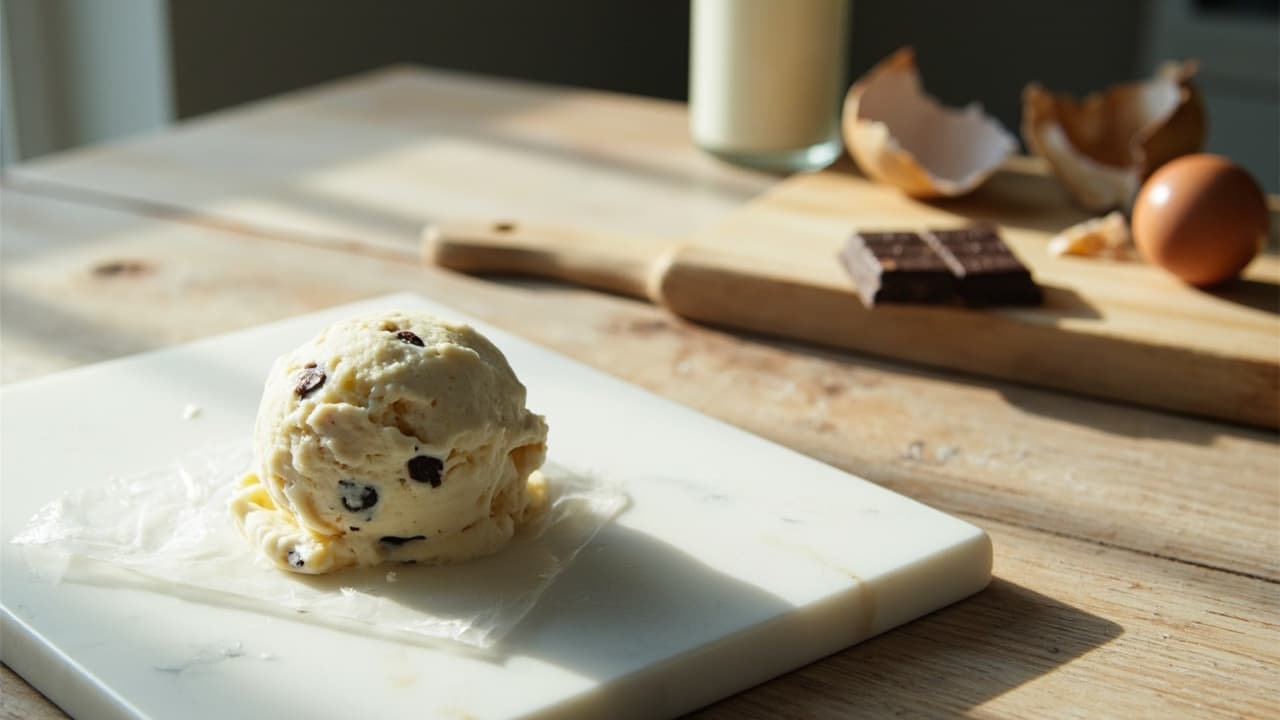
Ricotta and Chocolate Chip Gelato
A silky, Northern Italian-style gelato where fresh ricotta lends a gentle richness and delicate tang, studded throughout with hand-folded dark chocolate shards. Churned slowly to maintain a smooth, dense texture that Lorenzo would approve of.

Prep
20 min
Cook
10 min
Total
30 min
Method
1
Roughly chop the dark chocolate into irregular shards, 5-8mm in size. Set aside on a plate at room temperature.
2
In a medium copper pot, whisk together the eggs and white sugar until pale and slightly thickened, about 2 minutes by hand.
3
Pour in the heavy cream and add the vanilla extract. Whisk gently to combine without incorporating too much air.
4
Place the pot over medium-low heat. Stir constantly with a wooden spatula in wide, sweeping motions, watching for the first wisps of steam. The mixture should reach 82-84C — just shy of a simmer — after 6-8 minutes. Do not let it boil.
5
Remove from heat immediately. Pour the warm custard through a fine-mesh sieve into a clean bowl to catch any cooked egg threads.
6
7
Cover the surface directly with plastic wrap to prevent a skin forming. Refrigerate the mixture until fully chilled, at least 4 hours or overnight.
8
Churn the chilled base in an ice cream maker according to the manufacturer's instructions, approximately 25-30 minutes, until it reaches a thick, ribbon-like consistency.
9
When the gelato is just shy of fully churned, scatter the chopped chocolate shards over the surface. Allow the machine to fold them in for the final 30 seconds of churning.
10
Transfer to a lidded container. Press plastic wrap directly onto the surface. Freeze until firm, at least 2-3 hours, before scooping.
D
Nutri-Score
Needs balance
A–E · lower is better · score 14
Calories
465
per serving
High in saturated fat · 15gCalorie-dense · 465 kcalSource of protein · 14gLow salt · 169mg
Protein
14g
Carbs
34g
Fat
30g
Sat. fat
15g
Fiber
1g
Sugar
28g
Sodium
169mg
Comfort FoodGluten FreeLacto VegetarianLactose SensitivityNot Suitable DiabetesNot Suitable Heart HealthyNot Suitable Low CarbNot Suitable Low FatNot Suitable Low SugarNot Suitable Weight LossHigh FatHigh Saturated FatHigh SugarModerate Protein
Nutri-Score is a general nutritional-balance guide, not medical or dietary advice.
D
Environmental impact
High impact
A–E · lower is better · includes estimates
kg CO2e
2.1
per serving
DCarbon
Ricotta drives 47% of this recipe’s estimated footprint.
Carbon from Poore & Nemecek 2018; water, land & runoff from Agribalyse — modelled averages for comparing recipes, not a measurement of your groceries.
Flavor Profile
5
Umami
5
Sweet
2
Salty
3
Sour
3
Bitter
0
Spicy
Textures
CreamySilkySmoothTender
Aromas
CaramelCocoaDairyVanilla
Kitchen Equipment
Primary Tool
Copper PotSafety & Storage
Cooking Temperature
Heat custard to 82-84°C to cook eggs without scrambling; do not allow to boil as this creates grainy texture and increases risk of bacterial survival
High Risk Population
Custard contains eggs; pregnant women, elderly, and immunocompromised individuals should use pasteurized eggs or exercise caution with raw egg consumption
Storage
Store finished gelato at -18°C or below in airtight container with plastic wrap pressed directly on surface to prevent ice crystal formation
Cross Contamination
Clean ice cream maker thoroughly between uses; chocolate shards should be added to clean, sanitized equipment to prevent allergen cross-contact with other batches
Handling
Use immersion blender or whisk to ensure ricotta is fully incorporated into warm custard to eliminate lumps; strain through fine-mesh sieve to catch any cooked egg threads
Shelf Life
Consume within 2 weeks for optimal texture; extended storage may result in ice crystal growth and flavor degradation
Pro Tips
Technique
The temperature of your custard is sacred — 82 to 84 degrees Celsius, never more. At this precise point, the eggs are cooked enough to give body but not so much that they scramble. Watch for the first wisps of steam, use your wooden spatula in wide, sweeping motions, and trust what you see. This is how we learned before digital thermometers, and the old way still teaches better.
Substitution
If you cannot find fresh ricotta of good quality, mascarpone makes an acceptable substitute — it will give a denser, more velvety result with less tang. Reduce the quantity to 400 grams and taste before adjusting the sugar, as mascarpone is naturally sweeter.
From the chef
Fresh ricotta gives this gelato a gentle richness and a quiet tang that cream alone cannot match — it is a Northern Italian approach, from the Po Valley, where dairy and patience meet without pretense. The custard is cooked slowly to 82 degrees, blended smooth with the ricotta, then chilled overnight before the slow churn begins. Dark chocolate shards fold in at the last moment, their bitterness sitting cleanly against the ricotta's softness. The best dolci ask nothing of you but time, and this one rewards every hour of it.
TagsGelatoItalianFrozenDairyEggChocolateNo BakeChilledArtisanChocolate Chip
AllergensMilkEggsSoyTree Nuts
Source: generated · June 13, 2026