 Filipino
Medium · Hot
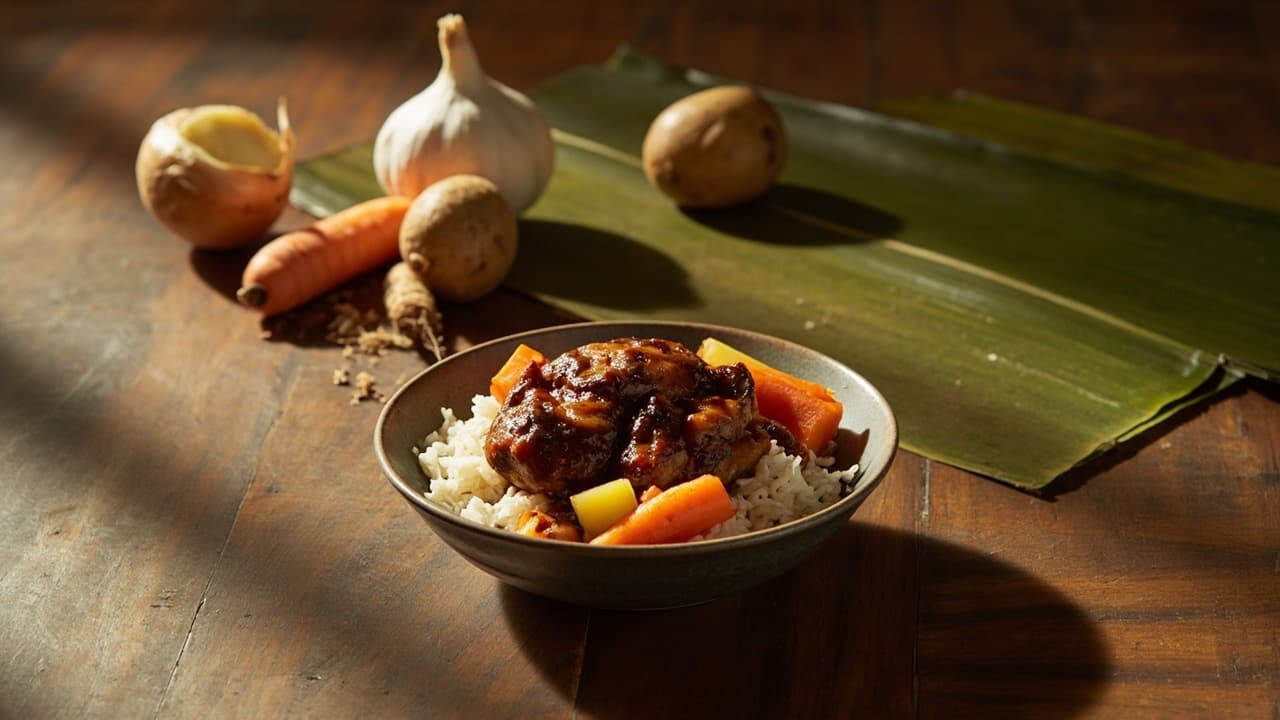
Maricel's Garlic Chicken Paksiw
A Filipino braised chicken dish tangy with vinegar and savory with garlic, perfect for family gatherings served over steaming white rice.

Prep
20 min
Cook
50 min
Rest
10 min
Total
1h 20m
Method
Prep
1
Pat chicken thighs dry with paper towels. Season generously with salt and black pepper. Set aside for 10 minutes to come to room temperature.
2
Peel and crush the garlic cloves with the flat side of your knife. Peel and slice the yellow onion into thick rings.
Build the Braise
4
In a large Dutch oven or heavy pot, heat 2 tablespoons of sunflower oil over medium heat. Add the crushed garlic and sauté until fragrant, about 1 minute — waft that garlicky aroma into the kitchen!
5
Add the sliced onion rings and cook until softened and slightly translucent, about 3 minutes.
6
Pour in the white vinegar, soy sauce, and add the white sugar and remaining black pepper. Stir gently to combine the tangy-sweet braising liquid.
Braise
7
8
Bring the liquid to a gentle boil, then reduce heat to low. Cover tightly and simmer for 25 minutes.
9
Flip the chicken thighs to the other side. Baste with the braising liquid. Continue cooking covered for another 15 minutes until chicken is cooked through and vegetables are tender.
B
Nutri-Score
Good balance
A–E · lower is better · score 0
Calories
330
per serving
High in protein · 33gLow sugar · 7gLow saturated fat · 3g
Protein
33g
Carbs
17g
Fat
13g
Sat. fat
3g
Fiber
2g
Sugar
7g
Sodium
918mg
Gluten FreeDairy FreeNut FreeDiabetes FriendlyHeart HealthyAnti InflammatoryHigh ProteinLow Carb
Nutri-Score is a general nutritional-balance guide, not medical or dietary advice.
C
Environmental impact
Moderate impact
A–E · lower is better · includes estimates
kg CO2e
1.2
per serving
CCarbonAEU all-round· carbon sets the grade
Water
0.3m³
Land
43Pt
Runoff
0.1g P
Chicken Thigh drives 92% of this recipe’s estimated footprint.
Carbon from Poore & Nemecek 2018; water, land & runoff from Agribalyse — modelled averages for comparing recipes, not a measurement of your groceries.
Flavor Profile
6
Umami
3
Sweet
5
Salty
7
Sour
1
Bitter
4
Spicy
Textures
TenderJuicySilkyCaramelized
Aromas
GarlickyTangySavoryOnionUmami
Kitchen Equipment
Primary Tool
Dutch OvenDutch OvenWokRice CookerChef KnifeCutting BoardLadleMeasuring CupsMeasuring SpoonsTongsPaper TowelsPlastic WrapCooking Oil
Counter FootprintMedium
Safety & Storage
Cooking Temperature
Chicken must reach minimum 165°F internal temperature to ensure safe consumption. Use a meat thermometer inserted into the thickest part of the thigh, avoiding bone.
Cross Contamination
Use separate cutting boards and utensils for raw chicken and vegetables. Wash all surfaces, hands, and tools with hot soapy water after handling raw poultry.
Storage
Refrigerate leftover paksiw within 2 hours of cooking. Store in airtight containers. Consume within 3-4 days for best quality and safety.
High Risk Population
When serving at family gatherings, ensure elderly guests, pregnant women, and immunocompromised individuals are aware the dish contains soy sauce and its gluten content if using traditional wheat-based varieties.
Allergen Warning
If serving to guests with soy or gluten allergies, substitute with tamari or coconut aminos as a soy-free alternative and verify the vinegar used is sulfite-free.
Handling
When flipping chicken during braising, use tongs rather than piercing the meat with forks to retain juices and prevent cross-contamination from raw contact points.
Pro Tips
Technique
Don't rush the vinegar! Let it come to a gentle simmer before adding the chicken — this mellows the sharp acidity and creates a smoother, more balanced sauce that seeps into every bite of meat and veggie.
Substitution
If you can find cane vinegar (sukang paombong), use it instead of white — it gives this dish that authentic, deeper tang that my lola always insisted upon. But white vinegar works perfectly in a pinch, and your paksiw will still be sarap!
From the chef
Paksiw is all about that tangy-savory braising liquid — vinegar, soy sauce, and crushed garlic that slowly saturates every bite of chicken thigh until the meat is falling-tender and the sauce has reduced into something glossy and deeply flavored. Potatoes and carrots go in early so they soak up all that same goodness. The secret is patience: let the lid do its work, then uncover and reduce until the sauce clings. Serve it over a big mound of steamed rice and spoon every last drop of that glaze on top. Walang kanin na maiiwan!
TagsFilipino CuisinePaksiwVinegar BraisedGarlickyOne PotFamily MealWeeknight DinnerChicken Thigh
AllergensSoyGlutenSulfites
Source: generated · June 10, 2026