 Spanish
Medium · Hot
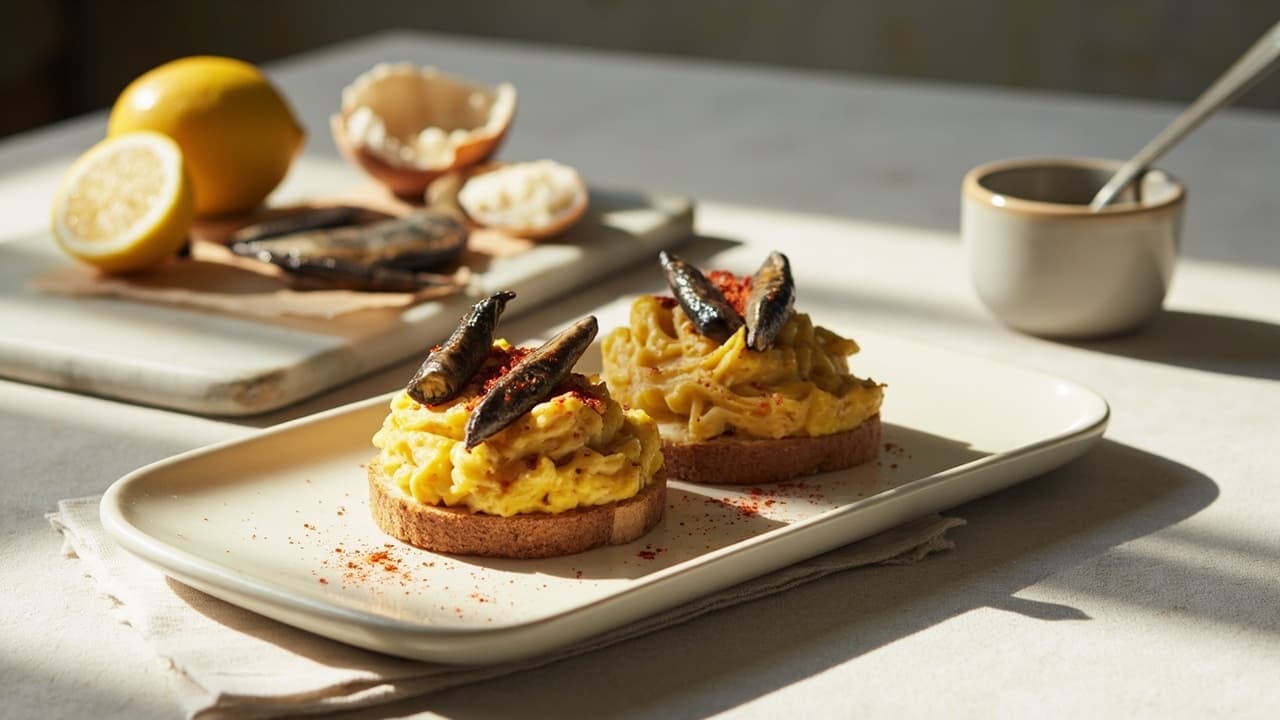
Smoky Spanish Egg and Sardine Pintxo
Hard-browned sardines meet soft-scrambled egg on toasted bread, finished with lemon and smoked paprika. Five ingredients. No apology.

Prep
5 min
Cook
15 min
Total
20 min
Method
Prepare
1
Slice bread into thick rounds or squares if not pre-sliced. Pat sardines dry with paper towel. Crack eggs into a bowl. Juice the lemon.
Toast Base
2
Heat 2 tablespoons olive oil in a cast iron skillet over high heat until smoking. Add bread slices. Press flat and cook without moving until deeply golden, about 2 minutes per side. Transfer to a plate.
Brown Sardines
3
In the same skillet over medium-high heat, add sardines in a single layer.
Scramble Eggs
Assemble
5
Pile eggs onto each toast. Top with sardines. Spoon any remaining pan juices over everything. Serve immediately.
B
Nutri-Score
Good balance
A–E · lower is better · score 1
Calories
328
per serving
High in protein · 21gLow sugar · 2g
Protein
21g
Carbs
13g
Fat
21g
Sat. fat
5g
Fiber
2g
Sugar
2g
Sodium
359mg
PescatarianDairy FreeHeart HealthyAnti InflammatoryHigh ProteinOmega 3 RichLow Carb
Nutri-Score is a general nutritional-balance guide, not medical or dietary advice.
Grade pending
Environmental impact
Estimated footprint
Grade pending · 69% ingredient coverage
kg CO2e
≥0.3
per serving
Eggs drives 69% of this recipe’s estimated footprint.
Carbon from Poore & Nemecek 2018; water, land & runoff from Agribalyse — modelled averages for comparing recipes, not a measurement of your groceries.
Flavor Profile
8
Umami
2
Sweet
6
Salty
5
Sour
1
Bitter
4
Spicy
Textures
CrispyTenderSilky
Aromas
SmokyBrinyCitrusFatty
Kitchen Equipment
Primary Tool
Cast Iron SkilletCounter FootprintMedium
Techniques
Safety & Storage
High Risk Population
Immunocompromised individuals, pregnant women, young children, and elderly should exercise caution with sardines due to scombroid poisoning risk from improper storage or freshness.
Cooking Temperature
Heat olive oil until smoking before adding bread and sardines to ensure proper browning and Maillard reaction development.
Remove eggs while still slightly wet — carryover cooking will continue. Do not serve eggs that appear runny or undercooked to vulnerable populations.
Eggs should reach an internal temperature of 160°F (71°C) when scrambled to ensure safety for vulnerable populations. Use a calibrated food thermometer for accuracy.
Cross Contamination
The same cast iron skillet is used sequentially for sardines and eggs without cleaning between uses, creating potential allergen cross-contact risk for fish-allergic individuals.
Handling
Lemon juice will spit violently when added to the hot sardine pan. Stand back and use long tongs or a spatula to avoid burns.
Allergen Warning
This dish contains fish and eggs as primary ingredients. Sardines and egg protein can remain on cooking surfaces even after wiping.
Storage
Sardines in oil should be refrigerated after opening. If using fresh sardines, ensure they have been properly chilled since purchase and cooked within 24-48 hours.
Shelf Life
Cooked eggs should be consumed immediately. Remaining pan juices with egg residue should not be saved as they create ideal bacterial growth conditions.
Pro Tips
Technique
Get the cast iron screaming hot before you add bread. If it’s not smoking, you’re braising, not searing. That fond on the bottom after sardines? That’s flavor debt. You want interest on your investment.
Substitution
Fresh sardines are ideal, but quality tinned sardines in olive oil — the ones you actually want to eat alone — work here. Do not substitute with the oil that tastes like tin. If the sardines are bad, the dish is already lost.
From the chef
In San Sebastián, they call this architecture. Five ingredients doing five jobs — bread carries, sardines brown and deliver, egg unifies, lemon acidifies, paprika smokes. No garnish to hide behind. I watched an old woman make these at a bar counter with a cast iron and a bowl of eggs. No measurements. She did not apologize. Neither should you.
TagsQuickHigh ProteinSeafoodOne PanBudget FriendlyPintxo
AllergensFishEggsWheat
Source: generated · June 10, 2026