 Catalan
Medium · Hot
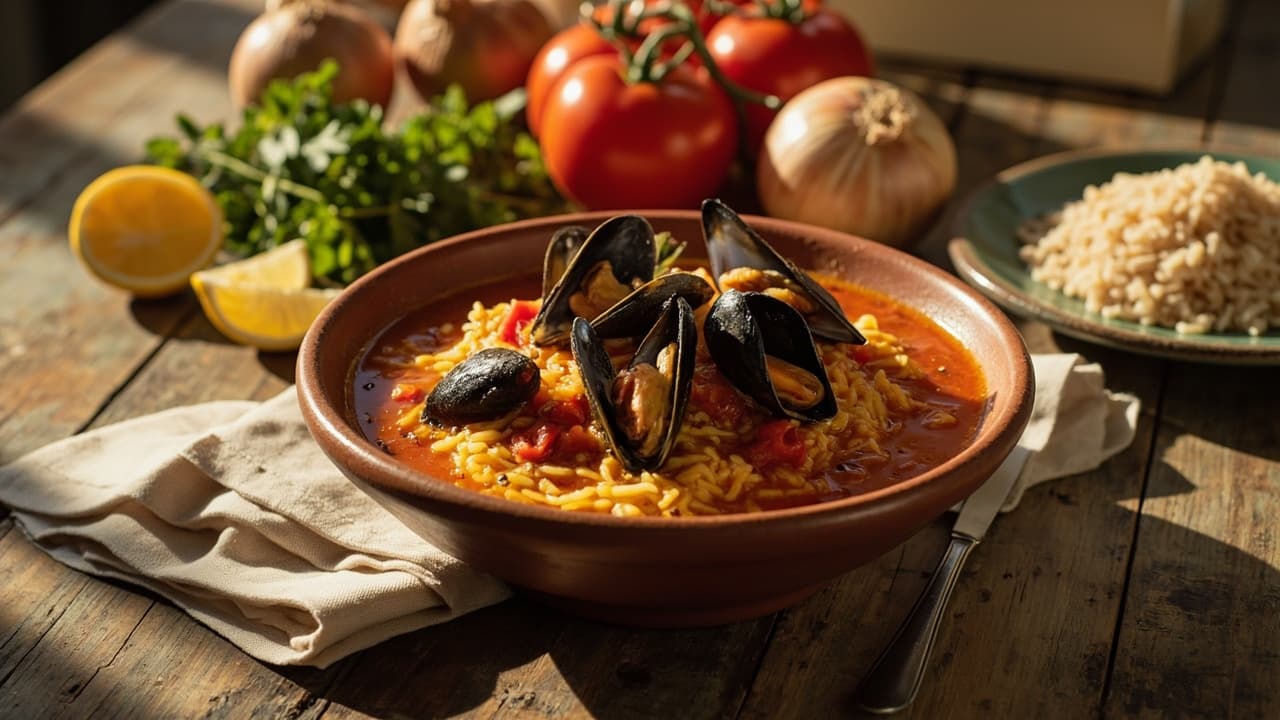
Mussels in Saffron Tomato Broth over Rice
Tender mussels bathed in a deep saffron-tinted tomato broth served over silky rice. A taste of the Empordà coast — the sea and land united in one fragrant, golden bowl.

Prep
15 min
Cook
30 min
Rest
2 min
Total
47 min
Method
Build the sofregit
1
Warm the olive oil in a large Dutch oven over medium heat. Add the diced onion and cook, stirring with a wooden spoon, for 10-12 minutes until soft and golden — this slow caramelization is the heart of the dish.
2
Add the minced garlic and cook for 2 more minutes until fragrant and tender.
3
Stir in the grated tomatoes. Reduce heat to low and let this sofregit cook for 15-20 minutes, stirring occasionally, until it becomes thick, jammy, and deeply concentrated. This is not a rushed sauce — patience is rewarded.
4
[object Object]
5
[object Object]
Finish and serve
7
Divide the golden rice among warm, deep bowls. Arrange the steamed mussels on top and ladle over any remaining saffron broth.
8
Finish with a generous drizzle of good olive oil and a crack of black pepper. Serve immediately with lemon wedges on the side.
A
Nutri-Score
Excellent balance
A–E · lower is better · score -1
Calories
709
per serving
Source of protein · 35gLow sugar · 4gLow saturated fat · 5g
Protein
35g
Carbs
89g
Fat
23g
Sat. fat
5g
Fiber
4g
Sugar
4g
Sodium
1457mg
Gluten FreePescatarianDairy FreeMediterraneanHeart HealthyDiabetes FriendlyWeight ManagementHigh ProteinOmega 3 RichLow Saturated Fat
Nutri-Score is a general nutritional-balance guide, not medical or dietary advice.
Flavor Profile
8
Umami
5
Sweet
5
Salty
3
Sour
1
Bitter
2
Spicy
Textures
SilkyTenderSaucyAl Dente
Aromas
FloralGarlickyTomatoHerbalBriny
Kitchen Equipment
Safety & Storage
High Risk Population
Mussels are considered high-risk for vulnerable populations including pregnant individuals, elderly, immunocompromised, and young children. Ensure mussels are extremely fresh and cooked thoroughly before service to these groups.
Cooking Temperature
Steam mussels until all shells open wide, approximately 4-5 minutes over high heat. Any mussels with closed shells after cooking must be discarded as they may contain harmful bacteria.
Cross Contamination
Mussels must be prepared on separate equipment and surfaces from other ingredients. Use dedicated utensils and clean/disinfect all contact surfaces thoroughly after handling raw mussels.
Storage
Keep live mussels refrigerated at 40°F (4°C) or below. Use within 1-2 days of purchase. Store shell-on mussels in a bowl with damp paper towels over them - never submerge in water or seal in airtight containers as mussels need to breathe.
Allergen Warning
Clearly label mussels as an ingredient on any menu or serving description. For restaurant settings, maintain strict separation between mollusk-containing dishes and allergen-free items during prep, cooking, and plating.
If using commercial chicken broth, verify the label for hidden allergens including milk, wheat, soy, celery, or fish which may be present in broth concentrates or bases.
Handling
Before cooking, inspect all mussels and discard any with cracked, damaged, or broken shells. Scrub shells under cold running water and remove beards. If any mussel has a strong, unpleasant odor before cooking, discard immediately.
Shelf Life
Mussels are highly perishable. Cook within 24-48 hours of purchase. Once cooked, consume within 2 hours or refrigerate leftovers at 40°F (4°C) or below for up to 3 days. Reheat cooked mussels to 165°F (74°C) before service.
Pro Tips
Technique
Never rush the sofregit — those 15-20 minutes of slow cooking transform simple onion and tomato into something deep and jammy. This is the soul of the dish, and a thin, quick sauce will never give you the same result.
Substitution
If you cannot find Arborio, a short-grain Spanish rice like Calasparra works beautifully and keeps that lovely bite. Just adjust cooking time by a minute or two.
Flavor Boost
A small splash of the mussel cooking liquid strained into the saffron broth adds an incredible depth of the sea that you simply cannot replicate any other way.
From the chef
The saffron goes into warm broth first, steeping until the liquid turns a deep, true gold — and from that moment the dish announces itself. Beneath the mussels sits a slow sofregit of onion, garlic, and grated tomato that cooks down for nearly twenty minutes until it is thick and jammy. The rice absorbs all of that golden broth as it cooks, becoming fragrant and giving before the mussels are laid on top, still in their shells, releasing their briny liquor into the bowl. A generous drizzle of olive oil at the end and nothing else is needed. The sea is already there.
TagsSeafoodOne PotSaffronSofregitMar I MuntanyaEmpordà
AllergensMollusks
Source: generated · June 10, 2026