 American
Medium · Hot
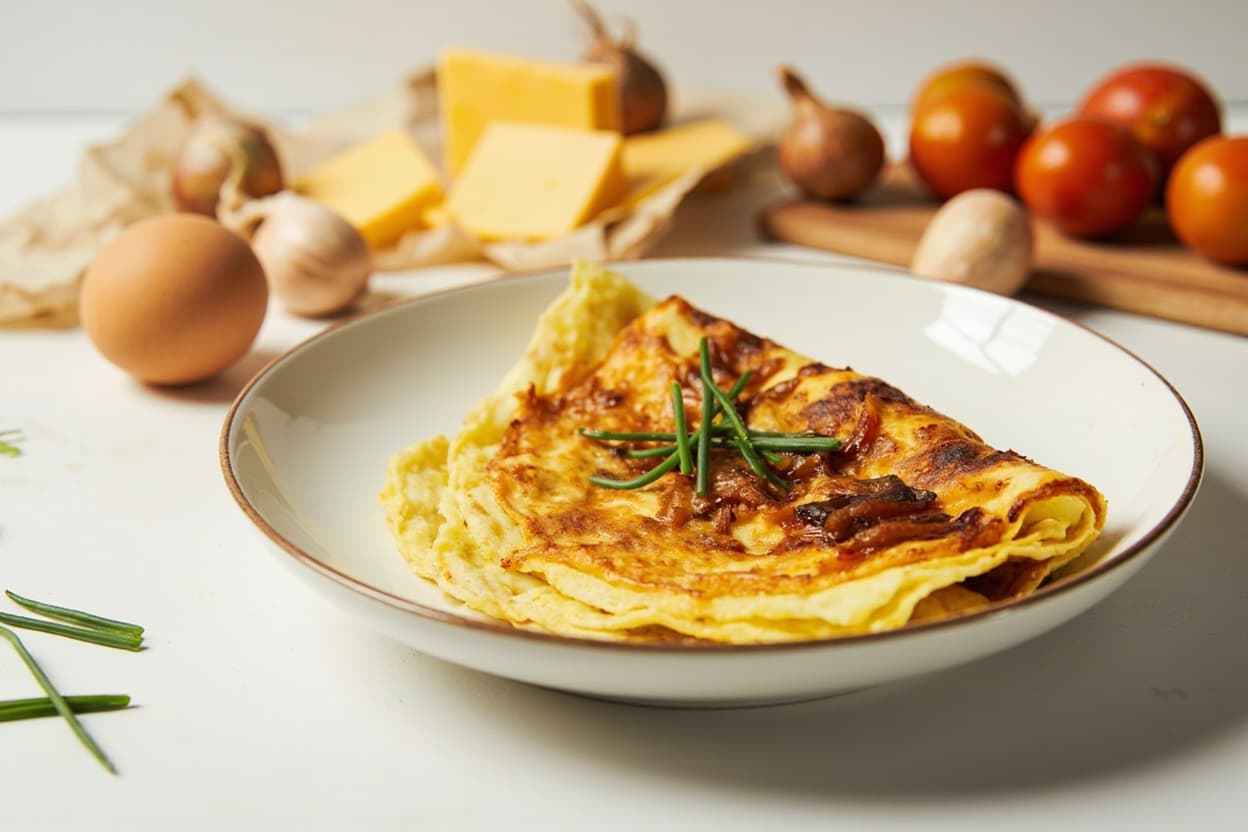
Caramelized Onion and Cheddar Breakfast Omelette
Yellow onion cooked low in butter until deeply golden and sweet — the most patient part of the whole process — then folded into a soft egg omelette with sharp cheddar that melts into every fold. Chives over the top, and that's all it needs. A good omelette is unhurried by nature, and this one rewards you for not rushing it.

Prep
10 min
Cook
25 min
Total
35 min
Method
Caramelize the Onions
1
2
Add the sliced onions and a pinch of salt. Cook slowly, stirring occasionally, for 15-20 minutes until the onions are deeply golden, soft, and fragrant. Lower the heat if they start to brown too quickly. Set aside.
3
Add the sliced onions and a pinch of salt. Cook slowly, stirring occasionally, for 30-45 minutes until the onions are deeply golden, soft, and fragrant, adjusting heat as needed. Lower the heat if they start to brown too quickly. Set aside.
Mix the Eggs
4
Crack the eggs into a bowl and add the whole milk, salt, and black pepper. Whisk together until the mixture is smooth and slightly frothy.
Cook the Omelette
5
Heat an 8-inch non-stick pan over medium-low heat. Add the butter and let it melt without browning.
6
Heat a 10-inch (25cm) non-stick pan over medium-low heat.
7
8
When the eggs are mostly set but still slightly glossy on top, distribute the caramelized onions evenly across one half of the omelette.
Add Cheese and Fold
9
Scatter the cheddar cheese over the onions. Fold the omelette in half, covering the filling. Cook for another minute to melt the cheese.
10
Slide the omelette onto a warm plate and serve immediately with a little extra butter if you like.
C
Nutri-Score
Fair balance
A–E · lower is better · score 3
Calories
578
per serving
High in saturated fat · 21gHigh in protein · 30gLow sugar · 9g
Protein
30g
Carbs
17g
Fat
44g
Sat. fat
21g
Fiber
3g
Sugar
9g
Sodium
878mg
Gluten FreeLow CarbKeto FriendlyHeart HealthyDiabetes FriendlyLow Sodium FriendlyHigh ProteinBalanced Fat
Nutri-Score is a general nutritional-balance guide, not medical or dietary advice.
C
Environmental impact
Moderate impact
A–E · lower is better · complete match
kg CO2e
1.7
per serving
CCarbonAEU all-round· carbon sets the grade
Water
0.4m³
Land
48Pt
Runoff
0.1g P
Cheddar Cheese drives 41% of this recipe’s estimated footprint.
Carbon from Poore & Nemecek 2018; water, land & runoff from Agribalyse — modelled averages for comparing recipes, not a measurement of your groceries.
Flavor Profile
6
Umami
5
Sweet
4
Salty
1
Sour
2
Bitter
3
Spicy
Textures
SoftTenderCreamySilky
Aromas
ButterySweetSmokySavoryUmami
Kitchen Equipment
Primary Tool
Non Stick Frying PanCounter FootprintSmall
Safety & Storage
Cooking Temperature
Cook eggs thoroughly until fully set with no glossy liquid remaining. Internal temperature should reach 160°F minimum to eliminate Salmonella risk.
High Risk Population
Eggs are classified as high-risk food for vulnerable populations. Pregnant individuals, young children, elderly, and immunocompromised should ensure eggs are fully cooked.
Cross Contamination
Use separate cutting boards and utensils for raw onions versus raw eggs. Wash hands thoroughly after handling raw egg mixture.
Equipment Safety
Ensure non-stick pan is not scratched or damaged. Overheating non-stick pans can release harmful fumes. Use medium-low heat as directed.
Storage
Serve immediately after preparation. This dish does not store well and should not be refrigerated for later consumption.
Pro Tips
Technique
When cooking the omelette, keep your heat gentle and resist the urge to rush. Let the eggs set slowly, nudging the edges toward the center as you go—this keeps them pillowy rather than rubbery.
Substitution
If sharp cheddar isn't your thing, a aged Gruyère or even a good crumbled goat cheese works wonderfully here. The key is choosing something that melts well and has enough flavor to stand up to the sweet onions.
From the chef
This omelette reminds me of those slow Sunday mornings at the cafe when the breakfast rush hadn't started yet and I could take my time with the little things. The onions need patience—let them soften and turn golden at their own pace, and they'll reward you with a sweetness that pairs beautifully with sharp cheddar. It's simple cooking, really, but there's nothing quite like a well-made omelette to make the morning feel unhurried and kind.
TagsBreakfastBrunchEggsCheeseCaramelized OnionsComfort FoodAmerican Breakfast
AllergensEggsMilk
Source: generated · May 30, 2026