 French
Medium · Frozen Soft
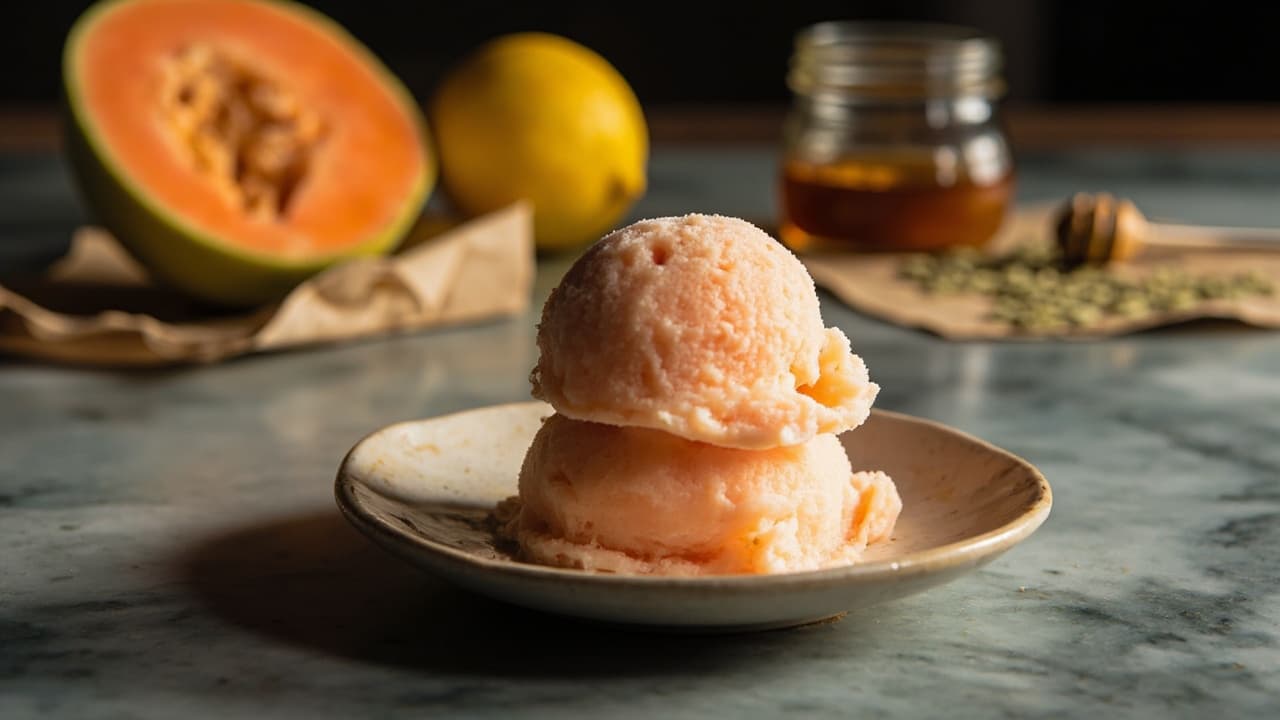
Cantaloupe and Fennel Seed Rose Sorbet
A fragrant summer sorbet that marries the honeyed sweetness of ripe cantaloupe with aromatic fennel seed and a whisper of lemon, churned to a silky, pale coral finish.

Prep
20 min
Cook
15 min
Total
35 min
Method
1
Combine water, white sugar, and fennel seed in a small saucepan over medium heat. Stir until sugar dissolves and the mixture reaches a gentle simmer, about 3-4 minutes.
2
Remove from heat and steep for 15 minutes at room temperature. Strain through a fine-mesh sieve, pressing gently on the seeds to extract maximum flavor. Discard seeds and let syrup cool completely.
3
Cut cantaloupe in half, remove seeds, and peel. Cube the flesh into rough 1-inch pieces. Zest the whole lemon using a fine grater, reserving the zest separately. Juice the lemon to measure 2 tablespoons of fresh juice.
4
5
Taste the mixture — it should balance cantaloupe sweetness with faint fennel anise and bright citrus. Adjust with remaining 1 tablespoon lemon juice if needed. Strain through a fine-mesh sieve if a silkier texture is desired.
6
Cover and refrigerate the base for at least 2 hours, or until thoroughly chilled to 40°F (4°C) or below.
7
Pour the chilled base into an ice cream maker and churn according to manufacturer instructions, approximately 25-30 minutes, until the sorbet reaches a lush, ribbon-like consistency with soft, small crystals.
8
Transfer to a lidded freezer-safe container, smoothing the top flat. Freeze for a minimum of 3 hours until firmly set.
9
Before serving, let the sorbet temper at room temperature for 5-8 minutes. Scoop into chilled bowls and serve immediately as a palate-cleansing dessert.
B
Nutri-Score
Good balance
A–E · lower is better · score 2
Calories
259
per serving
Low saturated fat · 0gLow salt · 74mg
Protein
2g
Carbs
65g
Fat
1g
Sat. fat
0g
Fiber
3g
Sugar
62g
Sodium
74mg
Anti InflammatoryDiabetesHeart HealthyLow FatLow Sodium
Nutri-Score is a general nutritional-balance guide, not medical or dietary advice.
A
Environmental impact
Very low impact
A–E · lower is better · includes estimates
kg CO2e
0.3
per serving
ACarbon
Cantaloupe drives 63% of this recipe’s estimated footprint.
Carbon from Poore & Nemecek 2018; water, land & runoff from Agribalyse — modelled averages for comparing recipes, not a measurement of your groceries.
Flavor Profile
2
Umami
7
Sweet
3
Salty
6
Sour
3
Bitter
0
Spicy
Textures
SilkySmoothSoft
Aromas
AniseCitrusFloralFruityHerbal
Kitchen Equipment
Primary Tool
Ice Cream MakerIce Cream MakerSmall SaucepanBlenderFine GraterFine Mesh SieveMeasuring CupsMeasuring SpoonsFreezer Safe ContainerPlastic Wrap
Safety & Storage
Temperature Concern
Cool fennel seed syrup completely before using to prevent ice crystal formation in the final sorbet.
Refrigerate cantaloupe base to 40°F (4°C) or below before churning to ensure food safety and optimal texture.
Cross Contamination
Thoroughly clean and sanitize ice cream maker canister and utensils before use to prevent bacterial contamination.
Storage
Transfer finished sorbet to an airtight freezer-safe container and maintain at 0°F (-18°C) or below.
Shelf Life
Consume within 1-2 weeks for best quality; extended storage may cause flavor degradation and texture changes.
Handling
Use oven mitts when handling the hot saucepan during syrup preparation to prevent burns.
High Risk Population
For immunocompromised individuals, ensure all equipment is sanitized and the base reaches proper chilling temperature before churning.
Allergen Warning
Although no major allergens are present, this recipe is prepared in a kitchen that may contain traces of common allergens.
Pro Tips
Technique
Steep the fennel seed syrup until it turns pale gold with a distinct anise fragrance. A thermometer should never touch this mixture—watch the tiny bubbles and count the minutes. The difference between 14 and 16 minutes is the difference between flavor and essence.
Flavor Boost
After churning, fold in one teaspoon of pure rose water before the final freeze. The floral notes echo the fennel beautifully and honor the Ottoman tradition of layered aromatics. My family would approve.
Equipment
Use a candy thermometer during the syrup preparation. Sugar syrups for frozen desserts should reach exactly 230°F for optimal texture and to prevent ice crystallization. This is not optional in my kitchen.
From the chef
This sorbet earns its elegance through two precise acts. First, the fennel seeds steep in hot syrup until their anise warmth softens into something subtler — not licorice, but a breath of aromatic depth that the cantaloupe would otherwise lack. Second, the cantaloupe itself must be genuinely ripe: pale coral flesh, heavy with its own perfume, that needs no enhancement beyond lemon to balance its sweetness. Churn it cold and freeze it firm. The result is clean, fragrant, and almost architectural in its restraint — a pale coral sorbet that tastes of late summer and smells faintly of the Ottoman spice markets.
TagsSummerFrozenChurnedFloralFruitSeasonalNo BakeElegantPalate CleanserDate Night
Source: generated · June 13, 2026