 Filipino
Medium · Hot
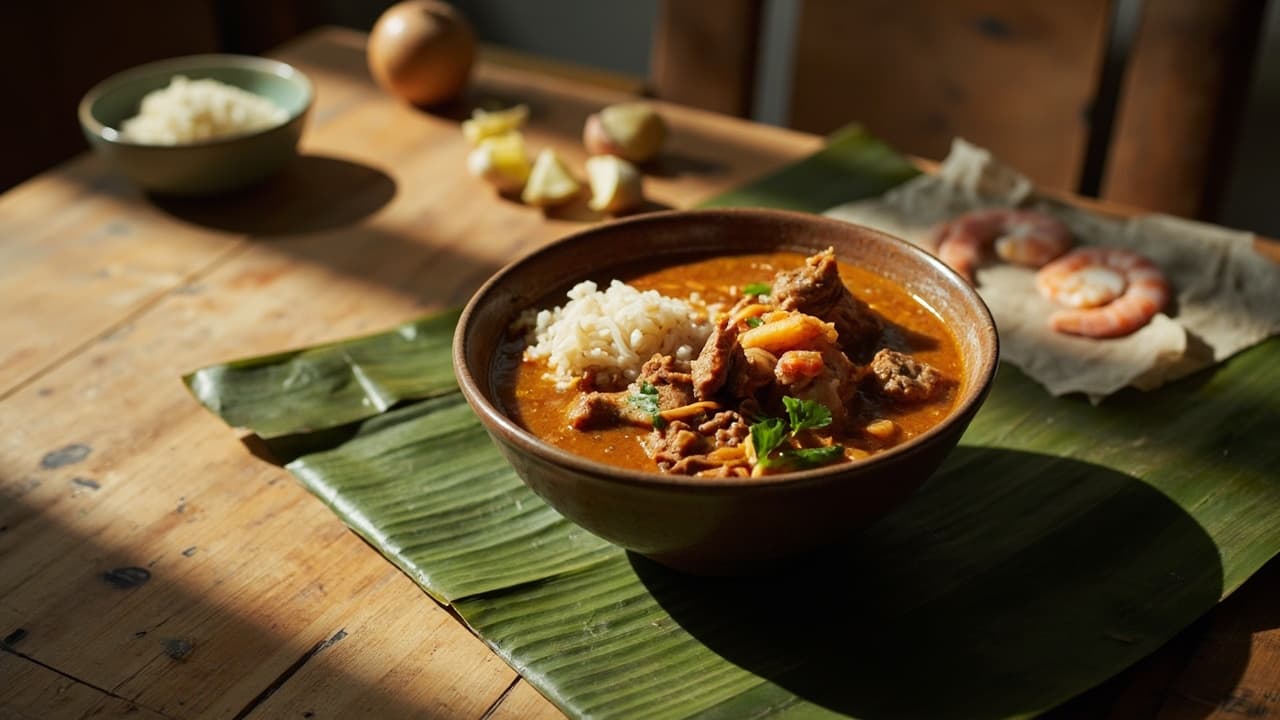
Pork and Shrimp Sarap (Savory Filipino Stew)
A hearty Filipino stew bursting with savory depth from pork belly, plump shrimp, and a rich coconut-inspired broth with vinegar tang. Perfect for family gatherings.

Prep
15 min
Cook
30 min
Rest
5 min
Total
50 min
Method
Prepare and Brown Pork
1
Pat pork belly cubes dry with paper towels. Season lightly with salt and black pepper.
2
Heat oil in a large Dutch oven or heavy pot over medium-high heat. Brown pork belly on all sides, about 4-5 minutes. Work in batches to avoid crowding. Remove and set aside.
Build the Base
3
In the same pot, add more oil if needed. Sauté garlic, yellow onion, and ginger until fragrant and onion is translucent, about 3-4 minutes.
4
Return browned pork to the pot. Pour in chicken broth, soy sauce, and white vinegar. Bring to a rolling boil, then reduce heat to maintain a gentle simmer.
Simmer to Flavor
5
6
Stir in heavy cream for richness. Taste and adjust seasoning with more salt, pepper, or a splash of soy sauce if needed.
C
Nutri-Score
Fair balance
A–E · lower is better · score 10
Calories
733
per serving
High in saturated fat · 19gSource of protein · 23gLow sugar · 6g
Protein
23g
Carbs
17g
Fat
64g
Sat. fat
19g
Fiber
3g
Sugar
6g
Sodium
965mg
Gluten FreeDairy InclusiveHeart ConsciousHigh ProteinBalanced Meal
Nutri-Score is a general nutritional-balance guide, not medical or dietary advice.
E
Environmental impact
Very high impact
A–E · lower is better · includes estimates
kg CO2e
2.7
per serving
ECarbonBEU all-round· carbon sets the grade
Water
9.2m³
Land
56Pt
Runoff
0.5g P
Shrimp, peeled and deveined drives 50% of this recipe’s estimated footprint.
Carbon from Poore & Nemecek 2018; water, land & runoff from Agribalyse — modelled averages for comparing recipes, not a measurement of your groceries.
Flavor Profile
8
Umami
3
Sweet
6
Salty
6
Sour
1
Bitter
2
Spicy
Textures
TenderSilkySucculentChewy
Aromas
GarlickySavoryGingeryHerbal
Kitchen Equipment
Primary Tool
Dutch OvenCounter FootprintMedium
Safety & Storage
Cross Contamination
Use separate cutting boards and utensils for raw pork belly and raw shrimp. Never use the same plate that held raw proteins for serving. Wash hands thoroughly with soap after handling raw shrimp.
Cooking Temperature
Shrimp must reach an internal temperature of 145°F (63°C) and appear pink with curled shape. Pork belly should simmer until reaching at least 145°F (63°C) internally. Use a food thermometer to verify doneness.
Storage
Refrigerate leftover stew within 2 hours of cooking. Store in airtight containers at 40°F (4°C) or below for up to 3 days. Reheat to 165°F (74°C) before consuming.
High Risk Population
This dish contains shellfish and dairy which pose higher risks for pregnant individuals, elderly, young children, and immunocompromised persons. Ensure all proteins are fully cooked and served hot.
Handling
Do not add shrimp to the stew until the final 3-4 minutes of cooking. Overcooked shrimp become tough and rubbery. Stir gently when adding shrimp to preserve the cream-based broth.
Pro Tips
Technique
When browning the pork belly, make sure your pot is hot enough before adding the meat—wag kabahan (don't rush)! You want that beautiful golden sear, not steaming. Crowding the pot means steaming instead of searing, and we want that caramelized flavor in every bite.
Substitution
No heavy cream? No problema! Coconut milk is a beautiful swap and brings us closer to our tropical roots. Use full-fat for that rich, luscious broth we all crave.
Reheating
This stew tastes even better the next day, parang adobo! The vinegar tang mellows out beautifully overnight. Just add fresh shrimp when reheating since they're best cooked once.
From the chef
This stew earns its sarap the honest way — pork belly seared until golden, then slow-simmered with shrimp, potato, and carrot in a broth that balances tangy vinegar, savory depth, and just enough cream to bring everything together. The ginger and garlic do the heavy lifting early, and by the time the shrimp go in, the whole pot smells like something worth gathering around. Spoon it over jasmine rice and make sure you have enough bowls for everyone, because this ulam disappears fast.
TagsFilipino CuisinePork BellyShrimpVinegarSoy SauceGarlicCreamy StewFamily StyleComfort FoodOne PotWeeknight Dinner
AllergensShellfishMilkSoy
Source: generated · June 10, 2026