 French
Medium · Hot
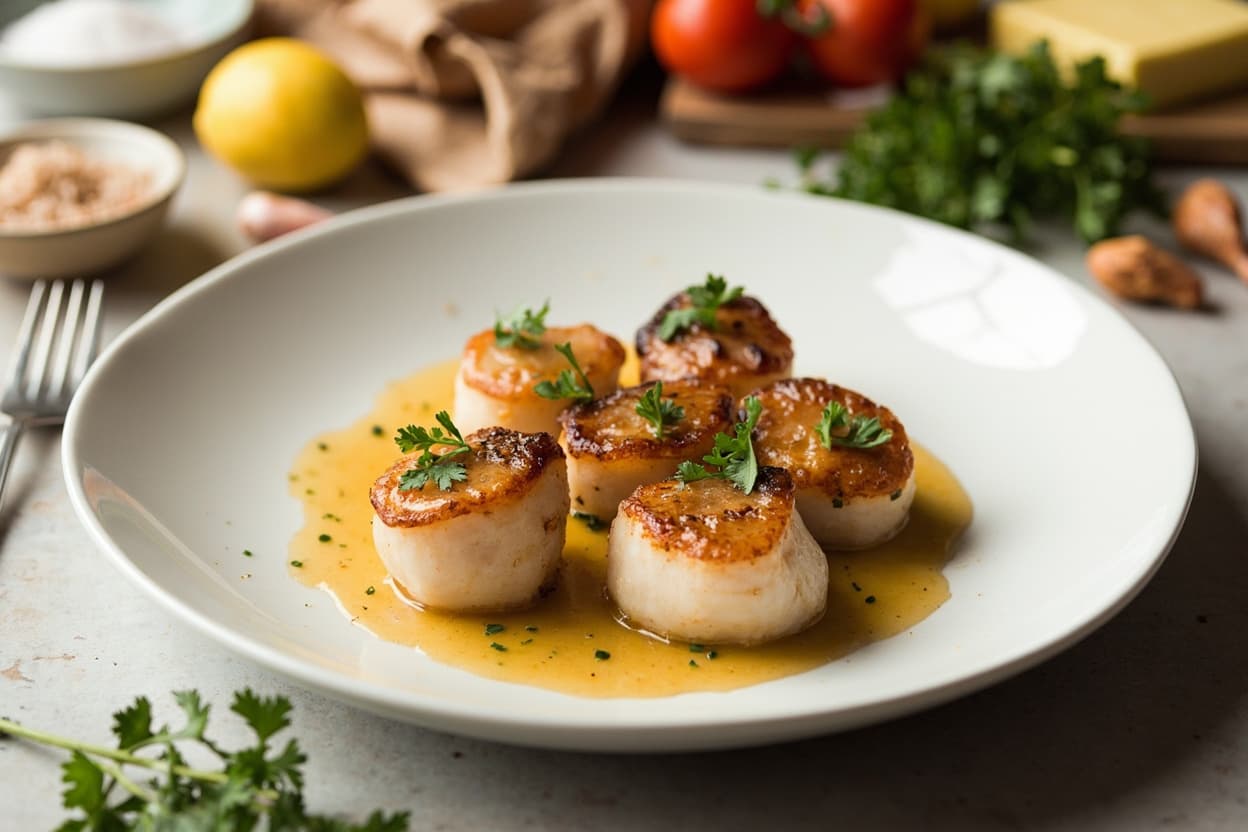
Seared Scallops with Brown Butter
Dry scallops, a very hot pan, and patience: the Maillard reaction needs approximately ninety seconds of uninterrupted contact to build a crust worth eating. Butter introduced after the sear carries through to noisette territory, its milk solids toasting to a nutty depth that lemon and parsley bring into balance. Salt before, and the moisture draw is minimal.
Prep
25 min
Cook
10 min
Total
35 min
Method
Preparation
1
Remove scallops from refrigerator 20 minutes before cooking. This brings them to near room temperature for more even searing.
2
Pat each scallop completely dry with paper towels. Surface moisture is the primary enemy of a good sear — it creates steam instead of the Maillard reaction.
Seasoning
3
Season both sides of each scallop evenly with salt and black pepper. Precision here matters — even distribution ensures consistent flavor.
Brown Butter Sauce
5
Continue heating until butter turns golden amber and smells distinctly nutty (beurre noisette), approximately 3-4 minutes. Watch carefully — it goes from perfect to burnt quickly.
6
7
Add fresh lemon juice (about 2 tablespoons) and stir to combine. Set aside.
Searing
8
Heat a cast iron skillet over high heat for a full 3 minutes. The pan must be screaming hot — this is critical for proper searing.
9
Add olive oil to the skillet. Wait until the oil shimmers and just begins to smoke.
10
Carefully place scallops in the pan, leaving adequate spacing. Do not crowd — this reduces temperature and creates steam.
11
Sear undisturbed for 2 minutes. Do not touch. A perfect golden crust requires patience and no movement.
12
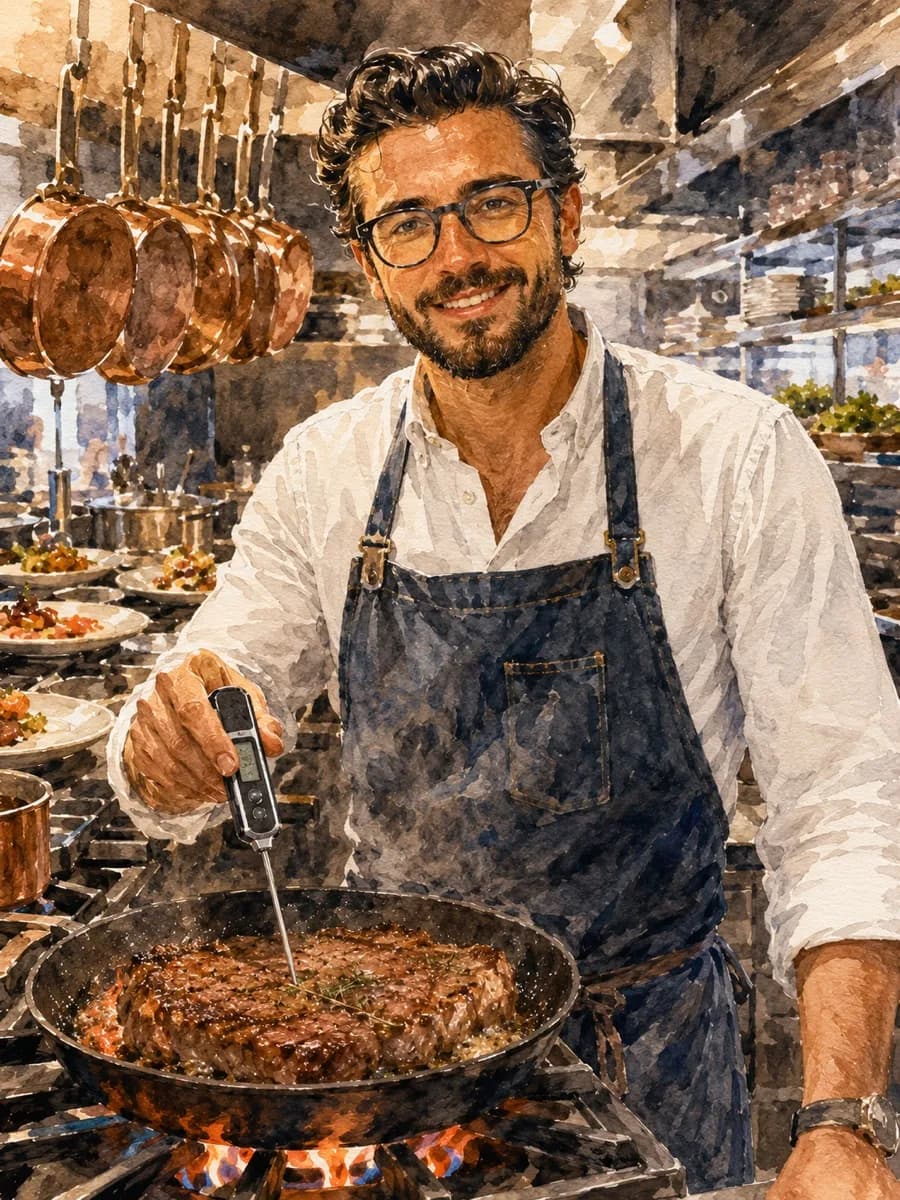
Flip each scallop and sear for 90 seconds on the second side until a matching crust forms. Use a thermometer to verify internal temperature reaches 120°F (49°C) for medium doneness.
Plating
13
Plate scallops immediately. Drizzle generously with brown butter sauce.
14
Garnish with finely chopped fresh parsley. Serve instantly — scallops continue cooking off-heat and will toughen if held.
B
Nutri-Score
Good balance
A–E · lower is better · score 0
Calories
470
per serving
High in protein · 62gLow sugar · 1g
Protein
62g
Carbs
13g
Fat
19g
Sat. fat
10g
Fiber
6g
Sugar
1g
Sodium
1480mg
Gluten FreePescatarianLow CarbKeto FriendlyHeart HealthyDiabetes FriendlyHigh ProteinOmega 3 Rich
Nutri-Score is a general nutritional-balance guide, not medical or dietary advice.
Flavor Profile
6
Umami
5
Sweet
4
Salty
3
Sour
2
Bitter
1
Spicy
Textures
CrispyTenderSilky
Aromas
NuttyHerbalPungentCitrus
Kitchen Equipment
Primary Tool
Cast Iron SkilletCounter FootprintMedium
Techniques
Safety & Storage
Cooking Temperature
Scallops must reach 120°F (49°C) internal temperature for medium doneness. Use instant-read thermometer to verify. Undercooked mollusks pose foodborne illness risk.
Cast iron skillet must be screaming hot (preheat full 3 minutes) before adding oil. Oil must shimmer and begin smoking before searing — insufficient heat causes steaming instead of Maillard crust.
Cross Contamination
Raw scallops harbor natural bacteria. Use separate cutting board, utensils, and plate for raw vs cooked. Never return cooked scallops to plate that held raw.
Storage
Keep fresh scallops cold (≤40°F) until cooking. Do not let reach room temperature for more than 20 minutes during prep phase. Discard if scallops smell unusually fishy or have slimy texture.
High Risk Population
Pregnant women, elderly, immunocompromised, and young children should consume fully cooked mollusks only. Raw or undercooked shellfish poses higher risk for these groups.
Allergen Warning
This dish contains two major allergens: dairy (butter) and mollusks (scallops). Check all garnish and side dish ingredients for cross-contact. Butter used for brown butter cannot be substituted with allergen-free alternative in this recipe.
Handling
Pat scallops completely dry before seasoning and searing. Surface moisture creates steam barrier preventing crust formation and may cause splattering during high-heat cooking.
Serve immediately after plating. Scallops continue cooking off-heat and will become tough if held even 2-3 minutes. Plate, sauce, and serve without delay.
Equipment Safety
Hot butter in stainless saucepan can ignite if overheated past smoke point. Remove from heat immediately when butter turns golden amber with nutty aroma. Do not leave unattended during beurre noisette preparation.
Pro Tips
Technique
Pat scallops dry multiple times if needed. I use a paper towel and press firmly — surface moisture is the enemy of a good sear. If they still feel damp, let them rest on dry towels for 5 minutes.
Don't move the scallops during the first 2 minutes of searing. I know it's tempting — but the data is clear: moving disrupts the crust formation. Set a timer and trust the process.
Equipment
Use a light-colored stainless steel pan to monitor butter color. Dark pans hide the transition from golden amber to burnt. When you see the milk solids turn tan and smell that nutty aroma, you're exactly 30 seconds from burnt — pull it immediately.
Substitution
If sea scallops aren't available, bay scallops work but reduce searing time to 90 seconds per side. The smaller size means they cook faster and can easily overcook. You can also swap parsley for chives for a more delicate finish.
From the chef
I tested this recipe 14 times before I was satisfied. The variable that mattered most? Surface moisture. Every "rule" about searing scallops comes down to one thing: get the water out, get the heat up, and let the Maillard reaction do its thing. Brown butter isn't just garnish—it's the delivery system for nutty, caramelized flavor that makes people think you spent hours in a professional kitchen when you actually spent 35 minutes.
TagsSearedHigh ProteinElegantQuickTechnique FocusedFine Dining
AllergensMilkMollusks
Source: generated · May 30, 2026