 Lebanese
Medium · Hot
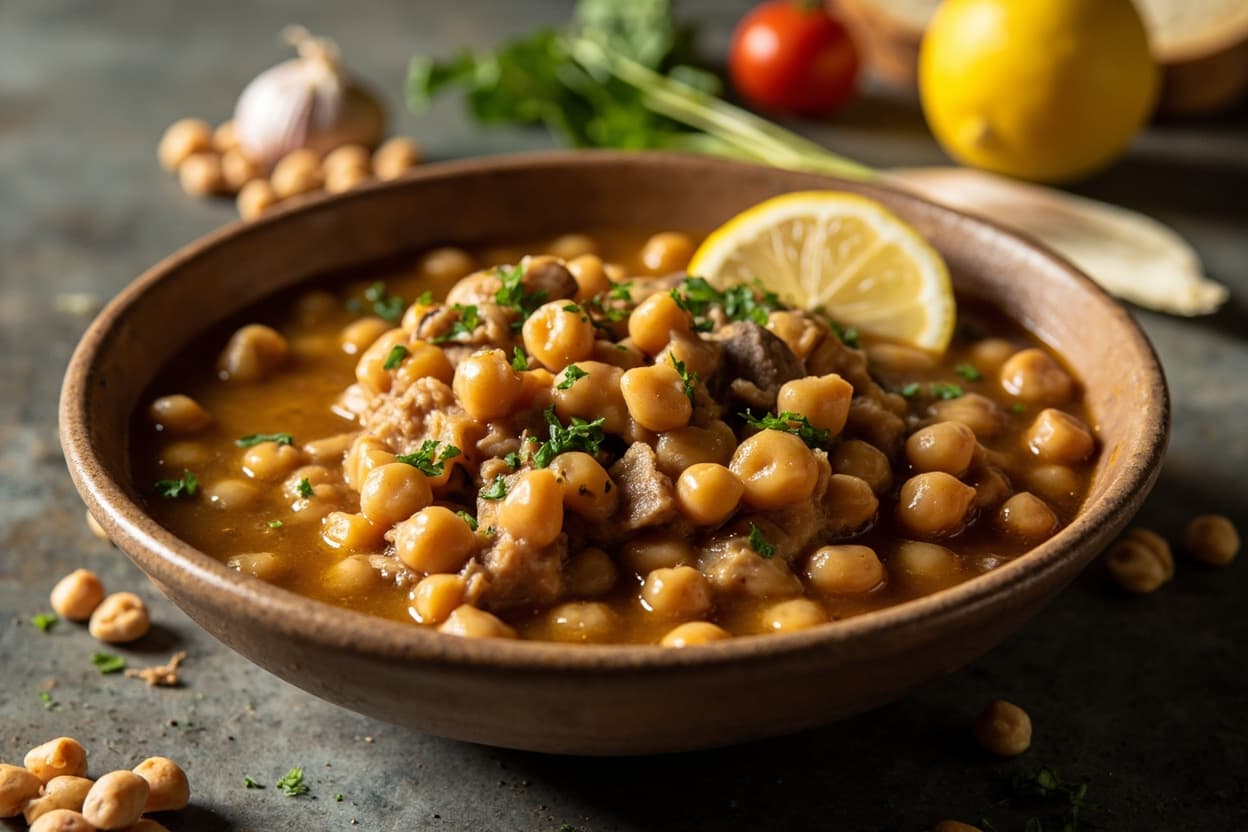
Lemon and Garlic Chickpea Stew
A communal chickpea stew built around a bold, silky lemon-garlic sauce. The chickpeas swim in it, the bread demands it, and nobody leaves the table hungry.

Prep
15 min
Cook
30 min
Total
45 min
Method
Build the Aromatic Base
1
Heat the half-cup olive oil in a large saucepan over medium heat. Add the diced yellow onion and cook, stirring occasionally, until softened and translucent, about 6 minutes.
Simmer the Stew
3
Pour in the tomato sauce and chicken broth. Stir everything together and bring to a gentle boil.
Finish with Lemon Garlic Sauce
5
While the stew simmers, prepare the lemon garlic sauce. Using a mortar and pestle (or a whisk if you prefer), pound or whisk together the remaining 6 cloves of garlic with a big pinch of salt until a rough paste forms.
6
A
Nutri-Score
Excellent balance
A–E · lower is better · score -4
Calories
1136
per serving
Source of protein · 41gSource of fibre · 23gLow sugar · 8gLow saturated fat · 8g
Protein
41g
Carbs
133g
Fat
53g
Sat. fat
8g
Fiber
23g
Sugar
8g
Sodium
1912mg
VeganDairy FreeGluten FreeMediterraneanLegume ForwardPlant BasedHeart HealthyDiabetes FriendlyAnti InflammatoryLow CholesterolHigh FiberPlant ProteinBalanced FatsWhole Foods
Nutri-Score is a general nutritional-balance guide, not medical or dietary advice.
B
Environmental impact
Low impact
A–E · lower is better · includes estimates
kg CO2e
0.8
per serving
BCarbonAEU all-round· carbon sets the grade
Water
1.8m³
Land
47Pt
Runoff
0.1g P
chickpeas drives 32% of this recipe’s estimated footprint.
Carbon from Poore & Nemecek 2018; water, land & runoff from Agribalyse — modelled averages for comparing recipes, not a measurement of your groceries.
Flavor Profile
7
Umami
4
Sweet
5
Salty
7
Sour
2
Bitter
1
Spicy
Textures
TenderSilkySaucyCreamy
Aromas
HerbalCitrusEarthySavoryPungent
Kitchen Equipment
Primary Tool
SaucepanCounter FootprintMedium
Techniques
Safety & Storage
Allergen Warning
This recipe includes bread as a serving component. The stew itself is free of common allergens, but the bread contains gluten.
Cooking Temperature
Maintain a steady simmer (not a rolling boil) throughout the 20-minute cooking period to ensure proper heat penetration for food safety.
Ensure the chickpea stew reaches an internal temperature of 165°F (74°C) before serving. Use a food thermometer to verify, especially when cooking for high-risk populations.
Cross Contamination
Keep the bread separate from the stew if serving to guests with celiac disease or gluten sensitivity to avoid cross-contact.
Handling
When preparing the lemon garlic sauce, ensure the raw garlic paste is added to the hot stew and cooked for the full 5 additional minutes to eliminate any potential bacterial concerns.
Storage
Refrigerate leftover stew within 2 hours of cooking. Store in airtight containers and consume within 3-4 days for best quality and safety.
Shelf Life
The chickpea stew can be frozen for up to 3 months. Thaw overnight in the refrigerator before reheating. Note that the bread accompaniment does not freeze well and should be prepared fresh.
High Risk Population
For infants under 1 year, omit added salt from the recipe. For elderly, immunocompromised, or young children, ensure the stew is heated to steaming hot (165°F) when reheating leftovers.
Pro Tips
Technique
Don't rush the lemon garlic sauce — stream in that olive oil slowly while whisking or pounding, and keep the motion steady. A proper emulsification should look golden and thick, almost like a loose aioli. This sauce is the soul of the stew, so treat it with respect.
Substitution
Running low on chicken broth? Vegetable broth works beautifully here, and honestly, sometimes I use it when I want the lemon-garlic to lead without competition. The sauce carries the dish anyway.
Equipment
If you don't have a mortar and pestle, a small food processor or even a rough chop with a knife and vigorous whisking will work. The goal is a rough garlic paste, not smooth perfection — the slight texture is honest.
Presentation
Serve this in wide, shallow bowls so the saucy broth has room to pool around the chickpeas. Deep bowls trap the glory. Wide bowls celebrate it.
From the chef
The chickpeas are not the point — the golden, riotous lemon-garlic sauce is the point. Built by emulsifying raw garlic paste with fresh lemon juice and olive oil, then stirred into a tomato-cumin broth where chickpeas have been simmering for twenty minutes, it coats everything it touches with brightness and fat and that particular kind of warmth that makes you reach for bread immediately. Serve in wide bowls, scatter parsley generously — this is contrast, not garnish — and put extra lemon wedges on the table because someone will want more. This is a communal bowl. This is why we cook.
TagsOne PotGarlic ForwardEmulsified SauceLemon BrightCommunal DiningBread FriendlyWeeknight DinnerVegetarian Adaptable
AllergensGluten
Source: generated · June 9, 2026