 French
Medium · Hot
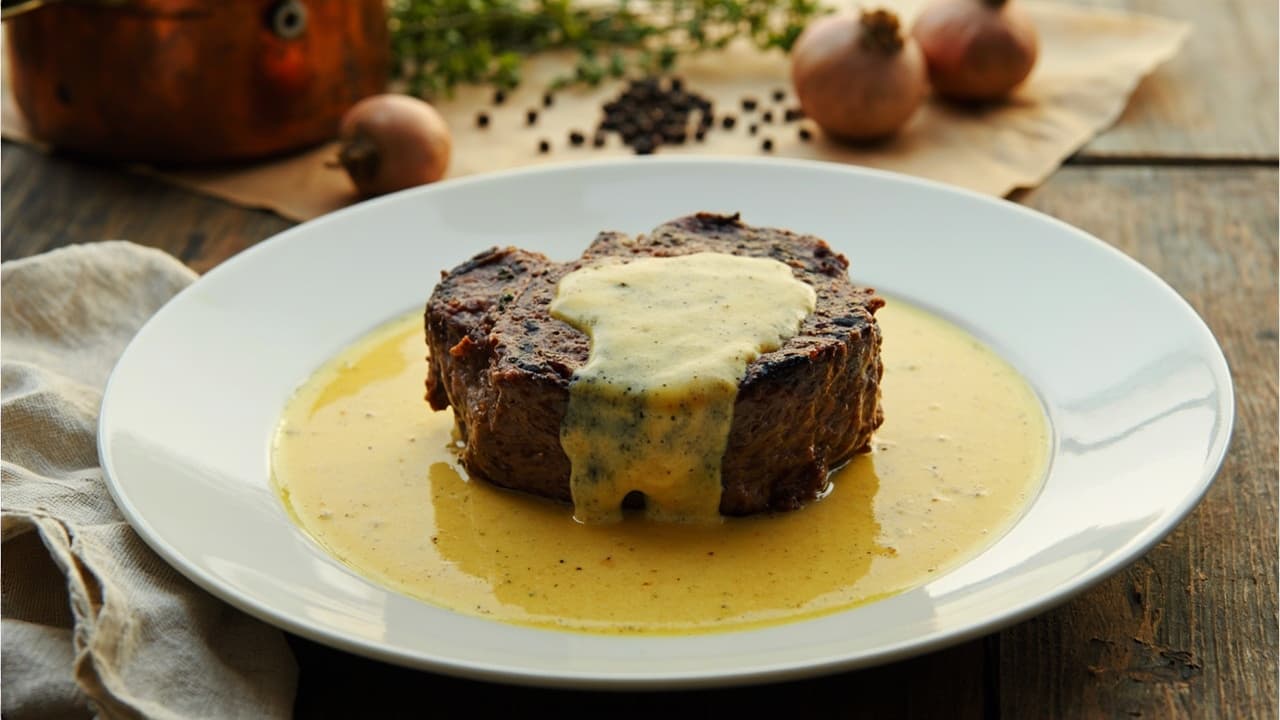
Steak au Poivre with Shallot Butter Pan Sauce
A classic French bistro preparation featuring pepper-crusted beef steaks finished with a silky shallot butter pan sauce enriched with cream and finished with Dijon mustard.
Prep
15 min
Cook
20 min
Rest
5 min
Total
40 min
Method
Preparing the Steaks
1
Remove steaks from refrigerator 30 minutes before cooking to bring them to room temperature. This ensures even cooking throughout.
2
Pat steaks completely dry with paper towels — moisture is the enemy of a proper sear.
3
Press the cracked black pepper generously onto all sides of each steak, creating an even crust. Season lightly with fine sea salt.
4
[object Object]
Making the Shallot Butter Pan Sauce
5
Reduce heat to medium. Pour off any excess fat from the pan, leaving the fond (those beautiful brown bits) intact.
6
Add 2 tablespoons butter to the pan. Once foaming, add the minced shallots and cook for 2 minutes until softened and fragrant but not colored.
7
Pour in the heavy cream, scraping the fond from the bottom of the pan with a wooden spoon. Allow to simmer for 2 minutes until slightly thickened.
8
Stir in the Dijon mustard, remaining thyme leaves, cracked black pepper, and salt. Whisk to combine.
9
Remove from heat and stir in the remaining 2 tablespoons cold butter, swirling the pan until the sauce is glossy and emulsified. The butter should melt without boiling.
D
Nutri-Score
Needs balance
A–E · lower is better · score 11
Calories
608
per serving
High in saturated fat · 18gCalorie-dense · 608 kcalHigh in protein · 33gLow sugar · 7g
Protein
33g
Carbs
17g
Fat
47g
Sat. fat
18g
Fiber
5g
Sugar
7g
Sodium
964mg
Gluten FreeLow CarbLow FodmapBlood Sugar ManagementPcos FriendlyLow HistamineHigh ProteinNutrient Dense
Nutri-Score is a general nutritional-balance guide, not medical or dietary advice.
E
Environmental impact
Very high impact
A–E · lower is better · includes estimates
kg CO2e
23
per serving
ECarbonCEU all-round· carbon sets the grade
Water
0.6m³
Land
449Pt
Runoff
0.3g P
Beef steaks (ribeye or strip), 1-inch thick drives 99% of this recipe’s estimated footprint.
Carbon from Poore & Nemecek 2018; water, land & runoff from Agribalyse — modelled averages for comparing recipes, not a measurement of your groceries.
Flavor Profile
7
Umami
3
Sweet
5
Salty
3
Sour
2
Bitter
6
Spicy
Textures
CrispyTenderSilkyGlossy
Aromas
HerbalButteryPungentRich
Kitchen Equipment
Primary Tool
Heavy Bottomed SkilletHeavy Bottomed SkilletSaucepanChef KnifeCutting BoardWooden SpoonWhiskInstant Read ThermometerTongsPaper TowelsAluminum Foil
Counter FootprintMedium
Techniques
Safety & Storage
Cooking Temperature
Sear steaks over high heat until smoking. Internal temperature should reach 125°F for medium-rare. Reduce heat to medium when making the sauce to prevent scorching the cream and shallots.
Add cold butter to finish the sauce off heat, swirling until melted and glossy. Do not boil after adding final butter as this breaks the emulsion.
Handling
Pat steaks completely dry before seasoning and searing. Moisture prevents proper browning and crust formation.
Allow steaks to rest for exactly 5 minutes after cooking. Cutting too early causes juices to run out, resulting in dry meat.
Cross Contamination
Use separate cutting boards and utensils for raw beef and ready-to-eat ingredients. Do not return plated steaks to the cooking surface.
Storage
Leftover steak with cream-based sauce must be refrigerated within 2 hours. Store in airtight container for up to 3 days. Reheat gently to avoid breaking the butter emulsion.
High Risk Population
Cream-based sauces left at room temperature for extended periods present bacterial growth risk. Serve immediately after preparation. Do not hold at warm temperatures below 140°F for more than 2 hours.
Equipment Safety
Use heavy-bottomed skillet for even heat distribution. Never use non-stick pans for this preparation as the high heat required will damage the coating and is unnecessary for fond creation.
Pro Tips
Technique
Never, ever use a non-stick pan for this dish. Those beautiful brown bits—what the French call the fond—are your sauce. They are everything. A heavy-bottomed stainless steel or cast iron skillet will give you the sear and the foundation for the sauce that non-stick simply cannot.
Substitution
If ribeye or strip is not available, a thick-cut filet mignon works beautifully—just reduce cooking time by about a minute per side since it is leaner. The sauce, however, remains non-negotiable.
From the chef
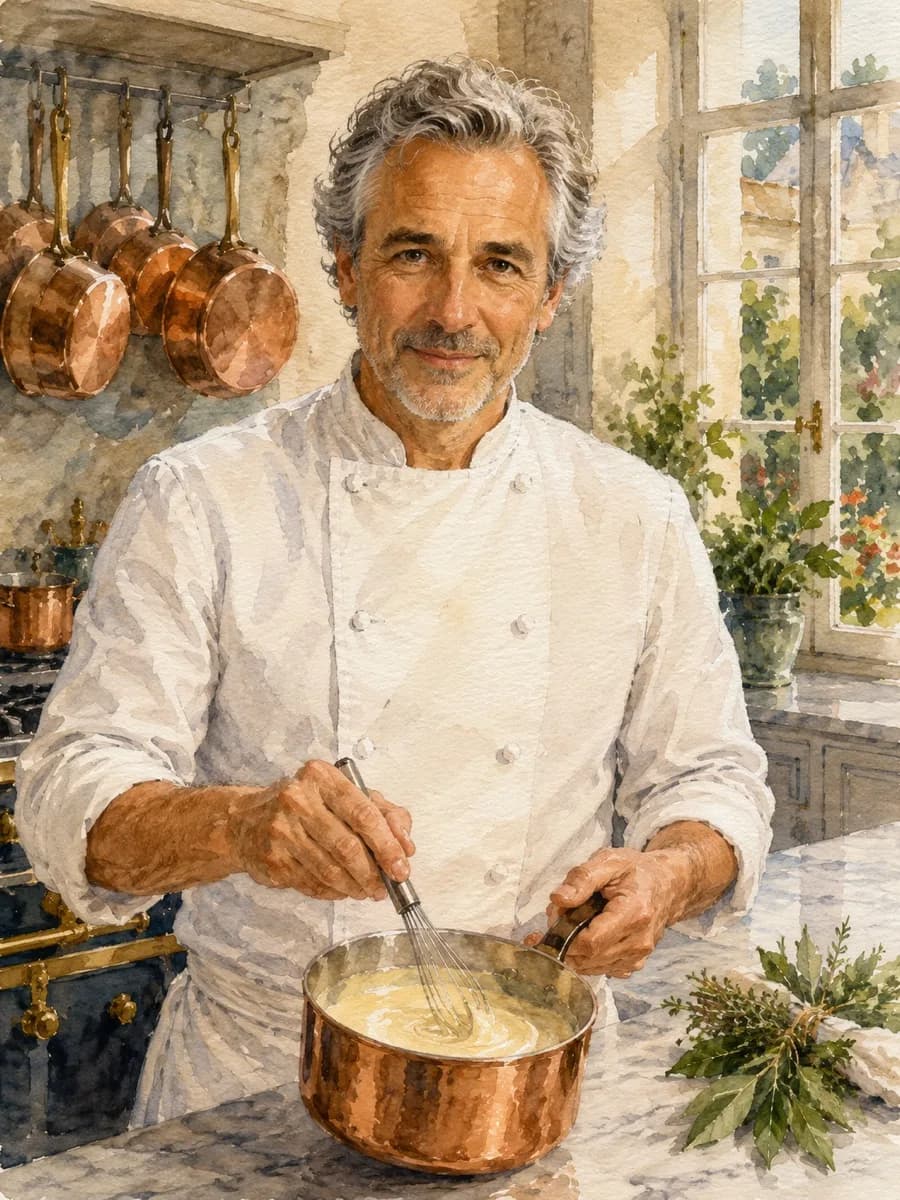
This is the steak I have been making for thirty years, ever since I first tasted it in a tiny bistro off the Place des Terreaux in Lyon. The pepper crust shatters against the tooth, the butter sauce pools like liquid gold around the meat, and the shallots whisper their sweet presence in every bite. This is not restaurant cooking—this is what we eat on Sunday evenings when we want something that feels like a celebration but does not require ceremony.
TagsFrench BistroBeefSteakPan SauceButter RichClassicElegant DinnerPepper Crusted
AllergensMilkMustardSulfites
Source: generated · June 10, 2026