 Mediterranean
Medium · Hot
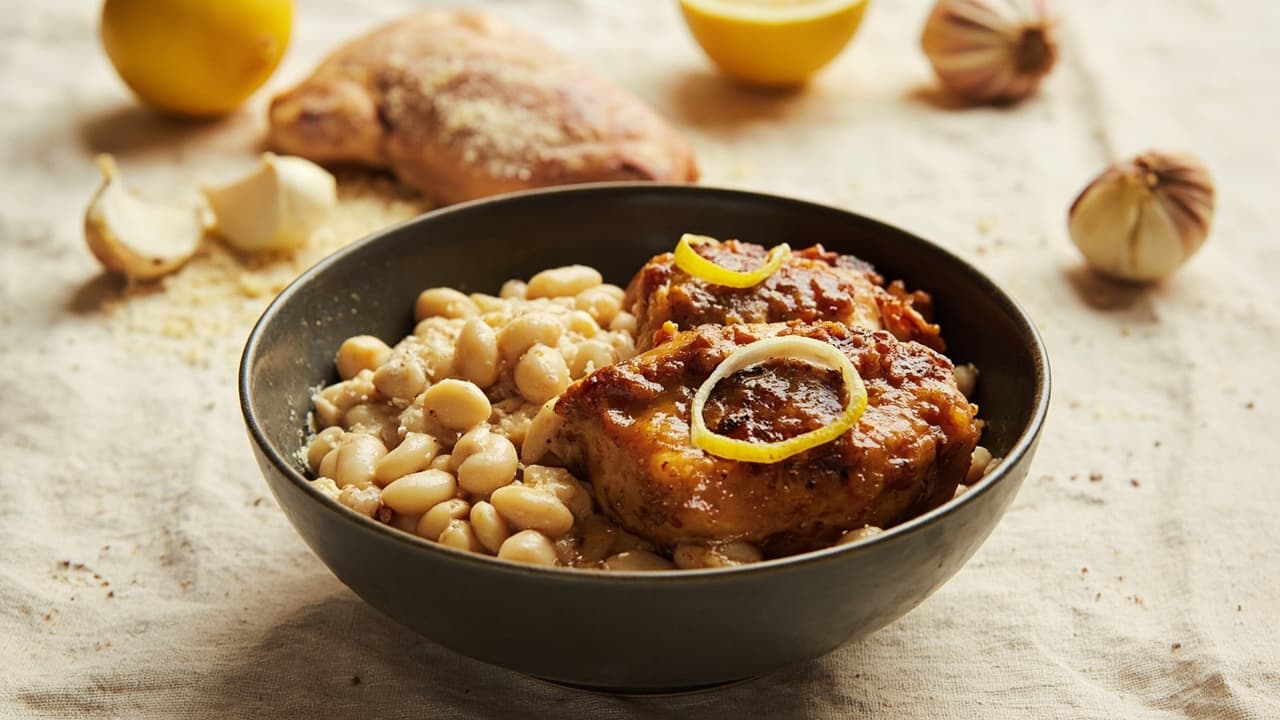
Lemon-Braised Chicken Thighs with White Beans
Tender chicken thighs braised with creamy white beans and bright lemon. Hard-browned skin, deeply reduced braising liquid, no garnish needed.

Prep
15 min
Cook
30 min
Total
45 min
Method
Brown the Chicken
1
Pat chicken thighs dry with paper towels. Season with salt only — nothing else.
2
Heat olive oil in a Dutch oven over medium-high heat until shimmering. Place chicken thighs skin-side down. Do not move them. Press flat with a spatula.
3
Listen for the sizzle to drop in pitch — that's when browning begins. Continue cooking skin-side down for 8-10 minutes until skin is deeply golden and releases cleanly. If it sticks, it isn't ready.
4
Flip chicken, cook bone-side down for 3 minutes. Remove to a plate. Pour off all but 1 tablespoon of fat.
Build the Braise
5
6
Add chicken broth. Scrape the bottom of the pot with a wooden spoon — that fond is flavor. Return chicken thighs skin-side up.
7
Add white beans around the chicken. Add lemon zest from the whole lemon directly over the chicken and beans.
A
Nutri-Score
Excellent balance
A–E · lower is better · score -4
Calories
800
per serving
Calorie-dense · 800 kcalHigh in protein · 64gSource of fibre · 14gLow sugar · 4gLow salt · 316mg
Protein
64g
Carbs
63g
Fat
33g
Sat. fat
11g
Fiber
14g
Sugar
4g
Sodium
316mg
Heart HealthyDiabetes FriendlyLow CarbHigh ProteinBalanced MealMuscle Recovery
Nutri-Score is a general nutritional-balance guide, not medical or dietary advice.
C
Environmental impact
Moderate impact
A–E · lower is better · complete match
kg CO2e
1.6
per serving
CCarbonAEU all-round· carbon sets the grade
Water
0.9m³
Runoff
0.1g P
Chicken Thighs drives 68% of this recipe’s estimated footprint.
Carbon from Poore & Nemecek 2018; water, land & runoff from Agribalyse — modelled averages for comparing recipes, not a measurement of your groceries.
Flavor Profile
8
Umami
3
Sweet
5
Salty
5
Sour
1
Bitter
0
Spicy
Textures
CrispyTenderCreamy
Aromas
SavoryCitrusHerbal
Kitchen Equipment
Primary Tool
Dutch OvenCounter FootprintMedium
Safety & Storage
Cooking Temperature
Chicken thighs must reach 175°F internal temperature as specified in the recipe to ensure safe consumption. Use a calibrated meat thermometer inserted into the thickest part of the thigh away from bone.
Cross Contamination
Raw poultry surfaces and utensils must not contact ready-to-eat foods including Parmesan and finished dish. Sanitize all cutting boards, tongs, and spatulas after contact with raw chicken.
Storage
Refrigerate leftovers in shallow airtight containers within 2 hours of cooking. Consume within 3-4 days. The beans and chicken braise may be frozen for up to 3 months.
Handling
Pat chicken thighs dry before browning as instructed. Moisture prevents skin from browning and creates steam conditions favorable for bacterial growth. Pour off excess rendered fat as directed.
Allergen Warning
This dish contains Parmesan cheese which contains milk. No dairy-free substitutes are specified in the recipe. Alert guests with milk allergies before serving.
High Risk Population
Elderly individuals, pregnant persons, young children, and immunocompromised individuals should verify that chicken reaches safe internal temperature. These populations are more susceptible to foodborne illness from undercooked poultry.
Pro Tips
Technique
Listen for the sizzle to drop in pitch when the skin begins to brown — that's your signal. If the thigh sticks to the pot, it isn't ready. Patience here is the difference between deeply caramelized skin and pale, steamed skin.
Substitution
Chickpeas work in place of white beans. The texture is firmer and the flavor earthier. Reduce the braising time by five minutes since chickpeas hold their shape longer than canned white beans.
Presentation
Grate the parmesan tableside, not in the kitchen. The cheese lands hot off the braise and melts into the sauce. If you grate it early, it clumps and doesn't incorporate properly.
From the chef
This dish exists because someone decided that a list of twenty ingredients means the food will taste like twenty ingredients. It won't. What you get is mud. The five-ingredient philosophy isn't poverty — it's precision. Lemon, beans, chicken, olive oil, a little cheese. That's it. When you brown the skin until it cracks and singes at the edges, when you reduce the braising liquid until it coats the beans like a glossy lacquer, when you squeeze the lemon at the end so the acid hits your tongue at exactly the right moment — that's not simplicity. That's mastery. Anyone can hide behind a long ingredient list. It takes discipline to make five ingredients taste like more.
TagsWeeknight DinnerOne PotComfort FoodBraisedHigh ProteinMediterranean Style
AllergensMilk
Source: generated · June 10, 2026