 Provencal
Medium · Warm
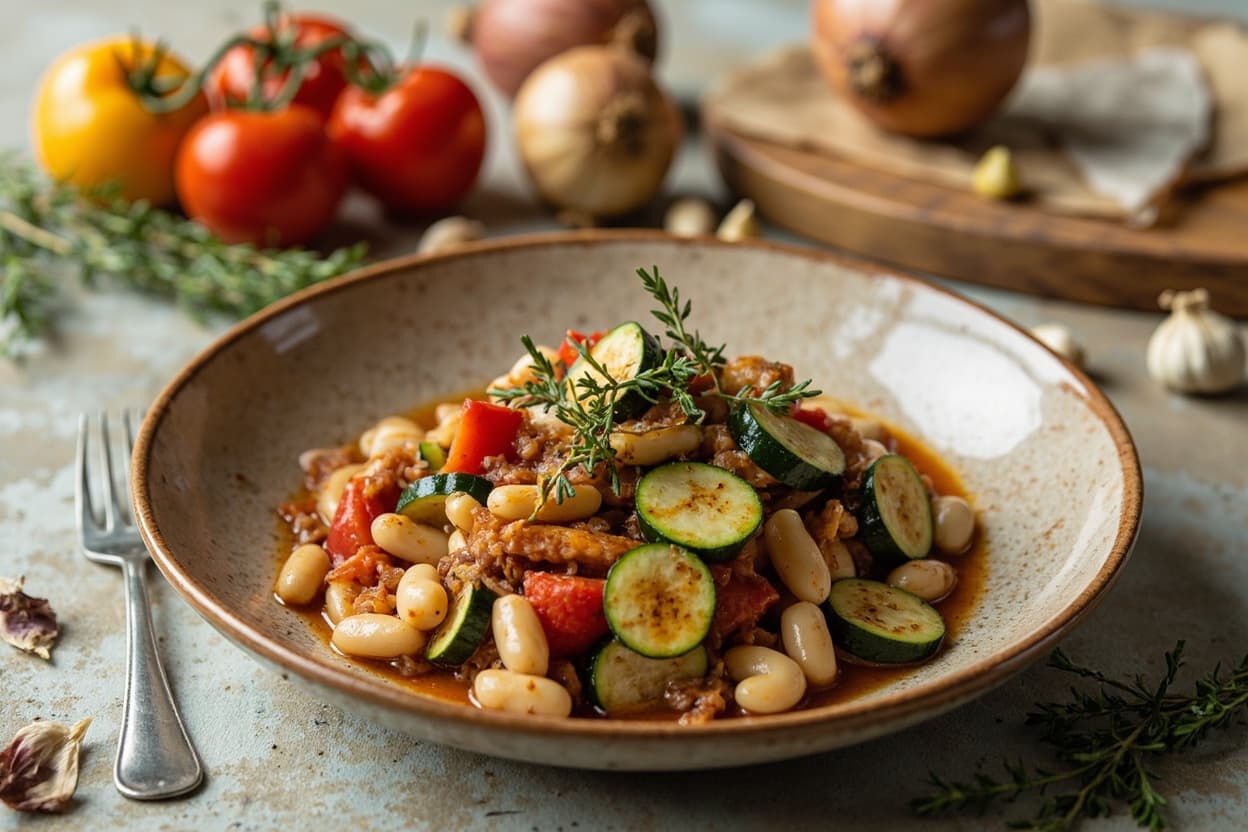
Thyme-Scented White Bean and Zucchini Ragout
White beans cooked low and slow with zucchini, onion, and garlic form a ragout that is thick without being heavy, the tomato lending just enough acidity to keep it honest. Thyme runs through the whole pot, the way it runs through every good Provençal kitchen — quietly, without asking for attention. A bowl of this needs nothing else beside it.

Prep
15 min
Cook
35 min
Total
50 min
Method
Sweat the aromatics
1
Warm the olive oil in a heavy-bottomed Dutch oven over medium-low heat. Add the diced onion and a pinch of salt. Let it sweat gently, stirring occasionally, for 8 to 10 minutes until soft and translucent.
2
Add the minced garlic and cook for another 2 minutes until fragrant but not browned.
Build the ragout
3
4
Add the white beans, thyme sprigs, salt, and black pepper. Pour in just enough water to barely cover everything — about a cup. Stir gently to combine.
Simmer slowly
Finish and serve
6
A
Nutri-Score
Excellent balance
A–E · lower is better · score -9
Calories
492
per serving
High in protein · 27gLow sugar · 8gLow saturated fat · 2g
Protein
27g
Carbs
75g
Fat
12g
Sat. fat
2g
Fiber
11g
Sugar
8g
Sodium
841mg
Gluten FreeDairy FreePlant BasedMediterranean DietHeart HealthyAnti InflammatoryDiabetes FriendlyLow CholesterolHigh FiberHigh ProteinPlant ForwardLow Saturated Fat
Nutri-Score is a general nutritional-balance guide, not medical or dietary advice.
B
Environmental impact
Low impact
A–E · lower is better · includes estimates
kg CO2e
0.5
per serving
BCarbonAEU all-round· carbon sets the grade
Water
0.8m³
Runoff
0.05g P
White beans drives 38% of this recipe’s estimated footprint.
Carbon from Poore & Nemecek 2018; water, land & runoff from Agribalyse — modelled averages for comparing recipes, not a measurement of your groceries.
Flavor Profile
6
Umami
5
Sweet
4
Salty
3
Sour
1
Bitter
1
Spicy
Textures
TenderSilkySoftSaucy
Aromas
HerbalGarlickyEarthyVegetalBright
Kitchen Equipment
Primary Tool
Dutch OvenCounter FootprintMedium
Safety & Storage
Cooking Temperature
The ragout simmers at low heat for 25 to 30 minutes, which is sufficient for safe cooking of vegetables and beans. Ensure the dish reaches a gentle simmer before timing.
Storage
Store leftover ragout in an airtight container in the refrigerator for up to 4 days. Reheat thoroughly before consuming.
Cross Contamination
Use clean utensils and cutting boards when preparing vegetables. Wash hands thoroughly after handling raw vegetables and before handling other foods.
Handling
When squeezing lemon juice, avoid contact with eyes or sensitive skin. Fresh herbs like thyme and basil should be washed thoroughly before use.
Pro Tips
Technique
Be patient with the onions — let them sweat slowly over medium-low heat until they're truly soft and translucent, almost sweet. This long caramelization is where the foundation of flavor lives, and rushing it will leave you with a flat ragout.
When adding the water, err on the side of less rather than more. The ragout should barely be peeking above the vegetables — you want them to braise in their own tasty liquids, not swim. You can always add a splash more if needed.
Substitution
If cannellini beans aren't available, butter beans or even chickpeas work beautifully here. They hold their shape during the slow simmer and drink in all those herbaceous, garlicky juices just as well.
Seasonal
This dish sings brightest from late July through September when zucchini and tomatoes are at their peak. Out-of-season tomatoes will give you hollow, watery results — best to wait until the garden delivers.
From the chef
White beans and zucchini braise together with patience and come out as something entirely their own — thick without being heavy, the tomato lending just enough brightness to keep the earthiness honest. The onion goes in first and sweats low and slow until it is sweet; then comes the garlic, then the vegetables, then the beans, and then you leave them to absorb one another in the covered pot. Thyme runs through the whole thing like a thread. A squeeze of lemon at the end opens it up, torn basil brings it forward, and a generous pour of good olive oil pulls everything into something generous and deeply Provençal. Eat it with bread.
TagsVegetarianVeganPlant BasedOne PotSlow SimmeredBraisedMediterraneanDairy FreeHeart Healthy
Source: generated · May 30, 2026