 Japanese
Medium · Hot
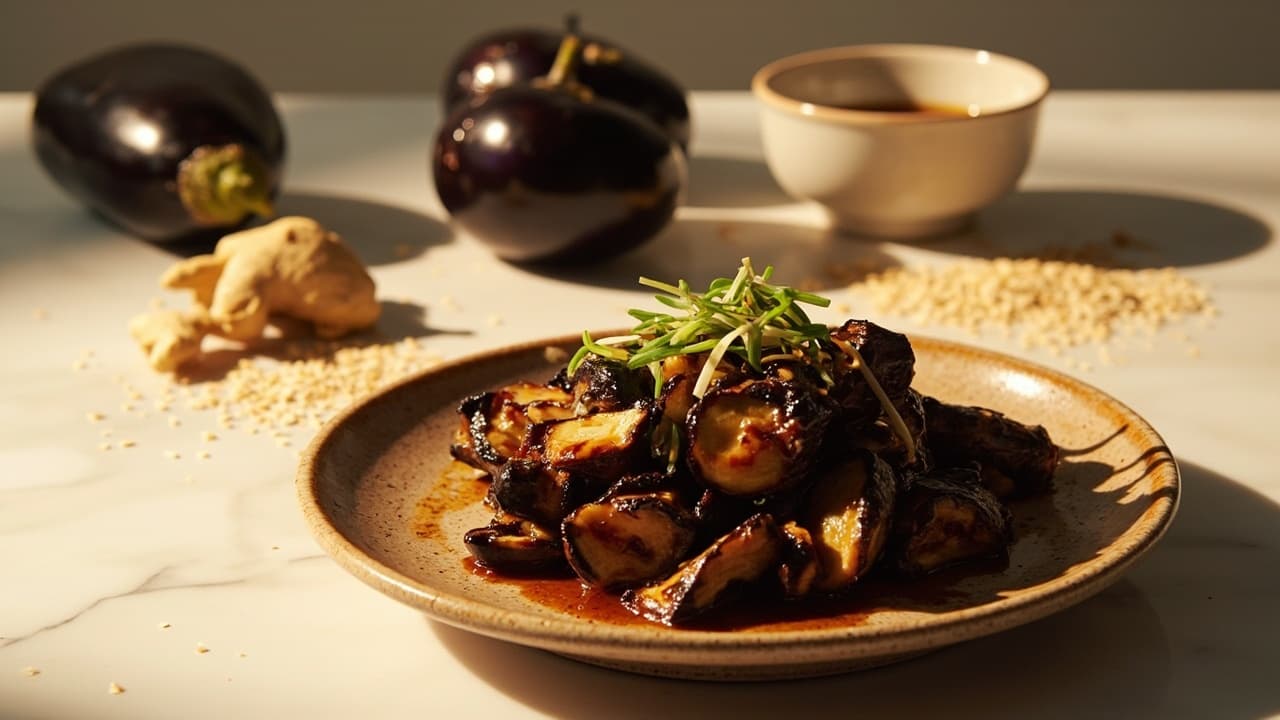
Miso-Glazed Eggplant with Sesame and Ginger
Tender roasted eggplant halves are scored and brushed with a deeply savory glaze, then roasted until caramelized and sticky. A final drizzle of sesame oil and toasted sesame seeds over fresh ginger make this a meditative, umami-rich dish.

Prep
20 min
Cook
35 min
Total
55 min
Method
Prepare the Eggplant
1
Preheat your oven to 200°C (400°F). Line a baking sheet with parchment paper and set it aside.
2
Trim the tops from the eggplants and cut each one in half lengthwise. Score the flesh in a crosshatch pattern, cutting deeply but being careful not to pierce the skin. This crosshatch scores the eggplant deeply so the glaze can seep into every pocket.
3
Place the eggplant halves cut-side up on the prepared baking sheet. Lightly brush the cut surface with sunflower oil and season with a pinch of salt. Let them sit at room temperature while you prepare the glaze, allowing the salt to draw out moisture.
Make the Glaze
4
In a small bowl, combine the soy sauce, sesame oil, honey, grated ginger, and minced garlic. Whisk together until the honey is fully dissolved and the glaze is smooth and fragrant. Taste carefully — it should be deeply savory, slightly sweet, and warmly spiced from the ginger.
Roast the Eggplant
6
Place the baking sheet in the preheated oven and roast at 200°C for 20 minutes. After 20 minutes, carefully pull the sheet out and baste the eggplant generously with the remaining glaze, using a spoon to coat the cuts and edges.
Finish and Plate
8
While the eggplant is still hot from the oven, drizzle the finishing teaspoon of sesame oil over the cut surface so it pools gently into the tender flesh.
9
Scatter the toasted sesame seeds across the top, then finish with the very thinly sliced fresh ginger — its bright, sharp heat cuts through the richness of the glaze beautifully.
10
Serve immediately while hot, allowing the sticky glaze and sesame aroma to fill the room. This dish is wonderful alongside steamed jasmine rice or as part of a larger spread.
A
Nutri-Score
Excellent balance
A–E · lower is better · score -2
Calories
306
per serving
Source of fibre · 5gLow salt · 99mg
Protein
4g
Carbs
22g
Fat
25g
Sat. fat
4g
Fiber
5g
Sugar
11g
Sodium
99mg
Heart HealthyAnti InflammatoryLow Saturated FatWeight ManagementHigh FiberLow Sugar
Nutri-Score is a general nutritional-balance guide, not medical or dietary advice.
A
Environmental impact
Very low impact
A–E · lower is better · includes estimates
kg CO2e
0.3
per serving
ACarbonAEU all-round· both agree
Water
0.3m³
Land
19Pt
Runoff
0.06g P
Eggplant drives 70% of this recipe’s estimated footprint.
Carbon from Poore & Nemecek 2018; water, land & runoff from Agribalyse — modelled averages for comparing recipes, not a measurement of your groceries.
Flavor Profile
7
Umami
4
Sweet
6
Salty
1
Sour
2
Bitter
5
Spicy
Textures
TenderCaramelizedSticky
Aromas
ToastedSmokyEarthy
Kitchen Equipment
Primary Tool
OvenCounter FootprintSmall
Safety & Storage
Allergen Warning
This dish contains soy (soy sauce), sesame (sesame oil and seeds), and gluten (soy sauce). Verify all ingredients are certified allergen-free for severe allergies.
Handling
Use oven mitts when handling the hot baking sheet at 200°C. Score eggplant halves carefully with a sharp knife, cutting deeply but protecting hands from slippage.
Cross Contamination
Prevent cross-contact with tree nuts, peanuts, or other allergens. Clean all utensils and surfaces that contact the sesame seeds and glaze.
Storage
Serve immediately while hot. Leftovers must be refrigerated within 2 hours in an airtight container and consumed within 2-3 days. Reheat to 75°C before serving.
Shelf Life
The reserved glaze contains raw garlic in oil, which should not sit at room temperature for more than 2 hours. Refrigerate immediately if preparing ahead.
High Risk Population
Young children, elderly individuals, and immunocompromised persons should consume only thoroughly reheated portions. The caramelized glaze edges may be challenging for some to digest.
Pro Tips
Technique
Resist the urge to skip the second glazing. Applying the reserved miso glaze halfway through roasting creates layers of caramelization that would be impossible with a single application. The second coat is what transforms the eggplant into something truly lacquered and glistening.
Substitution
If white miso is unavailable, use red miso but reduce the quantity by half and add a touch more honey to balance the stronger, saltier fermented flavor. The character will shift from delicate to bold, but the technique remains the same.
From the chef
There is something deeply meditative about scoring eggplant in a crosshatch pattern — each cut a small commitment to patience, each line a vessel waiting to be filled with flavor. As the miso glaze caramelizes under high heat, the kitchen fills with an aroma that is equal parts savory and sweet, and the thin-sliced ginger added at the end provides that necessary brightness that makes everything sing. This is a dish that reminds us that good food cannot be rushed, only witnessed.
TagsMiso GlazedRoastedEggplantUmami RichVeganGluten Free Adaptable
AllergensSoySesameGluten
Source: generated · June 10, 2026