 Lebanese
Medium · Hot
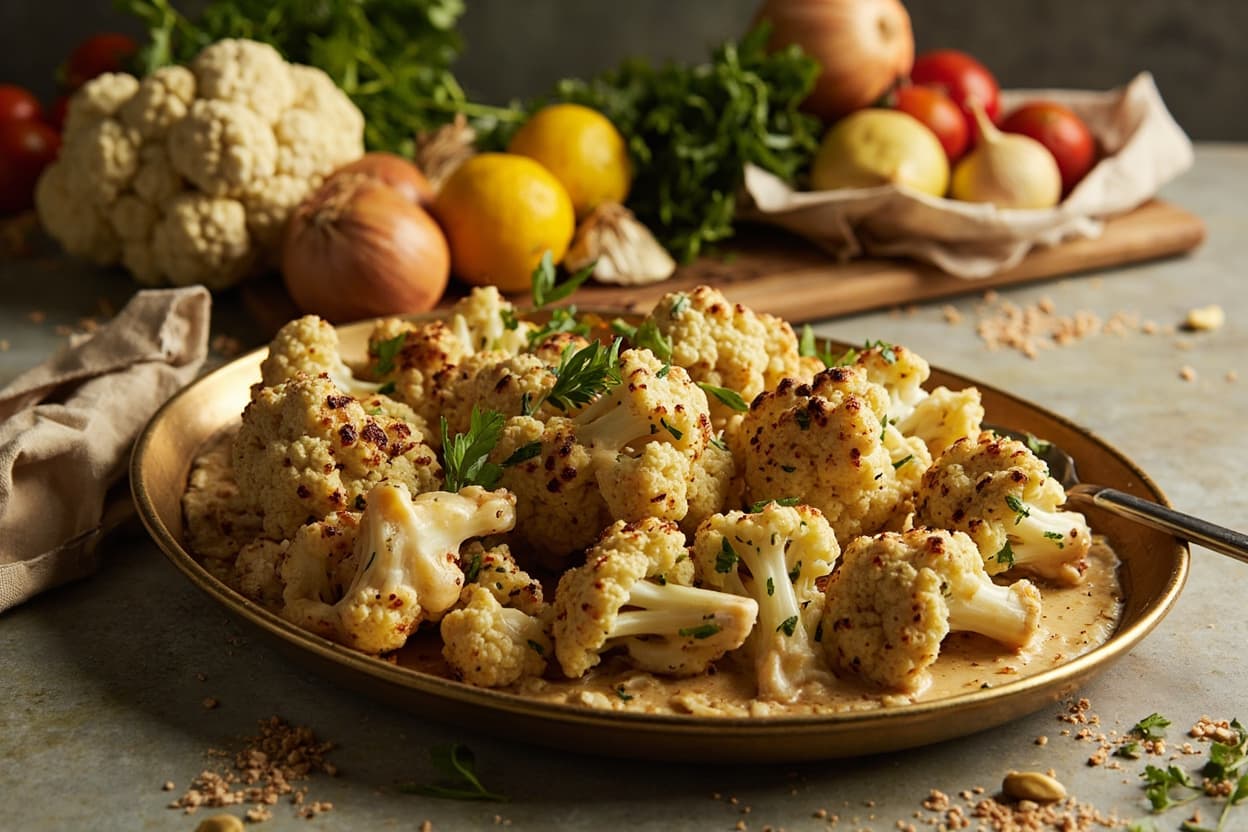
Roasted Cauliflower Drenched in Tahini
Cauliflower roasted until deeply golden and caramelized at the edges becomes something almost unrecognizable — nutty, sweet, with a slight chew that holds up beautifully beneath a tahini sauce thinned with lemon and drizzled without restraint. Parsley and olive oil finish the plate, adding color and a grassy richness that keeps the dish from feeling heavy. This is the vegetable preparation that changes minds.

Prep
15 min
Cook
30 min
Total
45 min
Method
Prepare and Roast Cauliflower
1
Preheat your oven to 425°F (220°C). Line a baking sheet with parchment paper.
2
Cut the cauliflower into bite-sized florets, discarding the core and tough stem pieces.
3
In a large bowl, toss the cauliflower florets with olive oil, salt, cumin, and paprika until evenly coated.
4
Spread the florets in a single layer on the prepared baking sheet, ensuring they have space to roast rather than steam.
5
Roast for 25-30 minutes, turning halfway through, until the cauliflower is deeply golden and caramelized at the edges.
Prepare Tahini Sauce
6
While the cauliflower roasts, prepare the tahini sauce. Using a mortar and pestle, finely crush the garlic cloves with a pinch of salt into a paste.
7
8
The sauce will thicken initially — continue whisking until it reaches a smooth, pourable consistency. It should coat the back of a spoon.
Assemble and Serve
9
Transfer the roasted cauliflower to a serving platter or shallow bowl.
10
Drizzle the tahini sauce generously over the hot cauliflower, allowing it to pool and seep into the crevices.
12
Serve immediately while warm, accompanied by warm pita bread for scooping.
C
Nutri-Score
Fair balance
A–E · lower is better · score 5
Calories
122
per serving
High in salt · 773mgLow sugar · 2g
Protein
2g
Carbs
8g
Fat
11g
Sat. fat
2g
Fiber
3g
Sugar
2g
Sodium
773mg
Gluten FreeDairy FreeVeganMediterraneanHeart HealthyAnti InflammatoryWeight ManagementHealthy Fats
Nutri-Score is a general nutritional-balance guide, not medical or dietary advice.
A
Environmental impact
Very low impact
A–E · lower is better · includes estimates
kg CO2e
0.2
per serving
ACarbonAEU all-round· both agree
Water
0.9m³
Land
15Pt
Runoff
0.03g P
Cauliflower drives 43% of this recipe’s estimated footprint.
Carbon from Poore & Nemecek 2018; water, land & runoff from Agribalyse — modelled averages for comparing recipes, not a measurement of your groceries.
Flavor Profile
7
Umami
4
Sweet
5
Salty
6
Sour
2
Bitter
3
Spicy
Textures
CrispyTenderSilky
Aromas
NuttyHerbalSmokyPungent
Kitchen Equipment
Primary Tool
Baking SheetCounter FootprintSmall
Safety & Storage
Cooking Temperature
Preheat oven to 425°F (220°C). Cauliflower must reach minimum 425°F for proper caramelization and to achieve the Maillard reaction for texture and flavor.
Cross Contamination
Use separate cutting boards for raw garlic and cauliflower. Wash all utensils that contact raw ingredients before use with prepared sauce.
Storage
Store roasted cauliflower separately from tahini sauce. Cauliflower keeps 3-4 days refrigerated in airtight container. Tahini sauce keeps 5-7 days refrigerated — separation is normal; whisk before reuse.
Handling
Let garlic paste rest with salt for 2-3 minutes before adding to tahini to develop flavor compounds properly. Sauce will initially thicken when lemon juice is added — continue whisking until smooth and pourable.
High Risk Population
This dish contains sesame. Individuals with sesame allergies must avoid entirely. Cauliflower is generally safe for most dietary restrictions including low-FODMAP diets in controlled portions.
Pro Tips
Technique
The secret to achieving those deep caramelized edges is giving each floret space on the pan—overcrowding creates steam instead of that beautiful crispy char we love. Roast in batches if needed.
Flavor Boost
Finish with a drizzle of pomegranate molasses for a touch of sweetness that cuts through the nutty tahini—this is my signature touch that transforms the dish into something memorable.
From the chef
This dish is pure mezze magic—the way cauliflower transforms in the oven, turning golden and caramelized while that silky tahini pools around the florets like liquid gold. In Beirut, we called this the quiet star of any spread, the dish everyone reaches for first but few can replicate at home. Now you can.
TagsVegetarianVeganGluten FreeRoastedTahiniLebaneseMiddle EasternCauliflowerHerbaceous
AllergensSesame
Source: generated · May 30, 2026