 Basque
Medium · Hot
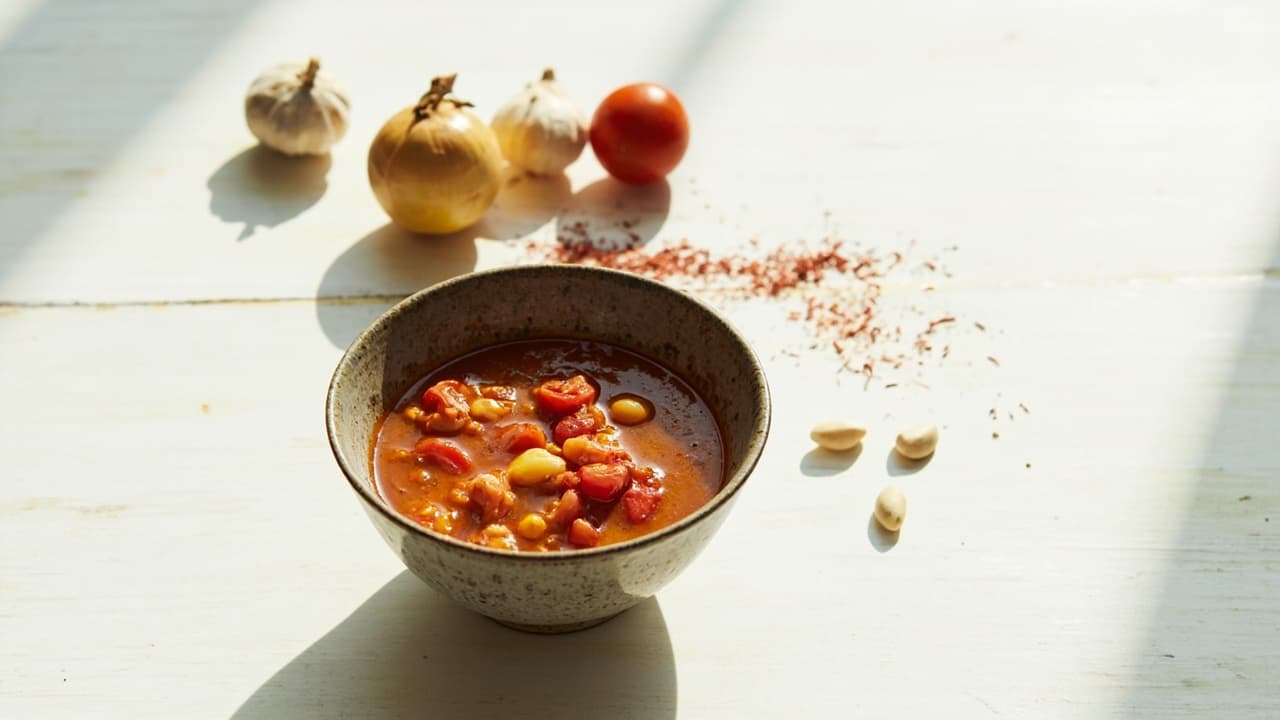
Basque Tomato and White Bean with Saffron
A rustic Basque stew where tomato and white beans build a rich, saffron-scented broth. Hard-browned onions, concentrated tomato, and properly hydrated saffron — nothing extra, nothing hidden.

Prep
10 min
Cook
50 min
Rest
5 min
Total
1h 5m
Method
1
Bloom the saffron in 60ml warm water for 10 minutes. Do not skip this.
2
Add minced garlic. Cook 2 minutes until fragrant.
3
Bring to a vigorous simmer, then reduce to steady simmer. Cook uncovered 25 minutes until beans are tender and broth has reduced by one third.
4
Remove from heat. Let rest 5 minutes for flavors to settle.
A
Nutri-Score
Excellent balance
A–E · lower is better · score -10
Calories
529
per serving
Source of protein · 26gLow sugar · 9gLow saturated fat · 2g
Protein
26g
Carbs
77g
Fat
15g
Sat. fat
2g
Fiber
10g
Sugar
9g
Sodium
621mg
Gluten FreeDairy FreeVeganMediterraneanLow CholesterolHeart HealthyDiabetes FriendlyAnti InflammatoryDigestive HealthLow Sodium AdaptableHigh ProteinHigh FiberPlant ForwardWhole FoodsMediterranean Diet
Nutri-Score is a general nutritional-balance guide, not medical or dietary advice.
B
Environmental impact
Low impact
A–E · lower is better · includes estimates
kg CO2e
0.7
per serving
BCarbonAEU all-round· carbon sets the grade
Water
0.6m³
Runoff
0.05g P
whole tomatoes drives 59% of this recipe’s estimated footprint.
Carbon from Poore & Nemecek 2018; water, land & runoff from Agribalyse — modelled averages for comparing recipes, not a measurement of your groceries.
Flavor Profile
7
Umami
4
Sweet
5
Salty
3
Sour
1
Bitter
2
Spicy
Textures
TenderSilkySaucy
Aromas
FloralSavoryEarthy
Safety & Storage
Cooking Temperature
Maintain steady simmer during the 25-minute braise. Beans must reach tender consistency — undercooked beans pose digestive risk.
Handling
Bloom saffron properly in 60ml warm water for full 10 minutes before adding. Insufficient hydration results in bitter flavor and incomplete saffron release.
Cross Contamination
If preparing on shared equipment, ensure thorough cleaning. While no allergens present, cross-contact risk exists in multi-use kitchens.
Storage
Refrigerate leftovers within 2 hours in airtight container. Consume within 3-4 days. Reheat to 165°F throughout before serving.
Shelf Life
Prepared dish maintains quality for up to 4 days refrigerated. Saffron flavor intensifies slightly overnight but beans may begin to soften.
Pro Tips
Technique
The onions must brown hard. Not soft, not golden—deep mahogany brown. This is not optional. The sweetness of properly caramelized onion is what holds this dish together, and if you rush them, you will taste the compromise in every bite.
Bloom the saffron in warm water for at least 10 minutes. Do not skip this and do not use cold water. The heat releases the pigments and the aroma. Cold saffron threads are a waste of money.
Substitution
If you cannot find good saffron, do not substitute with turmeric or saffron extract. Use smoked paprika instead—it will give you a different dish, but a respectable one. A lie is never respectable.
Batch Cooking
This dish improves overnight. Make a double batch on Sunday. By Tuesday, the beans have absorbed the broth and the flavors have settled into something that tastes like it came from a Basque grandmother's kitchen.
From the chef
Basque country taught me something important: restraint is not weakness, it is precision. The onions brown until they are almost burned, but not quite—that caramelization is not decoration, it is the foundation. The saffron blooms in warm water because patience is not optional. The tomatoes reduce until they are dense and unapologetic, the beans absorb every drop of that saffron-scented broth, and what emerges is something that tastes like it took all day, even though the actual labor is forty minutes of your attention. This is not a simple recipe. This is a disciplined recipe. There is a difference.
TagsRusticOne PotSaffronMediterraneanHeartyTraditional
Source: generated · June 10, 2026