 Spanish
Medium · Hot
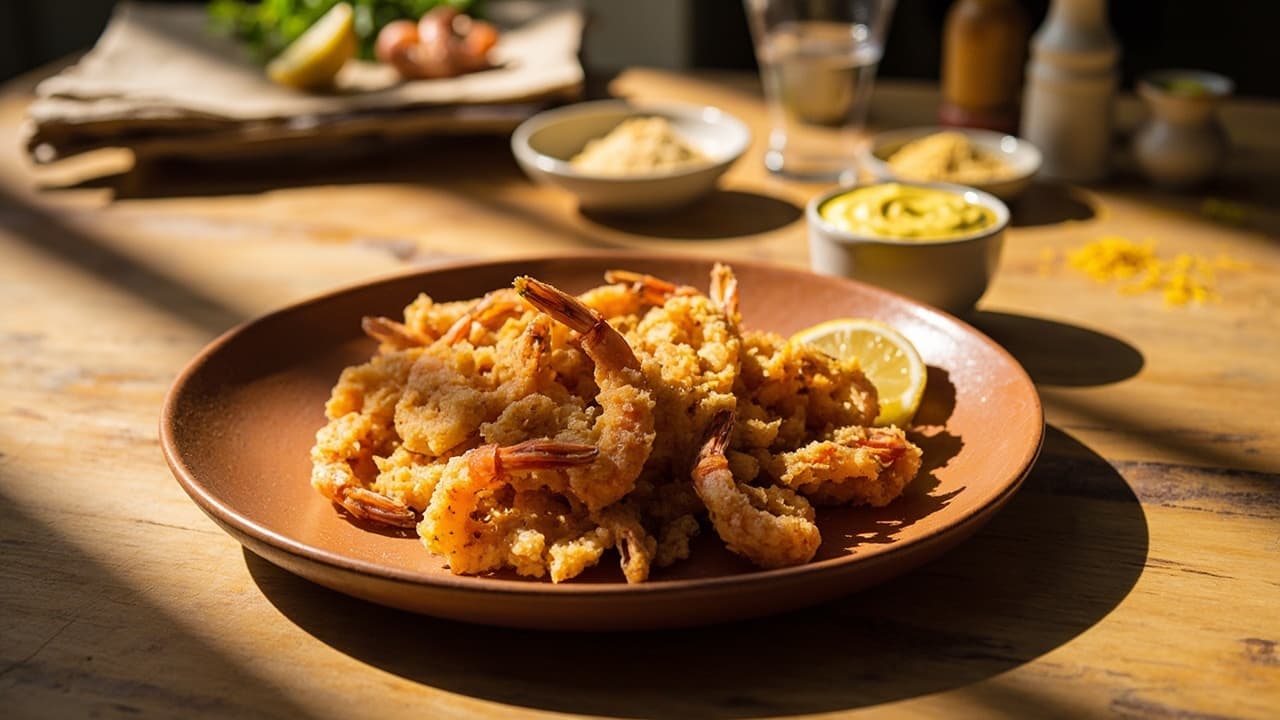
Crispy Shrimp Tapa with Almond Flour and Saffron
Golden shrimp with a nutty almond-saffron crust, served alongside a bright saffron-lemon aioli. The crust shatters to reveal plump, briny shrimp inside.
Prep
25 min
Cook
15 min
Total
40 min
Method
1
Pat the shrimp completely dry with paper towels — moisture is the enemy of a shattering crust. Season evenly with salt and black pepper, then set aside at room temperature while you prepare the coating.
2
Combine the 1 tsp saffron threads with 2 tbsp warm water in a small bowl. Let steep 10 minutes until the water turns a deep amber-gold. This blooms the saffron and develops its flavor fully.
3
In a wide, shallow dish, mix the almond flour with the bloomed saffron (water and all), minced garlic, and parsley. Stir until evenly combined — the saffron will stain the mixture a warm gold. Set aside.
4
Combine the remaining 0.5 tsp saffron threads with 1 tbsp warm water and let bloom 5 minutes. In a bowl, whisk together the bloomed saffron, lemon juice, and garlic. Slowly stream in the olive oil while whisking vigorously to emulsify into a thick, golden aioli. Season with salt. Cover and refrigerate until serving.
5
6
7
8
Transfer fried shrimp to a wire rack or paper towel-lined plate. Season immediately with a small pinch of salt.
C
Nutri-Score
Fair balance
A–E · lower is better · score 8
Calories
1098
per serving
Calorie-dense · 1098 kcalSource of protein · 44gSource of fibre · 10gLow sugar · 3g
Protein
44g
Carbs
19g
Fat
99g
Sat. fat
13g
Fiber
10g
Sugar
3g
Sodium
1273mg
Dairy FreeGluten FreeKeto FriendlyLow CarbDiabetesHeart HealthyWeight ManagementHigh ProteinOmega 3 Rich
Nutri-Score is a general nutritional-balance guide, not medical or dietary advice.
E
Environmental impact
Very high impact
A–E · lower is better · includes estimates
kg CO2e
3.8
per serving
ECarbonBEU all-round· carbon sets the grade
Water
25m³
Land
86Pt
Runoff
1.1g P
Large shrimp, peeled and deveined drives 89% of this recipe’s estimated footprint.
Carbon from Poore & Nemecek 2018; water, land & runoff from Agribalyse — modelled averages for comparing recipes, not a measurement of your groceries.
Flavor Profile
7
Umami
3
Sweet
5
Salty
4
Sour
2
Bitter
3
Spicy
Textures
CreamyCrispyTender
Aromas
CitrusFloralHerbalNutty
Kitchen Equipment
Techniques
Safety & Storage
Cooking Temperature
Maintain consistent medium-high heat during frying. Oil must shimmer and accept a water drop with immediate sizzle before adding shrimp. Shrimp must reach 63°C (145°F) internally at the thickest point. Use a calibrated probe thermometer — do not rely on visual cues alone. Oil temperature will drop when cold shrimp are added; monitor and adjust heat between batches.
Cross Contamination
Designate separate utensils and surfaces for raw shrimp handling. After patting shrimp dry and seasoning, wash hands thoroughly before touching the almond-saffron coating. Never place cooked shrimp on surfaces that held raw shrimp without sanitizing first. The almond flour coating should be used only for this batch.
High Risk Population
Shellfish is a high-risk food for pregnant women, young children, elderly individuals, and immunocompromised persons. All shellfish must be fully cooked to internal temperature. Pregnant women should avoid raw or undercooked seafood entirely. Individuals with compromised immune systems should consult healthcare provider regarding shellfish consumption.
Handling
Pat shrimp completely dry before seasoning and coating — moisture is the enemy of crust adhesion and browning. Allow coated shrimp to rest 5 minutes so the coating adheres properly before frying. This prevents coating from sloughing off during cooking. Work in single layers; crowding the pan drops oil temperature and creates steam, resulting in soggy rather than crispy coating.
Storage
Serve immediately while coating is crisp. If storing leftover fried shrimp, cool rapidly on a wire rack (not stacked), then refrigerate at 4°C (40°F) or below within 2 hours. Reheat in a 200°C (400°F) oven for 10-12 minutes to restore crispness — microwave will make coating soggy. Store saffron aioli separately, refrigerated, for up to 24 hours.
Allergen Warning
This dish contains shrimp (shellfish) and almond flour (tree nuts). Read all ingredient labels for hidden allergens. Saffron threads themselves are allergen-free, but verify that saffron is not processed in facilities handling tree nuts or shellfish. When serving to guests with known food allergies, communicate allergen information clearly and use dedicated serving utensils.
Pro Tips
Technique
The secret to that shattering crust lies in one step most home cooks skip: patting the shrimp completely dry before you touch the coating. Any moisture on the surface will steam instead of sear, leaving you with a soft, pasty crust rather than that golden crunch you want. After coating, let them rest five minutes on the plate—this allows the almond flour to hydrate slightly and adhere properly, so nothing slides off when you flip them in the pan.
Substitution
If almonds are not in your pantry today, you can substitute the almond flour with fine breadcrumbs mixed with a tablespoon of grated Manchego cheese—the cheese adds a similar nutty depth while keeping the crust light and golden.
From the chef
The almond flour crust on these shrimp shatters in a way breadcrumbs never quite do — drier, nuttier, and stained a deep gold by saffron threads bloomed in warm water and folded directly into the coating. The shrimp inside stay plump and briny, which is the whole point: the crust exists to honor what it protects. A saffron-lemon aioli alongside adds clean acidity. Cook them in a steady medium-high pan, not a screaming-hot one — the goal is an even, dark gold crust without any rubbery interior. Eat immediately while the crust still has its voice.
TagsCrispySeafoodGluten FreeSaffronPan FriedMediterraneanTapaAlmond FlourQuick
AllergensShellfishTree Nuts
Source: generated · June 13, 2026