 British
Medium · Warm
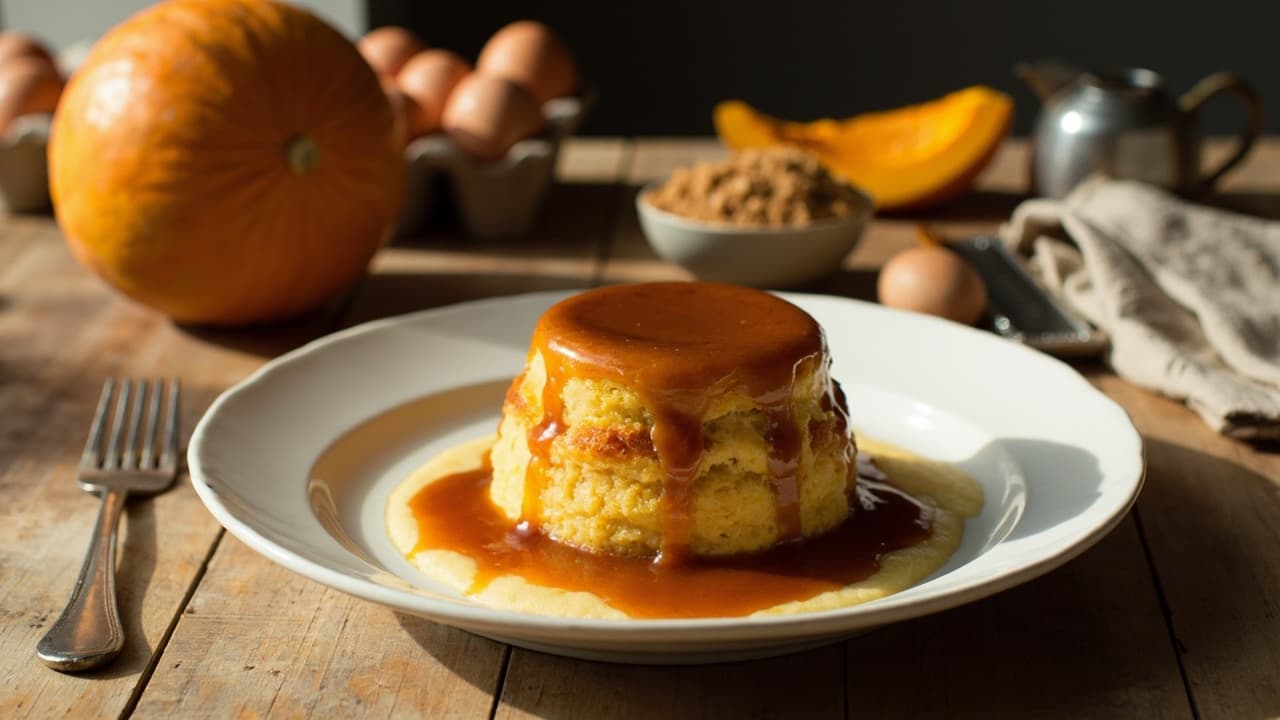
Steamed Butternut-Squash Sponge with Brown Sugar and Nutmeg
A tender, golden steamed sponge made with silky butternut-squash puree, dark brown sugar, and a whisper of nutmeg — evocative of proper British pudding tradition, best served warm with thick custard.

Prep
20 min
Cook
30 min
Total
50 min
Method
1
Peel and cube the butternut squash into 2cm pieces. Place in a steamer basket over simmering water and steam for 12-15 minutes until completely tender when pierced with a knife.
2
Transfer the steamed squash to a bowl and mash thoroughly with a fork until smooth. Allow to cool to room temperature — this puree should be lump-free before folding into the batter.
3
In a large bowl, cream the softened butter and brown sugar together with a wooden spoon or electric mixer for 3-4 minutes until pale, light, and noticeably increased in volume.
4
Beat in the eggs one at a time, ensuring each is fully incorporated before adding the next. The mixture may look slightly curdled — this is perfectly normal and will come together once the flour is added.
5
Sift the all-purpose flour, baking powder, and nutmeg together over the egg mixture. Fold gently with a spatula until just combined — do not overwork or the sponge will be tough.
6
Fold in the cooled butternut-squash puree until evenly distributed throughout the batter. The mixture should be thick and smooth.
7
Generously butter a 1-litre pudding basin or heatproof bowl. Pour the sponge batter in and tap gently on the counter to release any air pockets. Cover tightly with a double layer of pleated baking parchment or a pudding cloth secured with string.
8
9
10
Allow the sponge to rest in the basin for 5 minutes only — just long enough to firm up slightly. Run a knife around the edge, place a warm serving plate over the top, and invert in one confident motion.
11
Serve immediately while the sponge is still warm and fragrant, with proper vanilla custard poured over, if you like. A dusting of extra brown sugar is a lovely finishing touch.
D
Nutri-Score
Needs balance
A–E · lower is better · score 15
Calories
578
per serving
High in saturated fat · 18gHigh in sugar · 53gCalorie-dense · 578 kcal
Protein
8g
Carbs
88g
Fat
23g
Sat. fat
18g
Fiber
5g
Sugar
53g
Sodium
313mg
VegetarianDiabetesObesity ManagementComfort FoodTraditional Baking
Nutri-Score is a general nutritional-balance guide, not medical or dietary advice.
B
Environmental impact
Low impact
A–E · lower is better · includes estimates
kg CO2e
0.6
per serving
BCarbonAEU all-round· carbon sets the grade
Water
0.4m³
Land
23Pt
Runoff
0.06g P
Butter drives 37% of this recipe’s estimated footprint.
Carbon from Poore & Nemecek 2018; water, land & runoff from Agribalyse — modelled averages for comparing recipes, not a measurement of your groceries.
Flavor Profile
4
Umami
8
Sweet
2
Salty
1
Sour
2
Bitter
4
Spicy
Textures
MoistSoftSpongyTender
Aromas
EarthySpicySweetWarm
Kitchen Equipment
Primary Tool
Large PotPotSteamerBamboo SkewerChef KnifeCutting BoardFine Mesh SieveHand MixerMixing BowlsOven GlovesPastry BrushRubber SpatulaServing PlateWooden SpoonPudding Cloth Optional
Safety & Storage
Cooking Temperature
Steam pudding at a vigorous boil for the full 25-30 minutes. The skewer test must show the centre is fully cooked - if batter clings, return to steamer for additional 5-minute intervals until clean.
High Risk Population
Eggs are fully cooked during the steaming process which eliminates Salmonella risk for the general population. However, immunocompromised individuals, pregnant women, young children, and elderly persons should ensure eggs reach 160°F (71°C) at the centre - verify with a calibrated thermometer if serving to these groups.
Handling
Use oven gloves when removing the hot basin from the pot. The basin, water, and surrounding steam cause significant burn risk. Allow to rest only 5 minutes before unmoulding - this brief rest allows the sponge to firm slightly for clean inversion.
Equipment Safety
Pierce the sponge centre with a skewer to test doneness - use a heat-resistant skewer and allow the sponge to cool briefly before testing to avoid steam burns. When inverting onto the serving plate, ensure the plate is stable and make the flip motion in one confident motion away from yourself.
Cross Contamination
Thoroughly butter the 1-litre basin before adding batter to prevent sticking. Ensure all utensils used for raw egg incorporation are cleaned before contact with other ingredients. Do not reuse the steamer water for other cooking applications.
Storage
Steamed sponge is best consumed immediately while warm. If storing, cool completely on a wire rack within 2 hours, wrap tightly in cling film, and refrigerate for up to 2 days. Reheat by steaming briefly before serving to restore texture.
Allergen Warning
This recipe contains eggs, wheat (gluten), and milk products. Always inform guests of allergen contents before serving. When serving with custard as suggested, verify the custard is free from additional allergens such as tree-nuts or soy.
Pro Tips
Technique
When folding the cooled squash puree into your batter, treat it as you would a meringue — gentle, patient strokes, and stop the moment it's incorporated. The squash is wet enough without our help to deflate all that lovely air you've worked so hard to create.
Substitution
Should butternut squash be unavailable, a dense orange-fleshed sweet potato makes an admirable stand-in. Steam it precisely as you would the squash, and do resist the temptation to add it while still hot — warmth will make the butter in your batter seize up.
Equipment
A proper pudding basin is worth tracking down at any charity shop. The sloping sides and tight-fitting lid ensure steam circulates evenly, and there's simply no substitute for that satisfying un-moulding moment when the sponge slides free onto your plate.
From the chef
Butternut squash brings something genuinely lovely to a steamed sponge — a silky, yielding crumb that no amount of plain flour and egg alone can quite achieve, and a natural sweetness that pairs beautifully with dark brown sugar and a careful hand with nutmeg. The steaming is everything here: cover the basin tightly, keep the simmer steady, and resist lifting the lid. When you invert it onto a warm plate and it holds its shape cleanly, that is the reward. Serve it immediately with proper vanilla custard poured over, and a dusting of brown sugar if you like things properly dressed.
TagsTraditional
AllergensEggsWheatMilk
Source: generated · June 13, 2026