 Korean
Easy · Hot
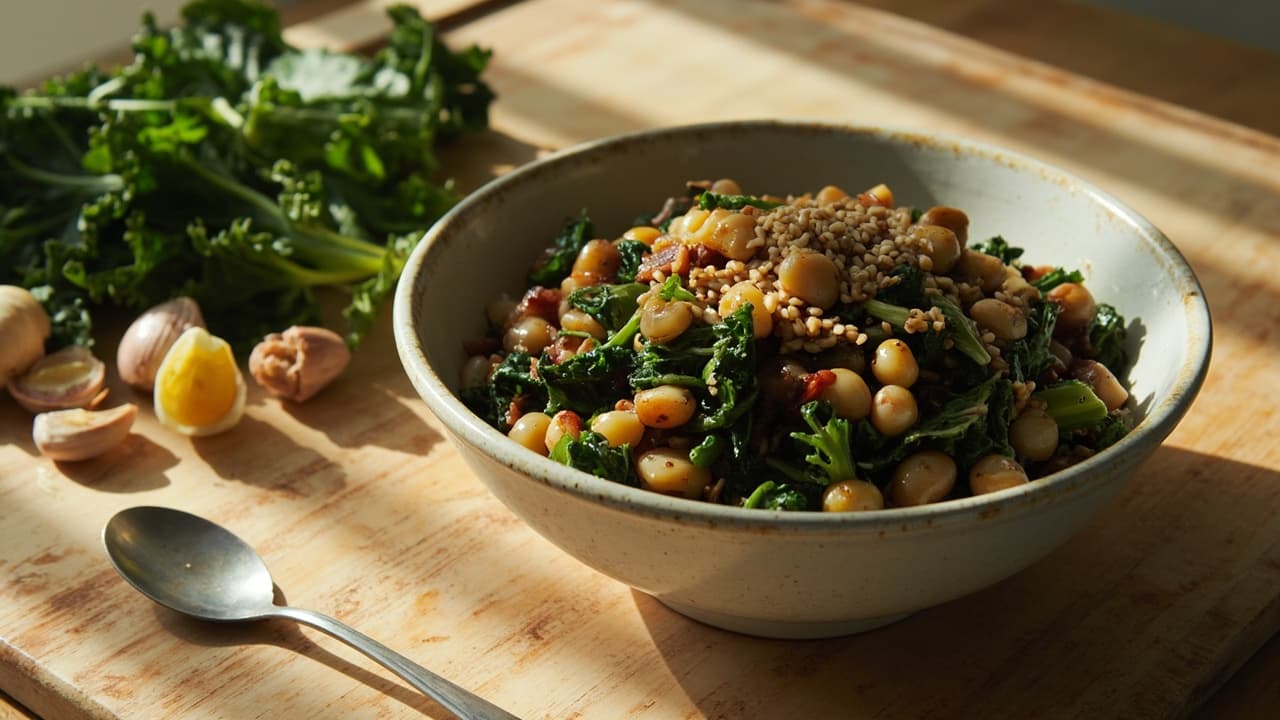
Soybean and Kale Stir-Fry with Sesame
A hearty Korean-inspired stir-fry combining protein-rich soybeans with tender kale, finished with toasted sesame seeds and aromatic sesame oil for a weeknight-friendly banchan-style dish.

Prep
15 min
Cook
15 min
Total
30 min
Method
Preparation
1
Remove kale stems and chop leaves into bite-sized pieces. Wash thoroughly and drain well.
2
If using frozen soybeans or edamame, thaw according to package directions. If using dried soybeans, cook until tender and drain.
3
Thinly slice the yellow onion. Mince the garlic cloves. Grate or finely mince the fresh ginger.
Stir-Fry
4
Heat 1 tablespoon sesame oil in a large frying pan or wok over medium-high heat.
Seasoning and Finishing
8
Drizzle soy sauce over the vegetables. Add cayenne pepper, salt, and black pepper. Toss to coat evenly.
9
Drizzle remaining 1 tablespoon sesame oil over the top. Toss to combine and add a glossy finish.
10
Remove from heat and sprinkle sesame seeds generously over the stir-fry. Toss once more before serving.
A
Nutri-Score
Excellent balance
A–E · lower is better · score -12
Calories
451
per serving
High in protein · 31gHigh in fibre · 16gLow sugar · 6gLow saturated fat · 2g
Protein
31g
Carbs
34g
Fat
23g
Sat. fat
2g
Fiber
16g
Sugar
6g
Sodium
319mg
VeganVegetarianGluten FreeDairy FreeWhole FoodLow CarbPaleoKeto FriendlyHeart HealthyAnti InflammatoryDiabetes FriendlyBone HealthImmune SupportHigh ProteinLow SugarHigh FiberPlant Based
Nutri-Score is a general nutritional-balance guide, not medical or dietary advice.
A
Environmental impact
Very low impact
A–E · lower is better · includes estimates
kg CO2e
0.2
per serving
ACarbonAEU all-round· both agree
Water
0.05m³
Runoff
0.03g P
Soybeans (shelled, cooked or frozen edamame) drives 61% of this recipe’s estimated footprint.
Carbon from Poore & Nemecek 2018; water, land & runoff from Agribalyse — modelled averages for comparing recipes, not a measurement of your groceries.
Flavor Profile
7
Umami
3
Sweet
6
Salty
1
Sour
2
Bitter
4
Spicy
Textures
Crisp TenderFirmNutty
Aromas
SesameGarlicGingerHerbalSavory
Kitchen Equipment
Primary Tool
WokWokFrying PanChef KnifeCutting BoardMeasuring SpoonsMeasuring CupsTongsGarlic PressGraterServing Plate
Counter FootprintMedium
Techniques
Safety & Storage
Allergen Warning
Contains soy and sesame - both are major allergens. For individuals with severe allergies, avoid this dish entirely and ensure no cross-contact occurs during preparation.
High Risk Population
Young children, elderly individuals, and immunocompromised persons should consume only properly cooked soybeans. Raw or undercooked soybeans may contain anti-nutritional factors.
Cross Contamination
If preparing this dish alongside other foods in a shared kitchen, clean all utensils, cutting boards, and surfaces thoroughly between uses to prevent allergen cross-contact.
Cooking Temperature
Ensure stir-fry reaches minimum internal temperature of 165°F (74°C) throughout. Frozen edamame should be cooked to boiling for at least 1 minute to ensure safety.
Storage
Store leftover stir-fry in airtight containers at 40°F (4°C) or below. Consume within 3-4 days. Reheat leftovers to 165°F (74°C) before serving.
Handling
When handling cayenne pepper, avoid touching eyes, nose, or face. Wash hands thoroughly with soap and water after handling to prevent irritation.
Shelf Life
Fresh soybeans and edamame have limited shelf life. Use within 1-2 days if refrigerated, or cook from frozen within manufacturer's timeframe for best quality and safety.
Pro Tips
Technique
Don't rush the onion—let it cook those full 3 minutes until it's translucent and slightly caramelized. That sweetness is the foundation that balances the kale's earthy bite and makes this banchan taste like it took hours, not minutes.
Substitution
Fresh spinach works beautifully if kale isn't available; just reduce cooking time to 2-3 minutes since it wilts faster. For extra fermentation depth, add a teaspoon of doenjang paste dissolved into the soy sauce before drizzling.
From the chef
Soybeans bring real protein to a banchan-style side, and kale holds up to wok heat better than most greens — it wilts without turning to mush if you keep the fire high and move fast. The sesame oil goes in twice: once at the start to build the base, again at the end for fragrance. Soy sauce ties the whole thing together, and a pinch of cayenne keeps it from tasting flat. This is a practical dish that stays good in the fridge for days, which is exactly the point — make it once and let it work for you all week.
TagsKoreanBanchanStir FryHealthyVegetarianWeeknight DinnerSesameQuickHigh ProteinProtein Rich
AllergensSoySesame
Source: generated · June 10, 2026