 Vietnamese
Medium · Hot
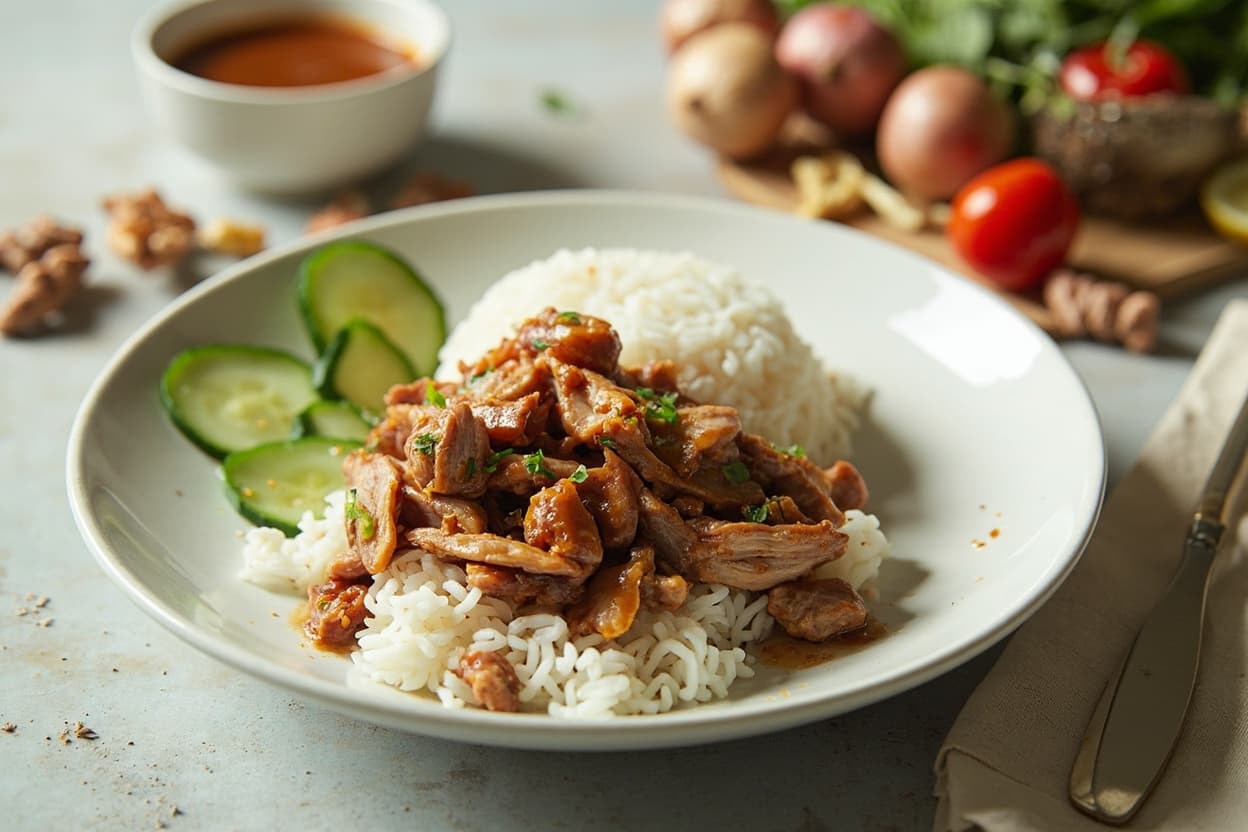
Ginger-Soy Duck Rice with Cucumber
Duck is braised low with ginger, garlic, and soy sauce until the skin softens and the meat falls gently from the bone, the cooking liquid reducing into something glossy and fragrant. Cool cucumber slices arrive at the side — uncooked, a deliberate counterpoint. Over white rice, the whole bowl asks very little of you except attention.

Prep
15 min
Cook
30 min
Rest
3 min
Total
48 min
Method
Prepare
1
Pat duck dry with paper towels, then coat generously with marinade. Let rest for 10 minutes.
Cook Rice
2
Combine 2 cups rice with 2.5 cups water in a rice cooker or pot. Cook until done. Remove from heat and let steam, covered, for 5 minutes. Fluff with a fork.
Sear Duck
3
Remove duck and let rest for 3 minutes before slicing thinly.
Prepare Cucumber
C
Nutri-Score
Fair balance
A–E · lower is better · score 4
Calories
933
per serving
Source of protein · 34gLow sugar · 13g
Protein
34g
Carbs
120g
Fat
35g
Sat. fat
20g
Fiber
6g
Sugar
13g
Sodium
1442mg
Gluten FreeDairy FreeHeart HealthyLean ProteinLow Saturated FatHigh ProteinLow Carb OptionAnti Inflammatory
Nutri-Score is a general nutritional-balance guide, not medical or dietary advice.
D
Environmental impact
High impact
A–E · lower is better · includes estimates
kg CO2e
1.9
per serving
DCarbonAEU all-round· carbon sets the grade
Water
2.8m³
Land
62Pt
Runoff
0.2g P
Duck breast, boneless drives 64% of this recipe’s estimated footprint.
Carbon from Poore & Nemecek 2018; water, land & runoff from Agribalyse — modelled averages for comparing recipes, not a measurement of your groceries.
Flavor Profile
7
Umami
4
Sweet
6
Salty
3
Sour
1
Bitter
2
Spicy
Textures
TenderCrispyFresh
Aromas
HerbalPungentSmoky
Kitchen Equipment
Primary Tool
Sauté PanCounter FootprintMedium
Techniques
Safety & Storage
Cooking Temperature
Duck breast must reach a minimum internal temperature of 165°F to ensure food safety. Use a meat thermometer to verify.
Cross Contamination
Use separate cutting boards for raw duck and vegetables. Wash hands thoroughly after handling raw poultry before touching other ingredients.
Storage
Refrigerate leftover duck and cooked rice within 2 hours of cooking. Store in airtight containers and consume within 3-4 days.
High Risk Population
Pregnant individuals, elderly, and immunocompromised individuals should ensure duck is cooked to 165°F throughout. Avoid using raw garlic in large amounts as a finishing garnish for high-risk groups.
Allergen Warning
Verify soy sauce brand for allergen information as some varieties may contain wheat/gluten if cross-contamination is a concern.
Pro Tips
Technique
Score the duck skin in a crosshatch pattern before searing — this allows the fat to render beautifully and the ginger-soy glaze to cling to every golden edge. Don't rush the skin-side sear; let it sit undisturbed for 3-4 minutes until deep amber.
Substitution
If duck is unavailable, boneless chicken thighs work beautifully — still juicy, still able to carry that ginger-soy glaze. For a vegetarian take, firm tofu pressed and seared until crispy would be wonderful alongside the cucumber ribbons.
[{"classification":"substitution-safety","text":"If substituting chicken thighs for duck, cook to minimum 165°F internal temperature using a meat thermometer. For tofu substitution, ensure it is pressed and seared until internal texture changes and edges are golden; keep tofu separate from raw poultry."}]
From the chef
Duck breast, seared skin-side down until deeply amber, then finished with ginger, garlic, and honey, builds a glaze that is rich without being heavy. Beside it on the same plate, cucumber slices dressed with lime juice and fresh cilantro arrive completely uncooked — deliberate, cool, a counterweight to the warmth of the meat. Over white rice the bowl holds both temperatures at once. A final squeeze of lime and a handful of fresh herbs are left to the eater, because this dish is not finished until the table finishes it.
TagsDuckGinger Soy GlazeFresh HerbsCucumberWeeknight DinnerMedium Difficulty
AllergensSoy
Source: generated · May 30, 2026