 Japanese
Medium · Warm
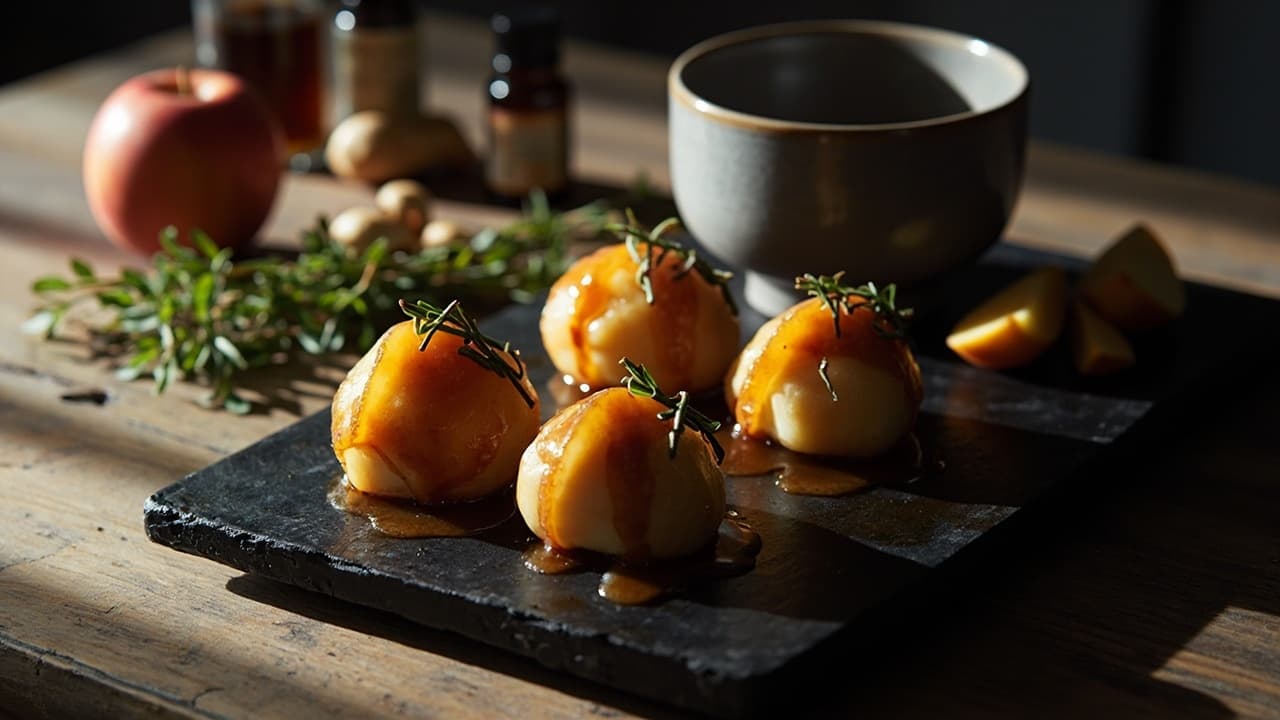
Rice Vinegar Braised Apple with Maple Syrup and Thyme
Tender apple quarters braised in a balanced bath of rice vinegar and maple syrup, finished with fragrant thyme. A refined sweet-savory side that bridges Japanese and Western sensibilities.

Prep
15 min
Cook
30 min
Total
45 min
Method
1
Peel, core, and quarter the apples. Cut each quarter in half lengthwise so the pieces are roughly uniform in size, about 2-inch pieces.
2
Combine water, rice vinegar, maple syrup, thyme sprigs, and the ginger piece in a wide saucepan or skillet. Bring to a gentle simmer over medium heat, 2-3 minutes, until the sugar dissolves and the liquid is fragrant.
3
4
5
6
7
Remove from heat. Let the apples rest in the glaze for 2 minutes to absorb flavor. Serve warm, spooning the glaze over each piece.
B
Nutri-Score
Good balance
A–E · lower is better · score 2
Calories
115
per serving
Protein
1g
Carbs
23g
Fat
3g
Sat. fat
2g
Fiber
3g
Sugar
20g
Sodium
503mg
Digestion SupportKidney HealthHigh FiberLow CalorieLow Fat
Nutri-Score is a general nutritional-balance guide, not medical or dietary advice.
A
Environmental impact
Very low impact
A–E · lower is better · includes estimates
kg CO2e
0.2
per serving
ACarbon
Apple drives 48% of this recipe’s estimated footprint.
Carbon from Poore & Nemecek 2018; water, land & runoff from Agribalyse — modelled averages for comparing recipes, not a measurement of your groceries.
Flavor Profile
4
Umami
6
Sweet
2
Salty
5
Sour
2
Bitter
0
Spicy
Textures
SaucySilkyTender
Aromas
CaramelHerbalTart
Kitchen Equipment
Safety & Storage
Storage
Refrigerate leftover braised apples within 2 hours of serving. The dairy content from butter makes proper refrigeration essential.
Handling
Use oven mitts when handling the pan during the finishing steps. The liquid reduces to high temperatures and the pan handle will be hot.
Cooking Temperature
Maintain proper simmering temperature during braising. The liquid should stay at a gentle simmer around 180-200°F for optimal apple texture without overcooking.
High Risk Population
This dish contains dairy. Immunocompromised individuals, pregnant women, young children, and elderly persons should consume only properly stored and heated portions.
Pro Tips
Technique
Resist the urge to stir while the apples braise. Gentle turning once midway is enough — this preserves the delicate structure of the fruit so each piece emerges tender but whole.
Substitution
If rice vinegar is unavailable, a mild white wine vinegar can stand in, though reduce the quantity by one teaspoon and balance with a small splash of water to soften the sharpness.
From the chef
In washoku, we speak often of shun — the moment an ingredient is at its peak. This time of year, apples arrive at the market with a gravity that demands respect. When I first tasted apple braised in rice vinegar and maple syrup, I felt something settle between two worlds: the clean acidity of Japanese kitchen philosophy and the warm sweetness of autumn in a different latitude. This dish asks for patience — let the vinegar and syrup do their quiet work, and the apple will give you something far more interesting than if you had rushed.
TagsSweetBraisedGlazedAromaticSeasonal Ingredient
Source: generated · June 12, 2026