 Galician
Medium · Hot
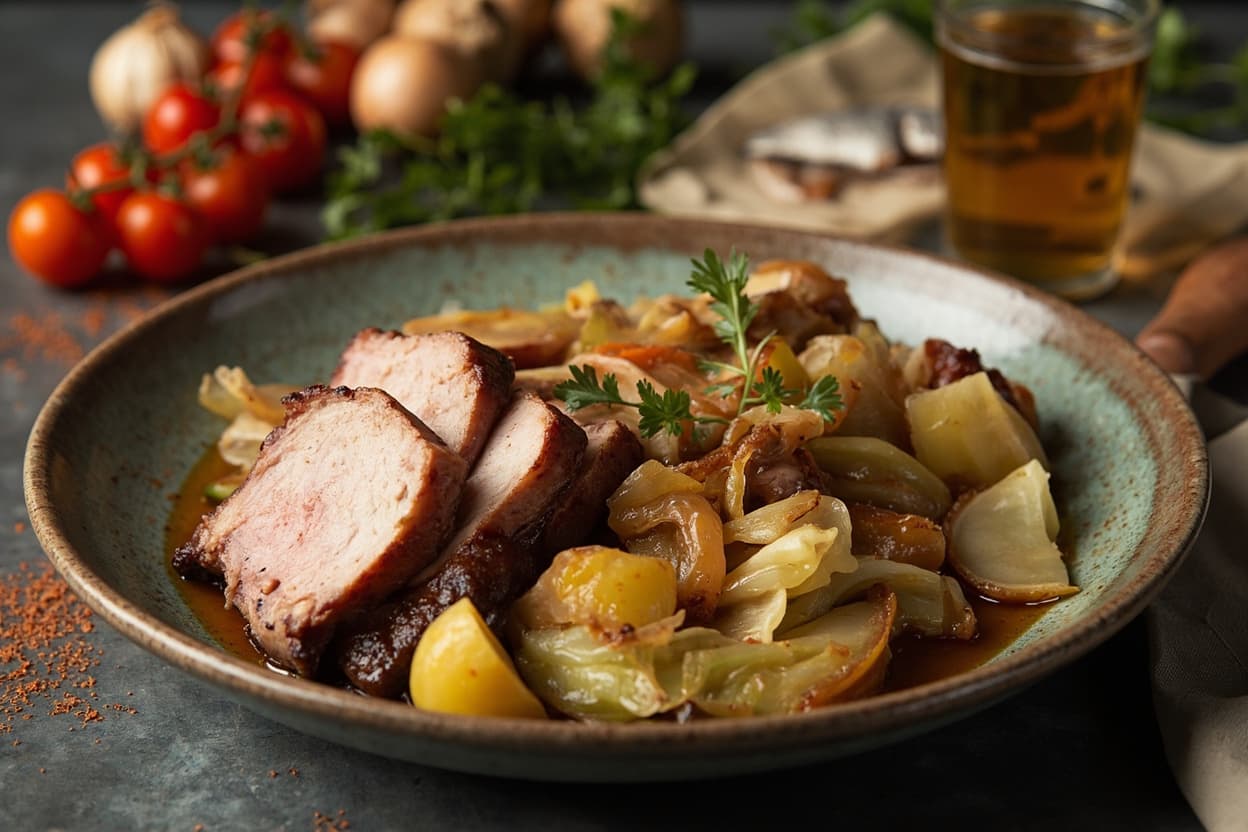
Slow Pork Belly with Cabbage and Potato
Pork belly cooked low and slow until the fat layer turns translucent and the meat beneath it gives at a look, surrounded by cabbage that has wilted into the drippings and potato that has soaked up all that smoky, paprika-stained richness. Garlic runs through the whole thing, quiet and foundational. The kind of dish that makes a cold afternoon disappear.
Prep
15 min
Cook
2h
Total
2h 15m
Method
Sear the Pork
1
Season the pork belly cubes with salt and black pepper. Heat olive oil in a heavy-bottomed pot or Dutch oven over medium-high heat.
2
Sear the pork belly in batches, letting each piece develop a golden-brown crust on all sides, about 4–5 minutes per batch. Do not crowd the pan. Remove the pork and set aside.
Build the Base
3
In the same pot, add the sliced onion and garlic. Cook over medium heat, stirring with a wooden spoon, until the onion softens and turns translucent, about 6–8 minutes. Scrape up any browned bits from the bottom — that is flavor.
4
Sprinkle in the smoked paprika and stir for 30 seconds to bloom the spice in the fat.
Braise
5
Return the pork belly to the pot. Add the water and bring to a gentle simmer. Cover tightly, reduce the heat to low, and cook for 45 minutes, letting the pork melt into a soft, silken texture.
Finish and Serve
7
8
Ladle the pork belly, vegetables, and braising juices into deep bowls. Drizzle generously with olive oil and a final pinch of smoked paprika. Serve with crusty bread to mop up every drop of sauce.
C
Nutri-Score
Fair balance
A–E · lower is better · score 7
Calories
1076
per serving
High in saturated fat · 27gLow sugar · 7g
Protein
18g
Carbs
33g
Fat
97g
Sat. fat
27g
Fiber
7g
Sugar
7g
Sodium
1061mg
Gluten FreeDairy FreeLow CarbHigh ProteinSatiety Focused
Nutri-Score is a general nutritional-balance guide, not medical or dietary advice.
D
Environmental impact
High impact
A–E · lower is better · includes estimates
kg CO2e
2.1
per serving
DCarbonAEU all-round· carbon sets the grade
Water
0.8m³
Land
69Pt
Runoff
0.2g P
Pork Belly, cubed drives 89% of this recipe’s estimated footprint.
Carbon from Poore & Nemecek 2018; water, land & runoff from Agribalyse — modelled averages for comparing recipes, not a measurement of your groceries.
Flavor Profile
8
Umami
4
Sweet
5
Salty
2
Sour
1
Bitter
4
Spicy
Textures
TenderSilkySoftCreamy
Aromas
SmokySavoryHerbalEarthy
Kitchen Equipment
Primary Tool
Dutch OvenCounter FootprintMedium
Safety & Storage
Cooking Temperature
Sear pork belly over medium-high heat until golden-brown on all sides (4-5 minutes per batch). Ensure pork reaches safe internal temperature before braising.
Braise at low heat with lid tightly covered. Maintain gentle simmer throughout 45-minute cooking period for pork, then additional 30-35 minutes when vegetables are added.
High Risk Population
Cook pork belly to minimum 145°F internal temperature to ensure safety for vulnerable populations.
Storage
Cool and refrigerate any leftovers within 2 hours. Store in airtight container for up to 3 days. Reheat to 165°F before consuming.
Handling
Keep raw pork separate from ready-to-eat vegetables during prep to prevent cross-contamination. Use separate cutting boards if available.
Pot contains hot oil and liquids. Use heat-resistant gloves when handling and allow to cool before moving or storing.
Pro Tips
Technique
Do not rush the sear. When you brown the pork belly cubes, leave them alone in the pan — let them develop a proper crust before you even think about turning them. That golden color is flavor, and it will anchor the entire braise.
Substitution
If you cannot find regular cabbage, kale works beautifully here — it holds its shape through the long braise and adds a slightly earthier note that pairs well with the smoked paprika.
Storage
This dish actually improves overnight. The flavors settle and deepen, so do not hesitate to make it a day ahead. Reheat gently over low heat with a splash of water to loosen the sauce.
From the chef
Pork belly needs time — there is no rushing it. Sear it first until the fat side is golden and starting to render, then let it braise low and slow until the meat beneath gives at a look. The cabbage goes in with the potatoes and softens into silky ribbons, drinking up every smoky, porky drop in the pot. Patience turns pig into something transcendent here, and the smoked paprika that blooms in the onion base ties the whole thing together. Finish with a generous drizzle of olive oil and bring it to the table in the pot — no need for anything more.
TagsSlow CookedBraisedPork Belly DishRusticOne Pot MealComfort FoodFamily Style
Source: generated · May 30, 2026