 Eastern European
Medium · Hot
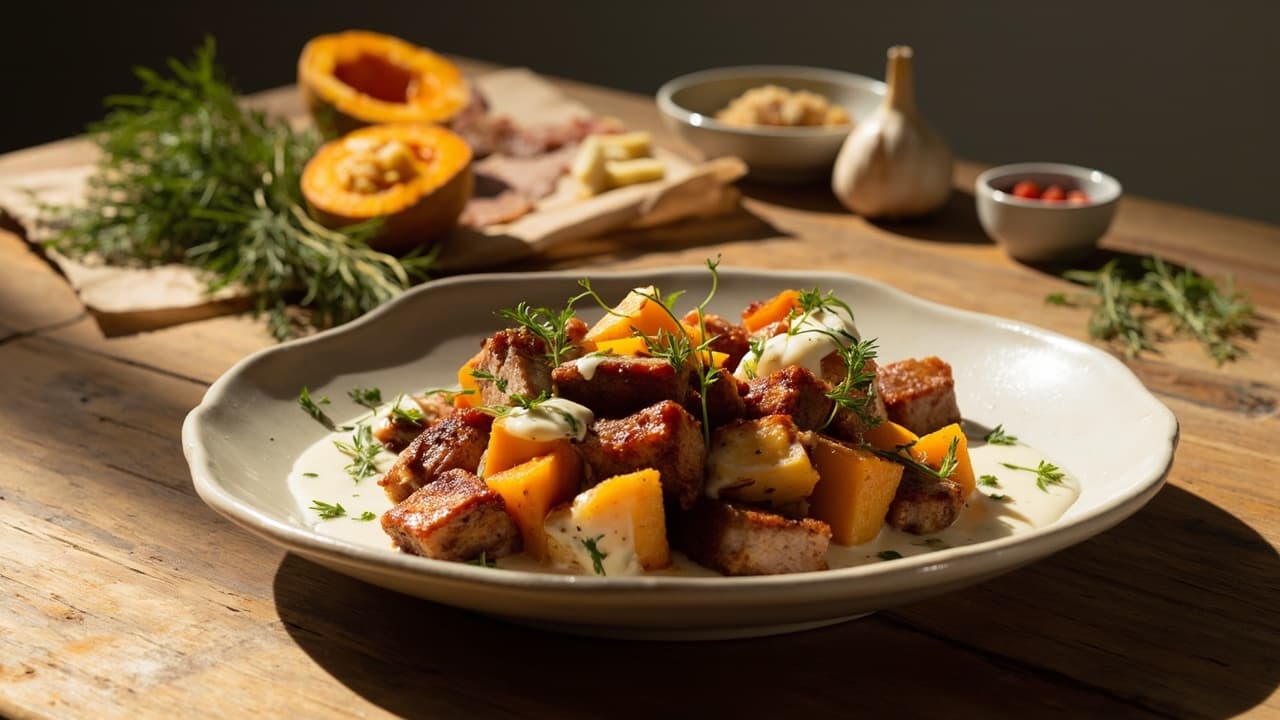
Smoky Pork Belly and Butternut Squash Bites with Yogurt and Dill
Crispy-edged pork belly cubes bloomed with smoked paprika, tender caramelized butternut squash, and a cool yogurt sauce brightened with dill and lemon — hearty, warm, and frugal, the way Andrei likes it.

Prep
15 min
Cook
28 min
Total
43 min
Method
1
Pat pork belly cubes very dry with paper towels — moisture is the enemy of a good sear. Season all over with smoked paprika, minced garlic, salt, and black pepper. Toss well and let sit 5 minutes.
2
Toss butternut squash cubes with olive oil, salt, and black pepper until evenly coated.
3
4
Heat a large heavy skillet or cast-iron pan over medium-high heat until lightly smoking. Add olive oil and swirl to coat.
5
Lay pork belly cubes in a single layer — work in two batches if needed. Cook undisturbed 4-5 minutes until deep golden-brown and crispy on the bottom; flip and cook another 3-4 minutes until second side is golden. Internal temperature should reach 71°C at the thickest point. Remove to a plate and rest.
6
Meanwhile, heat an oven to 200°C (400°F). Spread seasoned squash on a baking sheet in a single layer.
7
8
Arrange pork belly bites and roasted butternut squash on a warm serving platter or divide among four plates.
9
Drizzle yogurt sauce generously over the top or serve it in a small bowl alongside for dipping.
D
Nutri-Score
Needs balance
A–E · lower is better · score 12
Calories
981
per serving
High in saturated fat · 31gCalorie-dense · 981 kcalLow sugar · 8g
Protein
21g
Carbs
23g
Fat
91g
Sat. fat
31g
Fiber
7g
Sugar
8g
Sodium
1667mg
Dairy PresentGluten FreeHigh ProteinLow Carb
Nutri-Score is a general nutritional-balance guide, not medical or dietary advice.
D
Environmental impact
High impact
A–E · lower is better · includes estimates
kg CO2e
2.2
per serving
DCarbonAEU all-round· carbon sets the grade
Water
1.1m³
Land
67Pt
Runoff
0.2g P
Pork belly, skinless, cubed 2 cm drives 85% of this recipe’s estimated footprint.
Carbon from Poore & Nemecek 2018; water, land & runoff from Agribalyse — modelled averages for comparing recipes, not a measurement of your groceries.
Flavor Profile
7
Umami
4
Sweet
5
Salty
5
Sour
1
Bitter
3
Spicy
Textures
CreamyCrispyTender
Aromas
CitrusHerbalSmoky
Kitchen Equipment
Safety & Storage
Cooking Temperature
Pork belly must reach internal temperature of 71°C throughout. Use a calibrated meat thermometer inserted into the thickest cube to verify doneness before serving.
High Risk Population
This dish contains pork and dairy. Immunocompromised individuals, elderly, pregnant women, and young children should only consume pork that has reached safe internal temperature with no pink remaining.
Storage
Refrigerate yogurt sauce within 2 hours of preparation. The yogurt sauce must be kept at or below 4°C and consumed within 2-3 days. Do not leave at room temperature for more than 2 hours total.
Cross Contamination
Use separate cutting boards and utensils for raw pork and ready-to-eat components like butternut squash and yogurt sauce. Wash hands thoroughly with soap after handling raw pork belly.
Handling
Pat pork belly cubes completely dry before seasoning and cooking. Residual moisture prevents proper browning and crispy edges. Let seasoned pork rest 5 minutes to allow spices to adhere.
Shelf Life
Consume cooked pork belly within 3-4 days when refrigerated. Reheat leftovers to 74°C before eating. The yogurt sauce does not freeze well and should be made fresh or discarded after storage period.
Pro Tips
Technique
The most important step is patting those pork belly cubes completely dry before seasoning — if there's moisture, you steam instead of sear, and you lose that crispy edge that makes everything worth eating.
Substitution
If Greek yogurt feels too thick, stir in a tablespoon of cold water to loosen it to the consistency you want — my grandmother always said a sauce should coat the spoon but still drip.
Time Saver
Season the pork and prep the sauce while your oven preheats — by the time the squash goes in, your pork is ready and you can work in parallel without rushing.
Storage
Store the pork and squash separately from the sauce, and they'll keep beautifully — the pork stays crisp when reheated in a hot pan, and the squash doesn't get soggy sitting in yogurt.
From the chef
Pork belly and butternut squash is a pairing that makes sense the moment you try it — the sweet caramelized edges of the squash meet the rendered, smoky fat of the pork and suddenly each one needs the other. Pat the pork belly dry before it goes into a hot cast-iron pan, season it with smoked paprika and garlic, and let it sear undisturbed until a deep crust forms. Roast the squash separately at high heat until golden at the edges. The dill yogurt sauce — bright with lemon and a little grated garlic — ties everything together and keeps the richness in check.
TagsPork BellyRoasted VegetablesYogurt SauceNo HeatWeeknight DinnerFrugalHearty
AllergensMilk
Source: generated · June 13, 2026