 Argentinian
Medium · Hot
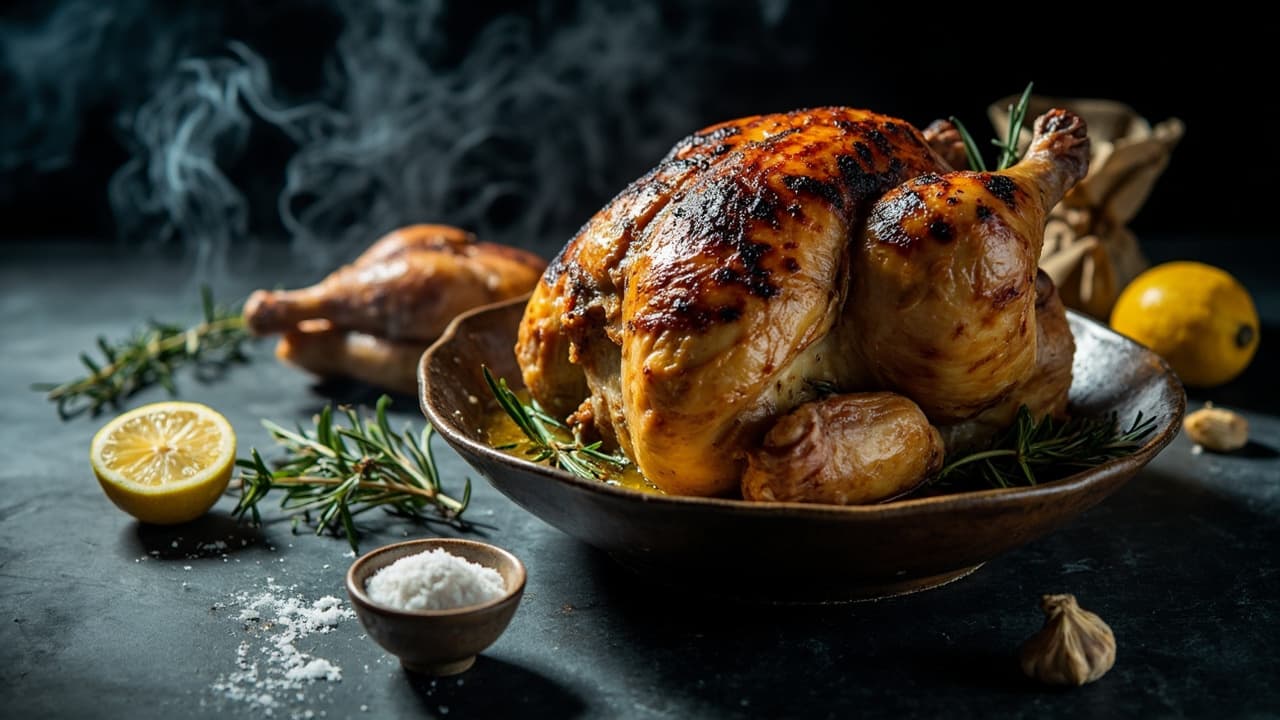
Whole Chicken Ember-Roasted with Rosemary and Lemon
A whole chicken roasted directly in ember heat, stuffed with lemon and rosemary, finished with blistered skin and a bright acid squeeze.

Prep
30 min
Cook
1h 30m
Rest
10 min
Total
2h 10m
Method
Prepare the Chicken
1
Remove the chicken from refrigeration 30 minutes before cooking to take the chill off the meat. Pat the entire bird completely dry with paper towels — moisture is the enemy of char.
2
Season aggressively inside the cavity and all over the skin with salt and black pepper. Do not be timid here; the fire will intensify the seasoning as it cooks.
Stuff the Bird
3
Build the Fire
5
Build a medium-hot coal bed in your grill or asador, approximately 350-400°F ambient heat. Let the wood burn down to glowing embers with minimal flame. The fire should feel comfortable on your outstretched hand for about 4 seconds.
6
Place a cast-iron skillet or heavy roasting pan near the coals to act as a heat buffer and drip tray. Add chicken broth to the pan.
Ember Roast
7
Set the chicken breast-side up directly on the cast iron or on a rack above the coals. Rotate the bird every 15-20 minutes to ensure even cooking on all sides.
8
Baste generously with olive oil every 20 minutes, collecting drippings from the pan. Watch for flare-ups from rendered fat — move the bird to cooler spots if flames lick up.
9
Roast until the internal temperature reads 165°F at the thickest part of the thigh, approximately 60-90 minutes depending on ember intensity. The skin should be deeply blistered and mahogany-colored.
Rest and Finish
10
Transfer the chicken to a cutting board and tent loosely with foil. Rest for 10 minutes — this allows juices to redistribute and the skin to set.
C
Nutri-Score
Fair balance
A–E · lower is better · score 3
Calories
1078
per serving
High in protein · 69gLow sugar · 4g
Protein
69g
Carbs
8g
Fat
84g
Sat. fat
18g
Fiber
2g
Sugar
4g
Sodium
1461mg
Gluten FreeDairy FreePaleoWhole30Heart HealthyDiabetes FriendlyLow CarbHigh ProteinBalanced Fat
Nutri-Score is a general nutritional-balance guide, not medical or dietary advice.
E
Environmental impact
Very high impact
A–E · lower is better · includes estimates
kg CO2e
3.9
per serving
ECarbonBEU all-round· carbon sets the grade
Water
2.0m³
Land
120Pt
Runoff
0.3g P
Whole Chicken drives 95% of this recipe’s estimated footprint.
Carbon from Poore & Nemecek 2018; water, land & runoff from Agribalyse — modelled averages for comparing recipes, not a measurement of your groceries.
Flavor Profile
7
Umami
3
Sweet
7
Salty
5
Sour
2
Bitter
3
Spicy
Textures
CrispyTenderJuicyBlistered
Aromas
SmokyHerbalCitrusGarlickyCharred
Kitchen Equipment
Safety & Storage
Cooking Temperature
Ember roasting requires monitoring ambient heat at 350-400°F with internal chicken temperature reaching exactly 165°F at thickest thigh. Use reliable instant-read thermometer and check multiple spots.
Handling
Raw poultry is a high-risk food handling situation. Wash hands thoroughly with soap for 20+ seconds after touching raw chicken. Use separate cutting boards and utensils designated only for poultry.
Cross Contamination
Raw chicken drippings contaminate surfaces rapidly. Place chicken on designated tray during fire setup. Never place cooked foods on surfaces that contacted raw poultry without sanitizing first.
Equipment Safety
Flare-ups from rendered fat dripping onto coals present sudden flame hazards. Have fire-resistant mitts, long tongs, and water spray bottle ready. Never leave ember roasting unattended.
Cast iron near open flame retains extreme heat. Use appropriate long-handled tools. Never place hot cast iron on wet or cold surfaces to prevent thermal shock and cracking.
Storage
Leftover chicken must cool to room temperature within 2 hours maximum, then refrigerate at 40°F or below. Consume refrigerated leftovers within 3-4 days.
High Risk Population
Poultry prepared by ember roasting may not achieve consistent doneness throughout. Pregnant individuals, young children, elderly, and immunocompromised persons should ensure all parts reach 165°F before consumption.
Allow chicken to rest at room temperature only 30 minutes maximum before cooking. Beyond this window, bacteria can multiply in the temperature danger zone between 40°F and 140°F.
Pro Tips
Technique
Never rush your coal bed. The difference between a good ember-roast and a steaming disaster is patience — let those logs burn down to glowing coals that feel comfortable on your outstretched hand for about 4 seconds. That's your signal the fire is ready to receive the bird.
Substitution
Fresh thyme works beautifully if you don't have rosemary on hand — it has that same bold, woody presence that stands up to the smoke without disappearing. And for the citrus? Swap in a halved orange with a few cloves for something unexpected and equally magical.
Equipment
A heavy cast-iron skillet is your best friend here — it acts as a heat buffer so the breast doesn't cook faster than the thighs, and it catches those precious drippings for basting. Don't skip it.
From the chef
A whole chicken over embers is one of the most honest things you can cook. The bird goes on with lemon and rosemary packed inside, skin seasoned hard, and then the fire does its slow work for sixty to ninety minutes — rotate it, baste it, watch that skin go from pale to gold to a deep mahogany blister. The heat from within keeps the meat juicy while the outside builds something worth carving through. Squeeze the roasted lemon over the sliced meat, pour on a thread of olive oil, and finish with flaky salt. That char is not damage. That is the whole point.
TagsEmber RoastedLive FireWhole ChickenHerb SeasonedRusticLemonRosemary
AllergensCeleryGluten
Source: generated · June 10, 2026