 American Chinese
Medium · Hot
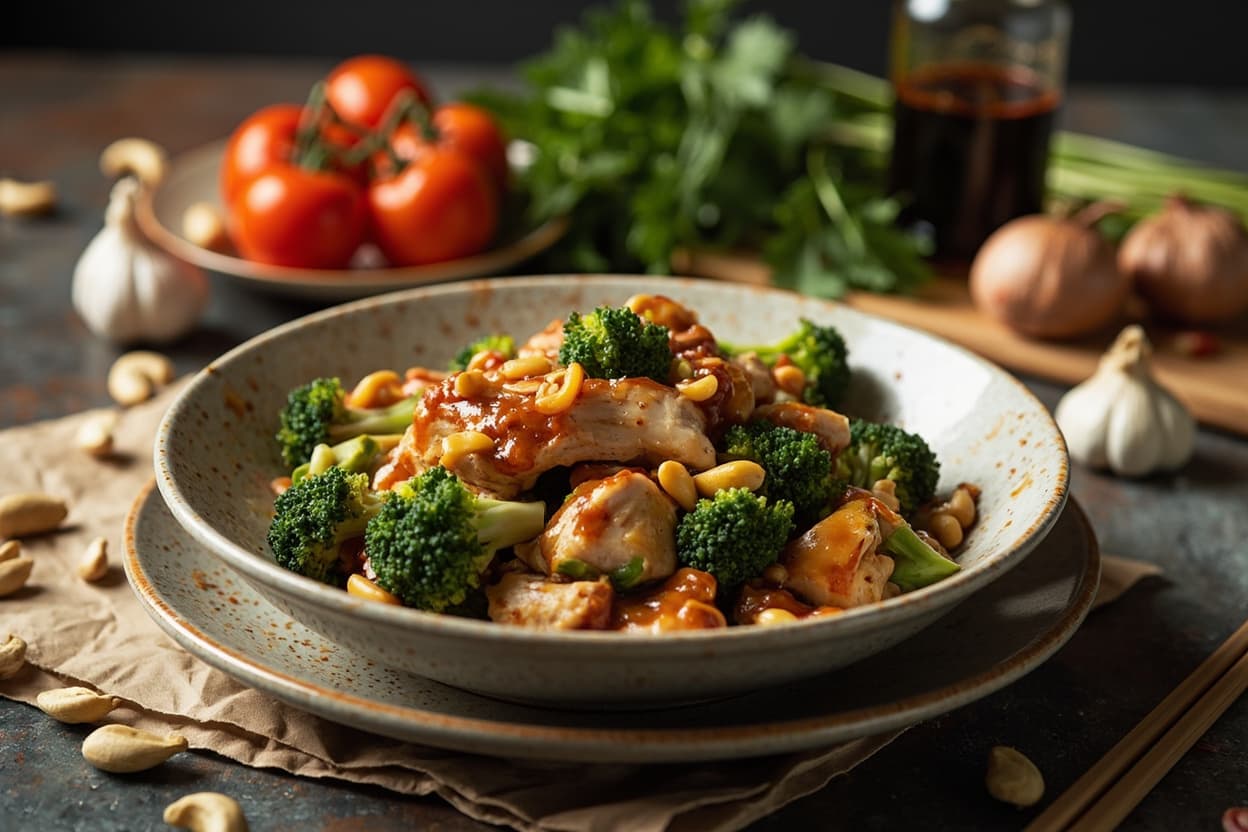
Cashew Chicken Stir-Fry with Broccoli
If you have ever salted a chicken wing before frying it, you already understand why a quick soy-sauce toss transforms a plain breast into something worth eating — salt draws out moisture, concentrates flavor, and builds the fond that makes the pan sing. Cashews go in last, staying just long enough to warm through and release their buttery fat into the sauce, while the broccoli holds its bite and soaks up the garlic-laced pan juices. It is the kind of weeknight dish that teaches you more about heat and timing than any textbook could.

Prep
15 min
Cook
15 min
Total
30 min
Method
Prep
1
2
Cut broccoli into bite-size florets. Slice bell pepper into thin strips. Dice onion. Mince garlic and ginger together into a paste.
Sauce
3
Whisk together 3 tablespoons soy sauce (do not use marinade from raw chicken), honey, sesame seeds, and black pepper in a small bowl. Set aside. Use fresh sauce for the stir-fry; discard any marinade that contacted raw chicken.
Cook Chicken
4
Heat 1 tablespoon oil in a wok or large skillet over high heat until shimmering. Add chicken in a single layer — do not crowd the pan. Cook undisturbed 2 minutes, then toss and cook another 2 minutes until golden. Use a meat thermometer to verify chicken has reached 165°F (74°C) internal temperature before transferring to a plate.
5
Wipe wok clean with a paper towel.
Cook Vegetables
6
7
Add onion and bell pepper, stir-fry 2 minutes. Add broccoli, stir-fry another 3 minutes until bright green and crisp-tender.
Finish & Serve
8
Return chicken to wok, pour sauce over everything, and toss to coat evenly. Cook 1 minute until sauce thickens slightly and glazes the chicken and vegetables.
9
Scatter cashews over the top, toss once more, and serve immediately over steamed white rice. Verify dish is above 140°F before serving.
Grade pending
Nutri-Score
Estimated nutrition
Grade pending · 100% ingredient coverage
Calories
1034
per serving
High in protein · 65gLow saturated fat · 5gLow salt · 665mg
Protein
65g
Carbs
131g
Fat
29g
Sat. fat
5g
Fiber
10g
Sodium
665mg
Dairy FreeGluten FreeEgg FreeHeart HealthyDiabetes FriendlyHigh ProteinBalanced Macros
Nutri-Score is a general nutritional-balance guide, not medical or dietary advice.
D
Environmental impact
High impact
A–E · lower is better · includes estimates
kg CO2e
2.0
per serving
DCarbonAEU all-round· carbon sets the grade
Water
2.3m³
Land
73Pt
Runoff
0.2g P
Chicken Breast drives 69% of this recipe’s estimated footprint.
Carbon from Poore & Nemecek 2018; water, land & runoff from Agribalyse — modelled averages for comparing recipes, not a measurement of your groceries.
Flavor Profile
9
Umami
5
Sweet
8
Salty
2
Sour
2
Bitter
4
Spicy
Textures
TenderCrispCrunchySaucy
Aromas
SavoryNuttyHerbalPungentEarthy
Kitchen Equipment
Techniques
Safety & Storage
Cooking Temperature
Stir-fry must be cooked at high heat (400°F/200°C) with oil shimmering before adding ingredients to ensure proper texture and safe cooking of chicken to 165°F internal temperature.
Cross Contamination
Use separate cutting boards for raw chicken and vegetables. Wash all utensils, tongs, and the wok thoroughly with hot soapy water after cooking chicken before preparing vegetables.
High Risk Population
Ensure chicken reaches 165°F throughout. For immunocompromised individuals, elderly, or pregnant persons, verify no pink remains and juices run clear.
Allergen Warning
This dish contains soy, sesame, and tree nuts. Cashews are a tree nut allergen. Verify all guests have no allergies before serving. Do not substitute ingredients without checking allergen profiles.
Storage
Refrigerate leftovers within 2 hours in airtight containers. Consume within 3-4 days. Reheat stir-fry to 165°F before eating.
Handling
Marinate raw chicken in refrigerator, not at room temperature. Keep cashews sealed and stored away from other allergens to prevent cross-contact.
Pro Tips
Technique
That wok is your best friend here — high heat and no hesitation. Let it smoke slightly before you add anything. The Maillard reaction does not wait for anyone, and that is where all that savory complexity happens.
Substitution
Out of cashews? Slivered almonds work in a pinch, though you lose a bit of that creamy richness. You could also try roasted peanuts for a more Southern-style twist.
From the chef
If you have ever ordered cashew chicken from a takeout menu, you already know what we are doing here — but we are doing it better, at home, in 30 minutes flat. This dish is my bridge: it starts with the familiar comfort of American-Chinese classics, then layers in real ginger, real garlic, and a sauce that actually tastes like something. Think of it as the version where you finally get to crack open the good soy sauce and add that extra pinch of umami that makes everything sing.
TagsWeeknight DinnerStir FryOne PotUmami
AllergensSoySesameTree Nuts
Source: generated · May 30, 2026