 Spanish
Medium · Hot
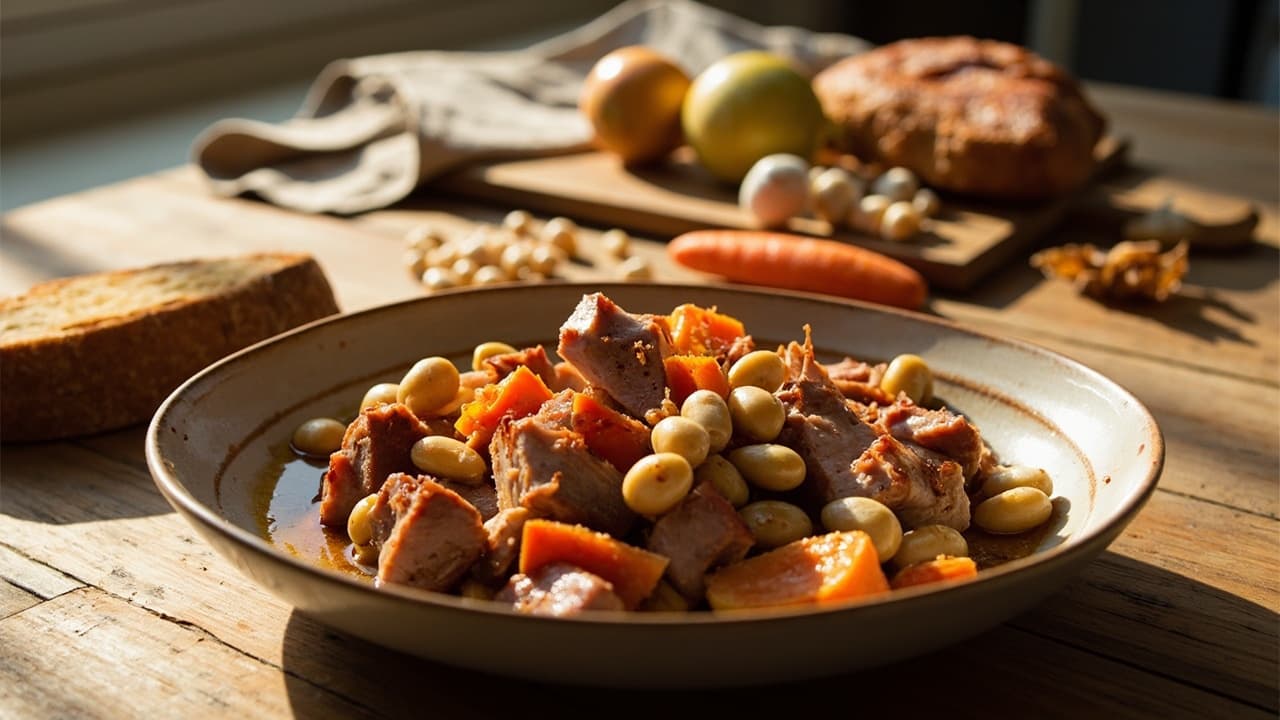
Pork Belly and White Bean Skillet with Paprika and Carrot
A hearty Atlantic skillet where pork belly renders into crisp, golden edges while white beans and sweet carrot absorb all that smoky paprika-infused richness. The kind of dish that feeds a family and leaves the pot licked clean.
Prep
15 min
Cook
35 min
Total
50 min
Method
Prepare and render the pork belly
1
Place the pork belly cubes in a cold heavy skillet or Dutch oven. Set over medium heat and let the fat slowly render, stirring occasionally with a wooden spoon. Cook for 12–15 minutes until the pieces are golden and crispy on the outside and the fat has mostly melted into the pan. Remove the pork belly with a slotted spoon and set aside, leaving the rendered fat in the pot.
Build the base — onion, carrot, garlic
2
Add the diced yellow onion to the pork fat remaining in the skillet. Cook over medium heat for 5 minutes until softened and beginning to turn translucent. Add the sliced carrot and cook for another 5 minutes until the carrot has softened slightly and the onion is golden at the edges. Add the sliced garlic and cook for 1 minute until fragrant.
Season and deglaze
3
Sprinkle the smoked paprika and salt over the vegetables. Stir everything well to coat, letting the paprika toast in the fat for 30 seconds. Pour in the chicken broth and scrape the bottom of the skillet with the wooden spoon to lift any caramelized bits. Let the liquid come to a gentle simmer.
Finish with beans and pork belly
4
Add the white beans and the reserved pork belly cubes to the skillet. Stir everything together, then reduce the heat to low. Simmer uncovered for 10–12 minutes, allowing the beans to absorb the broth and the flavors to meld. The liquid should thicken and glaze the beans without drying out — if needed, add a splash more broth.
Finish and serve
5
Remove from heat and drizzle generously with olive oil. Give it one last gentle stir, then serve straight from the skillet with crusty bread or boiled potatoes alongside.
C
Nutri-Score
Fair balance
A–E · lower is better · score 10
Calories
1241
per serving
High in saturated fat · 26gCalorie-dense · 1241 kcalSource of protein · 38gLow sugar · 5g
Protein
38g
Carbs
69g
Fat
91g
Sat. fat
26g
Fiber
8g
Sugar
5g
Sodium
1108mg
Gluten FreeDairy FreeDiabetes FriendlyHeart HealthyHigh FiberBalanced Macros
Nutri-Score is a general nutritional-balance guide, not medical or dietary advice.
D
Environmental impact
High impact
A–E · lower is better · includes estimates
kg CO2e
2.1
per serving
DCarbonAEU all-round· carbon sets the grade
Water
0.6m³
Runoff
0.2g P
Pork belly, cut into 2cm cubes drives 87% of this recipe’s estimated footprint.
Carbon from Poore & Nemecek 2018; water, land & runoff from Agribalyse — modelled averages for comparing recipes, not a measurement of your groceries.
Flavor Profile
7
Umami
4
Sweet
5
Salty
2
Sour
1
Bitter
3
Spicy
Textures
CrispyTenderSilkySaucy
Aromas
SmokySavoryHerbalNutty
Kitchen Equipment
Primary Tool
Dutch OvenCounter FootprintMedium
Safety & Storage
Cooking Temperature
Render pork belly over medium heat for 12-15 minutes until golden and crispy. While pork belly cubes are considered pre-cut, ensure thorough cooking with no pink remaining in center. Add broth only after pork is fully rendered.
Verify the entire dish reaches 165°F (74°C) throughout before serving. Use a calibrated food thermometer to check multiple areas, especially since the dish contains chicken broth and the simmering process may not evenly heat all components.
Cross Contamination
Use separate cutting boards and utensils for raw pork belly versus ready-to-eat vegetables and beans. Sanitize all surfaces and tools that contact raw pork before using for other ingredients.
Storage
Cool dish to room temperature within 2 hours of cooking, then refrigerate in airtight containers. Consume within 3-4 days. Reheat leftovers to 165°F (74°C) throughout before serving.
Handling
Use oven mitts when handling the skillet - pork fat and cast iron retain significant heat. When adding pork belly back to the skillet with beans, the rendered fat can cause splattering.
High Risk Population
This dish contains pork - ensure proper cooking if serving to pregnant women, elderly, or immunocompromised individuals. Pork should reach safe internal temperature with no pink visible.
Equipment Safety
Allow skillet to cool completely before washing to prevent thermal shock to cast iron. Never submerge a hot Dutch oven in cold water.
Pro Tips
Technique
Start your pork belly in a cold pan, my friend — no rushing this. Let it render slowly over medium heat, and you'll be rewarded with crispy edges and golden fat pooling in the pan. This is where the flavor lives, and it takes patience, not high heat.
Flavor Boost
Never skip the olive oil drizzle at the end. A generous finish while the dish is off the heat — this is the Galician touch that makes everything shine. Good olive oil wants to be tasted, not cooked away, so pour it on just before serving.
Substitution
If you can't find pork belly, thick-cut pancetta works well, though you won't get quite the same melt-in-your-mouth richness. And if you want to stretch this further, add a handful of chard or kale in the last five minutes — my grandmother always found ways to make one pot feed more mouths.
From the chef
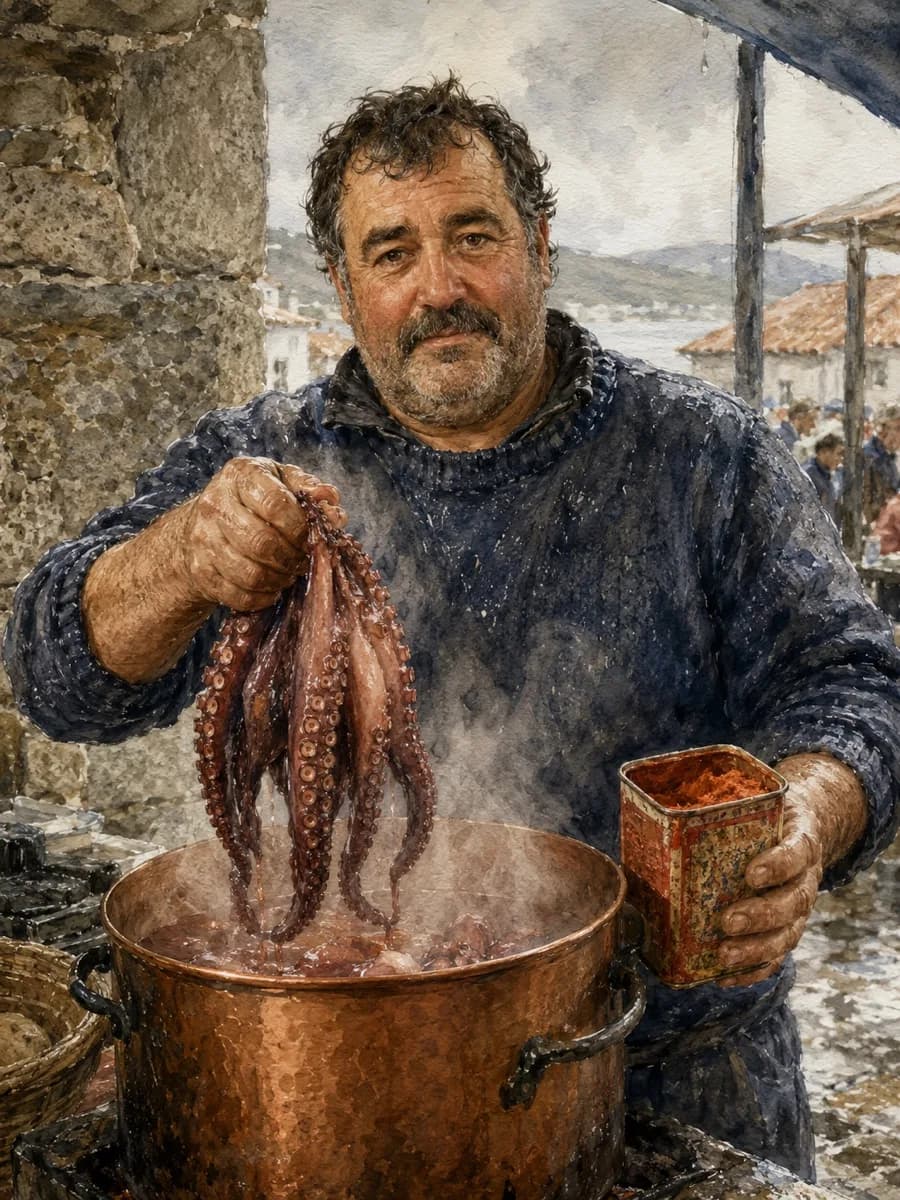
In Galicia, we say a good pot feeds the soul before it fills the belly. This skillet reminds me of winter evenings when the rías fog rolled in and my grandmother's copper pot bubbled away — pork belly crisping while the beans drank in all that smoky paprika richness. It's the kind of dish where the fat renders into gold and the whole house smells like home, the kind my family would eat straight from the pan with crusty bread to soak up every drop of that dark, glossy sauce.
TagsPorkBeansSmoked PaprikaHeartyFamily Meal
AllergensGluten
Source: generated · June 10, 2026