 Indonesian
Medium · Hot
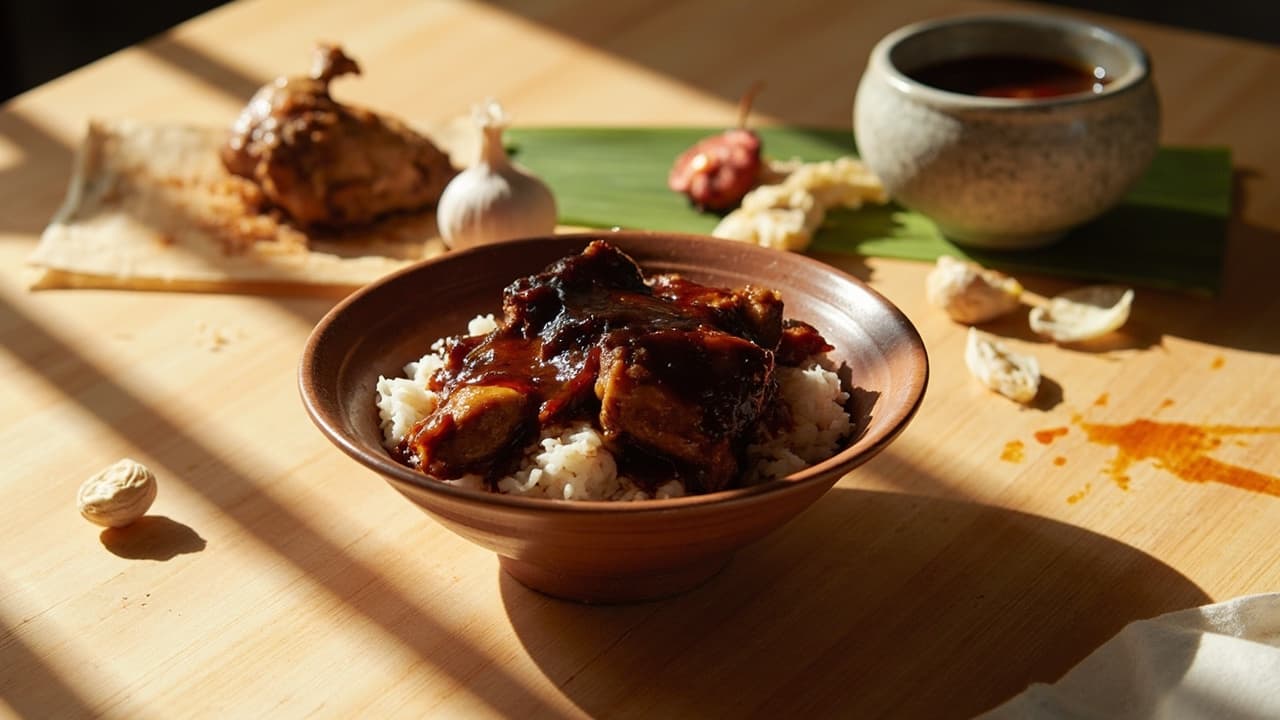
Ayam Kecap — Indonesian Chicken Braised in Sweet Soy
A beloved Indonesian comfort dish where chicken simmers low and slow in a glossy, caramelized sauce made from sweet soy and aromatic spices. The result is tender, flavorful chicken with a beautiful mahogany glaze.

Prep
15 min
Cook
45 min
Total
1h
Method
Prepare the Bumbu
1
Peel the garlic and shallots. Using a mortar and pestle (or a mini food processor), grind the garlic and shallots into a rough paste.
2
Add the fresh ginger and cayenne to the mortar. Continue grinding until everything is well combined into a fragrant spice paste.
Brown the Chicken
3
Pat the chicken thighs dry with paper towels and season lightly with salt. Let them sit at room temperature for 10 minutes.
4
Heat the coconut oil in a wide Dutch oven or heavy-bottomed pot over medium-high heat. When the oil shimmers, add the chicken thighs skin-side down.
5
Sear the chicken without moving for 4-5 minutes until the skin is deeply golden and crispy. Flip and cook another 2 minutes. Remove and set aside.
Braise in Sweet Soy
6
Reduce heat to medium. In the same pot with the remaining chicken fat, add the prepared bumbu spice paste. Fry in the oil for 2-3 minutes, stirring constantly, until very fragrant and the raw smell disappears.
7
Pour in the sweet soy sauce and chicken broth. Stir to combine, scraping up any browned bits from the bottom of the pot.
8
Return the browned chicken thighs to the pot, skin-side up. The liquid should come about halfway up the chicken.
9
Add the lime juice to the braising liquid. Bring everything to a gentle boil, then reduce heat to low. Cover and simmer for 25-30 minutes, turning the chicken halfway through, until cooked through and tender.
Finish and Serve
10
Remove the lid and increase heat to medium. Let the sauce reduce for 5-8 minutes, spooning it over the chicken repeatedly, until the liquid thickens into a glossy, syrupy glaze that coats the chicken.
11
Taste and adjust seasoning with salt if needed. The sauce should be sweet, savory, and slightly sticky.
12
Serve the Ayam Kecap hot over steamed jasmine rice, with extra sauce spooned generously over the top.
B
Nutri-Score
Good balance
A–E · lower is better · score 0
Calories
604
per serving
High in protein · 55gLow sugar · 11gLow salt · 167mg
Protein
55g
Carbs
21g
Fat
34g
Sat. fat
16g
Fiber
4g
Sugar
11g
Sodium
167mg
Diabetes FriendlyHeart HealthyLow CarbWeight ManagementHigh ProteinBalanced MacrosWhole Foods
Nutri-Score is a general nutritional-balance guide, not medical or dietary advice.
D
Environmental impact
High impact
A–E · lower is better · includes estimates
kg CO2e
2.0
per serving
DCarbonAEU all-round· carbon sets the grade
Water
0.7m³
Land
72Pt
Runoff
0.2g P
Chicken Thighs, bone-in drives 97% of this recipe’s estimated footprint.
Carbon from Poore & Nemecek 2018; water, land & runoff from Agribalyse — modelled averages for comparing recipes, not a measurement of your groceries.
Flavor Profile
7
Umami
6
Sweet
4
Salty
3
Sour
1
Bitter
4
Spicy
Textures
CrispyTenderGlossySyrupy
Aromas
AromaticCaramelizedHerbalNuttyPungent
Kitchen Equipment
Primary Tool
Dutch OvenDutch OvenWokMortar And PestleChef KnifeCutting BoardTongsWooden SpoonMeasuring SpoonsMeasuring CupsPaper TowelsPlastic Wrap
Counter FootprintMedium
Safety & Storage
Cooking Temperature
Cook chicken thighs to minimum internal temperature of 165°F (74°C). Use a probe thermometer to verify doneness, especially at the thigh's thickest point near the bone.
Maintain braising liquid at a gentle simmer (180-200°F) during the 25-30 minute cooking period to ensure even heat distribution and safe cooking.
Handling
Pat chicken dry before searing to achieve proper browning. Moisture on the skin surface prevents Maillard reaction and compromises both flavor and food safety.
Cross Contamination
Use separate cutting boards and utensils for raw chicken preparation. Sanitize all surfaces and tools that contact raw poultry before using them for other ingredients.
Do not reuse the marinade or braising liquid that has contacted raw chicken unless it is boiled for at least 1 minute before reuse.
Storage
Refrigerate leftover Ayam Kecap within 2 hours of cooking. Store in airtight containers and consume within 3-4 days. Reheat to 165°F before serving.
The high sugar content in sweet soy sauce glaze may cause faster spoilage at room temperature. Cool to room temperature within 1 hour before refrigerating.
High Risk Population
Ensure chicken is fully cooked for pregnant individuals, elderly, young children, and immunocompromised persons. Avoid any pink color near the bone.
Allergen Warning
Verify that sweet soy sauce labels state 'kecap manis' rather than 'soy sauce' as some products may contain additional allergens like fish sauce or shrimp paste.
Pro Tips
Technique
The sear is everything, my friend! Don't rush it — let the chicken skin-side down for a full 4-5 minutes until it's deeply golden and crispy. That rendered fat is liquid gold for frying your bumbu later, and those crispy bits on the bottom of your pot? That's where the flavor lives. Deglaze with abandon!
Substitution
I beg you — please don't substitute regular soy sauce for kecap manis. Yes, it's easier to find, but it's missing the caramel depth and that signature glossy finish. Kecap manis is non-negotiable in my kitchen. If you see 'sweet soy sauce' at an Asian market, grab it without hesitation!
Flavor Boost
For an extra layer of complexity, add a tiny pinch of shrimp paste (terasi) when you fry your bumbu. Just a pinch! It amplifies the umami without making the dish taste fishy. My mother always did this, and once you try it, you'll never skip it.
Equipment
Please, please use a mortar and pestle for your bumbu if you have one. Yes, it takes a little more effort than a food processor, but grinding releases essential oils that a machine just can't capture. The difference in fragrance when the bumbu hits that hot coconut oil is absolutely worth the arm workout!
From the chef
Every family in Yogyakarta has their own way of making ayam kecap, and this recipe is the one I grew up watching my mother prepare. The slow braise transforms simple ingredients into something extraordinary — the kecap manis caramelizes into a sticky, mahogany glaze that clings to every bite of tender chicken. I'll show you how to build the bumbu from scratch because that foundation of aromatics is what makes this truly sing. No shortcuts, no substitutions — just honest Indonesian home cooking that fills your kitchen with the most incredible fragrances.
AllergensSoyWheatGluten
Source: generated · June 10, 2026