Water & Steam
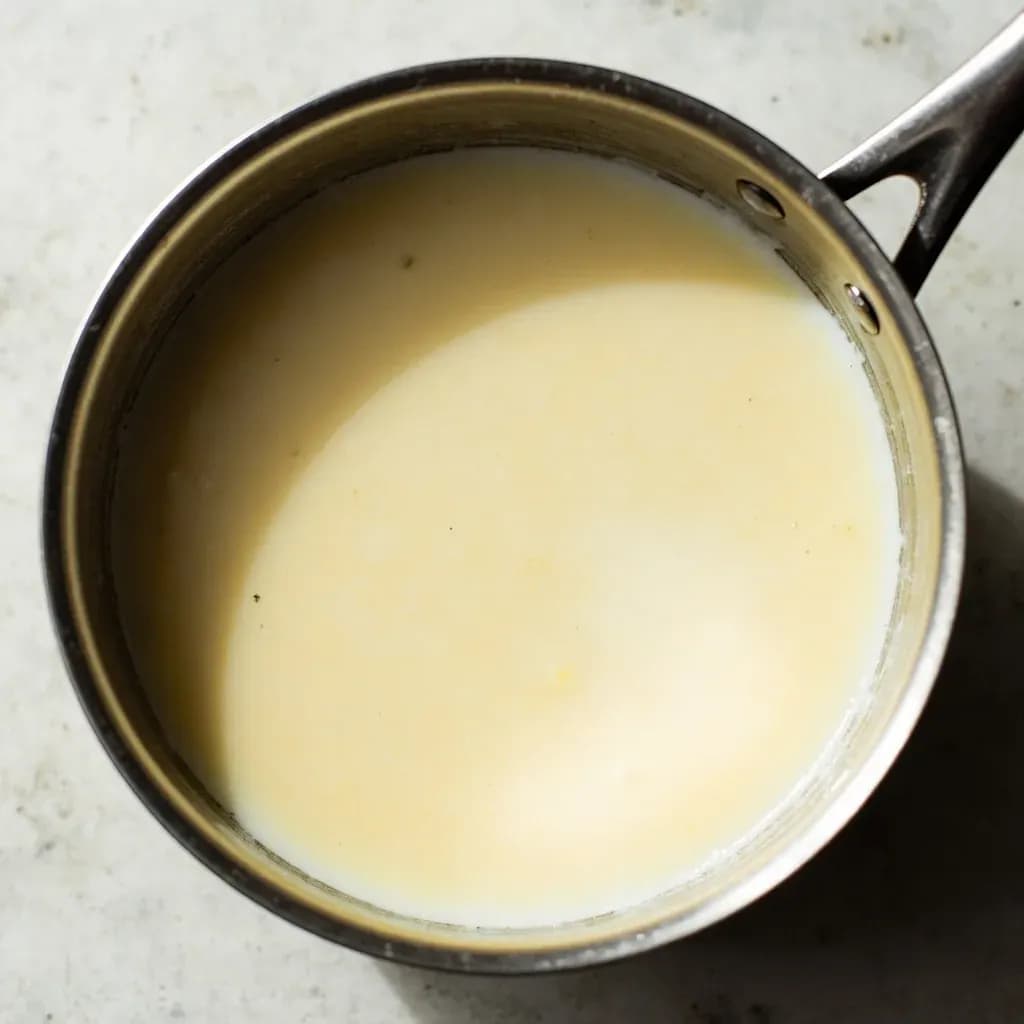
Milk Reduction
Slowly simmering milk to evaporate water and concentrate it into rich solids like khoya or rabri.
Milk reduction simmers milk over low heat for a long time, stirring often, so water evaporates and the milk thickens and sweetens as its solids concentrate. It is the basis of Indian preparations such as khoya, rabri, and kheer, and of coconut-milk rundowns in the Caribbean. Constant stirring and scraping prevent the concentrating milk from scorching on the bottom.
Milk reduction is the slow, controlled simmering of milk until a meaningful share of its water has evaporated, leaving behind a denser, richer liquid or solid built almost entirely from milk solids. What looks like a simple act of cooking milk down is in fact a layered transformation: casein and whey proteins concentrate, butterfat emulsifies more tightly into the shrinking water phase, and lactose edges toward caramelization. A few spoonfuls of the finished product carry the flavor of an entire glass of fresh milk and the texture of cream, jam, or a soft dough depending on how far the cook takes it.
The technique underlies an enormous family of products across South Asia, the Middle East, and Europe — khoya, rabri, basundi, qishta, clotted cream, evaporated and condensed milk, and eventually dulce de leche. It is also one of the simplest ways to add body and milky depth to a savory dish: a small pour of reduced milk into a curry or biryani finish is the difference between a thin gravy and a satiny one. Because nothing is added except heat and time, the cook has unusual control over flavor, color, and texture, and the only equipment required is a wide, heavy pan and patience.
Two variables do almost all of the work: pan width and heat level. A broad pan evaporates water far faster than a tall one, often halving cooking time without sacrificing control, while a lazy simmer — never a rolling boil — keeps proteins from aggregating into a grainy, off-flavored finish. Everything else, from stirring frequency to whether the cream skin is folded back in, shapes the final product but is downstream of those two decisions.
- Difficulty
- Medium
Types & varieties
South Asian; ~4:1 reduction cooked to a soft, dough-like paste that holds its shape. Foundation of barfi, peda, gulab jamun, kalakand, and halwa.
Harder, drier variety from Punjab — cooked further with continuous stirring until almost crumbly; grated over sweets.
Granular-textured khoya achieved by adding a little citric acid or yogurt near the start; used in kalakand and certain barfi.
North Indian; milk reduced ~3:1 with the cream skin (malai) collected as it forms and folded back in. Served as a dessert or layered into rasmalai, malpua, and shahi tukda.
Gujarati and Maharashtrian; ~3:1 reduction sweetened with sugar and flavored with cardamom, saffron, and nuts. Served chilled.
Middle Eastern, Turkish, and South Asian; thickened clotted cream skimmed from the surface during slow reduction. Used in pastries, knafeh, and sheer khurma.
Cornish and Devon tradition, traditionally produced by indirect steam heat, but stovetop reduction at very low heat produces the same dense, golden, buttery result.
Industrial version with ~60% of the water removed; homogenized and canned.
Evaporated milk with added sugar; further reduction on the stove (often with butter) yields dulce de leche and caramelized milk.
How to do it
- 1
Choose and measure the milk
Use full-fat whole milk, ideally pasteurized rather than UHT. For every liter, plan on roughly 200–250 g of finished khoya or 300–350 ml of basundi or rabri. Measuring up front makes it easier to gauge doneness later.
- 2
Set up a wide, heavy pan
Select a broad, heavy-bottomed pan — a kadai, kadhai, or wide stainless saucier. Have a flat wooden or silicone spatula, a fine-mesh skimmer, and a small bowl of cold water within reach.
- 3
Bring to a gentle simmer
Pour the milk in, set over medium heat, and warm it slowly, stirring occasionally to break any skin that forms. As soon as the surface shimmers and the first lazy bubbles appear at the edges, drop the heat to low.
- 4
Hold a controlled simmer
Maintain a low, even simmer — small bubbles breaking the surface across the whole pan, never a rolling boil. Skim the cream skin (malai) as it forms if making rabri, and reserve it; for khoya, leave it in.
- 5
Scrape, don't stir
Every few minutes, run the spatula along the bottom and up the sides, folding the thickening milk back into the body. In the first half hour this is light work; in the final 20–30 minutes it becomes near-constant.
- 6
Watch the danger zone
Once the milk has lost roughly half its volume, it thickens quickly and scorching risk spikes. Reduce heat further, stir more often, and rinse the spatula in cold water between passes. If the smell turns toasty, pull off the heat and add a tablespoon of cold water to rescue it.
- 7
Reach the target consistency
For khoya: a spoon drawn through leaves a clean trail that holds for several seconds, and the mass pulls away from the pan sides into a soft ball. For rabri or basundi: about one-third of the original volume, coating the back of a spoon; if making rabri, fold the reserved malai back in off the heat.
- 8
Cool quickly and store
Transfer to a cool plate or shallow tray and spread thin to halt carryover cooking. Once cool, cover and refrigerate, or portion and freeze. Use within 3–5 days refrigerated or up to 2 months frozen.
The science of concentration
A liter of whole milk is roughly 87% water, 4–5% butterfat, 3.3% protein (about 80% casein and 20% whey), and 4.7% lactose. As water leaves, those proportions invert: by the time you reach khoya you are looking at roughly 25% water, 25–30% fat, 18–20% protein, and 25% sugars, with the balance as ash. The proteins denature gently, which is why a slow simmer gives a smoother result than a fast boil — quick heating drives Maillard browning and aggregates the casein into a grainy finish. Lactose begins its Maillard journey once the milk is well reduced; pushing past the visual endpoint for halwa-style sweets is essentially controlled caramelization, and it is the difference between a pale, milky khoya and a deep, nutty one. The cream skin that rises to the surface is fat and protein dried by evaporation; folding it back in retains richness, while skimming and reserving it is what gives rabri its characteristic layered texture.
- Protein behavior is the main reason for low heat: casein stays smoothly dispersed below about 85 °C / 185 °F and aggregates into a grainy texture at higher temperatures.
- Lactose caramelizes late; if you want a nutty rather than a milky flavor, keep cooking 5–10 minutes past the spoon-trail test.
- Butterfat is what makes a finished khoya feel rich on the tongue; milk below 3.5% fat produces a noticeably thinner result.
Common uses
Tips & pitfalls
- Use the widest heavy pan you have — evaporation rate scales with surface area, not depth. A broad kadai can cut cooking time nearly in half versus a tall saucepan.
- Never let the milk reach a rolling boil. A gentle, lazy simmer is what builds flavor and color; a hard boil scorches the proteins and gives a grainy, off-flavor finish.
- Stir more frequently as the milk thickens. The first 30 minutes need only occasional scraping; the last 20–30 minutes need near-constant motion across the bottom and sides.
- Rinse the spatula in cold water between passes — the water briefly cools the pan base and helps prevent sticking without diluting the milk.
- If you smell even a hint of toast, pull the pan off the heat for 15–20 seconds, add 1–2 tablespoons of cold water, and stir vigorously; this rescues most scorchings if caught early.
- For the silkiest khoya, fold the cream skin back in as you go. For danedar (granular) khoya, stir in ¼ teaspoon citric acid dissolved in 1 tablespoon water at the start.
- Stop at the right moment: khoya is done when a spoon drawn through leaves a clean trail that holds for several seconds; basundi coats the back of a spoon; rabri is the consistency of warm honey.
- Cool the finished product quickly by spreading it in a thin layer on a wide plate or sheet pan — this halts carryover cooking and prevents the solids from turning rubbery.
Good to know
- Heat level
- Low to medium-low; a lazy simmer with small bubbles across the surface, never a rolling boil
- Time
- 45 minutes to 2+ hours per liter, depending on the target product and pan width
- Yield
- Roughly 1 L whole milk yields ~200–250 g khoya or ~300–350 ml basundi/rabri
- Reduction ratio
- Khoya ~4:1 by volume; rabri/basundi ~3:1; qishta ~2.5:1
- Best milk
- Full-fat whole milk, pasteurized rather than UHT — UHT scorches faster and gives a thinner, less flavorful result
- Equipment
- Wide, heavy-bottomed pan (kadai or thick stainless saucier); flat wooden or silicone spatula; fine-mesh skimmer optional
- Storage
- Refrigerate covered 3–5 days; freeze up to 2 months and thaw gently over low heat
- Safety
- Milk foams and boils over easily — never fill the pan more than one-third full and stay nearby once simmering
Also called
Milk Reduction (for Kheer/Khoya) · Run Down (Coconut Reduction) · Rundown · Reducing Milk
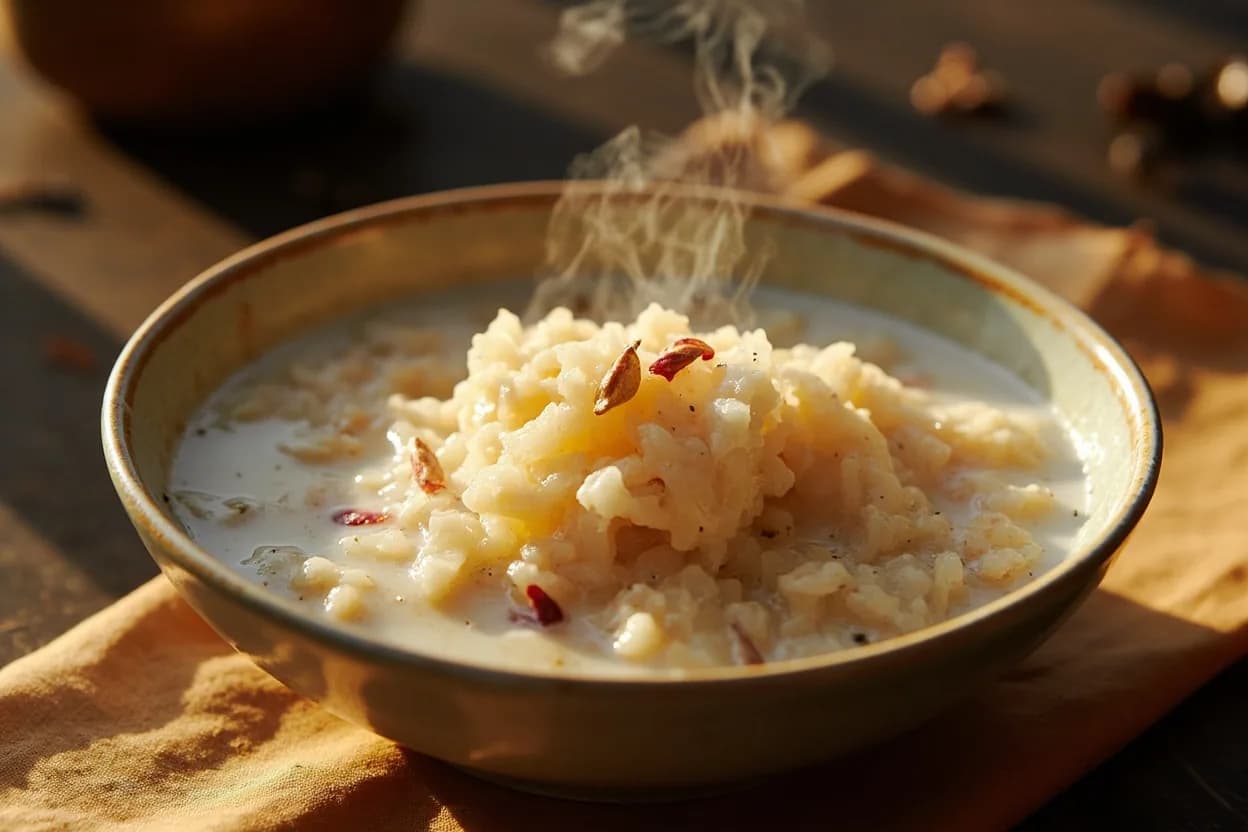
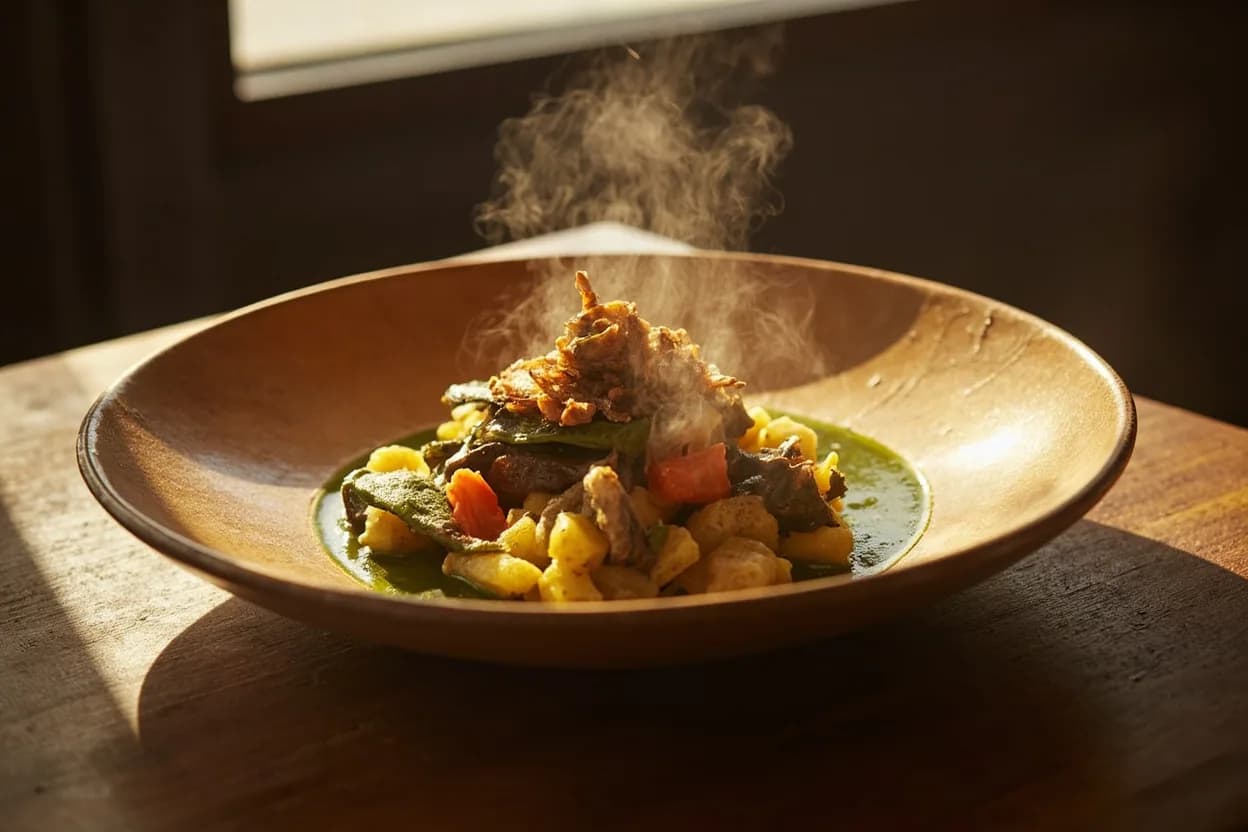
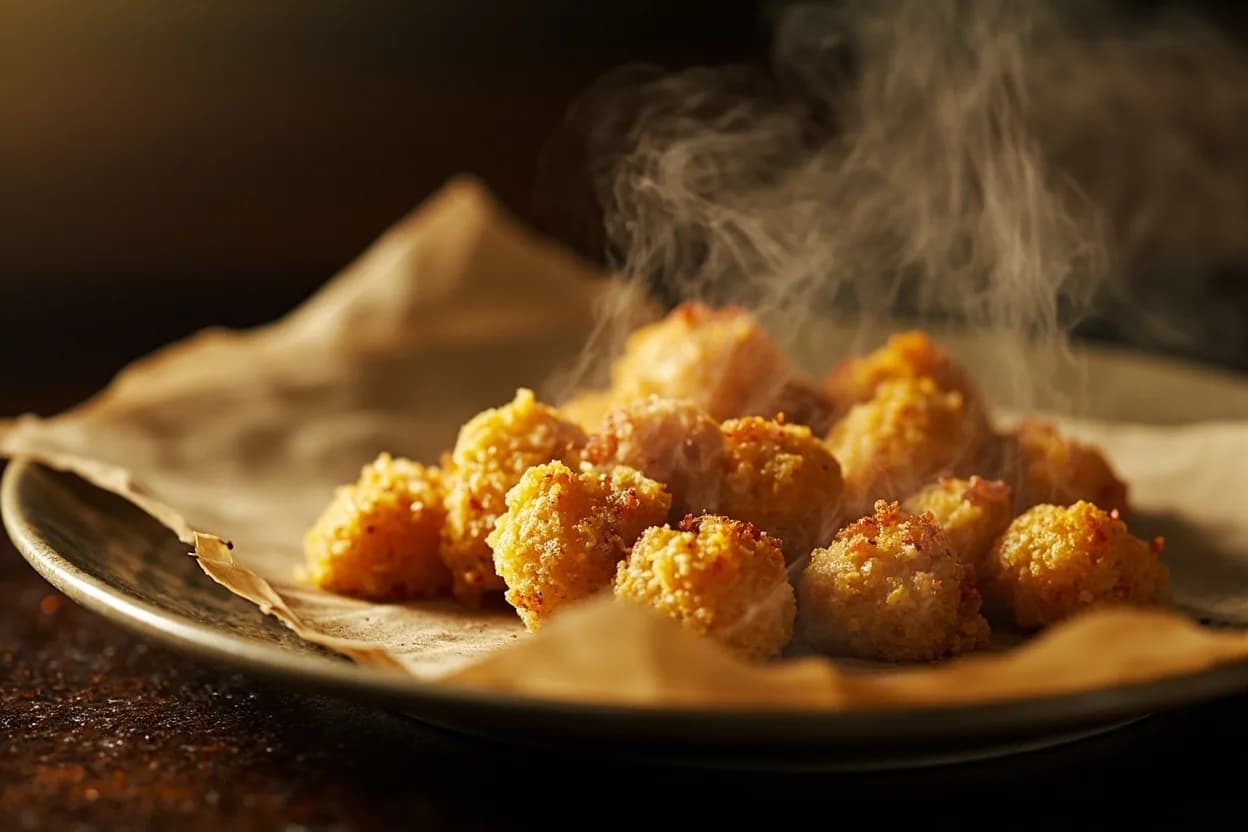
Dishes that rely on it

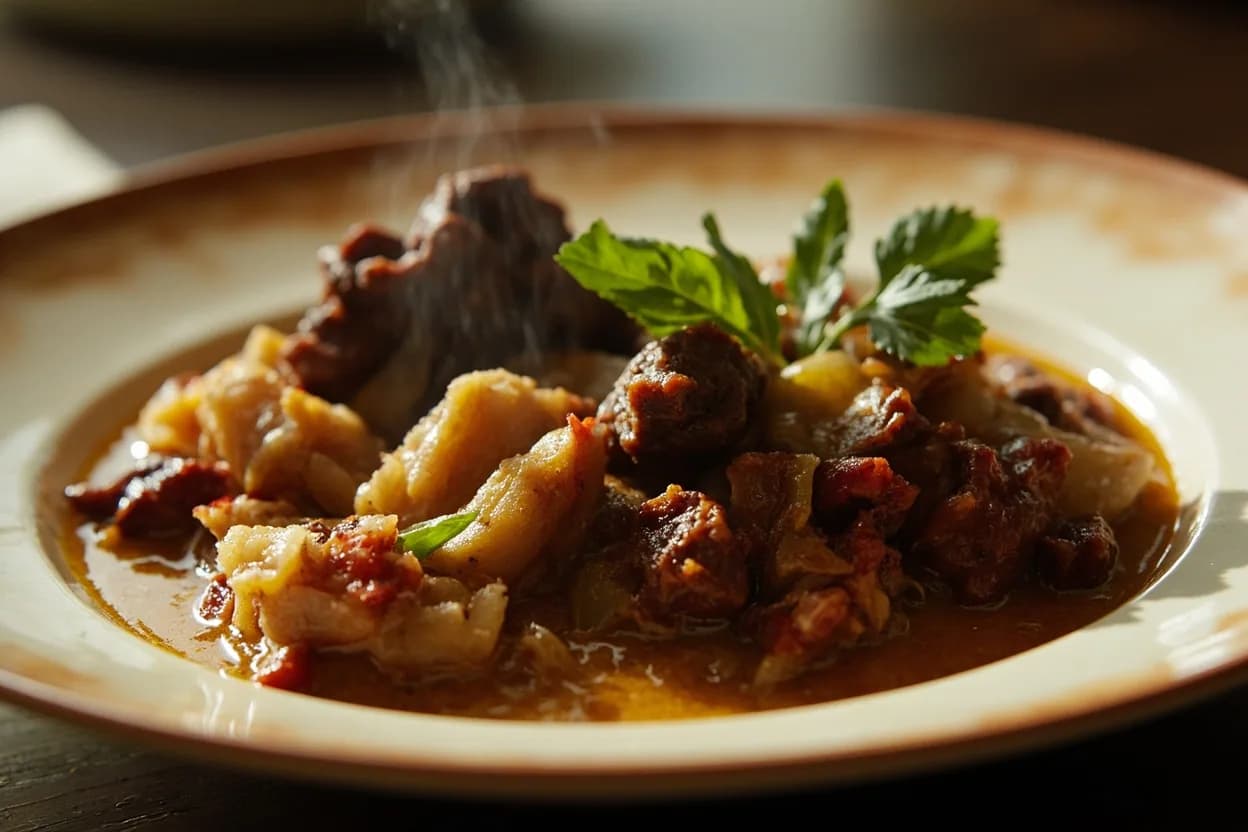
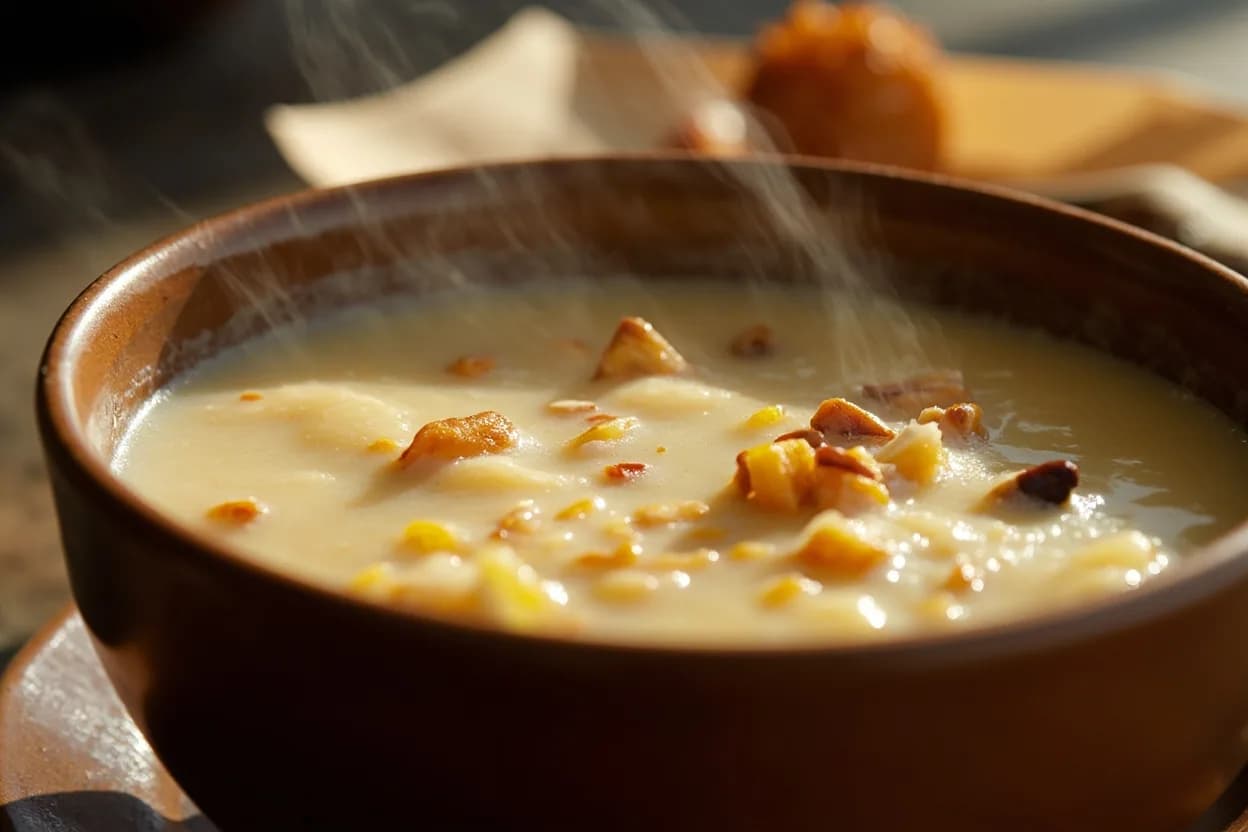
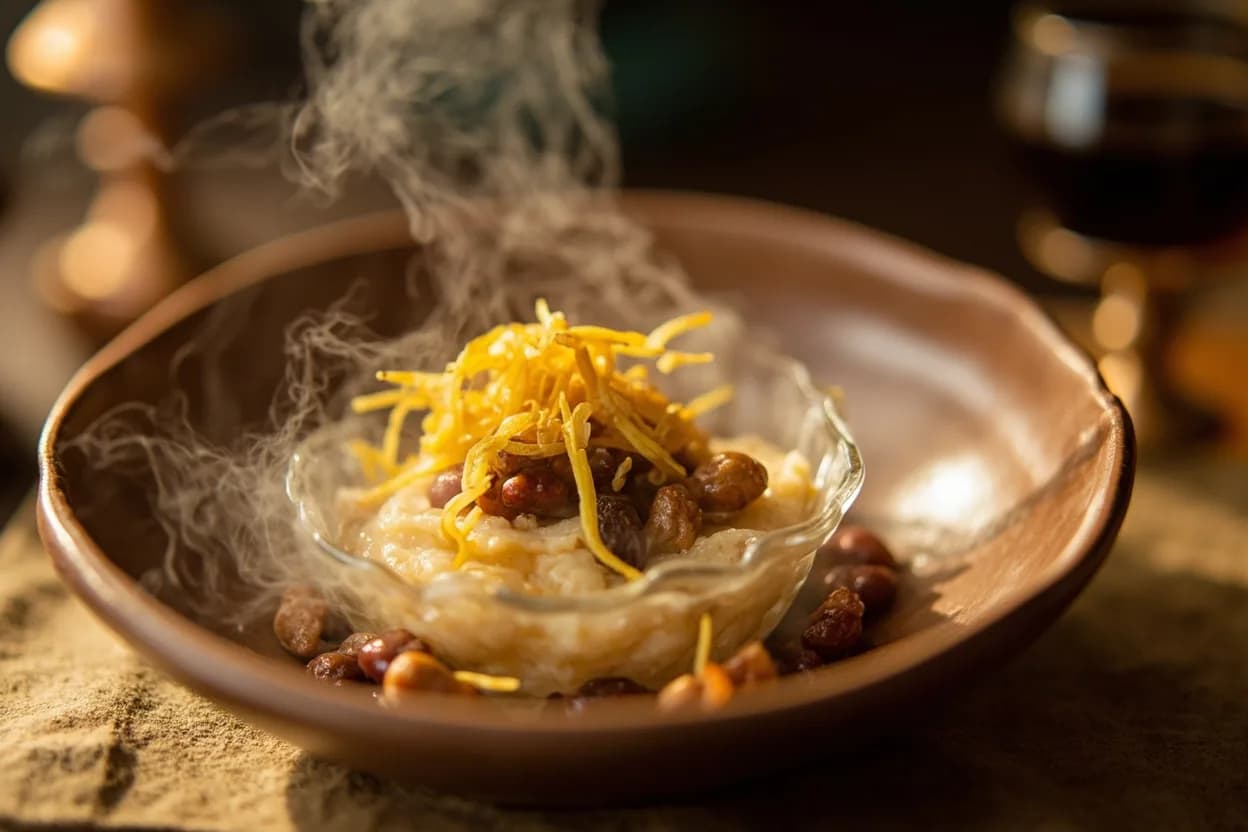
Related

Boil
Cook in vigorously bubbling liquid at full rolling heat

Simmer
Hold liquid at a gentle shimmer for tender, unhurried cooking

Poach
Cook gently in barely-trembling liquid for silky, tender results

Steam
Cook in rising vapor to keep color, nutrients, and shape intact

Blanch
Plunge briefly in boiling water, then shock cold to lock color

Braise
Sear, then cook slow in a little liquid until fall-apart tender

Stew
Simmer bite-sized pieces fully submerged into a rich, unified pot

Sous-Vide
Seal and cook in precise warm water for edge-to-edge doneness