
Heat & Fire
Pan-Fry
Crisp food in a shallow layer of hot fat, turning once or twice
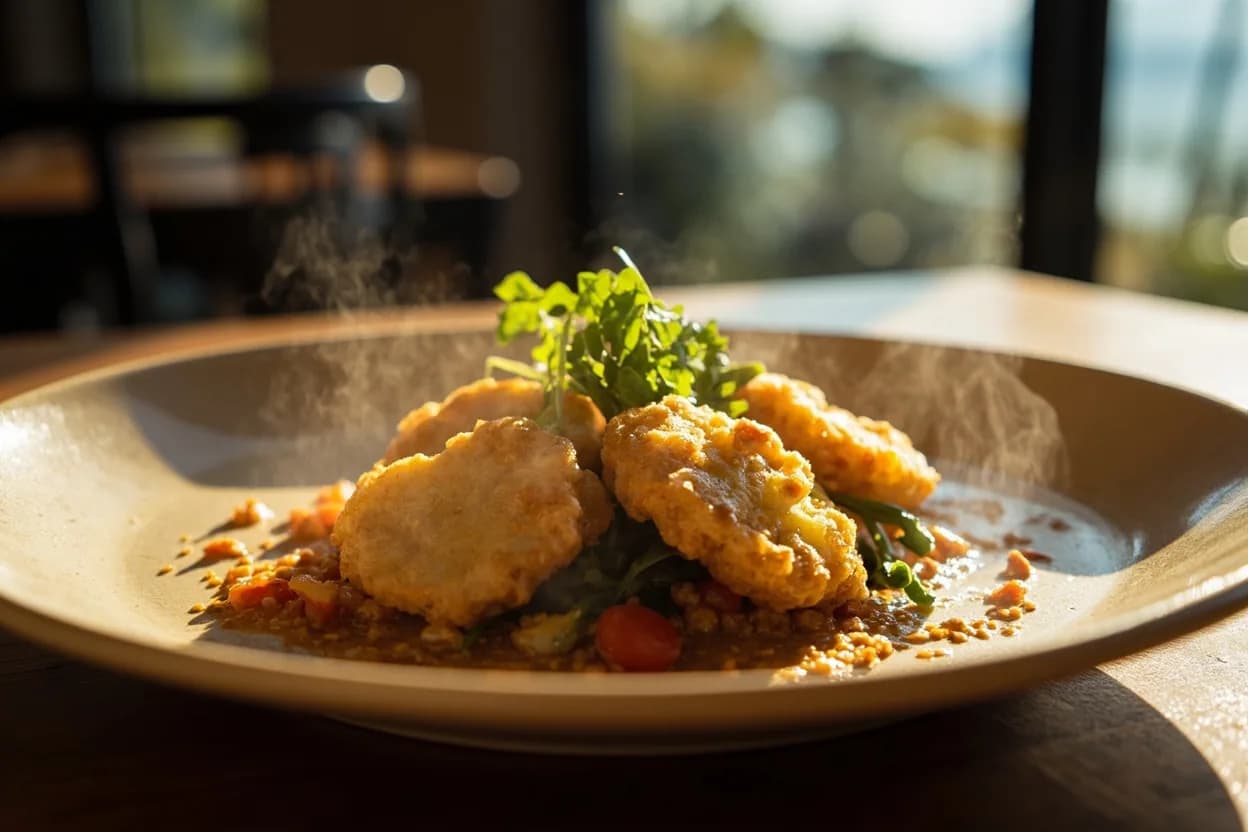
Pan-frying uses enough fat to come partway up the food, giving an even golden crust on cutlets, fritters, and fish. It's gentler than deep-frying but crispier than sautéing. Keep the oil at a steady medium-high and flip only when the underside has set, or the coating tears.
Pan-frying cooks food in enough fat to come about a third to halfway up its sides, giving an even golden crust without fully submerging it the way deep-frying does. It's the sweet spot for breaded cutlets, fritters, fish fillets, and croquettes — crispier than a sauté but far less oil and mess than a deep fry. The key is a steady medium-high oil temperature and patience: let the underside set into a crust before you turn, or the coating tears and sticks.
- Difficulty
- Easy
Types & varieties
Slightly more oil, partway up the food, for an all-around crunch.
Pan-fry the base, then add water and cover to steam through.
Loose, swirling bath of fat that lets the breading puff and float.
How to do it
- 1
Bread or coat
For cutlets, set up flour, egg, and crumb; press the coating on firmly and let it rest a few minutes to adhere.
- 2
Heat oil to temperature
Bring the oil to 160–180°C / 325–350°F — a crumb dropped in should sizzle steadily and brown in about 30 seconds.
- 3
Add without crowding
Lay food in away from you in a single layer; leave space so the oil temperature doesn't crash.
- 4
Don't move it early
Let the first side cook undisturbed until deep golden and releasing easily before you turn it once.
- 5
Flip and finish
Cook the second side to match; thick pieces may need to finish in a low oven so the crust doesn't over-brown.
- 6
Drain and season
Lift onto a rack (not paper, which steams the bottom) and salt immediately while hot.
Doneness and crust cues
A good pan-fry reads through sight, sound, and feel.
- Steady, lively bubbling around the food means the oil is right; furious spitting means too hot, lazy seeping means too cool.
- The crust should be deep gold, not pale — pull too early and it's greasy, too late and it's bitter.
- Food releases cleanly from the pan when the underside crust has set; if it sticks, it's not ready to turn.
Common uses
Tips & pitfalls
- Use a thermometer until you can read the oil by sight; temperature is everything here.
- Rest breaded food before frying so the coating bonds and won't slough off.
- Drain on a wire rack rather than paper towels to keep the underside crisp.
- Skim stray crumbs between batches so they don't burn and flavor the oil.
Good to know
- Heat level
- Medium-high; oil around 160–180°C / 325–350°F
- Best for
- Breaded cutlets, fish, fritters, dumplings, croquettes
- Equipment
- Heavy skillet (cast iron or stainless)
- Fat needed
- Enough to come 1/3 to 1/2 up the food
- Time
- 3–5 minutes per side for cutlets
Also called
shallow-fry
Dishes that rely on it
Related

Sear
Blast the surface hot for a deep-browned, savory crust

Sauté
Cook quickly in a little fat over lively heat, tossing as you go

Stir-Fry
Toss bite-sized pieces over roaring heat for fast, smoky cooking

Deep-Fry
Submerge in hot oil for an all-over crackling crust

Roast
Cook uncovered in dry oven heat for browned edges and tender centers

Bake
Cook with steady, surrounding oven heat — the soul of bread and pastry

Broil
Hit food from directly above with fierce overhead heat

Grill
Cook over live fire for char, smoke, and bar-marked edges