Heat & Fire
Cantonese Roasting (燒味)
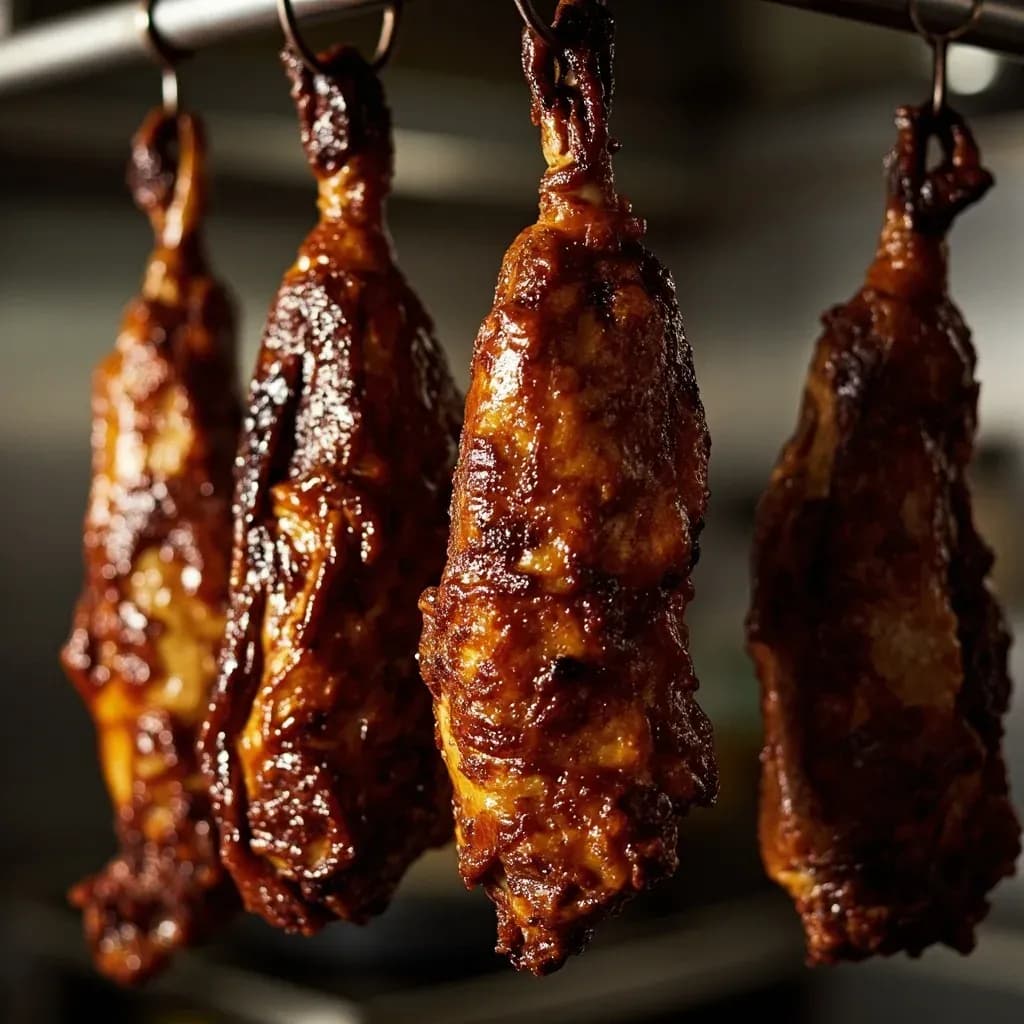
Hanging marinated or maltose-glazed meats in a tall roaster for lacquered, crackling-skin siu mei.
Cantonese roasting, or siu mei, hangs whole or large cuts of meat and poultry on hooks in a tall, intensely hot roasting oven. Items like char siu, roast duck, and crispy-skin pork are first marinated or glazed with maltose, then roasted so the exterior lacquers and the skin crackles while the interior stays juicy. The vertical hanging lets fat render and drip away as the meat cooks evenly on all sides.
Cantonese roasting, known in Chinese as siu mei (燒味) for the finished meats and siu laap (燒臘) for the broader trade of roasted and cured meats, is a family of techniques that turns marinated pork, duck, goose, chicken, and pigeon into the glossy, lacquered, crackling-skinned showpieces of a Cantonese deli counter. The method rests on three signature moves: a fragrant marinade built on five-spice, soy, Shaoxing wine, and often hoisin or red fermented tofu; a maltose syrup brushed onto the skin; and a long, breezy air-dry that leaves the surface dry and tacky before the meat ever sees heat. Once in the oven, the meat hangs freely from overhead hooks in a tall front-loading roaster so hot air can circulate on every side, eliminating the need to turn the meat.
The result is what diners actually come for: a glassy, mahogany skin that crackles or shatters under the cleaver, with seasoned, juicy meat underneath. The technique behaves differently from Western roasting because the maltose-and-air-dry combination does work that high heat alone cannot — it dehydrates the outer skin enough to crisp, then caramelizes the sugars into a deep lacquer. Leaner birds and pork cuts (shoulder and belly) are the easier home projects; whole goose and suckling pig are showpieces that benefit from a purpose-built siu laap oven and the steady turnover of a specialist shop.
Most authentic siu mei is produced by siu laap shops, whose tall gas or charcoal ovens, long drying rails, and accumulated expertise are hard to replicate at home. The underlying logic, however, is teachable: dry the skin thoroughly, glaze in thin coats, and roast hot with good air circulation. A domestic convection oven, a fridge-and-fan drying phase, and patience will get you a credible char siu or a respectable roast duck, even if your crackling is not quite at Kowloon City or Shanwei standard.
- Difficulty
- Hard
Types & varieties
Long thin strips of pork shoulder or belly marinated in hoisin, red fermented tofu, honey, five-spice, and soy, then roasted and glazed until mahogany-red.
Crispy-skinned roast pork belly; the skin is pricked, salted, and air-dried for hours before roasting to produce a shattering crackling layer over fat and meat.
Marinated in a spiced master stock and roasted, often basted with maltose; the Shanwei and Kowloon City traditions are particularly famous.
Slightly smaller and leaner than goose, with the same five-spice and maltose treatment; a Cantonese banquet staple.
Brined or marinated, air-dried, then roasted; the skin is the prized part.
Small young pigeons marinated with five-spice and roasted briefly so the skin stays glassy and the flesh stays faintly pink at the bone.
Whole young piglet, traditionally spit-roasted; the goal is a glassy, puffed skin and tender meat beneath.
Roasted goose given a finishing smoke over tea leaves and raw rice in a closed wok; a Shanwei specialty.
How to do it
- 1
Select and trim the meat
Choose the right cut for the dish: pork shoulder or belly for char siu, pork belly with intact skin for siu yuk, dressed duck, goose, chicken, or pigeon. Trim excess loose fat, leaving the subcutaneous fat intact for moisture and flavor.
- 2
Marinate
Coat the meat thoroughly in a marinade built around five-spice powder, light and dark soy sauce, Shaoxing wine, sugar, white pepper, garlic, and hoisin. For char siu, add red fermented tofu and a splash of rose-flower wine. Marinate refrigerated for several hours, ideally overnight, turning occasionally so the salt and sugar cure the meat evenly.
- 3
Thread and shape
Thread the meat onto long metal skewers or S-hooks so it hangs straight and dangles freely in the oven. For siu yuk, tie the belly into a tight roll (or keep it flat) so the skin remains taut and the layers do not separate.
- 4
Glaze with maltose
Warm maltose syrup until pourable and thin it with a little water. Brush a thin, even coat over the skin; some cooks repeat this two or three times at intervals to build a deep, lacquered gloss.
- 5
Air-dry
Hang the glazed meat in a cool, dry, breezy place — a covered balcony, a walk-in, or in front of a fan — for 2 to 12 hours. The surface should feel dry and slightly tacky, like a membrane, before it goes into the oven. This step is the single biggest factor in crackling, glassy skin.
- 6
Roast in a tall oven
Hang the meat inside a pre-heated roasting oven (燒臘爐) at roughly 200–260 °C, with the thickest part nearest the heat source. Close the door and let hot air circulate. Typical times: 20–30 minutes for pigeon, 30–40 minutes for chicken, 40–60 minutes for duck, 50–75 minutes for goose, 25–40 minutes for char siu, and 45–60 minutes for siu yuk. Larger cuts may need a turn or a move of position if heat is uneven.
- 7
Optional finish and check doneness
Brush on a final thin layer of maltose near the end for extra gloss, or, in the Shanwei tradition, finish the goose in a covered wok with tea leaves and raw rice to smoke it. Check internal temperature (around 75 °C for poultry, 70 °C for pork) and confirm juices run clear; char siu should still show a faint pink ring at the center from the marinade.
- 8
Rest and slice
Rest the meat 10–15 minutes on a board. Slice across the grain with a heavy Chinese cleaver using a quick, decisive motion; serve with rice, noodles, or as part of a siu mei platter with mustard, hoisin, and sweet bean sauce on the side.
The maltose-and-dry combination: why the skin crackles
Maltose is the unifying signature of siu mei. Warmed until pourable and thinned with a splash of water, it is brushed onto the skin in thin coats and left to set during the air-dry. By the time the meat enters the oven, the skin surface is dry and slightly tacky, almost membrane-like. The hot air then drives off the last of the surface moisture while the maltose sugars caramelize into a deep, glassy lacquer. Without the air-dry, that moisture would steam the skin soft and the sugars would run off into the drip pan. Honey is the usual home substitute; it behaves similarly but browns faster and can scorch, so a slightly lower oven or a thinner coat is wise.
- Maltose is a disaccharide that browns more slowly and evenly than sucrose or honey, which is why it survives long roasts without burning.
- Multiple thin coats (two or three) build a deeper gloss than a single thick coat, which tends to gum or drip.
- The air-dry is non-negotiable: under-dried skin will not crackle, no matter how hot the oven.
Siu laap shops and the home kitchen
Siu mei is as much a trade as a cooking method. A proper siu laap shop has a tall, gas- or charcoal-fired oven with overhead rails, a long drying corridor, and a roster of customers moving enough product to keep the oven full all day. That volume is part of why the results are so consistent. Home cooks can get close with a convection (fan-forced) oven set to its highest setting, an open door for the last few minutes to drive off residual steam, and a drying phase overnight on a rack in the fridge with a small fan pointed at the skin. Leaner cuts (char siu, chicken, duck) reward the home cook most; whole goose and suckling pig are best left to a specialist unless you are set up for them.
- S-hooks or threaded skewers let you hang the meat from the upper rack of a domestic oven; an inverted sheet pan on the lower rack catches drips.
- A fridge-and-fan dry for 8–12 hours is the closest home equivalent to a siu laap drying corridor.
- For siu yuk specifically, pricking the skin thoroughly with a sharp pin (and a light rub of baking soda on some skins) helps the crackling puff.
Common uses
Tips & pitfalls
- Do not skip the air-drying phase — without several hours of drying, maltose-glazed skin will not crackle or lacquer; it will simply go soft.
- Apply the maltose glaze in thin, multiple coats rather than one thick coat to avoid burning or a gummy finish.
- For siu yuk, use a sharp pin or skewer to prick the skin thoroughly; some cooks also rub a little baking soda into the skin to help it puff.
- Keep the oven hot — lean birds like duck and goose benefit from a quick blast of high heat at the end to tighten the skin.
- Score a small cross-section of the thickest part to check doneness: char siu should show a faint pink ring from the marinade, duck and goose juices should run clear.
- Hang meats with the thickest part of the cut toward the hottest zone of the oven; rotate hooks during a long roast if heat is uneven.
- Rest the meat 10–15 minutes before slicing so the juices reabsorb; a heavy cleaver and a quick, decisive motion give the cleanest cut.
- Common home-cook mistakes: under-drying the skin, applying glaze before the meat has set (it runs off), and roasting at too low a temperature, which toughens the skin rather than crisping it.
Good to know
- Cuisine
- Cantonese (Guangdong, southern China)
- Chinese names
- 燒味 (siu mei) for the roasted meats; 燒臘 (siu laap) for the broader roasted-and-cured trade
- Signature glazes
- Maltose (麥芽糖), warmed and thinned with water and brushed on; honey is the common modern substitute
- Signature marinades
- Five-spice powder, light and dark soy sauce, Shaoxing wine, sugar, white pepper, garlic, and hoisin; char siu adds red fermented tofu (nam yu) and sometimes rose-flower wine
- Equipment
- A tall, front-opening roasting oven (燒臘爐) with overhead rails and S-hooks, typically gas-fired; traditional workshops used wood or charcoal
- Oven temperature
- Roughly 200–260 °C (390–500 °F); higher for crackling-skinned pork, gentler for leaner birds
- Air-drying step
- Glazed meats are hung to dry in a cool, breezy spot or under a fan for 2–12 hours before roasting — the single biggest factor in glossy, crackling skin
- Origin and centers
- Developed in Guangdong and refined through the 20th century in Guangzhou and Hong Kong; roast goose is especially associated with Kowloon City (鵝城) and Shanwei (汕尾)
Also called
Siu Mei · Char Siu Roasting · 燒味
Dishes that rely on it
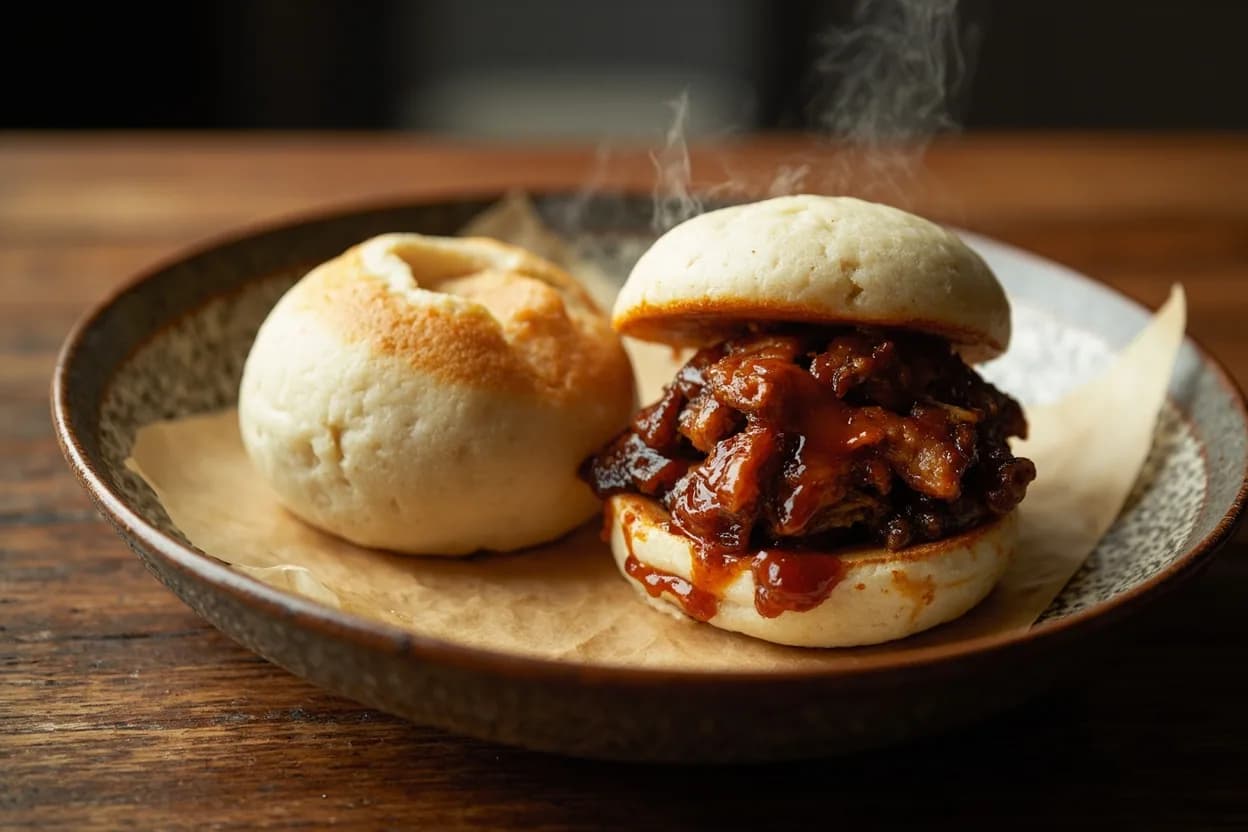
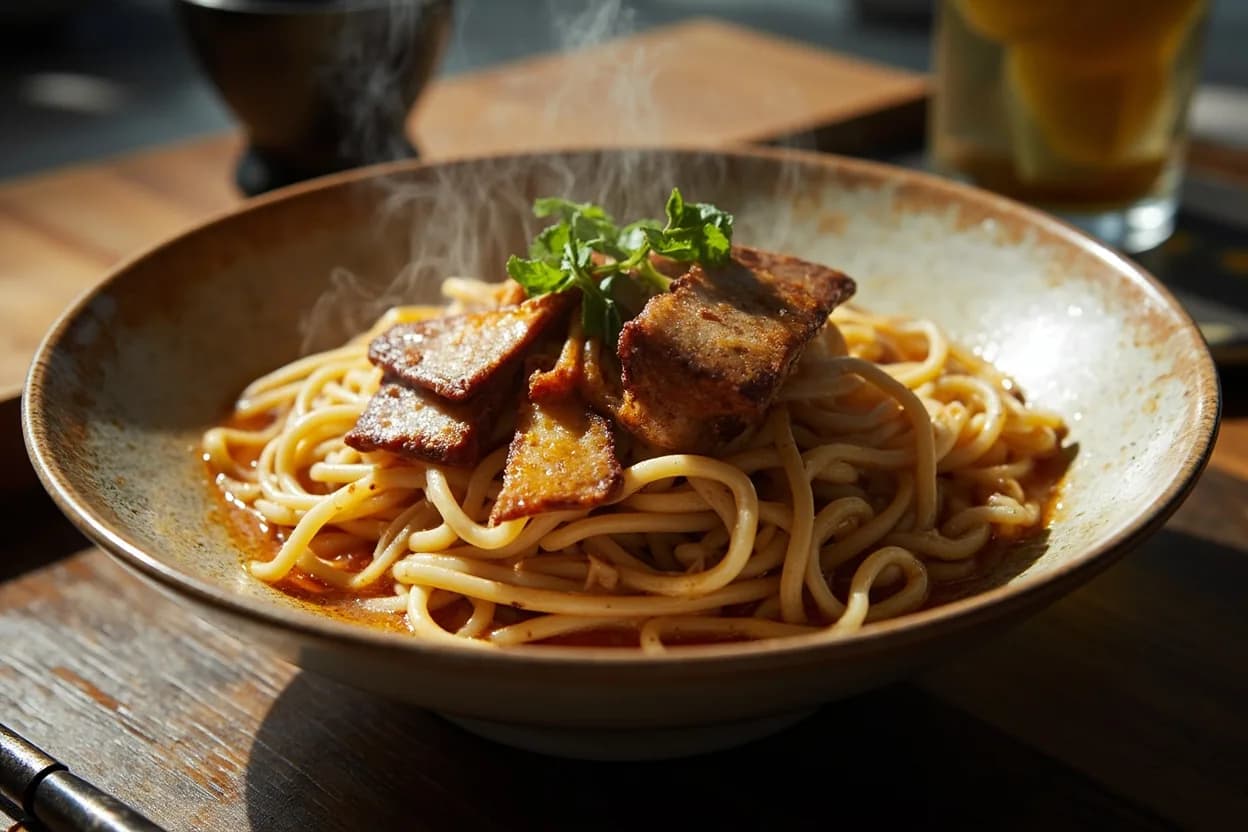
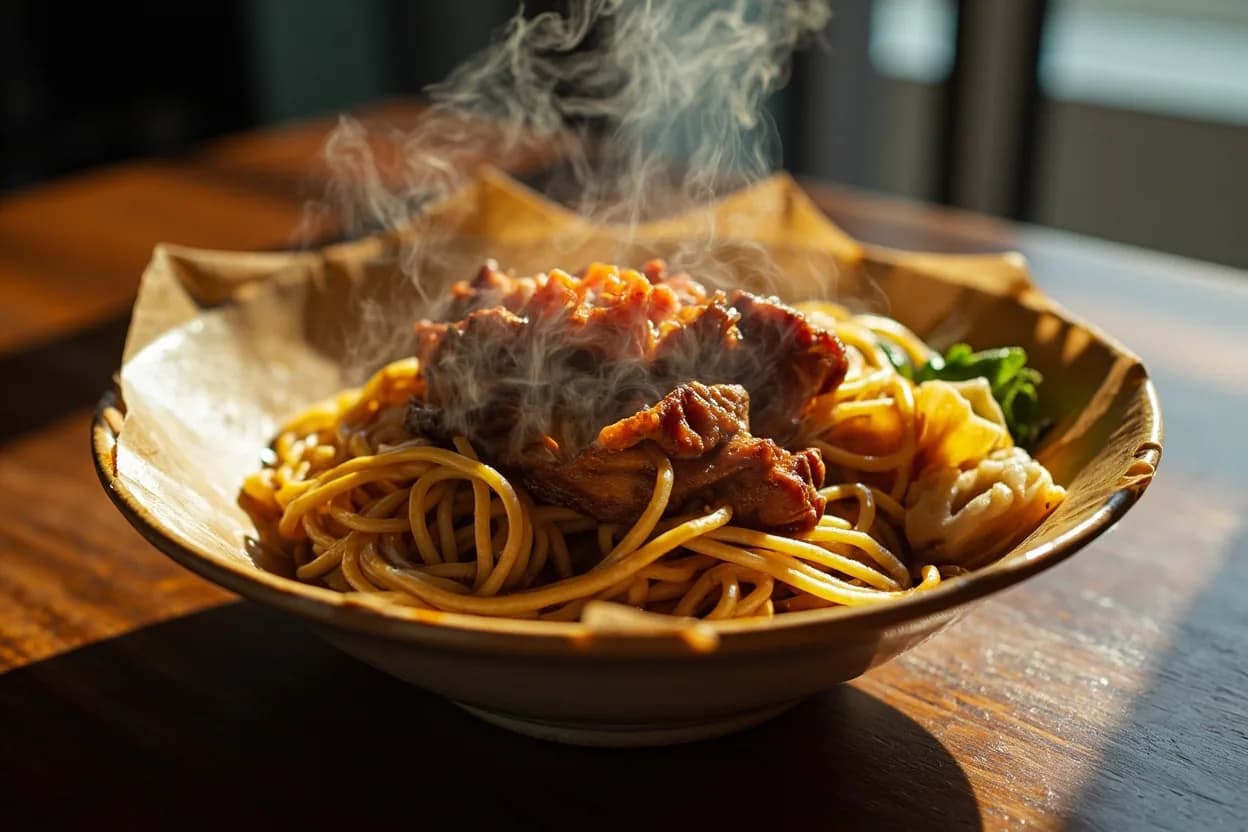
Related

Sear
Blast the surface hot for a deep-browned, savory crust

Sauté
Cook quickly in a little fat over lively heat, tossing as you go

Stir-Fry
Toss bite-sized pieces over roaring heat for fast, smoky cooking

Pan-Fry
Crisp food in a shallow layer of hot fat, turning once or twice

Deep-Fry
Submerge in hot oil for an all-over crackling crust

Roast
Cook uncovered in dry oven heat for browned edges and tender centers

Bake
Cook with steady, surrounding oven heat — the soul of bread and pastry

Broil
Hit food from directly above with fierce overhead heat