Heat & Fire
Spit-Roasting
Slowly rotating meat on a skewer over fire for even browning and self-basting.
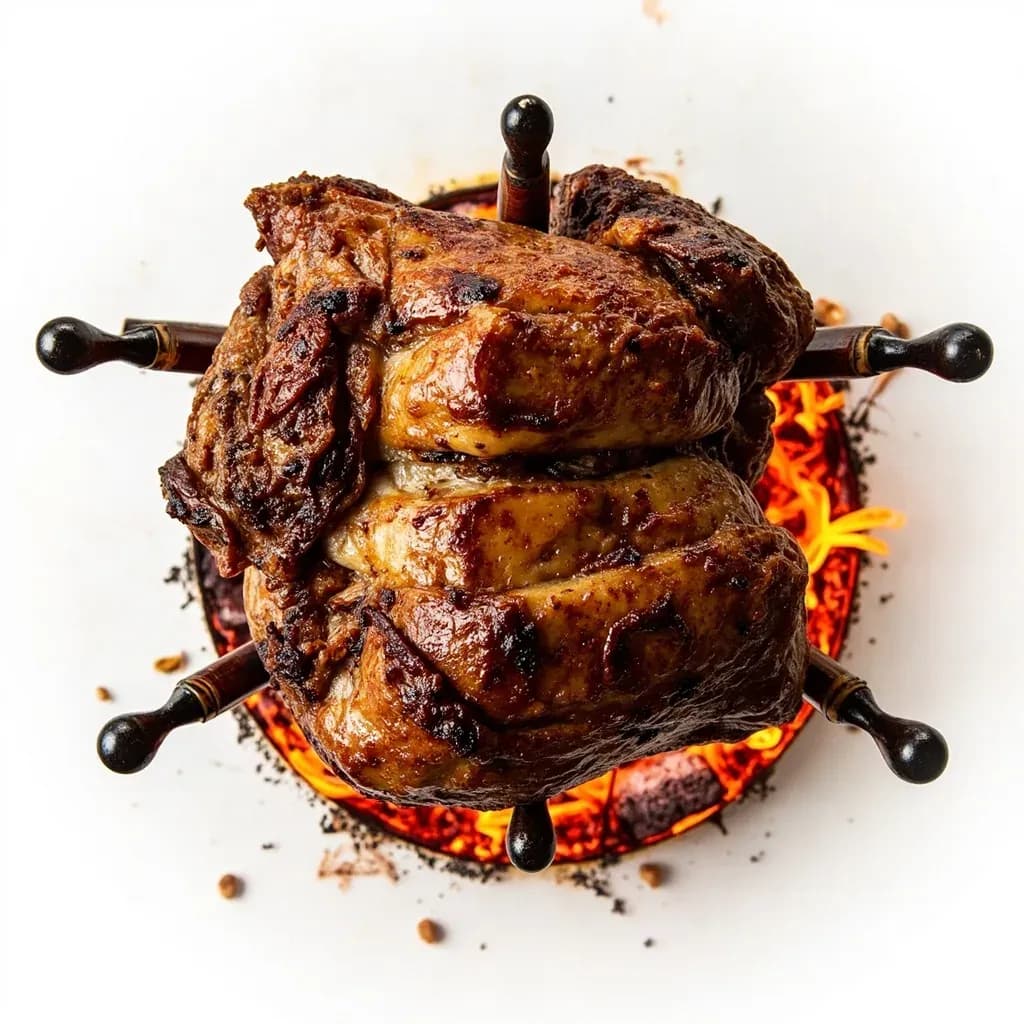
Spit-roasting threads meat onto a rotating spit set over coals or open flame, turning it continuously so it cooks evenly and bastes itself in its own dripping fat. It is a centuries-old method behind whole-roasted lamb, suckling pig, and Balkan pečenje na ražnju. The constant rotation prevents any one side from scorching while building a crisp, burnished exterior.
Spit-roasting is one of the oldest cooking methods on earth, and it is also one of the most forgiving once you understand what the rotating meat is actually doing. A skewer holds the food over (or beside) a fire while constant rotation does three jobs at once: it exposes every surface to the heat evenly, it carries melted fat across the meat so it bastes itself, and it lets gravity drain excess fat away into a drip pan below. The result is even browning without the flare-ups and hot spots that plague static roasting, and a self-basting exterior that needs almost no attention from the cook.
The method divides into two quite different practices that share a name. The first is slow horizontal rotation of whole animals or large roasts over gentle, indirect heat — a hog, lamb, or rolled porchetta turning for hours over coals at 275–325°F, with smoke and drippings doing the flavor work. The second is vertical, faster rotation of stacked, marinated meat next to a radiant broiler — the gyro, shawarma, and al pastor cones shaved in thin slices to order. Both reward the same fundamentals: a square rod that grips the meat, a balanced load, and the discipline to cook to internal temperature rather than the clock.
- Difficulty
- Medium
Types & varieties
Mechanically rotated horizontal spit, often inside an enclosed box; the workhorse for chickens, prime rib, and small roasts in home and commercial kitchens.
Large horizontal setup for hogs, lambs, or goats; the rod runs the full length of the carcass, balanced and trussed with heavy twine.
Vertical spit with stacked, seasoned meat shaped around a large skewer; sliced thinly from the outside as it rotates beside a broiler.
Mexican adaptation of Lebanese shawarma: marinated pork stacked on a vertical spit (trompo), often crowned with a pineapple, and shaved into tortillas.
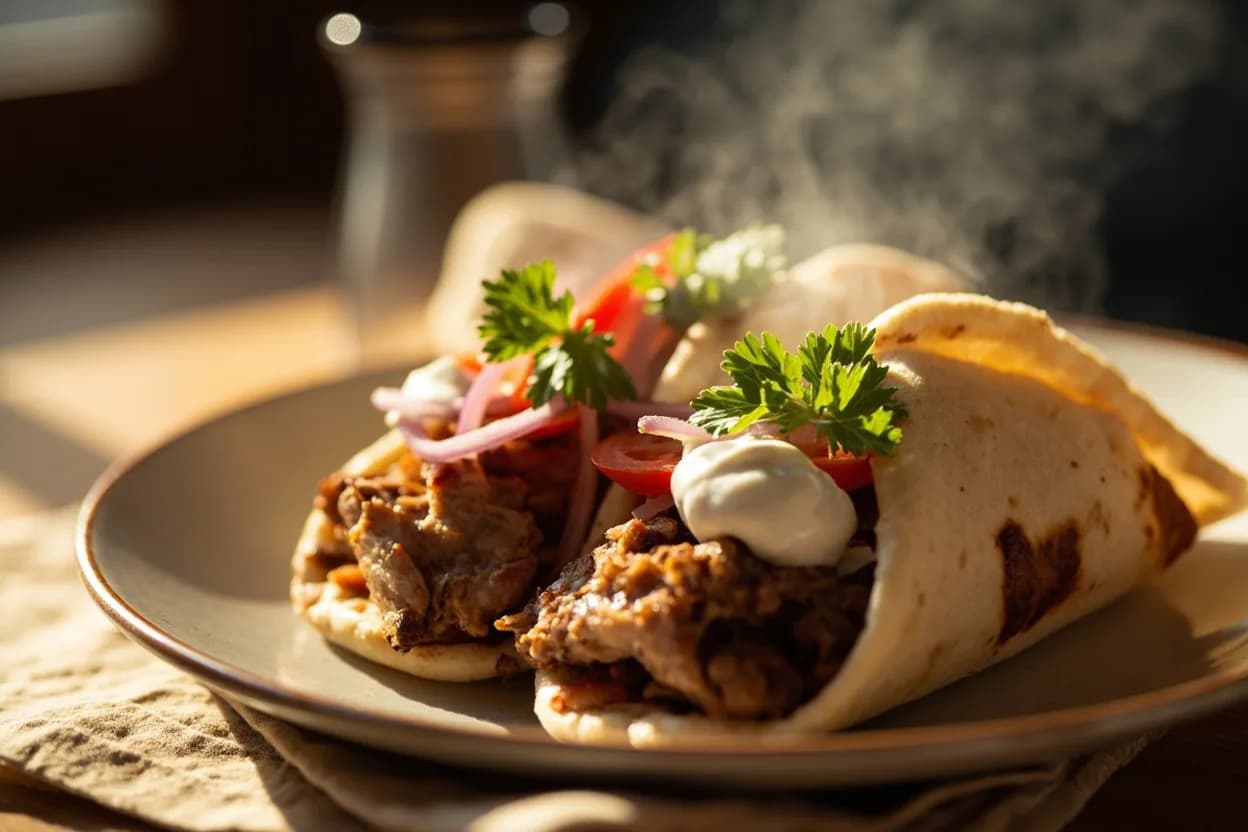
Middle Eastern vertical spit of layered, marinated chicken, lamb, or beef cooked by radiant side heat and shaved to order.
North African (especially Moroccan) whole lamb slow-roasted on a horizontal spit or in an underground pit; seasoned with little more than salt and cumin.
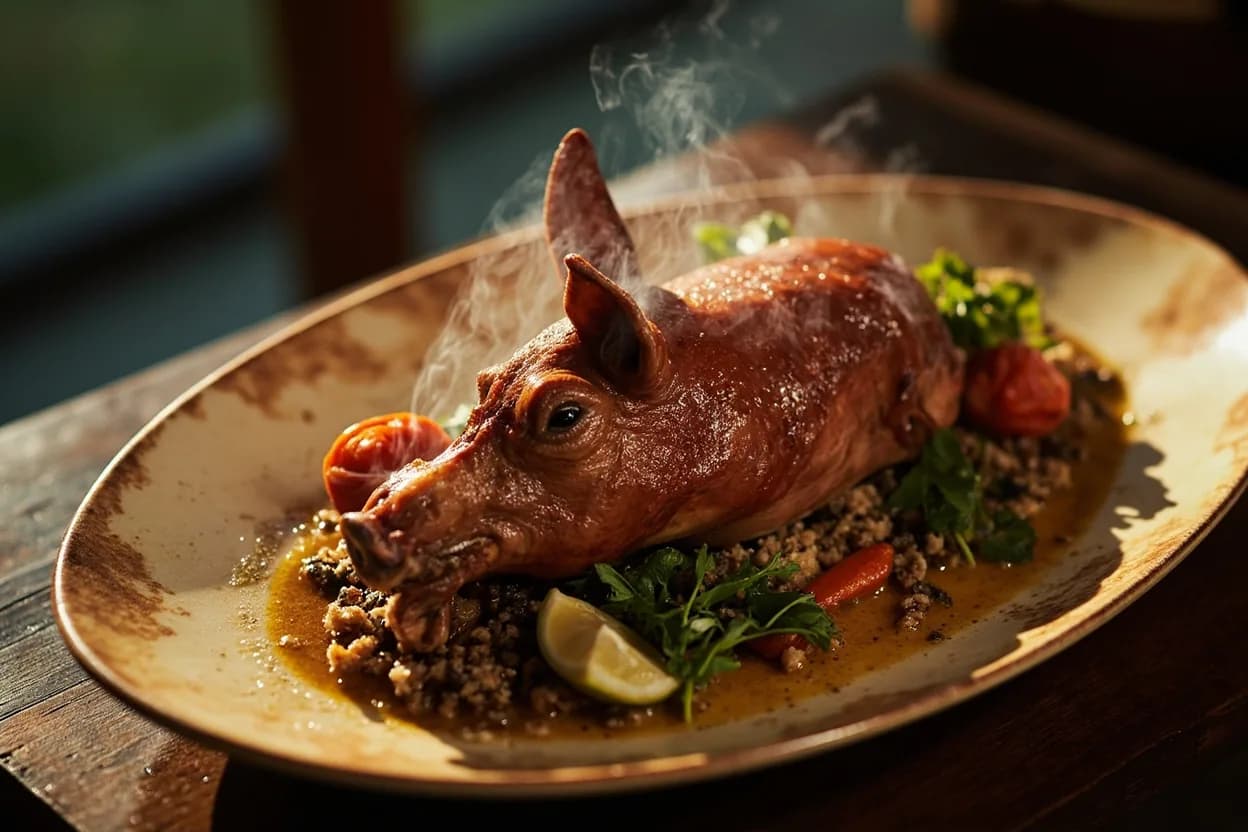
Filipine, Spanish, Cuban, and Puerto Rican whole pig roasted on a spit or in a purpose-built box (Caja China) for shatteringly crisp skin.
Boneless Italian pork belly and loin rolled, tied, and spit-roasted; the rotating skin crisps into crackling over herb- and garlic-seasoned meat.
Argentine and Chilean technique where a whole lamb or goat is tied to a stake or cross (asador) and roasted beside a slow wood fire.
How to do it
- 1
Choose and prepare the animal or cut
Start with a fresh, well-aged carcass or roast. Remove any loose papery skin but leave the fat cap intact on pork and lamb — it is your basting fat. For poultry, pat the skin dry, salt it generously, and refrigerate uncovered overnight so the skin dries out and will crisp under heat. For porchetta, debone the belly and loin, season the interior, and roll it tight enough to hold its shape on the rod.
- 2
Build the support and fire
Assemble the spit frame, motor or hand crank, and drip pan. Build a fire of hardwood or charcoal on one side of the pit so heat radiates rather than flares directly onto the meat. Aim for a steady 300°F (150°C) at the cooking surface, and let the fire burn down to a bed of glowing coals before you mount anything.
- 3
Truss and secure the meat to the rod
Skewer the meat through its center of mass, running the rod along the bone on whole animals (along the spine for pigs and lambs). Lock it in place with two sets of heavy prongs — one at each end — and tighten the retaining bolts. Tie the legs, wings, and any loose flaps against the body with butcher's twine so nothing droops into the fire or catches flame.
- 4
Balance the load
Slide the trussed meat along the rod until it spins smoothly with no heavy side. A few minutes spent here saves hours of uneven cooking and a strained motor. Lock the rod in its cradle and confirm the rotation is free before lighting up.
- 5
Mount and start rotation
Position the rod over the fire with the drip pan centered beneath the thickest part of the meat. Start the motor or hand-turning and confirm smooth rotation. Close any lids halfway to trap heat around the meat while leaving a vent for smoke to escape.
- 6
Cook low, slow, and steady
Maintain 275–325°F (135–165°C) at the surface. Rotate continuously and resist the urge to open lids. Replenish fuel in small amounts to keep temperature steady rather than chasing it with large additions that spike the heat. If you want a glazed crust, mop with a thin marinade or pan drippings only in the last 30–45 minutes of cooking — early basting washes off seasoning and can prevent browning.
- 7
Monitor internal temperature
Insert a leave-in probe into the deepest part of the muscle, away from bone. Track the climb against your target: 130°F (54°C) for medium-rare beef, 165–175°F (74–79°C) for poultry, 190–205°F (88–96°C) for pork shoulder and whole hog. Long cooks drift, so trust the thermometer over the clock.
- 8
Finish for color and crackling
If the surface is not browned enough late in the cook, raise the radiant heat — open vents, add more coals, or briefly turn up a gas burner — for the last 15–30 minutes. For pork, push the skin toward the hottest zone until it blisters into crackling. A handheld torch is a useful last resort for stubborn spots.
- 9
Rest before carving
Stop the motor, slide the rod off the heat, and tent the meat loosely with foil for 20–45 minutes depending on size. Carry-over heat will lift the internal temperature another 5–10°F, so pull slightly under your target. This rest is what lets the juices settle so they end up on the plate rather than the board.
- 10
Carve and serve
Move the roast to a board, remove twine and prongs, and carve across the grain. Skim the drip pan, defat the juices, and serve them alongside. For vertical spits (gyro, shawarma, al pastor), shave thin slices from the outside with a long knife as the cone continues to turn.
Horizontal vs. vertical spits
These two styles share a name but reward very different instincts. A horizontal whole-animal roast is a patient, low-and-slow project: you are managing a fire for hours, balancing a heavy load, and letting smoke and fat do the flavor work. A vertical shawarma or gyro cone is a fast, hot, slicing operation: you are layering marinated meat for an even ring, managing radiant side heat, and shaving thin slices to order. The equipment looks similar from a distance, but the cook's attention is on very different things.
- Horizontal: indirect heat, 275–325°F, hours of rotation, smoke and drippings for flavor.
- Vertical: radiant side heat up to ~500°F, faster rotation, thin slices shaved to order.
Fire management
The single biggest variable in spit-roasting is the fire. An open, flaming blaze scorches the outside long before the center is done and produces acrid smoke; a steady bed of coals gives clean heat and clean flavor. Build early, let it settle, and add fuel in small handfuls rather than armfuls. Hardwoods like oak and hickory give the strongest smoke flavor; fruitwoods (apple, cherry) are gentler; charcoal is the most predictable.
- Hardwood gives the most flavor but demands the most attention.
- Build the fire early and let the coals settle before mounting the meat.
Choosing the right cut
Not everything benefits from a spit. Whole young animals — pig, lamb, goat, chicken — are ideal because their geometry is even and their fat cap bastes them continuously. Large primal roasts (prime rib, pork shoulder, boneless loin rolled for porchetta) also work well. Lean, irregular cuts do poorly; they dry out before they brown and have no fat to self-baste.
- Look for even geometry and a healthy fat cap.
- Lean cuts dry out before they brown — they have no fat to self-baste.
Common uses
Tips & pitfalls
- Use a square or hex rod, never a round one — a round rod lets the meat free-spin under its own weight and the load will slide.
- Weigh and balance the load before you light the fire; an off-center load binds the mechanism and cooks one side to a crisp while leaving the other pale.
- Truss with butcher's twine at 1–2 inch intervals and tuck loose flaps against the body so nothing droops into the coals.
- Anchor a heavy roast with a second set of prongs on the counter-side of the rod to stop it from migrating along the spit as it cooks.
- Pat poultry and pork skin dry and salt it the night before; surface moisture is the enemy of crackling and browning.
- Position a drip pan with a little water or stock beneath the meat to catch fat and dampen flare-ups — never cook directly over open flames on a long roast.
- Cook by indirect heat whenever possible; an open blaze scorches the outside before the center comes up to temperature.
- Add hardwood chunks (oak, hickory, apple, cherry) for smoke, but keep the fire steady, not flaming.
- Baste only in the last 30–45 minutes; early basting washes off seasoning and can prevent browning.
- Use a remote probe thermometer and pull at internal temperature, not by the clock — long cooks drift and ambient conditions vary.
- If skin is not crisping, finish the last 15–20 minutes over higher radiant heat or briefly under a torch.
- Let the roast rest 20–45 minutes tented loosely with foil; skipping this is the most common reason a beautiful spit-roast ends up dry on the plate.
Good to know
- Origin
- Practiced for thousands of years; archaeological evidence of spits and roasting pits dates to at least the Bronze Age across the Mediterranean, Near East, and Central Asia.
- Alternative names
- Spit-roast, rotisserie (mechanically rotated), broche (French), asador (Spanish), mechoui (North African whole lamb), trompo (Mexican al pastor).
- Typical temperature
- Indirect heat of 275–325°F (135–165°C) for whole animals; hotter radiant heat up to 500°F (260°C) for shawarma- and gyro-style stacks.
- Rod type
- Square or hexagonal stainless steel rods are preferred — they grip the meat and keep it from free-spinning under its own weight.
- Rotation speed
- Roughly 4–6 revolutions per minute for whole roasts; 10+ rpm for thin shawarma and doner cones shaved to order.
- Whole-hog timing
- A 75–100 lb (35–45 kg) pig generally takes 6–8 hours over a low, steady fire; plan about 1 hour per 10 lb (4.5 kg).
- Internal targets
- Pull pork shoulder and whole hog at 190–205°F (88–96°C); whole lamb at 170–175°F (77–79°C) in the thickest part of the leg; poultry thigh at 170–175°F (77–79°C).
- Resting time
- Whole roasts need 20–45 minutes tented loosely with foil before carving so juices redistribute.
- Self-basting
- Constant rotation carries melted fat over the surface; a drip pan beneath catches runoff for mopping or gravy.
- Historical note
- Before mechanical jacks (15th–16th c.), European kitchens employed a 'spit boy' or, in smaller households, a 'turnspit dog' to turn heavy spits manually.
Also called
Rotisserie · Pečenje na Ražnju
Dishes that rely on it
Related

Sear
Blast the surface hot for a deep-browned, savory crust

Sauté
Cook quickly in a little fat over lively heat, tossing as you go

Stir-Fry
Toss bite-sized pieces over roaring heat for fast, smoky cooking

Pan-Fry
Crisp food in a shallow layer of hot fat, turning once or twice

Deep-Fry
Submerge in hot oil for an all-over crackling crust

Roast
Cook uncovered in dry oven heat for browned edges and tender centers

Bake
Cook with steady, surrounding oven heat — the soul of bread and pastry

Broil
Hit food from directly above with fierce overhead heat