East Asia
Fujian (Hokkien / Min Cuisine)
Also: Min Cai, Hokkien Cuisine, Fujianese Cuisine, Min Nan Cuisine
A coastal cuisine of crystalline broths, exquisite seafood, red-fermented tofu, and the umami-layering techniques that traveled with Hokkien migrants across all of Southeast Asia.
Fujian cuisine, one of China's Eight Great Culinary Traditions, is defined by three pillars: a mastery of clear, deeply flavored broths (the 'soul of Min cuisine'); an exceptional handling of seafood from one of China's most productive coastlines; and a sophisticated fermentation culture built around red fermented tofu (hong zao), rice wine, and preserved vegetables. The cuisine is lighter, more delicate, and less oily than most northern or Sichuan-influenced styles, with natural sweetness from seafood and a subtle umami depth that unfolds slowly rather than hitting immediately. Fujian was historically China's primary maritime province, and its cuisine traveled with merchants, sailors, and laborers to become the culinary foundation of Hokkien communities across Southeast Asia — from the Hokkien mee of Singapore and Malaysia to the Fookien dishes of the Philippines.
The flavour base
Clear or lightly enriched broths built from pork bones or seafood stock, seasoned with rice wine, fish sauce, and red fermented rice (ang chao / hong zao) — producing a pale, complex depth entirely different from soy-sauce-dominant Chinese regional styles.
Pantry staples
Key ingredients
Signature techniques
Signature dishes
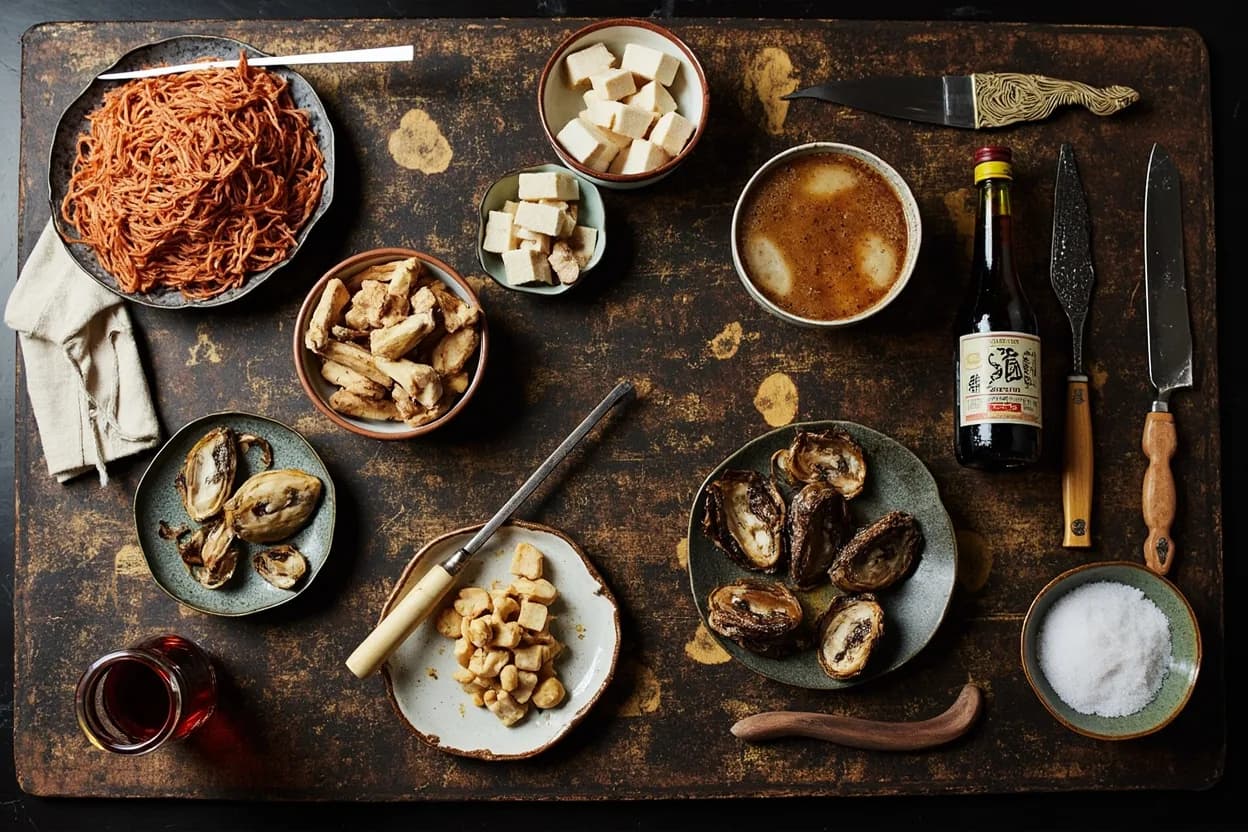
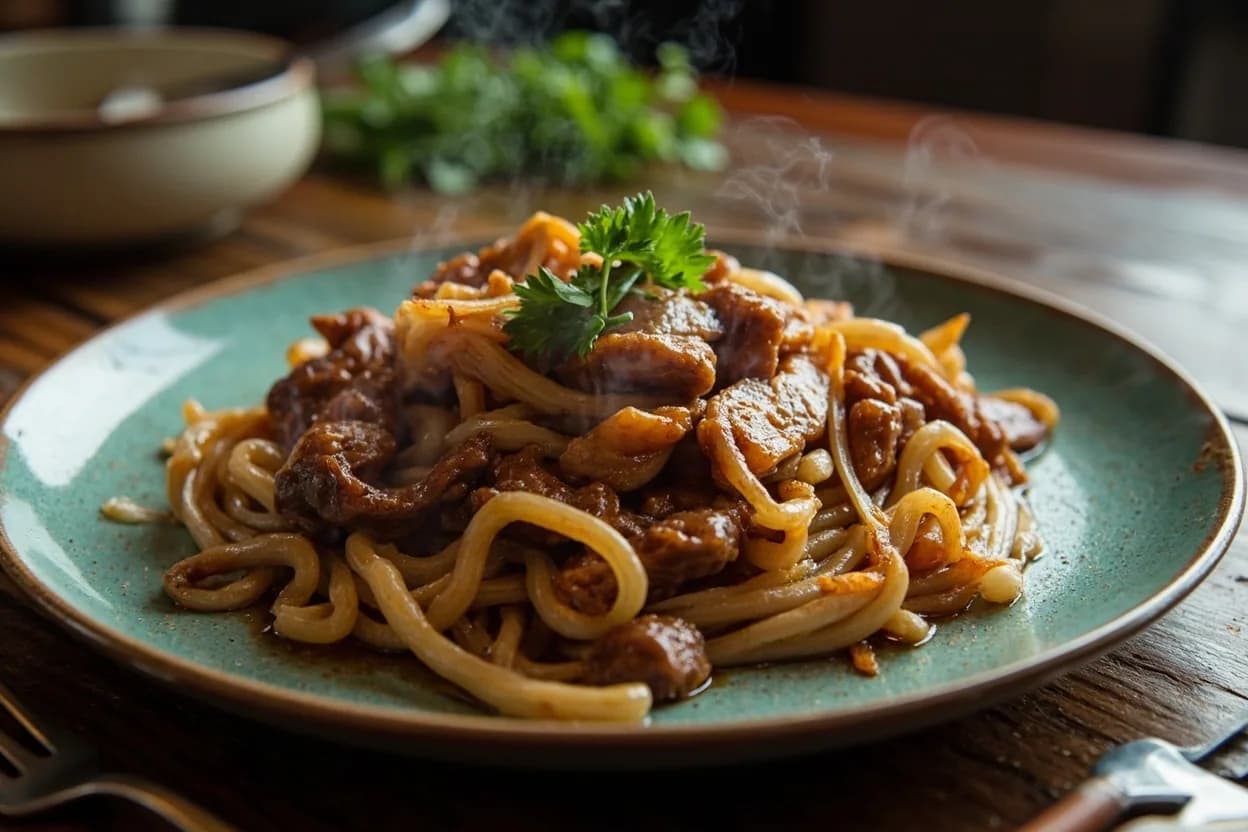
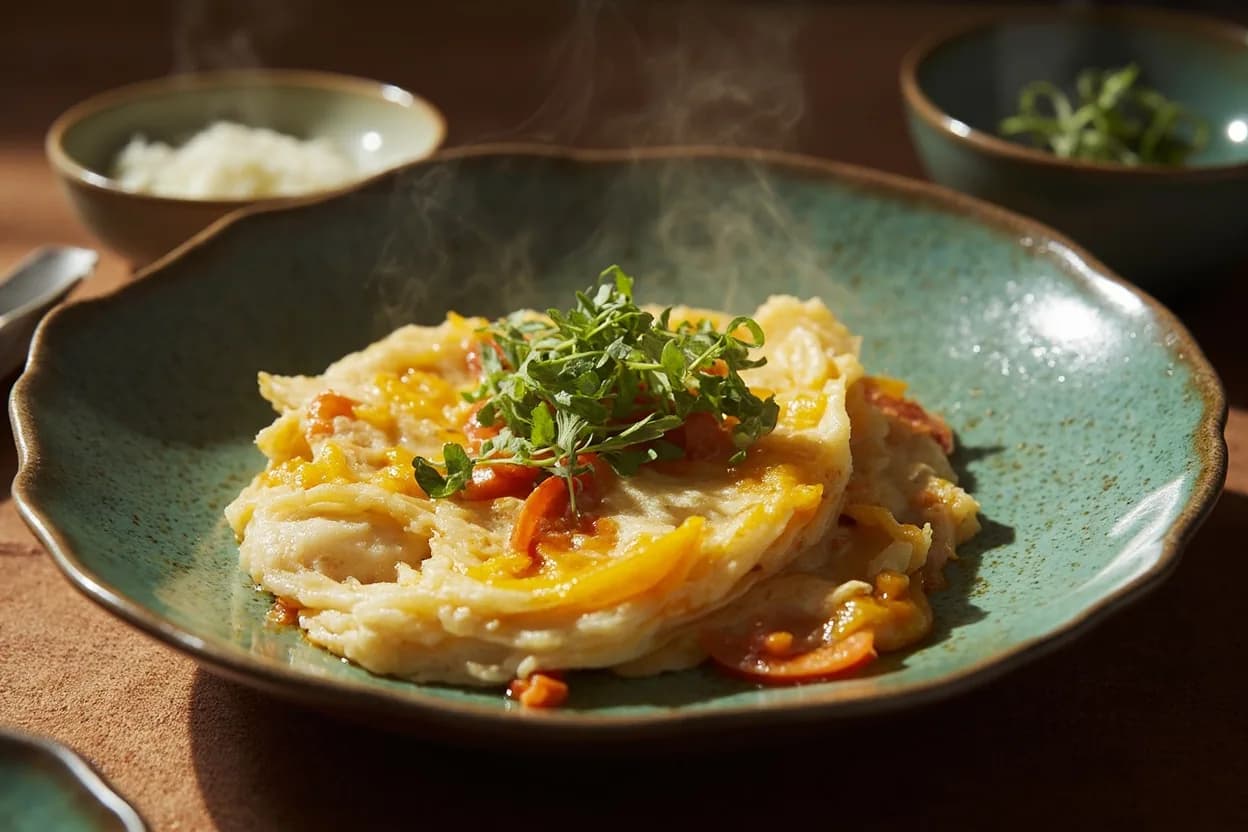
Fujian (Hokkien / Min Cuisine) on the table
At the table
Meals are soup-centric: a substantial soup or broth dish anchors the table and is consumed throughout the meal alongside shared plates rather than at a single moment. Seafood dominates the main courses. Rice is the staple, but rice vermicelli (mi fen) is equally important, especially at breakfast and for ceremonial occasions (longevity noodles). Banquets culminate in a grand broth centerpiece — the most elaborate being Fo Tiao Qiang.
History & context
Fujian's rugged terrain — 80% mountains — forced its people seaward, making them China's dominant maritime traders for a millennium. Min cuisine developed in parallel with this outward orientation: techniques for preserving seafood for long voyages, the use of fermentation to extend pantry staples, and the building of layered, nourishing broths for large cooking operations. Between the 15th and 19th centuries, massive waves of Hokkien (southern Fujian) emigrants departed for Southeast Asia, the Philippines, and Taiwan, carrying their culinary traditions intact. Fujian is thus the culinary ancestor of significant portions of Filipino, Singaporean, Malaysian, and Taiwanese cooking. The province is also the origin of many globally consumed products: Fujian-style soy sauce, oyster sauce, and fish sauce production influenced condiment traditions worldwide.
Regional variations
- Min Nan (Southern Fujian / Hokkien)
Most influential on the diaspora; includes the oyster omelette, satay traditions, and the braised-pork rice (lu rou fan) that traveled to Taiwan and beyond.
- Min Bei (Northern Fujian)
More meat-focused and mountainous; relies more on smoked and dried goods; less seafood; bamboo shoot dishes are central.
- Putian (Xinghua)
Considered the most refined sub-tradition; famous for the lightest, clearest broths and the Putian mi fen; an important seafood and ceremonial cuisine.
- Min Dong (Eastern Fujian / Fuzhou)
Fuzhou's home cuisine; most use of red fermented tofu; the ancestral home of many dishes that traveled to Indonesia's Peranakan communities.
Related cuisines
Neighboring southeastern tradition sharing the clear-broth philosophy, seafood supremacy, and diaspora reach into Southeast Asia.
Both prize ingredient freshness and seafood; Cantonese cooking is richer and more wok-forward while Fujian is lighter and broth-centered.
Taiwan's dominant culinary tradition is a direct descendent of Hokkien Min Nan cooking, with lu rou fan, oyster vermicelli, and braised pork offal as shared touchstones.
- Filipino (Chinese-influenced)
Filipino cuisine absorbed Fujian techniques via Hokkien merchants; pancit, lumpia, and siopao are all of Hokkien origin.
References
- 1.The Food of China — E.N. Anderson (Yale University Press, 1988)
- 2.Chinese Regional Cuisine: Fujian — Chinese Commercial Press, 1998
- 3.The Hakka Cookbook — Linda Lau Anusasananan (University of California Press, 2012)
- 4.Cradle of Flavor: Home Cooking from the Spice Islands of Indonesia, Malaysia, and Singapore — James Oseland (W.W. Norton, 2006)
Confidence: high
Notes
Hong zao: the red heart of Min cuisine
Red fermented rice (hong zao or ang chao) — glutinous rice fermented with Monascus purpureus mold — is the defining seasoning of Fujian cooking that has no equivalent in other Chinese regional traditions. It imparts a deep garnet color, a winey sweetness, and a funky depth completely different from soy sauce. Dishes braised with hong zao have a flavor profile closer to a rich European wine braise than to any other Chinese regional preparation.
Diaspora amplification
No other Chinese regional cuisine has shaped more non-Chinese national food cultures than Hokkien cooking. The satay sauce of Malaysia and Singapore, the pancit noodles of the Philippines, the ba wan (oyster vermicelli) of Taiwan, and the braised pork rice traditions of much of Southeast Asia are all products of Hokkien Fujian foodways transplanted to new ecologies with locally available ingredients.