Southeast Asia
Thai-Chinese (Sino-Thai)
Also: Sino-Thai cuisine, Thai-Teochew cooking, Yaowarat cuisine, Luk jin cooking
The cuisine of Thailand's Teochew Chinese community — noodle soups, congee, dim sum adaptations, and a Chinatown food culture that reshaped what Thais eat every day.
Sino-Thai cuisine is the cooking tradition of Thailand's ethnic Chinese population, predominantly of Teochew (Chaozhou) origin, who migrated to Siam in large numbers from the 18th century onward. It is not a museum piece but a living, continuously evolving hybrid: dishes that began as Teochew adaptations in a Thai market have long since become inseparable from mainstream Thai urban food culture. The noodle shop, the congee stall, the roast-duck vendor, and the fishball soup cart are all Sino-Thai institutions, as Thai in experience as they are Chinese in origin. The cuisine occupies the commercial center of Bangkok (Yaowarat Road, Bangkok's Chinatown) while simultaneously being woven invisibly into everyday Thai eating. Char siu pork, braised duck, fishballs, and five-spice-seasoned braises populate Thai street markets far from any Chinatown.
The flavour base
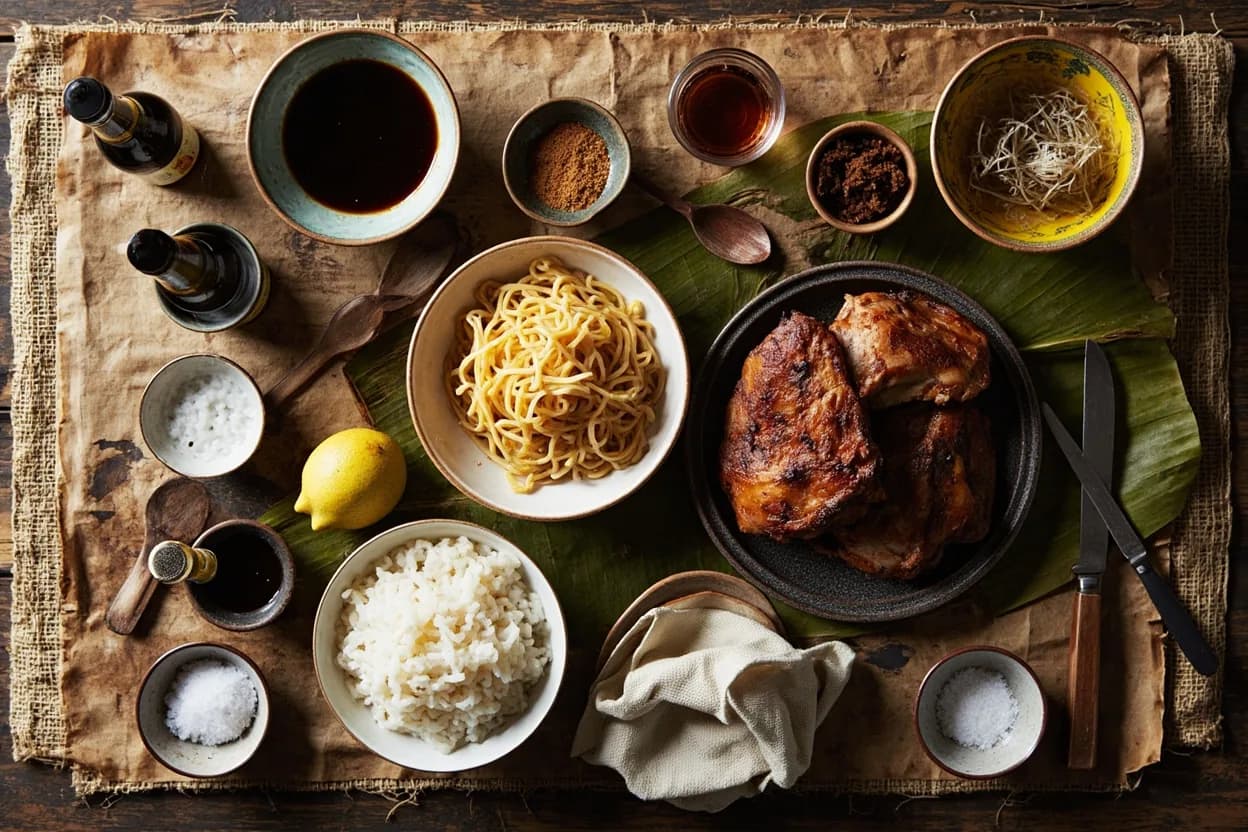
The Teochew flavor grammar of soy sauce (both light and dark), oyster sauce, sesame oil, Shaoxing wine, five-spice powder, and white pepper forms the seasoning base; garlic and ginger are the dominant aromatics, with none of the galangal-lemongrass-kaffir lime complexity of Thai herb pastes.
Pantry staples
Key ingredients
Signature techniques
Signature dishes
Thai-Chinese (Sino-Thai) on the table

At the table
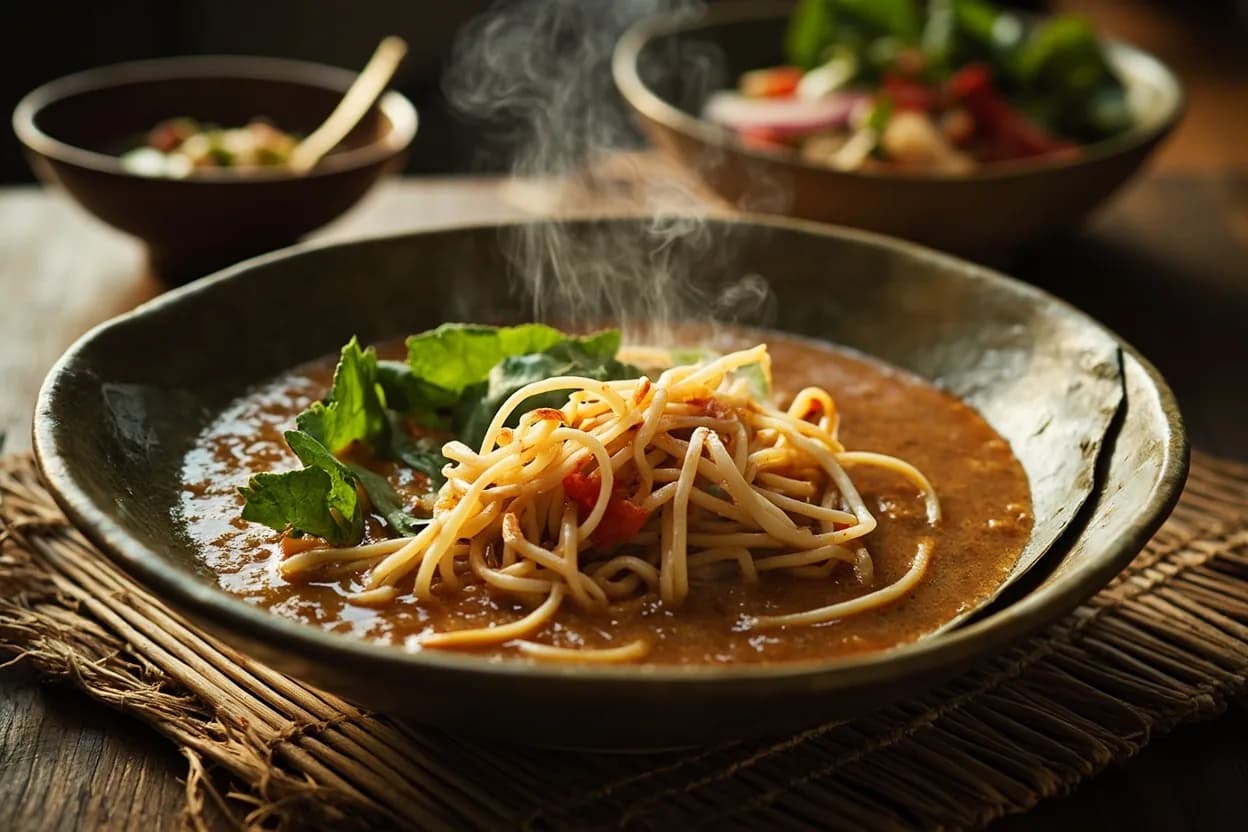
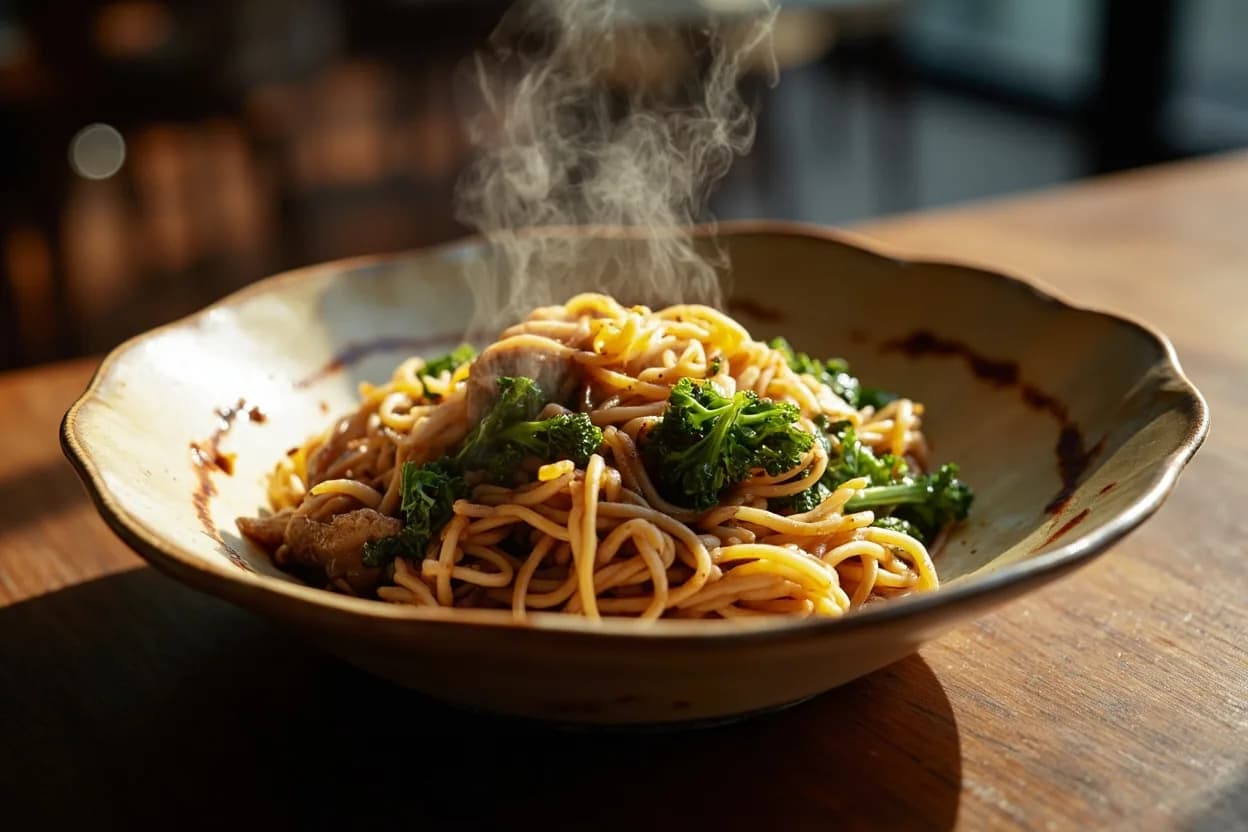
Sino-Thai meals are typically less ceremonious than formal Thai meals — they skew toward quick, satisfying single-dish eating: a bowl of congee for breakfast, a plate of noodles for lunch, a braised dish over rice for dinner. In festival and family contexts, Teochew banquet traditions apply: multiple cold appetizers, a whole braised duck, clear broth soups, and fried rice served at the end. Chinese New Year and the Vegetarian Festival (Tesagan Gin Je) are the two occasions when Sino-Thai food culture becomes highly visible on Bangkok streets.
History & context
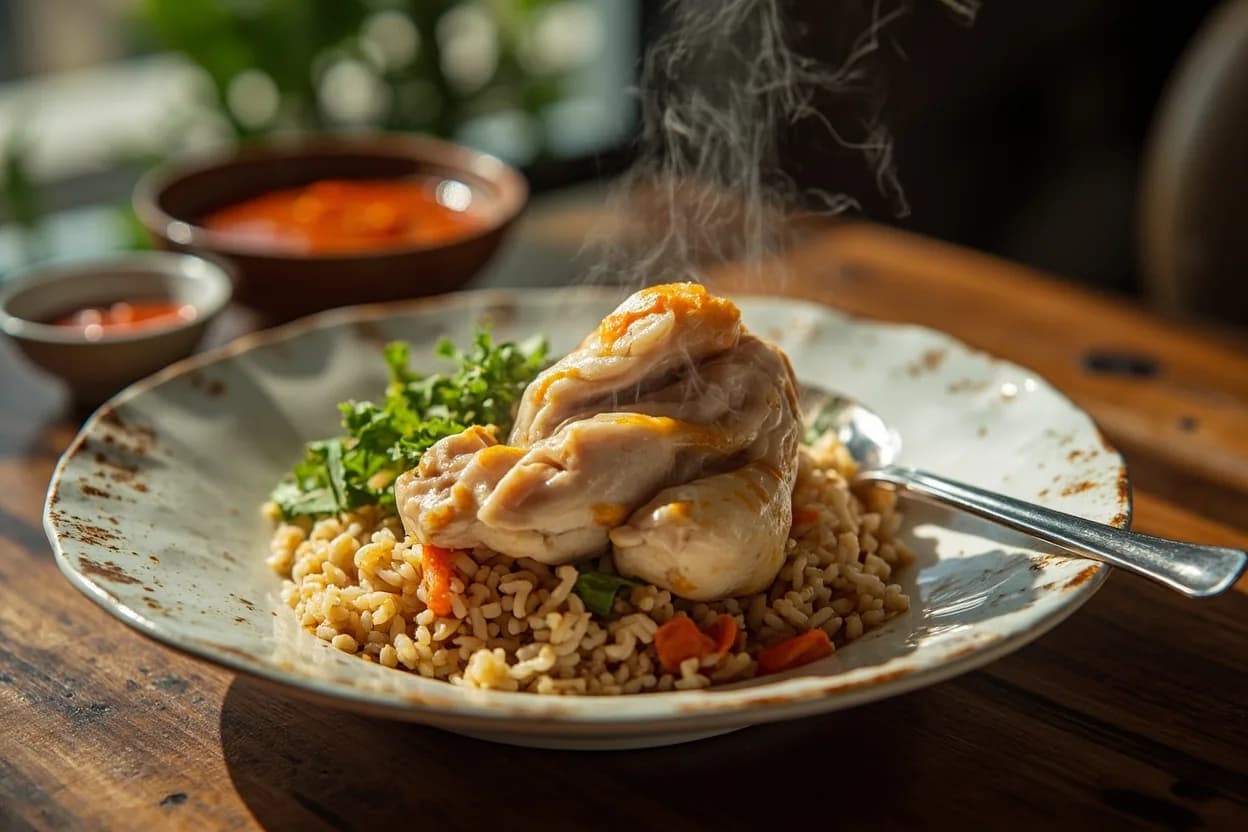
Teochew Chinese migration to Siam accelerated dramatically under King Taksin (1767–1782), himself of Teochew heritage, who actively encouraged settlement. By the 19th century, Chinese merchants controlled much of Bangkok's maritime trade, and the Yaowarat district had become a dense urban hub of shops, temples, and food stalls. Hokkien, Hakka, Cantonese, and Hainanese communities also arrived, each adding their own culinary notes — Hainanese cooks became dominant in the colonial-era hotel and restaurant trade, producing khao man gai and other dishes. Over the 20th century, intermarriage and urbanization blurred the distinction between Thai and Chinese identity for most luk jin (Thai-born Chinese) families, and their food became inseparable from mainstream Thai urban cuisine. The Thai Vegetarian Festival, brought by Teochew Taoists, now draws participants across all ethnic communities.
Regional variations
- Yaowarat (Bangkok Chinatown)
The historic center; roast-duck shops, dim sum teahouses, shark fin restaurants (historically), and street seafood at extreme scale
- Phuket Hokkien community
Phuket's tin-mining era brought Hokkien settlers; local cuisine includes o-tao (oyster omelette) and mee hokkien distinct from Teochew Bangkok cooking
- Nakhon Si Thammarat / Southern Chinese communities
Teochew settlers adapted to local southern Thai ingredients; hybrid dishes use southern Thai spice alongside Chinese technique
- Hat Yai
Large Hokkien and Teochew community; famous for dim sum culture and roast chicken distinct from Bangkok versions
Related cuisines
- Teochew (Chaozhou) Chinese
The dominant source tradition; Teochew's preference for clear broths, preserved vegetables, and restrained seasoning shaped the base template
- Malaysian Chinese
Parallel Teochew and Hokkien diaspora cuisines; many parallel dishes (char siu, fishballs, roast duck) with local inflections
Centuries of co-evolution mean many 'classic Thai' street foods (pad thai's early noodle history, pad see ew) have direct Sino-Thai roots
Canonical recipes
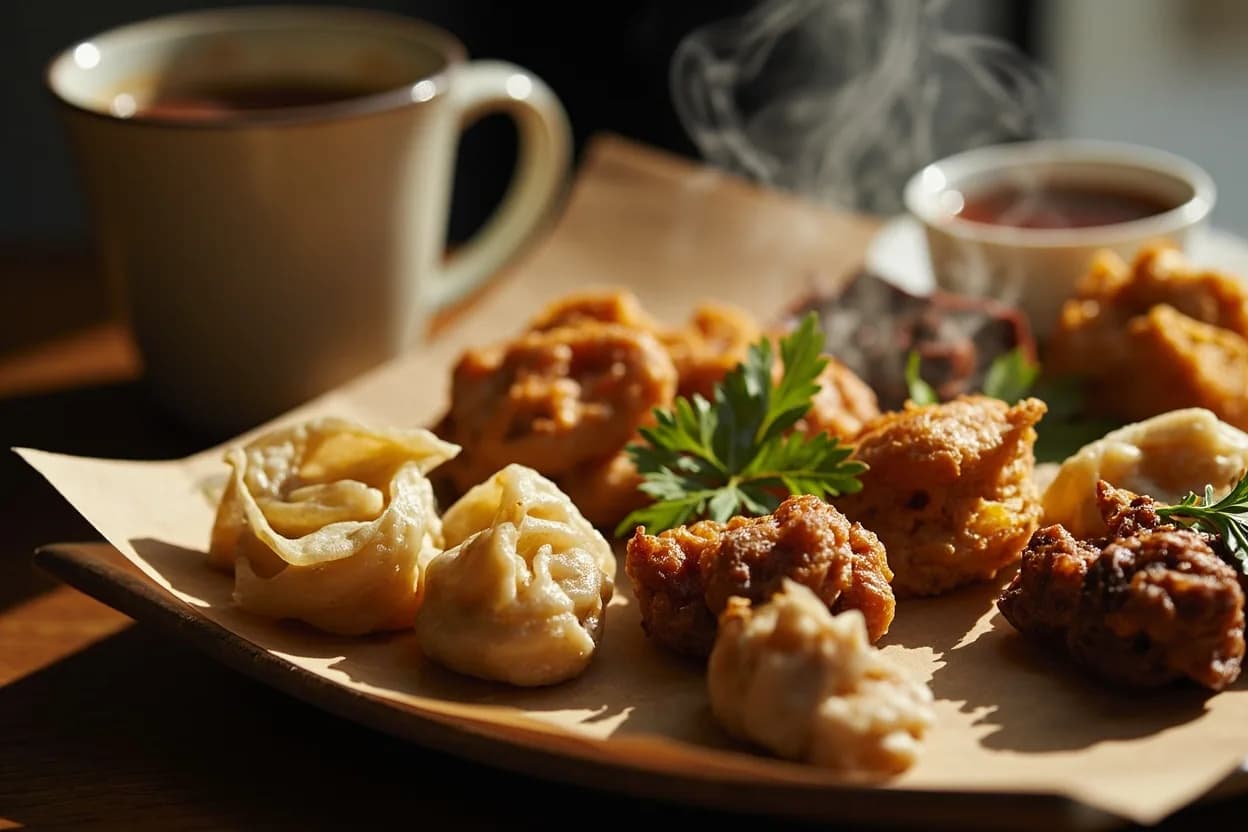
The dishes that define Thai-Chinese (Sino-Thai), documented in the Canon.
References
- 1.Bangkok: Recipes and Stories from the Heart of Thailand — Leela Punyaratabandhu (Ten Speed Press, 2017)
- 2.Hot, Sour, Salty, Sweet: A Culinary Journey Through Southeast Asia — Jeffrey Alford and Naomi Duguid (Artisan, 2000)
- 3.The Chinese Diaspora: Space, Place, Mobility, and Identity — Laurence J.C. Ma and Carolyn Cartier (eds.) (Rowman & Littlefield, 2003)
Confidence: high
Notes
Pad thai's Sino-Thai roots
Pad thai, now considered the national dish of Thailand, was promoted by the government of Plaek Phibunsongkhram in the 1940s as a nationalist alternative to Chinese noodle dishes. Yet its technique — stir-fried rice noodles with egg — and its noodle shop context are fundamentally Sino-Thai. The dish was a political rebranding of existing Chinese-influenced street food, demonstrating how thoroughly the two traditions had merged.
Tesagan Gin Je (Vegetarian Festival)
The nine-day vegetarian festival observed in October by Taoist-Chinese communities in Phuket and Bangkok has become one of Thailand's most spectacular cultural events. The meatless cooking required has driven remarkable creativity in plant-based Sino-Thai cooking — mock meats, tofu preparations, and vegetable dishes of considerable sophistication that are eaten by Thais of all backgrounds during the festival period.