Caribbean
Trinidadian & Tobagonian
Also: Trini cuisine, TT cuisine, Trinidad cuisine
A vivid multicultural table born of Indian indenture, African resilience, Chinese migration, and Spanish colonial roots — unified by scotch bonnet heat and chadon beni perfume.
Trinidadian and Tobagonian cuisine is one of the most genuinely syncretic food cultures in the world, shaped by the forced and voluntary migrations that converged on two small islands: enslaved West Africans, indentured South Asian laborers (predominantly from Bihar and eastern UP), Chinese shopkeepers, Portuguese merchants, and the lingering Spanish and French colonial palates. The result is a table where roti and callaloo coexist, where curry is as native as pelau, and where street food — particularly in Port of Spain — represents a living archive of diaspora creativity. Tobago retains a more purely Afro-Caribbean character, with crab and dumpling and blue food (dasheen) as its culinary signatures.
The flavour base
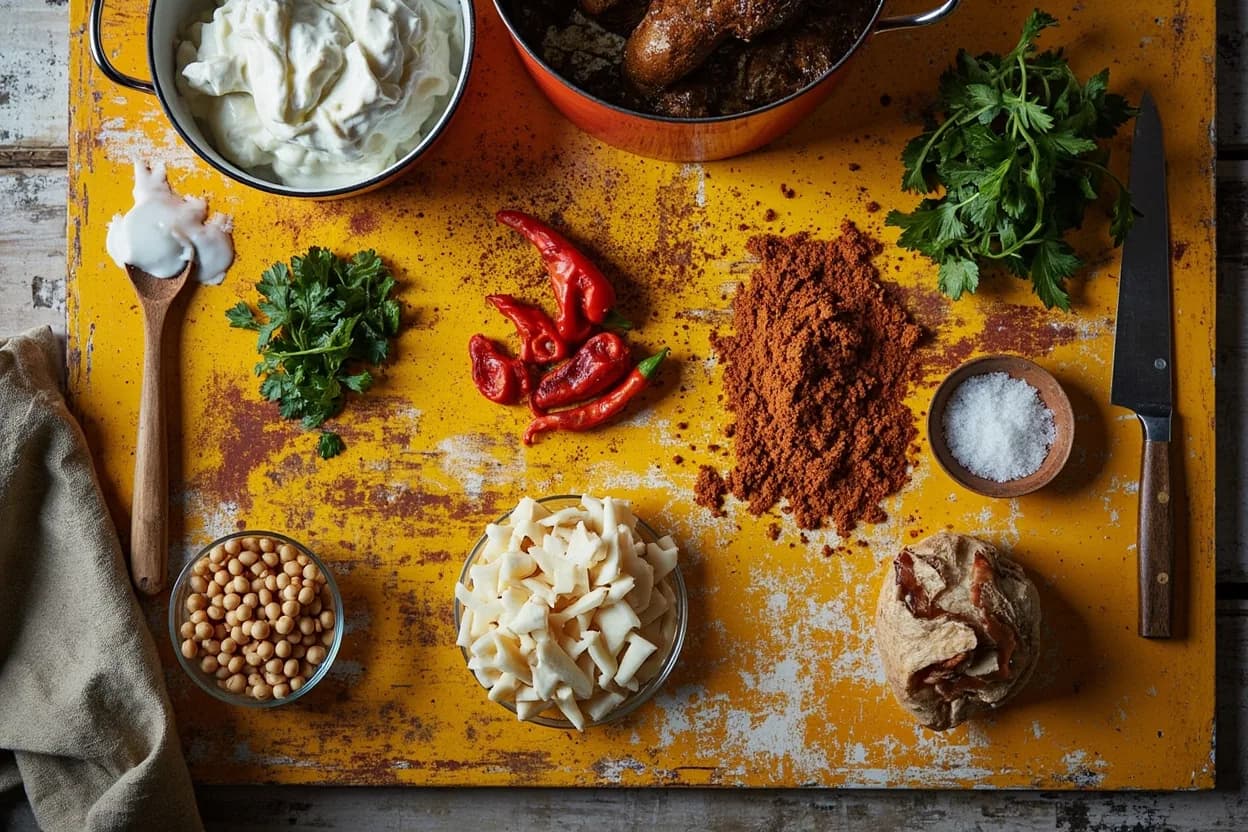
Green seasoning — a blended wet paste of chadon beni (culantro), thyme, garlic, scallions, and pimento peppers — is the primary aromatic foundation rubbed into virtually all proteins and many stews. Secondary pillars are curry masala (cumin-heavy Trinidadian blends), coconut milk, and the fruity heat of scotch bonnet.
Pantry staples
Key ingredients
Signature techniques
Signature dishes
Trinidadian & Tobagonian on the table
At the table
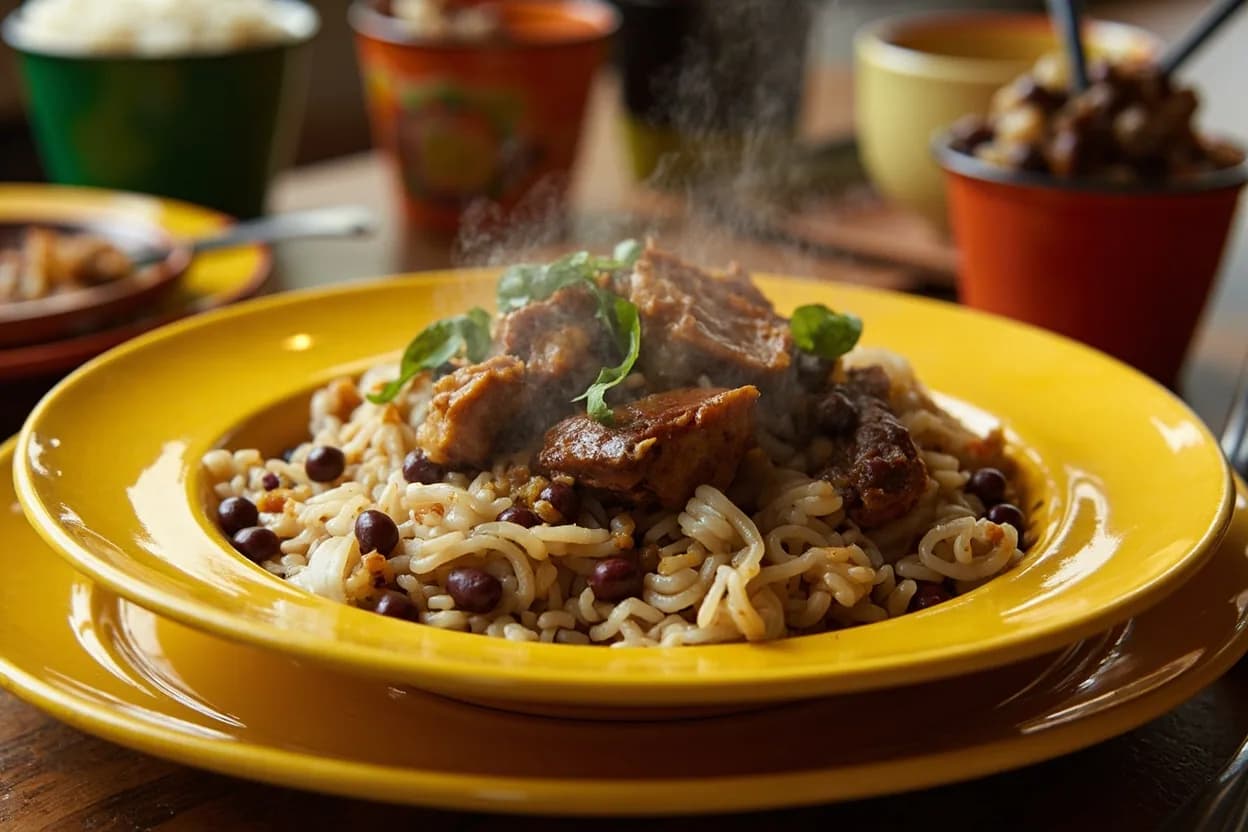
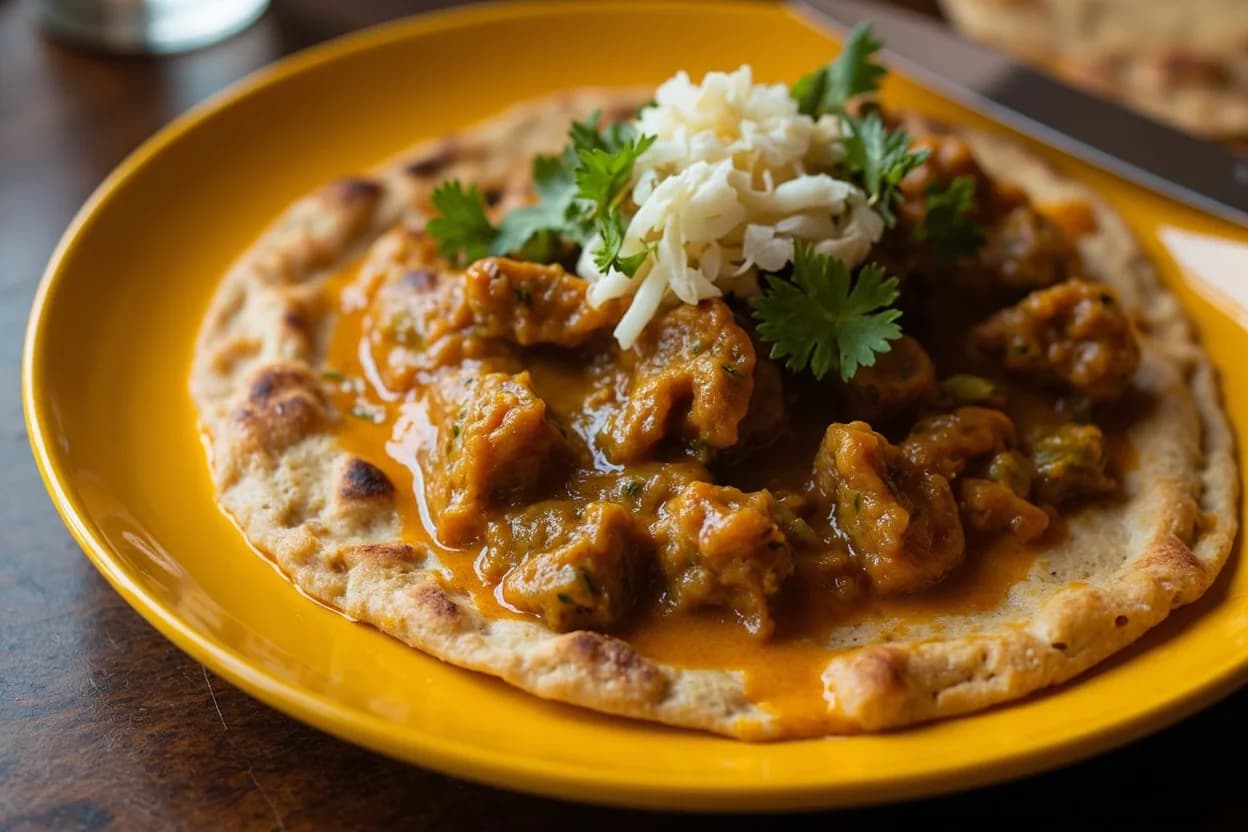
No rigid formal structure — Trinidadian eating culture revolves heavily around street food at all hours (doubles for breakfast is almost a national ritual), and home meals are abundant one-pot affairs. Sunday lunch is ceremonial: callaloo, stewed chicken or pork, macaroni pie, rice, and provision. Roti shops serve through midday. Rum punch and sorrel (hibiscus drink) accompany festive meals; mauby and coconut water are everyday refreshers.
History & context
The indigenous Arawak and Carib peoples were the original inhabitants; Spanish colonization from 1498 introduced cattle and new crops but largely decimated indigenous populations. French planters arrived in the 1780s bringing enslaved Africans who formed the cultural backbone of the islands' cooking — the technique of one-pot stewing, ground provisions, callaloo. British rule from 1797 reshaped the colonial economy, and the abolition of slavery in 1834 precipitated mass Indian indenture (1845–1917), which introduced roti, curry, and the dal-and-rice tradition. Chinese and Syrian-Lebanese arrivals in the late 19th and early 20th centuries added yet more layers. Independence in 1962 consolidated a proud national identity around this multicultural table.
Regional variations
- Tobago
Distinctly more Afro-Caribbean in character; crab and dumpling is the island's signature dish; blue food (dasheen, yam, eddoe) dominates; less Indian-influenced than Trinidad.
- Port of Spain street scene
The capital's street food is the densest expression of creolization — doubles vendors at dawn, roti shops at noon, bake-and-shark at Maracas; constant chutney and pepper sauce negotiation.
- South Trinidad (Caroni, Debe)
Heavy Indo-Trinidadian concentration; Debe Junction is famous as 'doubles capital'; sada roti, dhal, and bhaji (spinach) dominate home cooking.
Related cuisines
- Guyanese
Shares Indian indenture heritage — similar roti, curry, and pepperpot traditions with distinct local variations.
Fellow Anglophone Caribbean; shares African culinary base (stewing, ground provisions) but diverges sharply in spice grammar (jerk vs. green seasoning).
- North Indian (Bihari)
Ancestral source of the curry, roti, and dal traditions carried by indentured laborers from Bihar and eastern Uttar Pradesh.
- West African (Yoruba/Igbo traditions)
Callaloo, one-pot stewing, and provision cooking trace directly to West and Central African culinary practice.
Canonical recipes
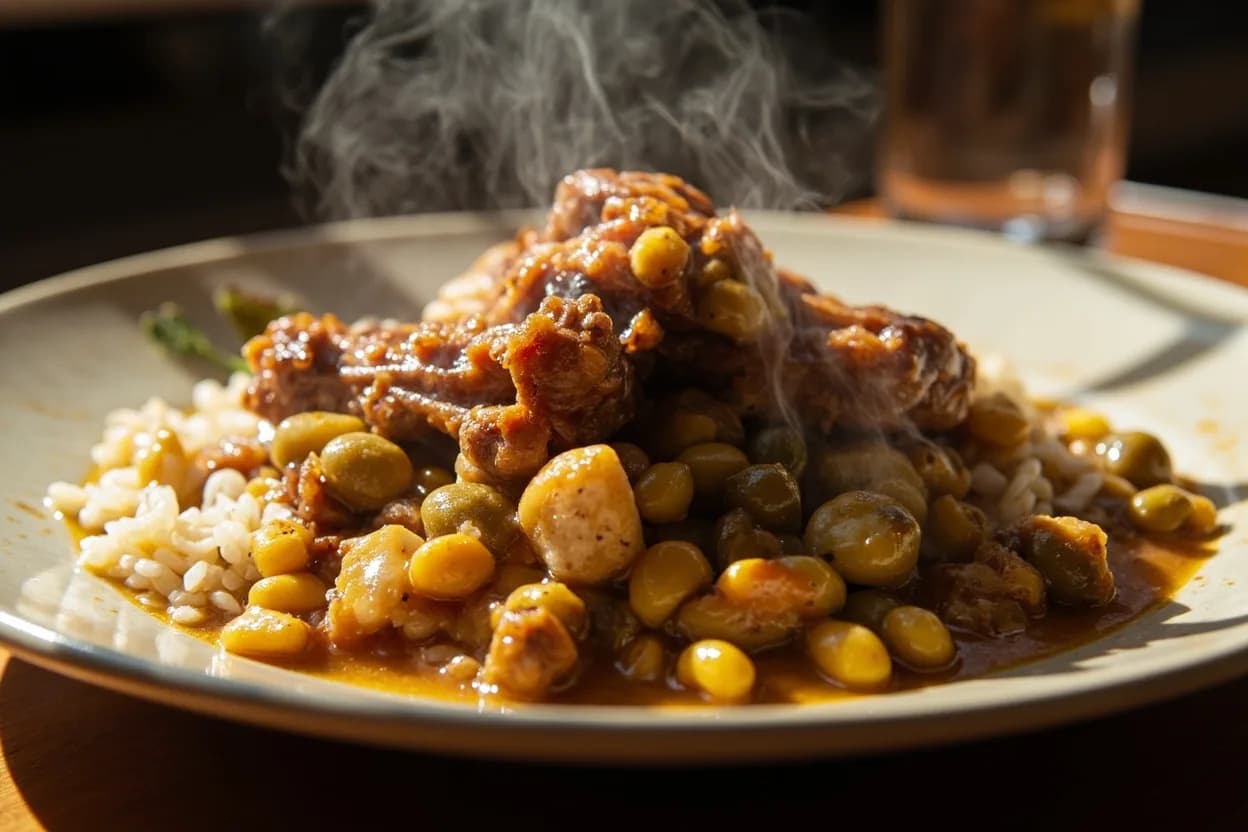
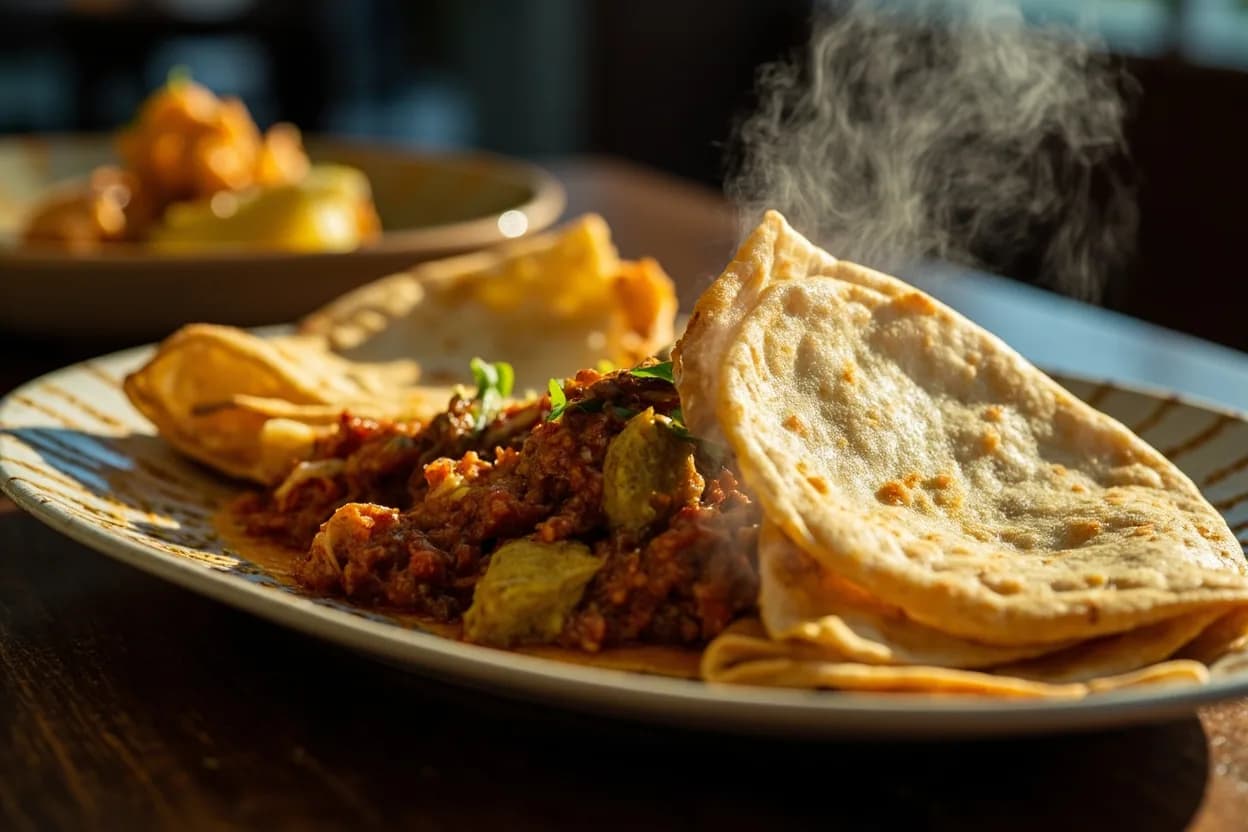
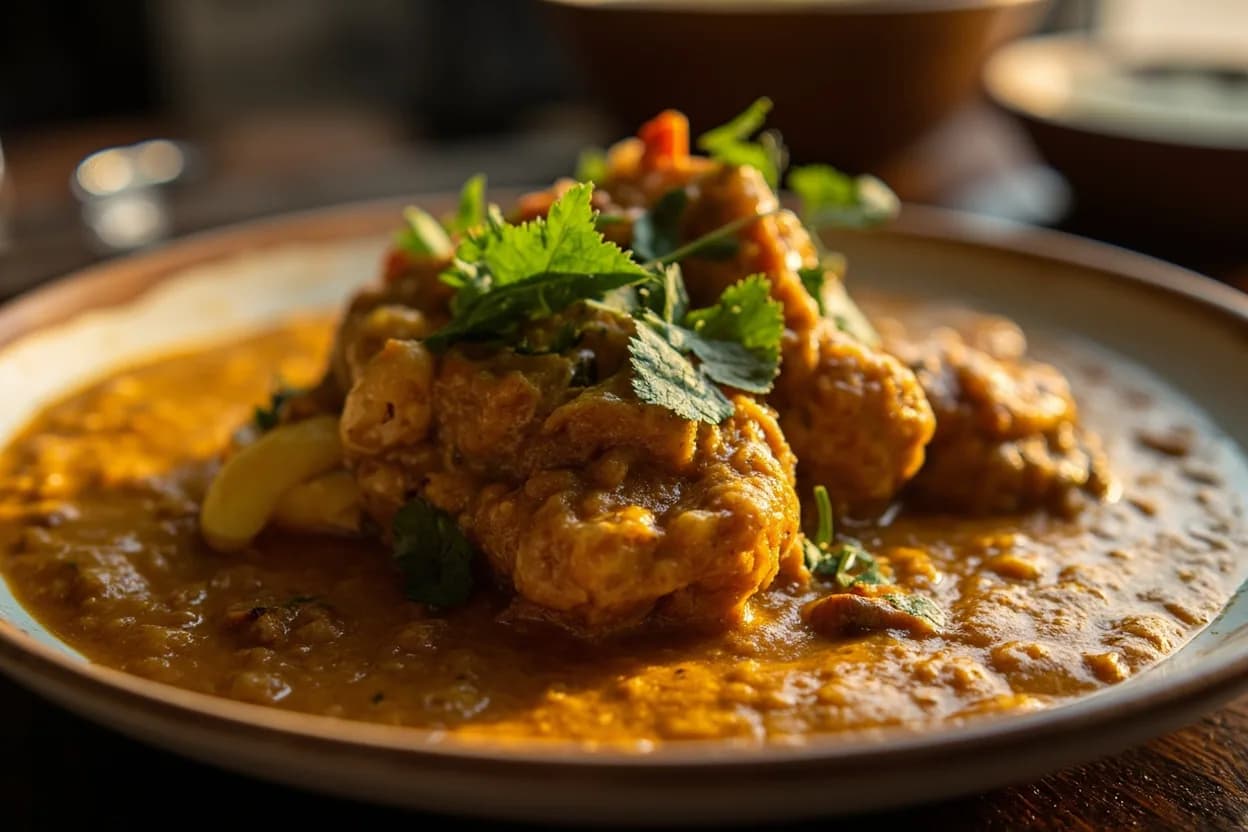
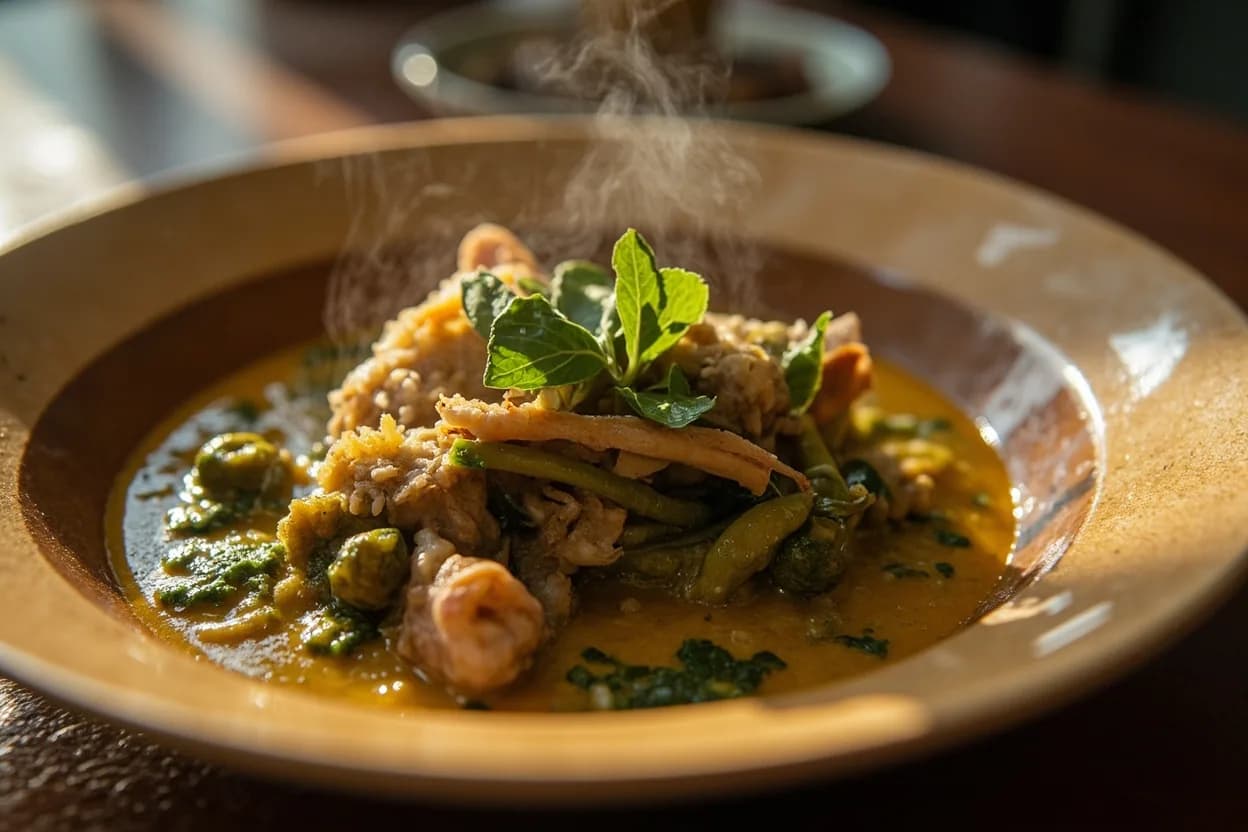
The dishes that define Trinidadian & Tobagonian, documented in the Canon.
References
- 1.Cooking Up a Storm: Recipes from the Caribbean — Chris De La Rosa (CaribbeanPot.com)
- 2.The Multi-Cultural Cuisine of Trinidad & Tobago — Naparima Girls' High School Cookbook (multiple editions)
- 3.Caribbean Food Made Easy — Levi Roots
- 4.Creolization and Diaspora in the Portuguese Colonies — Toby Green (broader context)
Confidence: high
Notes
Doubles: the national street food
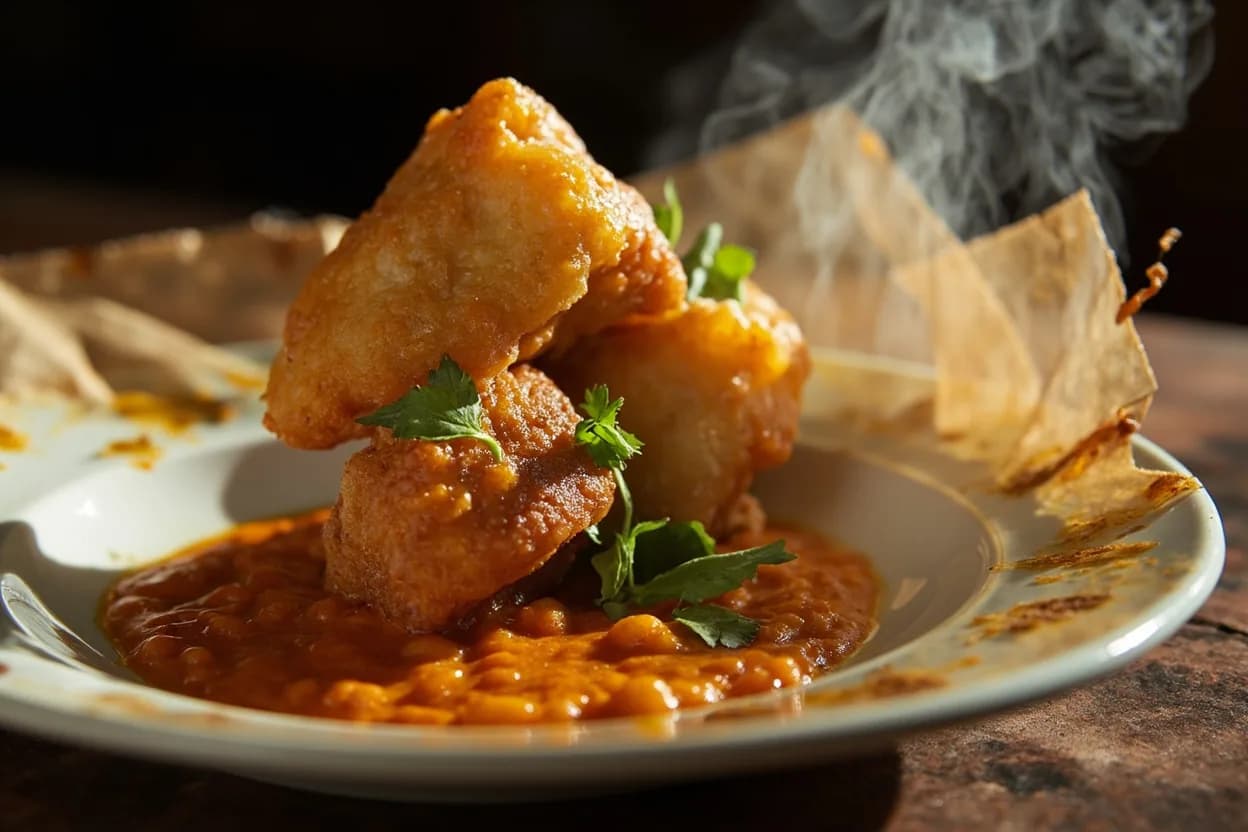
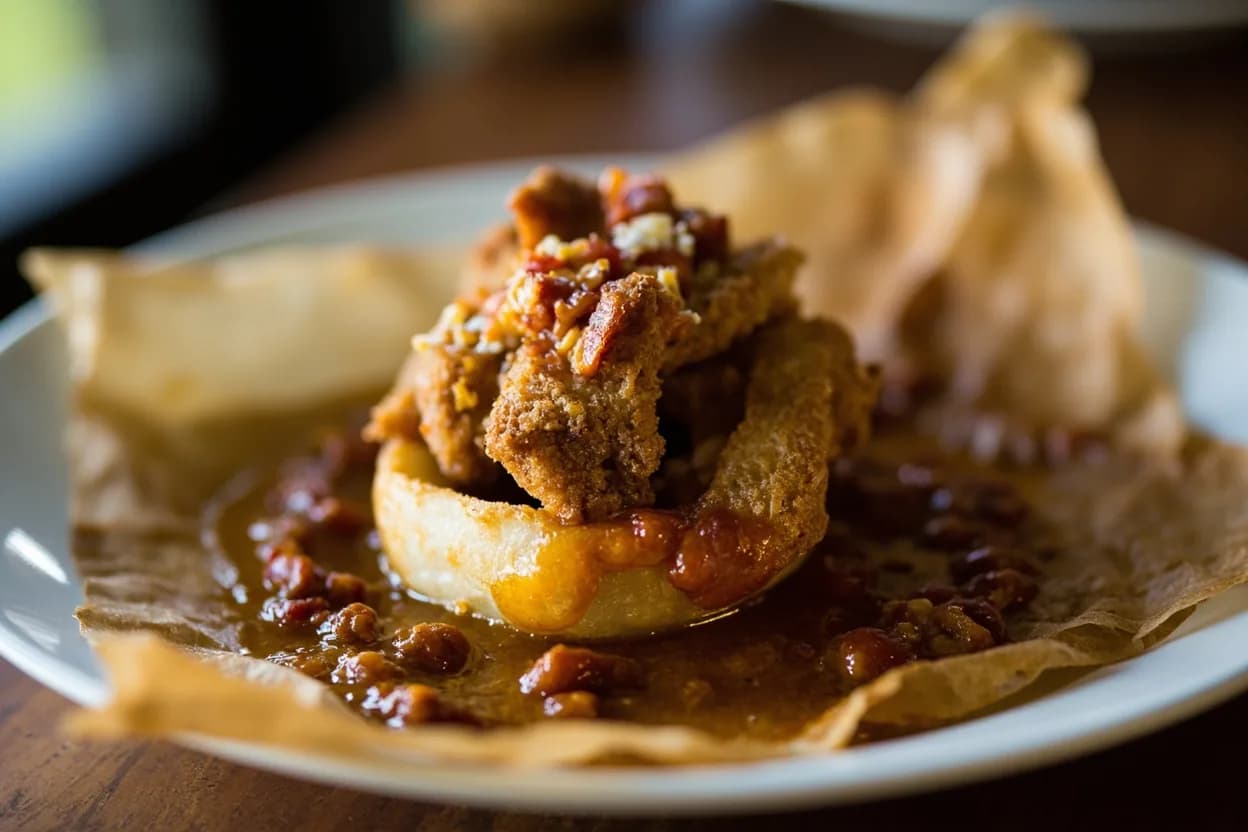
Doubles — two small fried bara (split-pea flatbreads) cradling curried chickpeas (channa), topped with cucumber chutney, coconut chutney, tamarind sauce, and pepper sauce to taste — is so deeply embedded in Trinidadian daily life that its price is a de facto economic indicator. Vendors set up before dawn; by 8 a.m. the line may be fifty people deep.
Green seasoning as identity
Every Trinidadian household has its own green seasoning formula, often jealously guarded. The base is always chadon beni (Eryngium foetidum, known elsewhere as culantro or Mexican coriander) and thyme; garlic, scallions, pimento peppers, and sometimes celery are added. It is blended smooth and refrigerated in quantity, used as a marinade and a finishing condiment simultaneously.