Stored
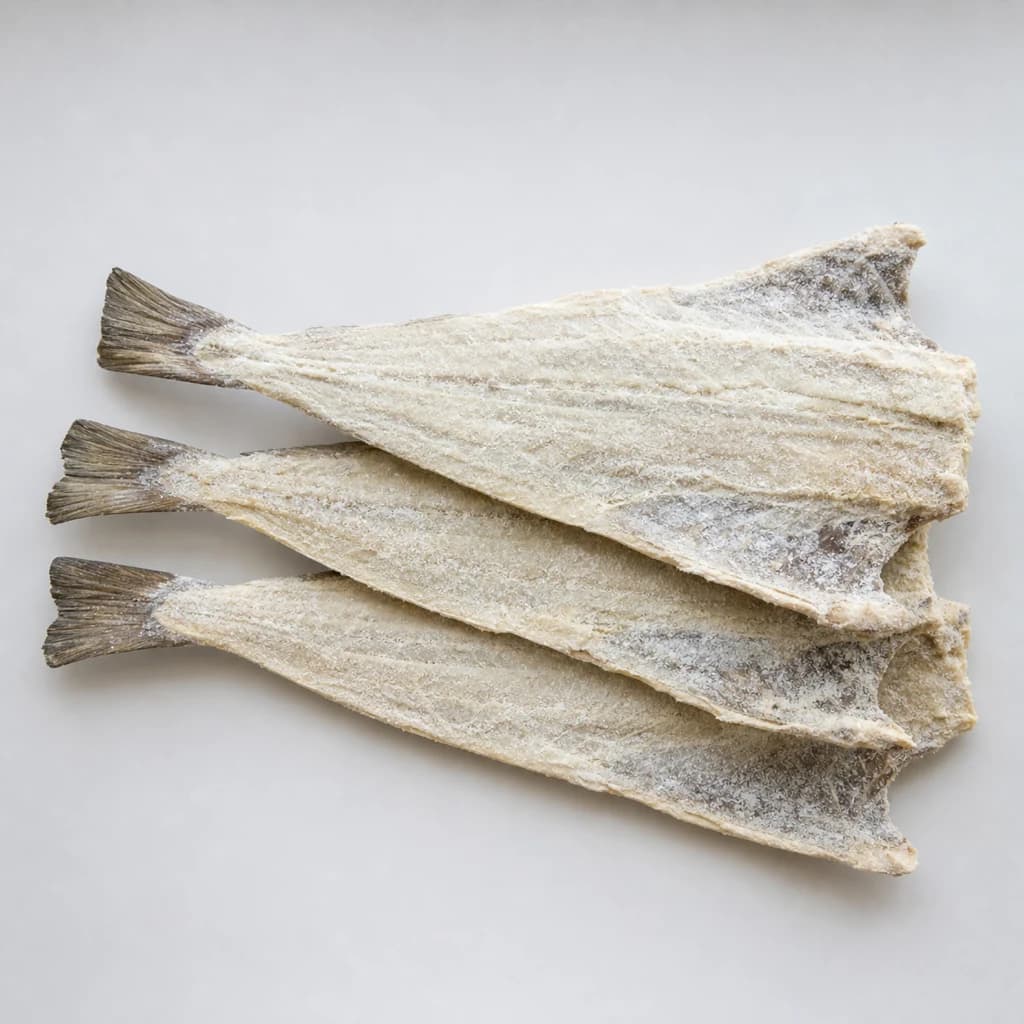
Whole dried salt cod fillets stacked flat, showing the stiff ivory-white preserved fish with visible salt crystals.
Shows the product exactly as purchased — rigid, heavily salted, bone-dry fillets — so readers immediately recognize it at market.
Proteins
Salt Cod (Bacalao)
Cod cured in salt and dried — soaked to rehydrate, then flaked into fritters, stews, and brandades.
Salt cod is white cod fillet preserved by heavy salting and drying, a centuries-old method that made fish portable far inland. Before cooking it must be soaked in repeated changes of water for a day or more to rehydrate and remove excess salt. It is then flaked into fritters, creamy brandade, tomato stews, and Iberian and Caribbean classics.
Salt cod is cod (Gadus morhua) that has been cured through a two-stage process: first packed in salt for two to three weeks, then air-dried for several weeks more. This combination of salting and drying reduces the fish's moisture content to approximately 15%, concentrating its flavor into something deeply savory and umami-rich while giving it a dense, leathery texture in its preserved state. The technique was developed by North Atlantic fishing communities—Norway, Iceland, Newfoundland—over a thousand years ago and spread southward through Catholic Europe, where it became essential protein for meatless Fridays and Lent, embedding itself permanently in Portuguese, Spanish, Italian, Greek, and Caribbean cuisines.
To use salt cod, you must rehydrate it: submerged in cold water, refrigerated, for 24 to 72 hours with two to three water changes. This is not optional and cannot be rushed. The soaked cod will swell to roughly 2.5 to 3 times its dried weight, and the flesh will transform from firm and translucent to opaque, flaky, and tender. The result tastes savory and ocean-forward, moderately salty but not mouth-puckering. Portuguese bacalao tends toward heavier salting and longer drying than Italian baccalà, which is often slightly plumper from a shorter cure. Once rehydrated, the cod cooks quickly and can dry out if overhandled or overcooked.
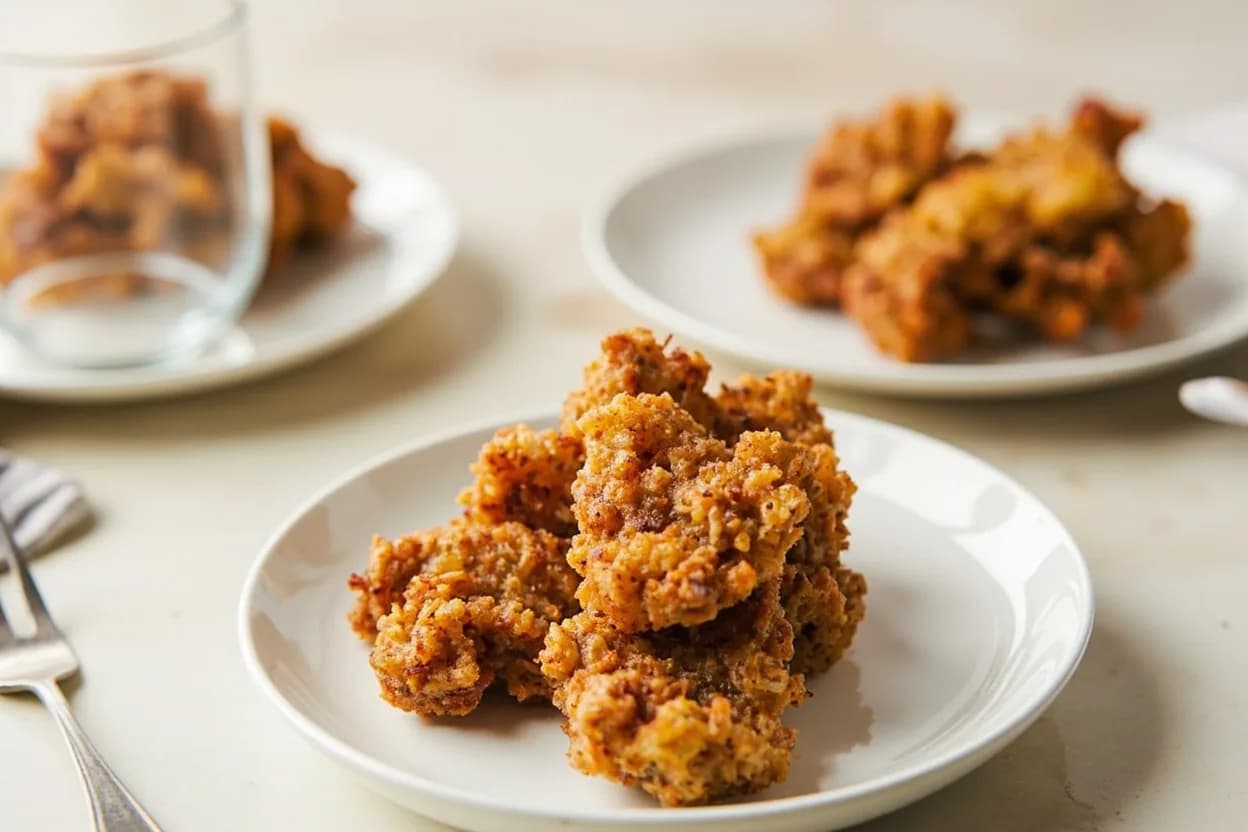
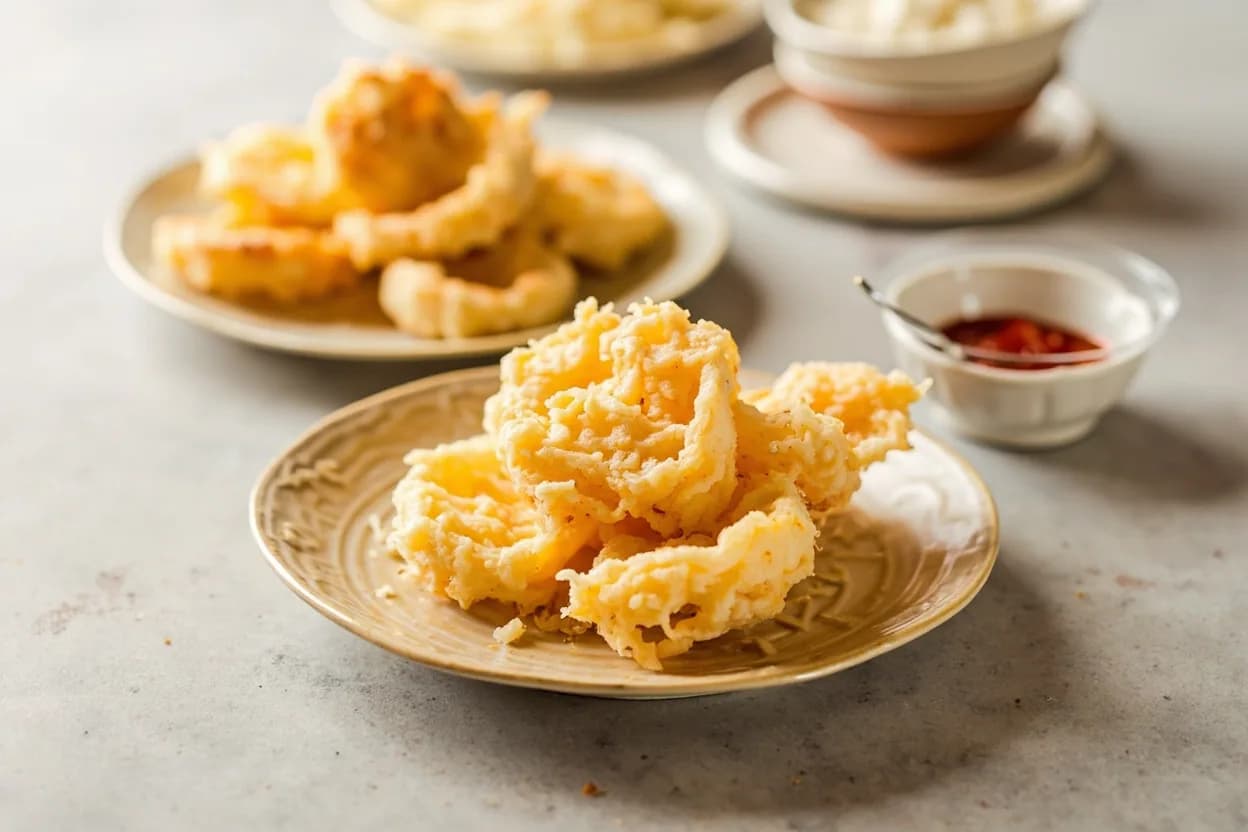
The true reward for mastering salt cod is its versatility. The same ingredient forms the base of Portuguese pastéis de bacalhau, Provençal brandade, Venetian baccalà mantecato, and Caribbean saltfish rundown. Its concentrated savoriness means a little goes a long way in stews and soups, while its dense, silky flakes hold their shape well in gratins and resist falling apart in fried preparations. The flavor profile—oceanic, mineral, deeply umami, with a pleasant salinity that varies by preparation—makes it one of the most distinctive ingredients in the Western cooking canon, and one that rewards cooks willing to plan ahead.
- Measured in
- g
- Storage
- Pantry
Allergens
Types & varieties
The archetype; traditionally made from Newfoundland cod, heavily salted and long-dried; central to Portuguese cuisine with hundreds of documented preparations.
Two preparations: Baccalà mantecato (wet-cured in brine) and Baccalà secco (dry-salted and dried); Veneto and southern Italy are major consumers.
Dried without salt — not the same as salt cod, though often confused. Lighter color, milder flavor; used in lutefisk and stews.
Salted then dried, but with less salt than Mediterranean bacalao; produces a softer, more supple texture when cooked; Bergen and Lofoten traditions.
Norwegian cured cod, often brined briefly then dried; milder than bacalao.
Pacific substitute; more common in East Asian markets; slightly firmer texture, similar flavor profile.
Made from black scabbard fish (Aphanopus carbo); regional specialty with richer, darker flesh.
Choosing and Sourcing
Not all salt cod is equal. Portuguese bacalao traditionally came from the Grand Banks off Newfoundland, and the name stuck even as fishing grounds shifted. Today, Atlantic cod stocks remain vulnerable to overfishing, so source matters. Look for MSC-certified products or those from verifiable sustainable fisheries. Italian baccalà often comes from Norwegian or Icelandic stocks; check labeling for origin and certification. The color of dried salt cod ranges from pale ivory to deep amber—the darker the color, the longer and more intense the cure. Avoid any product with visible mold, soft spots, or a rancid smell, which indicates improper storage.
- MSC-certified or sustainably sourced products are available from specialty grocers and reputable online suppliers
- Portuguese bacalao is typically more heavily salted and drier than Italian baccalà; adjust soaking time accordingly
- Check for firm, dense pieces with no soft spots or discoloration before purchasing
The Soaking Process in Depth
The soaking process is the single most critical variable in working with salt cod. Under-soaked cod is aggressively, unpleasantly salty and texturally wrong—it will taste like a sodium brick and refuse to flake properly. Over-soaked cod loses the concentrated flavor that makes it worth using in the first place, becoming bland and watery. The sweet spot is a piece that tastes savory and ocean-forward without any mouth-puckering salinity.
Always use cold water and keep the container refrigerated. For thin pieces (tails), 24 hours may suffice. For thick loins, plan on 48 to 72 hours. Change the water every 8 to 12 hours—twice daily is ideal. After soaking, tear a corner from the thickest piece and taste: it should be pleasantly savory, not salty. If it still puckers your mouth, soak longer, changing the water again. Once rehydrated, pat the cod completely dry before cooking. Residual surface moisture prevents browning and dilutes sauces.
To speed even rehydration of thick loins, cut them into portions before soaking. You can also cut crosswise into steaks, which rehydrates from both outer surfaces and the center simultaneously.
- Submerge completely in cold water; floating pieces will unevenly rehydrate
- Refrigerate during soaking—warm temperatures encourage bacterial growth
- Cut thick loins into portions or steaks for faster, more even rehydration
- Taste-test before cooking: the flesh should be savory, not aggressively salty
- Pat dry after soaking—surface moisture ruins browning and dilutes sauces
Common uses
Tips & pitfalls
- Always soak in cold water, refrigerated, for at least 24 hours — change the water every 8–12 hours. This is not optional; it is the difference between usable fish and a sodium brick.
- Tear a corner of the thickest piece after soaking and taste it. If it still puckers your mouth, soak longer. The flesh should taste pleasantly savory, not salty.
- Do not rush rehydration with warm water — it will unevenly hydrate the exterior while leaving the core firm and can cause off-flavors.
- After soaking, pat the cod completely dry before cooking. Residual surface moisture prevents browning and dilutes sauces.
- Remove rehydrated cod from heat just before it's fully cooked through — it continues cooking off heat and dries out easily if overdone.
- For silky brandade: cook potato in the cod's soaking water to absorb residual savoriness, then whip while hot, gradually adding warm olive oil in a thin stream off heat.
- When baking or simmering, test doneness by pressing with a fork: the flesh should flake easily and turn from translucent to opaque throughout.
- When frying salt cod, ensure the oil is at 350°F (175°C) — too cool and the exterior firms before the interior heats through.
- To store long-term unrehydrated: wrap in cheesecloth and keep in a well-ventilated container with a desiccant pack; humidity causes mold.
- If you cannot find dried salted cod, salt fresh cod fillets for 24–48 hours under a heavy salt layer, then rinse and use — not identical but workable.
Nutrition
Energy
519 kJ · per 100 g
Where the calories come from
Protein
20g
40% DV
Carbs
0g
0% DV
Fat
4.2g
5% DV
Fiber
0g
0% DV
Sodium
60mg
3% DV
Source · USDA FoodData Central · approx. Fish, bluefish, raw
View on FDC →In the shops
Matched grocery products
 €31.62
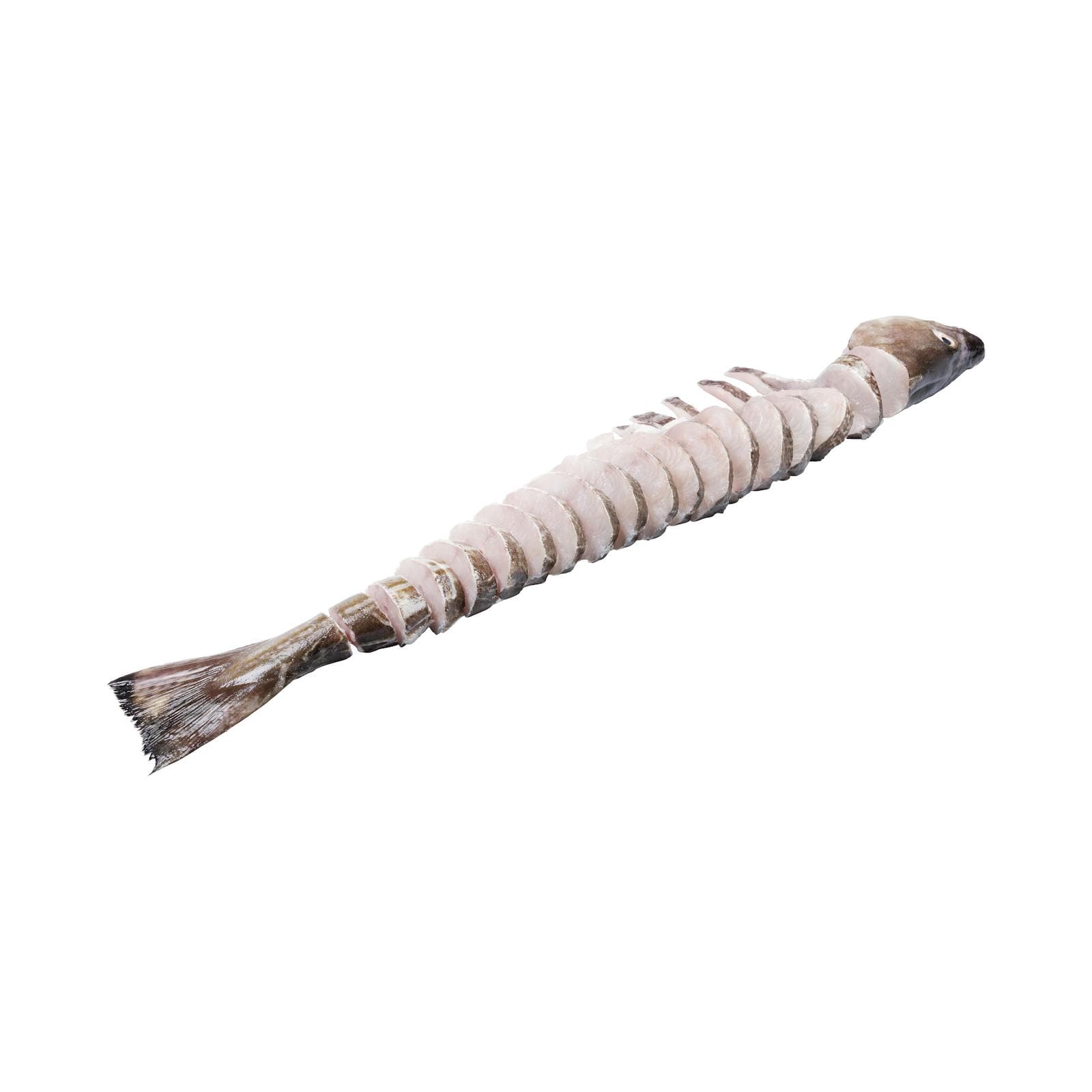
Cod Slices
2.48 kg · Mercadona
 €11.99
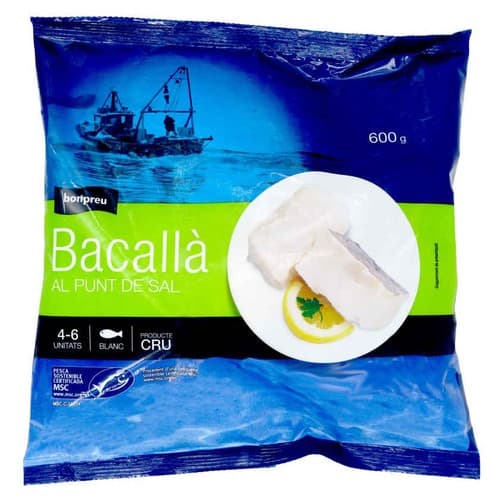
Salted Cod
BONPREU · kg · Bonpreu
 €2.99
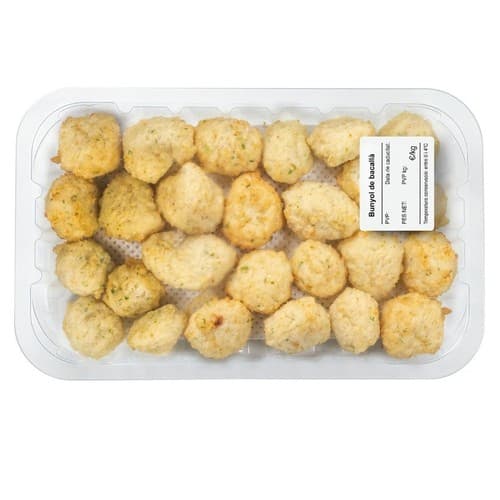
€2.99Cod Fritters
kg · Bonpreu
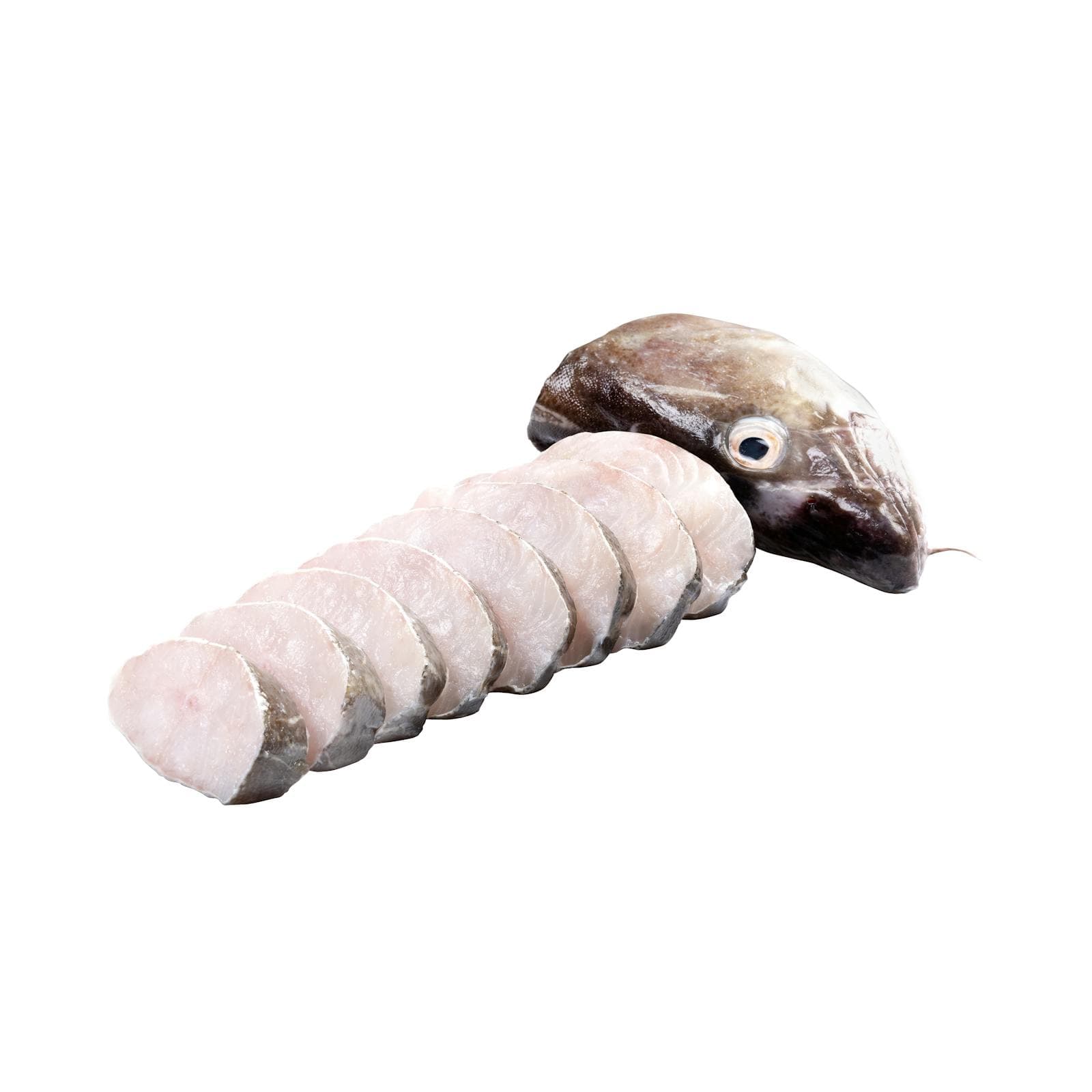 €15.04
Cod Half Piece Sliced
1.18 kg · Mercadona
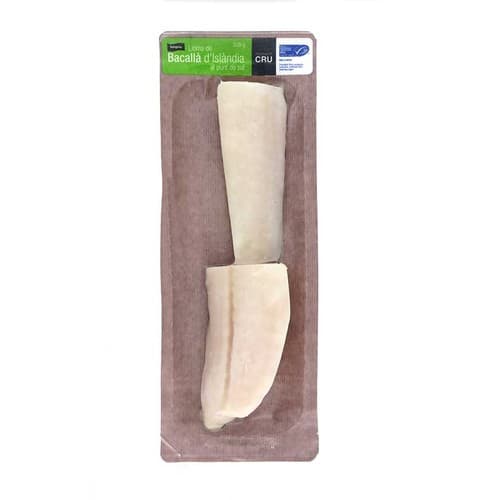 €8.99
€8.99Salted Cod Loin
BONPREU · kg · Bonpreu
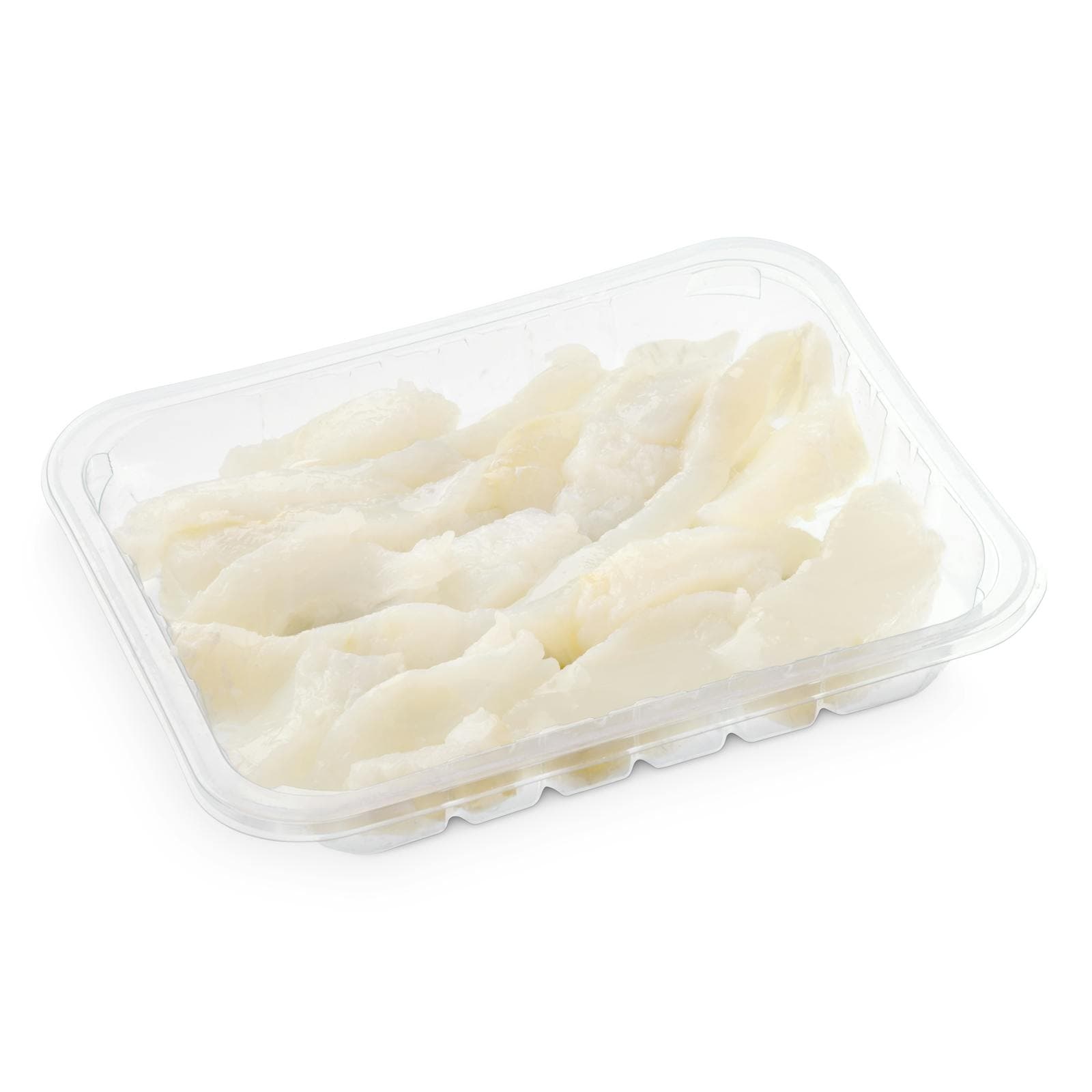 €7.27
€7.27Desalted Cod Crumbs
Hacendado · 285 g · Mercadona
Good to know
- Scientific name
- Gadus morhua (Atlantic cod)
- Origin
- North Atlantic — Norway, Iceland, Newfoundland, Labrador; 1,000+ years of Viking preservation tradition
- Curing process
- Fresh cod layered in salt 2–3 weeks, then air-dried several weeks; moisture drops to ~15%
- Shelf life (unrehydrated)
- 1–2 years in cool, dry, well-ventilated space; indefinitely if kept bone-dry
- Rehydration time
- 24–72 hours in cold water, changed 2–3 times daily, depending on thickness
- Yield
- Dried salted cod rehydrates to roughly 2.5–3× its dried weight
- Flavor
- Concentrated savory-umami, moderately salty, clean oceanic notes
- Texture (cooked)
- Dense, silky flakes; easily torn by hand; prone to drying out if overcooked
Substitutes
- Uncooked fresh cod — Adjust seasoning dramatically; fresh cod has no salinity. Use roughly half the quantity of rehydrated salted cod in a recipe, then season to taste.
- Dried unsalted stockfish — Similar texture and flavor but no inherent salt. Soak 24–48 hours, then salt to your dish's needs.
- Pacific cod (salted at home) — Cover fresh Pacific cod fillets in coarse salt for 24 hours, rinse, then proceed as with store-bought.
- Dried pollock (Hamppari, Korean Myul) — Widely available in Asian markets; similar savory-umami quality; soak and use as you would bacalao.
- Dulse or nori seaweed flakes — Does not replicate texture or flavor, but adds oceanic umami in vegan/vegetarian versions of dishes like brandade.
Pairs with
Also called
Salt Cod (Bacallà) · Salted Cod (Bacalhau) · Saltfish · Salt Fish (Morue) · Salt Cod (Bakaliaros) · Bacalao · Bacalhau · Bacallà · Morue
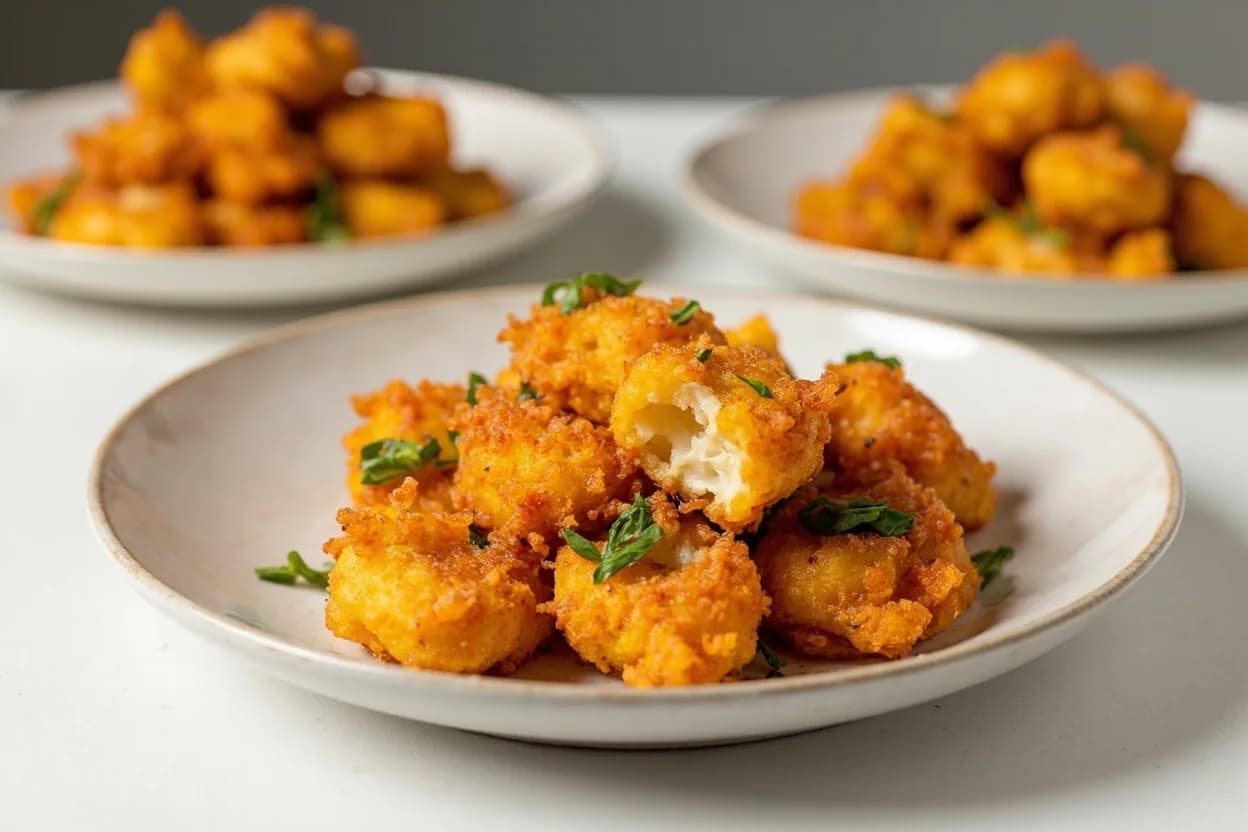
Appears in these dishes
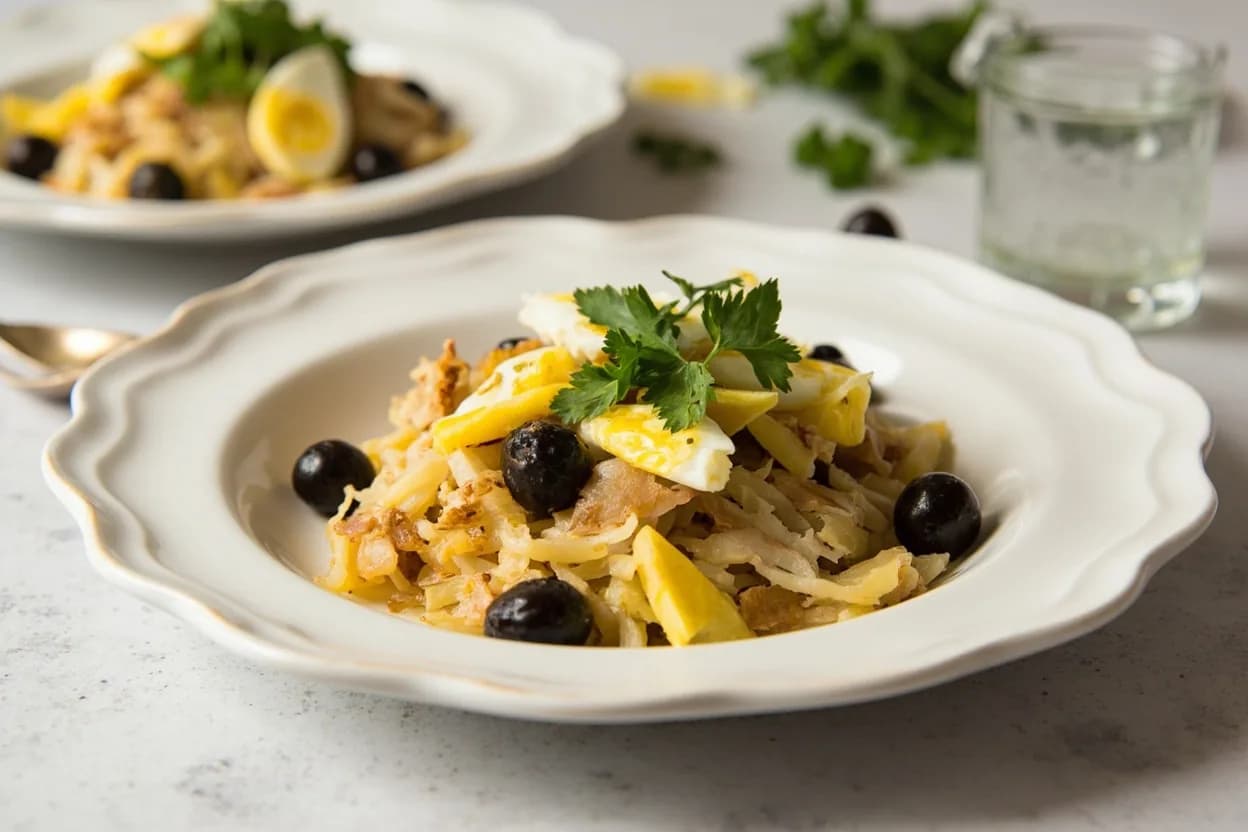
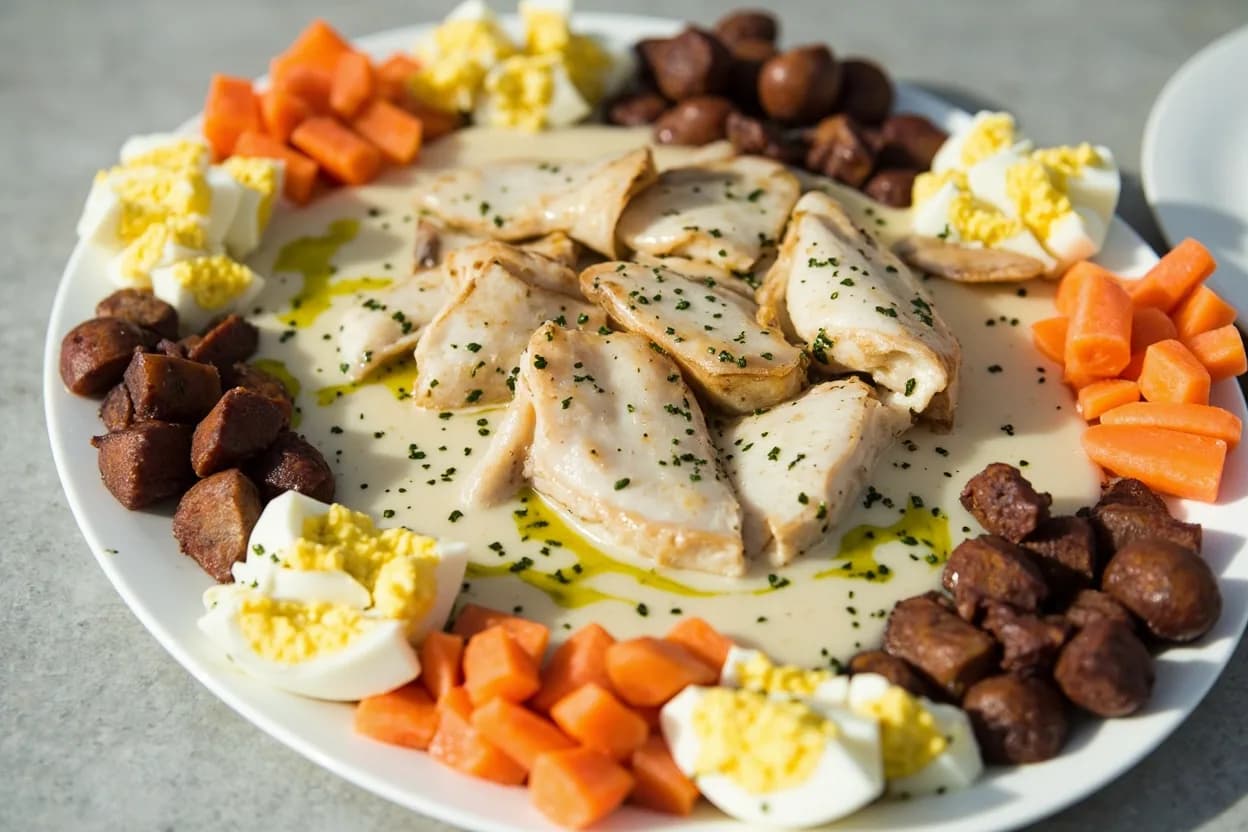
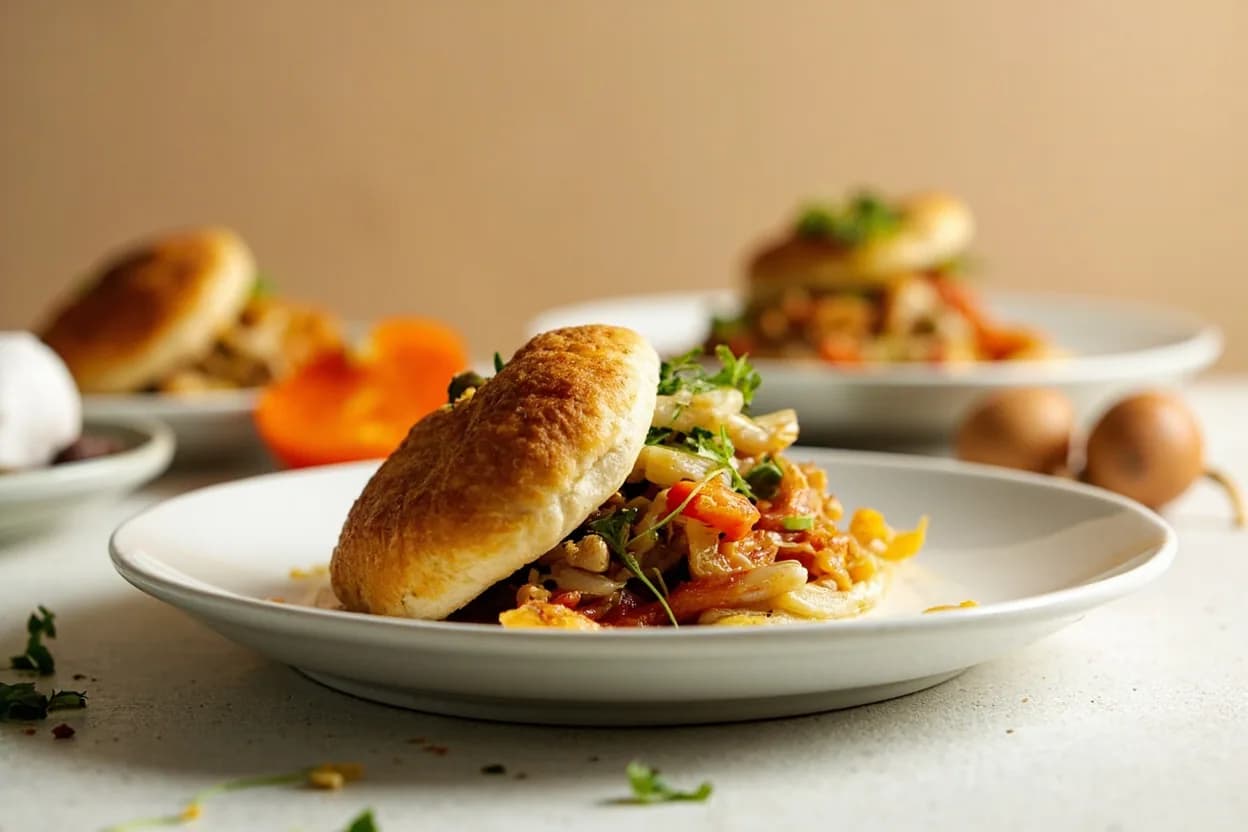
Related

Egg
The kitchen's everything ingredient — bind, leaven, enrich, or fry

Chicken Breast
Lean, quick-cooking white meat for everyday dinners

Ground Beef
Versatile minced beef for burgers, ragù, tacos, and meatballs

Pork Loin
Lean, tender roasting cut that stays juicy with care

Salmon
Rich, rosy fish that roasts, grills, or cures beautifully

Egg White
Pure protein that whips to airy peaks for meringue and more

Egg Yolk
Rich, golden yolk for custards, mayonnaise, and pasta

Quail Egg
Tiny, speckled eggs for garnishing and elegant bites