Proteins
Basturma (Pastirma)
Air-dried cured beef coated in a thick paste of fenugreek and spices; sliced paper-thin.
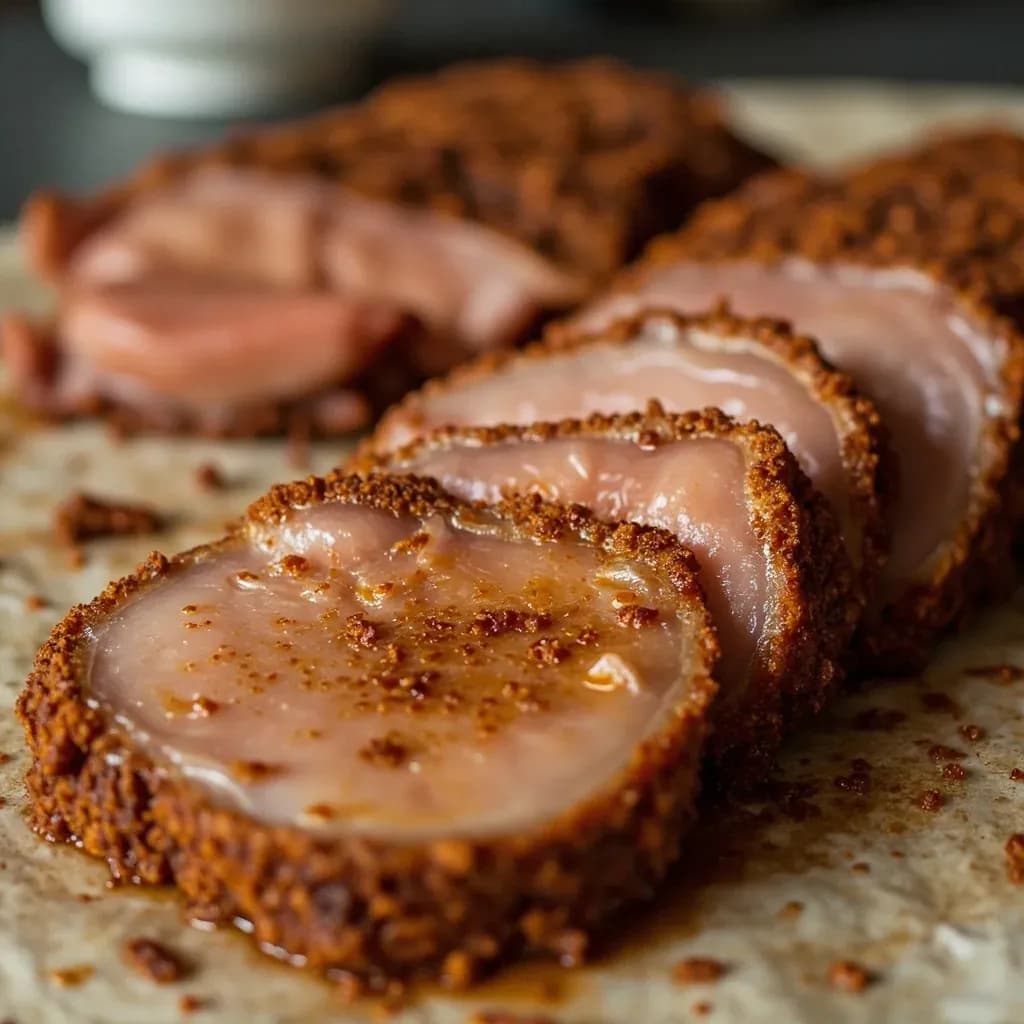
Basturma, also spelled pastirma, is highly seasoned air-dried cured beef, traditional across Armenia, Turkey, and the Middle East. The meat is salted, pressed, and coated in a thick, pungent paste called çemen made of fenugreek, garlic, paprika, and cumin before drying. Served in very thin slices as a meze or with eggs, it has an intense, aromatic, savory flavor.
Basturma (also spelled pastırma) is an ancient cured meat tradition originating in Eastern Anatolia with roots tracing back to Central Asia. It is made from lean beef—traditionally the tenderloin or file—salted, pressed, washed, and air-dried, then coated with çemen, a paste of ground fenugreek seeds, garlic, paprika, cumin, coriander, and chili. The çemen creates a thick, ruddy crust that distinguishes basturma from all other dried meats and imparts the characteristic bitter-floral flavor that defines this product. After coating, the meat dries again until it becomes dense and firm, ready for the razor-thin slicing that is its hallmark.
The çemen coating is not incidental—it is the soul of the product. The fenugreek creates the reddish-brown crust, and its distinct earthy, slightly bitter flavor with floral undertones cannot be replicated by any other spice. Traditional production centers around Kars and Erzurum provinces in northeastern Turkey, where artisans have refined the process over generations. Both Armenian and Turkish traditions produce basturma, with Armenian versions often featuring more cayenne heat, but the essential method and character remain shared heritage. The result is an intensely savory, salty, and complex cured meat that can stand alongside the finest prosciutto or bresaola in sophistication.
Basturma behaves differently from most cured meats once sliced. Because it is pressed and coated, the texture is denser and more unified than many air-dried meats, and the thin slicing is not merely aesthetic—it is structural to the eating experience. The çemen crust holds the slices together while the interior remains supple. Because it is lean with minimal fat cap, basturma does not develop the buttery melt of fatty cured meats; instead, it offers a concentrated beefy intensity that coats the palate. Whole pieces keep for months wrapped in cloth at cool room temperature, but once sliced, exposure accelerates drying and flavor loss—refrigerate and use within weeks.
- Measured in
- g
- Storage
- Fridge
Types & varieties
Made with çemen (fenugreek paste) as a coating; the standard form with regional variations in spice intensity
Similar process and appearance; spice blends vary slightly; often more heavily spiced with cayenne
Standard beef pastırma; the most common variety found commercially
Made from lamb rather than beef; rarer, more delicate flavor
The Çemen Distinction
The word çemen refers specifically to the ground fenugreek seed paste—not the fresh herb—that forms the outer coating of basturma. This is the defining characteristic that separates it from all other dried meats. Fenugreek seeds have an earthy, maple-like sweetness when raw, but when ground and mixed with garlic, paprika, and spices, they become savory, bitter, and complex. The paste is applied thickly to the dried meat, creating a textured crust that can be up to 3mm thick on artisan versions. When shopping, select pieces with the thickest, most even çemen coating—the crust protects the meat and indicates proper traditional production. Thin or patchy çemen suggests shortcuts in production.
- Çemen is made from ground fenugreek seeds, not the fresh herb
- The coating should be thick and even, 2–3mm on quality pieces
- Thin or uneven coating indicates rushed or low-quality production
- The crust protects the interior and retains moisture and flavor
Buying and Storing
In North America, quality basturma is available at well-stocked specialty markets, Turkish and Armenian grocery stores, and some online retailers. When selecting, examine the çemen crust—it should be thick, dry to the touch, and free of cracks or soft spots. The meat beneath should feel firm when pressed. Avoid pieces that appear moist, have any sour smell, or show discoloration at the edges. Whole uncut basturma stores remarkably well: wrap loosely in a clean cloth and keep in a cool, dry place. Do not refrigerate whole pieces—the refrigerator dries them too aggressively. Once sliced, transfer to an airtight container or vacuum-seal bag and refrigerate. Sliced basturma maintains quality for 2–3 weeks refrigerated, but flavor and texture degrade over time as the exposed surface oxidizes and dries.
- Select pieces with thick, even çemen coating and firm texture
- Store whole pieces wrapped in cloth at cool room temperature
- Never refrigerate whole basturma—it will dry out
- Once sliced, refrigerate in airtight containers and use within 2–3 weeks
Common uses
Tips & pitfalls
- Let sliced basturma come to room temperature for 15–20 minutes before serving—it releases more aroma and the flavors open up
- Use the sharpest knife you own or a deli slicer; the slicing must be paper-thin for proper texture and mouthfeel
- Store whole uncut basturma wrapped in cloth at cool room temperature; the çemen casing protects it from drying
- Once sliced, seal tightly and refrigerate; the exposed surface dries and loses flavor within days
- Select pieces with a thick, even çemen crust—it indicates proper traditional production and better flavor
- Do not cook basturma aggressively; a brief sear or crisping in a dry pan is all that is needed if heating at all
- Avoid slices that are discolored, overly moist, or smell sour—these are signs of improper curing or age
- In Turkey, high-quality pastırma is often sourced from specialty markets or the Kars region; ask your supplier about origin
Nutrition
Nutrition
No USDA FoodData Central match for Basturma (Pastirma) yet. We surface a per-100 g profile once a generic whole-food entry is matched and verified.
In the shops
Matched grocery products
No matched grocery products for Basturma (Pastirma) yet.
Good to know
- Origin
- Eastern Anatolia (Turkey) with roots in Central Asia; also central to Armenian cuisine
- Primary Meat
- Beef tenderloin (file) or other lean, tender cuts
- Key Flavoring
- Çemen paste—ground fenugreek seeds, garlic, paprika, cumin, coriander, and chili
- Traditional Process
- Salted, pressed, washed, air-dried, then coated with çemen paste and dried again
- Curing Time
- 2–6 weeks depending on size and climate
- Texture
- Dense, firm; sliced paper-thin
- Flavor
- Intense beefy, salty, mildly spicy; distinctive bitter-floral fenugreek notes from the çemen crust
- Shelf Life
- Months whole and wrapped; once sliced, refrigerate and use within weeks
- Serving Temperature
- Room temperature (let sliced meat temper before serving)
- Region of Production
- Kars and Erzurum provinces in northeastern Turkey remain the traditional centers
Substitutes
- Pastrami (American or deli style) — Cured and spiced but without the çemen coating; less complex, lacks the distinctive fenugreek flavor
- Bresaola — Italian air-dried beef; excellent in its own right but lacks the fenugreek and spice crust entirely
- Cured beef like Lorentz or country ham — Can stand in texturally but will differ significantly in spice profile and intensity
- Gaspé-style dried beef — Canadian cured beef; similar texture but different spice profile, no fenugreek notes
Pairs with
Also called
Basturma (Cured Beef) · Pastirma (Basterma) · Pastirma · Basterma
Related
Egg
The kitchen's everything ingredient — bind, leaven, enrich, or fry
Chicken Breast
Lean, quick-cooking white meat for everyday dinners

Ground Beef
Versatile minced beef for burgers, ragù, tacos, and meatballs
Pork Loin
Lean, tender roasting cut that stays juicy with care
Salmon
Rich, rosy fish that roasts, grills, or cures beautifully

Egg White
Pure protein that whips to airy peaks for meringue and more
Egg Yolk
Rich, golden yolk for custards, mayonnaise, and pasta

Quail Egg
Tiny, speckled eggs for garnishing and elegant bites