Proteins
Cow Skin (Kanda / Ponmo)
Cleaned, boiled cattle hide with a gelatinous bite, added to West African soups and stews.
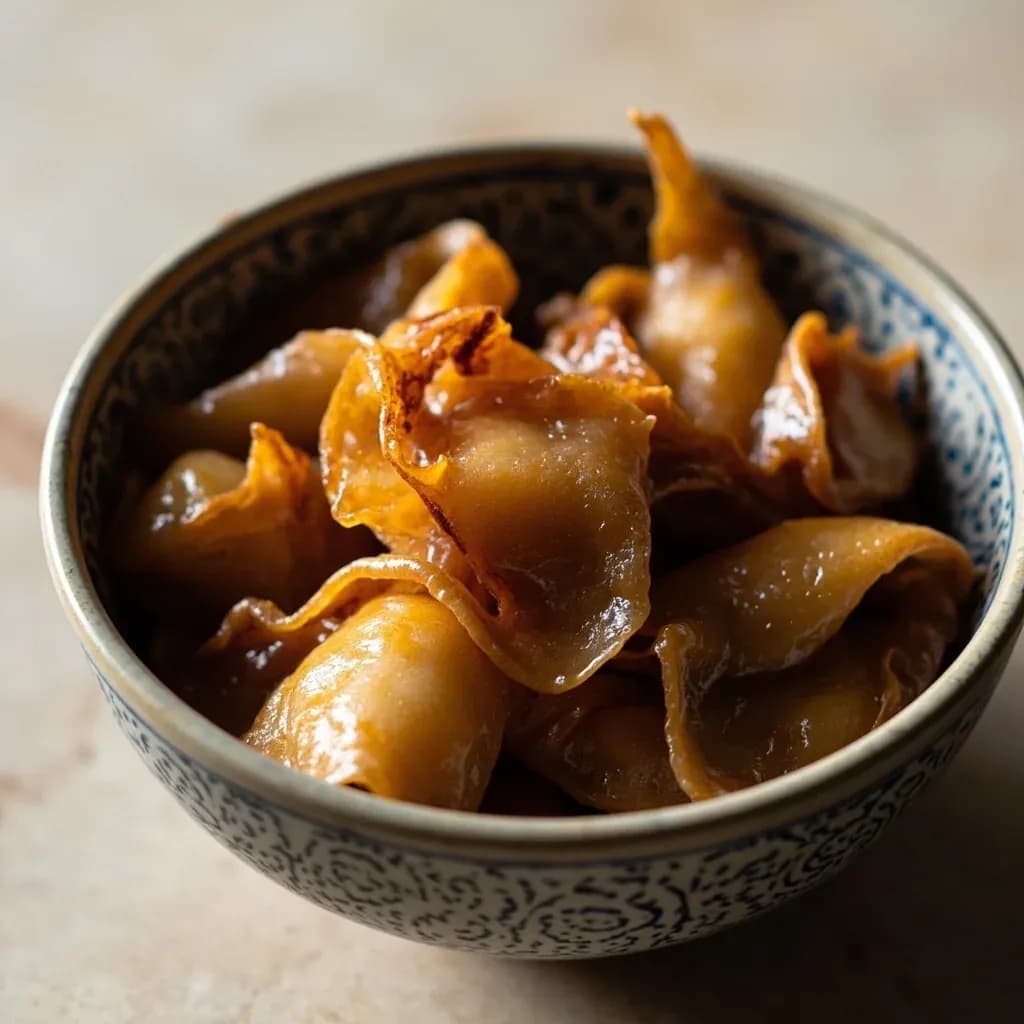
Cow skin, known as kanda or ponmo in West Africa, is cleaned, singed, and boiled cattle hide eaten as a meat substitute or addition. It has a soft, gelatinous, slightly chewy texture and readily absorbs the flavors of the spicy stews, pepper soups, and braises it is cooked into. Prized for its collagen-rich body, it adds heartiness and a distinctive mouthfeel.
Cow skin, known as ponmo in Yoruba, kanda in Hausa, and nwankwo in Igbo, is processed cattle hide that has become a cornerstone of West African cuisine, particularly in Nigeria. It is technically a byproduct of the beef industry, but its affordability, high collagen content, and ability to add body and texture to dishes have made it as important in Nigerian kitchens as the meat itself. The hide is cleaned, boiled or dried, and sometimes smoked before reaching the market, where specialized vendors handle the meticulous preprocessing that makes it ready to cook.
What makes ponmo remarkable is its textural transformation through cooking. When simmered, the collagen in the hide breaks down and releases gelatin, giving soups and stews a satisfying richness and viscosity that elevates even simple dishes. Despite its neutral flavor, properly cooked ponmo has a distinctive chew—somewhere between rubbery and tender—that adds substance and interest. This chewiness is a matter of preference: some cooks prefer it soft and yielding, while others want it with more resistance, and the cooking time is the key control for both.
In Nigerian markets, ponmo is sold pre-cleaned in sheets or smaller cut pieces, ranging from thin to moderately thick. The quality markers are clear: off-white to light tan color, no remaining hairs, and no strong ammonia smell, which indicates improper processing. Fresh ponmo needs thorough washing and boiling before it goes into a dish, while dried or smoked varieties require soaking and longer cooking. The effort is minimal but the payoff in flavor, texture, and protein enrichment is considerable.
- Measured in
- g
- Storage
- Fridge
Types & varieties
Recently processed and most common in urban markets; requires thorough washing and boiling before use
Dehydrated for extended shelf life; requires soaking for at least 2 hours or overnight, then longer cooking to rehydrate and soften
Smoke-dried for a distinctive smoky flavor; popular in rural areas and prized for long-term storage
Buying and Inspecting
Purchase ponmo from reputable butchers or specialized vendors who handle thorough cleaning and pre-processing. Quality ponmo should be off-white to light tan in color, free of any remaining hairs, and should not emit a strong ammonia smell—this is a reliable indicator of improper processing. Avoid sheets that appear yellowed, discolored, or have a slimy residue. In some markets, ponmo is sold already cut into smaller, manageable pieces, which saves prep time. Dried ponmo is typically sold in bundles; check that it is completely desiccated with no moisture pockets before purchasing.
- Look for off-white to light tan color without hairs or discoloration
- Avoid ponmo with a strong ammonia smell—indicates improper processing
- Fresh ponmo is most common in urban markets; dried is better for long storage
- Already cut pieces are convenient and cook more evenly
Preparing Fresh Ponmo
Fresh ponmo requires a dedicated cleaning and pre-boiling step before it goes into any dish. The goal is to remove residual debris, reduce any odor, and partially tenderize the hide so it can absorb flavors from the soup. Skipping or rushing this step is the most common cause of tough, chewy, or poorly flavored ponmo in the finished dish.
- Rinse multiple times in cold salted water, rubbing to remove any surface debris
- Boil in water with a pinch of salt, ground pepper, and half an onion for 20–30 minutes
- Drain and allow to cool, then cut into strips or bite-sized pieces if needed
- Add to soups early in cooking so it absorbs the full depth of the broth
Cooking Dried or Smoked Ponmo
Dried and smoked ponmo demand more lead time. Soaking is non-negotiable: at least 2 hours in room-temperature water, or overnight in the refrigerator for best results. Smoked ponmo may carry a stronger odor that benefits from a preliminary boil with aromatics before soaking. Once rehydrated, treat it like fresh ponmo—pre-boil with seasonings, then add to your dish. Smoked varieties will contribute their own light smokiness to the final dish, which is desirable in rural-style preparations.
- Soak dried ponmo for at least 2 hours or overnight before cooking
- Smoke-dried ponmo benefits from a preliminary boil with onion and pepper to reduce harshness
- Change the soaking water once if leaving overnight to keep it clean
- Pre-boil rehydrated ponmo before adding to soups, same as fresh
Common uses
Tips & pitfalls
- Rinse fresh ponmo multiple times in salted water before cooking—residual debris and off odors are common and must be washed away
- Boil ponmo with a pinch of salt, ground pepper, and onion for 20–30 minutes before adding to soups to pre-tenderize and season it
- Add ponmo early in the soup-making process so it has time to absorb the full depth of the broth's flavors
- Do not overcook in the pre-boil stage—maintain some chew so it holds its shape and texture in the finished soup
- If using dried ponmo, soak for at least 2 hours or overnight before cooking; thick pieces soaked overnight cook more evenly
- Season generously throughout the cooking process; ponmo's neutral flavor means it will taste bland if the dish is under-seasoned
- Test tenderness with a bite before adding to the soup—properly pre-boiled ponmo should offer resistance but be easily chewable, not rubbery
- Avoid ponmo with a strong ammonia smell, yellowed color, or visible hairs; these indicate poor processing
Nutrition
Energy
243 kJ · per 100 g
Where the calories come from
Protein
2.6g
5% DV
Carbs
12.4g
5% DV
Fat
0.1g
0% DV
Fiber
2.5g
9% DV
Sodium
10mg
0% DV
Source · USDA FoodData Central · approx. Potatoes, raw, skin
View on FDC →In the shops
Matched grocery products
No matched grocery products for Cow Skin (Kanda / Ponmo) yet.
Good to know
- Common Names
- Ponmo (Yoruba), Kanda (Hausa), Nwankwo (Igbo)
- Type
- Processed beef hide; protein and thickening ingredient
- Origin
- West Africa, especially Nigeria; integral to Yoruba, Hausa, and Igbo cuisines
- Primary Form
- Pre-cleaned boiled or sun-dried sheets of cattle hide; also sold smoked
- Texture
- Chewy and gelatinous when cooked; absorbs surrounding flavors
- Flavor
- Mild and neutral; takes on broth and seasoning completely
- Cooking Time
- 30–60 minutes simmering to achieve tender, edible texture
- Shelf Life
- Fresh: 1–2 days refrigerated; dried: several months in cool, dry storage
Substitutes
- Goat Skin (Omutuo) — Similar gelatinous texture and bite; use in equal amounts; slightly more tender when cooked
- Stockfish — Dried cod that adds protein body and depth to soups; requires longer soaking; different texture but common in the same dishes
- Smoked Catfish — Provides strong umami and protein; different texture but frequently used alongside or as a substitute for ponmo in Nigerian soups
Pairs with
Also called
Cow Skin (Kanda) · Ponmo · Kanda · Beef Skin
Appears in these dishes
Related
Egg
The kitchen's everything ingredient — bind, leaven, enrich, or fry
Chicken Breast
Lean, quick-cooking white meat for everyday dinners

Ground Beef
Versatile minced beef for burgers, ragù, tacos, and meatballs
Pork Loin
Lean, tender roasting cut that stays juicy with care
Salmon
Rich, rosy fish that roasts, grills, or cures beautifully

Egg White
Pure protein that whips to airy peaks for meringue and more

Egg Yolk
Rich, golden yolk for custards, mayonnaise, and pasta

Quail Egg
Tiny, speckled eggs for garnishing and elegant bites