Proteins
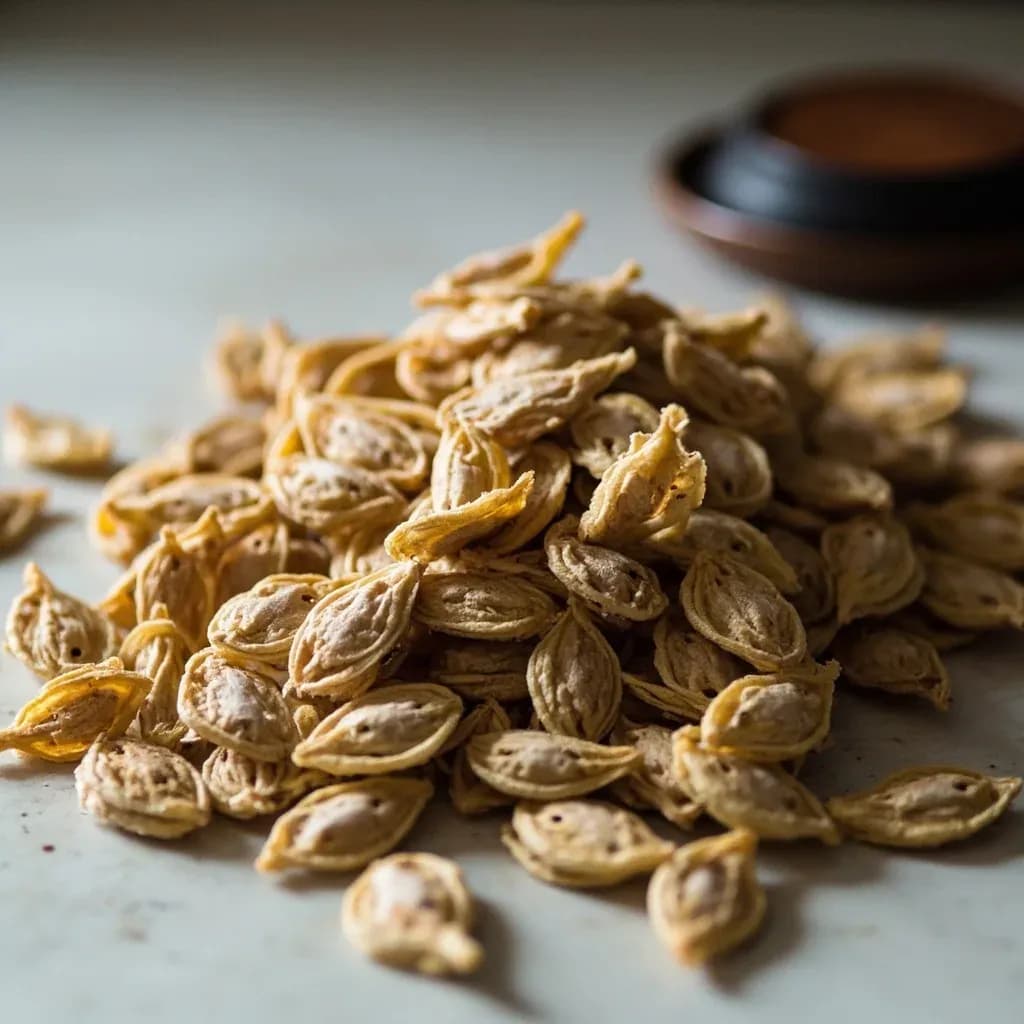
Dried Kapenta
Tiny sun-dried freshwater fish, a protein staple across Southern Africa.
Kapenta are small freshwater sardines from lakes Kariba and Tanganyika, sun-dried whole for preservation. Across Zambia, Zimbabwe, and the wider region they are fried with onion and tomato and served with nshima or sadza as an affordable everyday protein. Drying gives them an intense, salty fish flavor.
Dried kapenta is a traditional preserved protein made from tiny freshwater fish—primarily Limnothrissa miodon and Stolothrissa tanganicae—caught in enormous quantities from Lake Tanganyika, Lake Victoria, and other African inland waters. After harvest, the fish are either sun-dried for one to three days or smoked over wood fires, concentrating the protein to roughly 60–65% by dry weight. The entire fish is consumed: head, spine, innards, and all. The small, soft bones become soft and crispy when fried, making them a valuable calcium source rather than a hazard. In Zambia and Zimbabwe, kapenta is sold by volume in open markets—measured into cups or tins—and serves as a primary protein staple where fresh fish is seasonally scarce or prohibitively expensive. Its flavor is intensely savory and mineral-rich, with a concentrated umami character that deepens when cooked. Unlike some dried marine fish, raw kapenta has a relatively mild, less pungent aroma; the characteristic fishy intensity develops during frying or stewing. The dried fish behaves differently depending on method: frying yields a crisp, snack-like texture, while slow cooking in liquids produces a chewier, more integrated result that blends into relishes and stews.
- Measured in
- g
- Storage
- Pantry
Allergens
Types & varieties
The most common form; dried in direct sunlight for one to three days. Light silver color, mild raw aroma. Widely available in Zambian and Zimbabwean markets.
Smoked over wood fires, yielding a darker brown color and a stronger, smokier flavor. Common in some Congolese and Zambian preparations; the smoking adds a secondary preservation layer.
Some commercial varieties are briefly brined before drying, which adds saltiness and extends shelf life. Check the label if you are managing sodium intake.
The same category of tiny dried freshwater fish from Lake Victoria; typically sun-dried and sold throughout Tanzania and Uganda. May be slightly larger than Lake Tanganyika kapenta but prepared identically.
Small clupeid fish from Lake Albert and Lake Kyoga; a very similar product, often sold already ground into a coarse powder for use as a seasoning.
Why Kapenta Matters in African Cuisines
In landlocked countries like Zambia and Zimbabwe, fresh fish is expensive and seasonally unreliable. Dried kapenta solves both problems: it is shelf-stable for months and provides a dense, affordable source of protein and micronutrients year-round. The Lake Tanganyika kapenta fishery is economically significant, supporting thousands of livelihoods. For rural households, kapenta relishes—quick fried preparations served over thick starchy porridges like sadza, nshima, or ugali—form the backbone of daily nutrition. Because the whole fish is eaten, including the bones, kapenta also supplies calcium, which is otherwise limited in grain-based diets. This is not a luxury ingredient; it is a nutritional linchpin for millions of people.
- Economically critical in Zambia: kapenta from Lake Tanganyika is a major market commodity
- Provides bioavailable calcium from edible soft bones, important in calcium-poor diets
- Sold by volume rather than weight, reflecting its status as an affordable, everyday staple rather than a premium product
- The entire fish—head, spine, and innards—is consumed, maximizing nutrition and minimizing waste
Buying and Storing Kapenta
In open markets, kapenta is typically heaped into cups or tins, and quality varies. Look for a clean silver-gray color (sun-dried) or rich brown (smoked) with no visible mold, dark spots, or strong ammonia off-odor—these indicate spoilage or poor drying conditions. Sort through loose purchases to remove twigs, large scales, and debris before cooking. Commercial sealed packets offer more consistent quality and hygiene. Regardless of form, moisture is the enemy: humidity transforms crispy dried fish into a leathery, chewy product that will not fry up properly. Store in airtight containers with silica gel desiccant packets if available, and keep in a cool, dark, dry place. Under good conditions, the fish will stay usable for six to twelve months.
- Avoid packages with visible moisture or a strong ammonia smell
- Sort and rinse all loose-market purchases before use
- Airtight storage with desiccant is essential for maintaining texture
- Sealed commercial packets extend shelf life further than loose market fish
Common uses
Tips & pitfalls
- Always wash and sort dried kapenta before cooking—sand and debris are common in open-market purchases and ruin texture.
- Dry the fish thoroughly with kitchen paper before frying; any residual moisture causes splattering and prevents crisping.
- Do not add salt during cooking unless using an unsalted variety—commercial dried kapenta often retains significant salt from processing.
- Dry-frying in a heavy pan over medium-high heat is a healthier alternative that still produces a crispy result and minimizes fishy cooking odors.
- Store with silica gel packets in airtight containers; humidity is the primary cause of failure—moisture makes the fish chewy instead of crispy.
- If a softer texture is preferred for stews, soak the rinsed fish in warm water for five to ten minutes before adding to the dish.
- When grinding kapenta as a seasoning powder, toast the dried fish briefly in a dry pan first to deepen the umami before grinding.
- Buy from reputable vendors; improper sun-drying without hygiene controls can lead to bacterial or mold contamination.
- The entire fish—including soft bones—is edible and nutritious. The bones become soft and crispy when fried, providing a good calcium source.
- In Malawi, smoked kapenta fried until crisp and served over nsima is commonly called chipps—a street food staple.
Nutrition
Nutrition
No USDA FoodData Central match for Dried Kapenta yet. We surface a per-100 g profile once a generic whole-food entry is matched and verified.
In the shops
Matched grocery products
No matched grocery products for Dried Kapenta yet.
Good to know
- Common Names
- Kapenta (Zambia/Zimbabwe), Dagaa (Tanzania/Uganda), Mukene (Uganda), Silver biddy (South Africa)
- Scientific Name
- Limnothrissa miodon, Stolothrissa tanganicae; various small cyprinids in different regions
- Primary Source
- Lake Tanganyika (L. miodon); Lake Victoria (dagaa); widespread throughout Southern and East African freshwater lakes and rivers
- Type
- Sun-dried or smoke-dried small freshwater fish, whole and uneviscerated
- Size
- 2–6 cm length; whole fish including head, spine, and innards
- Color
- Silvery-gray when sun-dried; darker brown when smoked
- Flavor
- Intense umami, concentrated fishiness, slightly salty, mineral notes from the drying process
- Texture
- Crispy when fried; slightly chewy when slow-cooked in stews or relishes
- Protein Content
- Approximately 60–65% protein by dry weight—significantly higher than fresh fish
- Shelf Life
- 6–12 months in an airtight container away from moisture and sunlight
- Typical Purchase
- Sold loose by volume (cups, tins) in open markets, or in sealed packets from commercial brands
- Primary Cuisines
- Zambian, Zimbabwean, Tanzanian, Malawian, Congolese, Ugandan
Substitutes
- Small dried anchovies — Similar size, flavor profile, and crispy texture when fried. Rinse and use in a 1:1 ratio. Available in Asian grocery stores.
- Dried silver biddy or other small coastal dried fish — Closely related small fish sold in South Africa and along the Indian Ocean coast. Prepare and use the same way.
- Dried shrimp — Provides comparable umami intensity and protein but has a different texture and is saltier. Use sparingly and rinse well before use.
- Fermented fish sauce or paste — Excellent for adding umami depth in cooked dishes, but not a textural substitute. Use one to two teaspoons to replace one to two tablespoons of dried fish in soups and stews.
- Bonito flakes (katsuobushi) — Offers intense umami for seasoning purposes with a crumbly texture rather than crispy. Best for Japanese-influenced dishes or as a dry seasoning garnish.
Pairs with
Also called
Matemba · Kapenta · Lake Tanganyika Sardine
Appears in these dishes
Related
Egg
The kitchen's everything ingredient — bind, leaven, enrich, or fry
Chicken Breast
Lean, quick-cooking white meat for everyday dinners

Ground Beef
Versatile minced beef for burgers, ragù, tacos, and meatballs
Pork Loin
Lean, tender roasting cut that stays juicy with care
Salmon
Rich, rosy fish that roasts, grills, or cures beautifully

Egg White
Pure protein that whips to airy peaks for meringue and more

Egg Yolk
Rich, golden yolk for custards, mayonnaise, and pasta

Quail Egg
Tiny, speckled eggs for garnishing and elegant bites