Spices
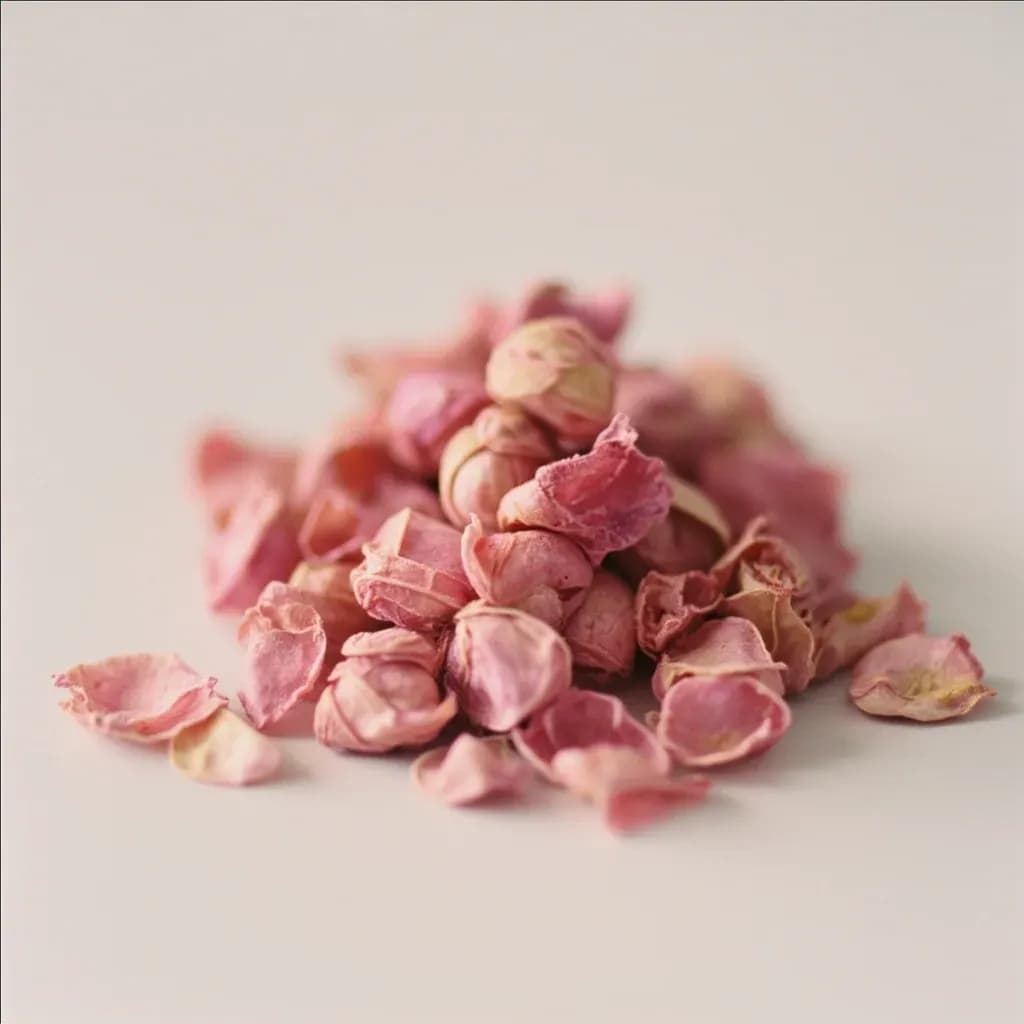
Dried Rosebud / Rose Petal
Fragrant dried roses used for floral aroma in teas, spice blends and Persian desserts.
Dried rosebuds and petals are culinary roses dried to preserve their delicate floral fragrance. They are used in Middle Eastern and Persian cooking to perfume rice, desserts and spice blends like ras el hanout and advieh, and to brew floral teas. Use sparingly so the aroma stays subtle rather than soapy.
Dried rosebuds and petals are the air-dried blossoms of Rosa damascena (Damask rose) and Rosa centifolia (cabbage rose), harvested at peak fragrance and cured in shade to preserve their volatile oils. Unlike fresh flowers, which carry a fleeting, watery scent, the dried form concentrates aromatic compounds into a potent, slightly tannic floral note that is subtly sweet and far more durable in cooking. Whole buds—particularly the Persian gulab dari—retain their shape through simmering and steaming, making them appropriate for rice dishes and tea where visual presentation is valued alongside flavor; petals are better suited to applications where they will be strained out or where a softer texture integrates into the final dish. Food-grade roses differ fundamentally from ornamental or florist varieties: the latter are often treated with pesticides and preservatives unsuitable for consumption and lack the fragrant volatile oils that make culinary roses worth using. When properly sourced and stored, dried rosebuds deliver a flavor profile centered on citronellol and geraniol—compounds that pair naturally with phenyl ethyl alcohol—creating an aromatic signature that defines an entire regional cuisine, particularly in Persia and Kashmir.
- Measured in
- g
- Storage
- Pantry
Types & varieties
Considered premium; intense color and fragrance, traditionally dried at high altitude
The classic culinary variety; essential for Persian preparations
Preferred for tea and rice dishes; holds shape during cooking
Often used for making rose water; slightly softer texture
More pungent and slightly fruity; used in French and Middle Eastern preparations
Quality and Sourcing
The quality hierarchy runs Kashmiri > Persian > Turkish > Indian commercially, with price reflecting aromatic intensity. Before buying, open the container and smell: a faint, papery, or dusty scent indicates stale stock with depleted oils—discard and seek fresher product. Avoid any roses treated with sulfur for color retention unless explicitly labeled as food-grade. Whole buds in sealed glass jars from specialty spice merchants or Middle Eastern grocery stores represent the best balance of quality and accessibility.
- Kashmiri roses dried at altitude have the highest oil content and deepest color
- Persian gulab dari is the workhorse variety for most culinary applications
- Seek product from retailers who specialize in whole spices rather than pre-ground or blended mixes
Rose Buds vs. Rose Water
Dried rosebuds and petals differ from rose water in that they contribute both aromatic oils and visual appeal. Rose water provides纯粹的香气 but no textural or color contribution. Whole buds are expected in tea and rice presentations; they should remain visible as decorative elements. When a recipe calls for dried petals but you have only rose water, use 1–2 teaspoons of rose water to replace 1 tablespoon of dried petals, though you will lose the visual component. Conversely, when a recipe calls for rose water, steeping a tablespoon of dried petals in warm liquid for 20–30 minutes produces a serviceable homemade substitute, and you can strain out the solids before using.
- Whole buds remain visible in finished dishes; petals may dissolve or disperse
- Homemade rose water from dried petals lacks the consistency of distilled products
- Rose water alone cannot replicate the visual impact of whole buds in rice or tea
Common uses
Tips & pitfalls
- Always verify the roses are specifically sold as food-grade; ornamental roses may carry pesticide residues or preservatives not safe for consumption.
- Add dried buds or petals early in cooking (30+ minutes) to allow time for volatile oils to fully infuse the dish, especially in rice, tea, and braises.
- Crush or grind petals slightly before adding to cold preparations such as dry rubs, dressings, or uncooked doughs to rupture the oil glands and release fragrance.
- Store in sealed glass jars, not plastic bags or containers, to prevent absorption of external odors; keep in a cool, dark cupboard, never the refrigerator where moisture will degrade them.
- If roses smell dusty or papery with no discernible fragrance, they are old and will add negligible flavor—discard and buy fresh stock.
- Do not confuse with hibiscus (karkadè), which is also sold dried but delivers a completely different tart, cranberry-like flavor profile and deep red color.
- When making tea, bruise the buds with a muddler or crush them lightly to release the oils before steeping in boiling water for 3–5 minutes.
Nutrition
Energy
105 kJ · per 100 g
Where the calories come from
Protein
0.6g
1% DV
Carbs
5.7g
2% DV
Fat
0.3g
0% DV
Sodium
0mg
0% DV
Source · USDA FoodData Central · approx. Rose-apples, raw
View on FDC →In the shops
Matched grocery products
No matched grocery products for Dried Rosebud / Rose Petal yet.
Good to know
- Scientific name
- Rosa damascena (Damask rose) and Rosa centifolia (cabbage rose)
- Primary origin
- Persia (Iran), Kashmir, India; also Morocco and Turkey
- Form
- Whole dried buds or petals, air-dried in shade to preserve volatile oils
- Flavor profile
- Delicate floral, slightly sweet, tannic; stronger than fresh petals due to concentration
- Shelf life
- 6–12 months in airtight glass container, away from heat and light
- Food-grade requirement
- Must be labeled specifically for culinary use; never use florist or ornamental roses
- Active compounds
- Volatile oils including citronellol, geraniol, nerol, phenyl ethyl alcohol
- Typical purchase size
- Sold in small quantities (30–100 g); a little goes a long way
Substitutes
- Rose water — Use 1–2 teaspoons to replace 1 tablespoon of dried petals; provides aroma but lacks texture and visual appeal
- Dried lavender — Milder and more camphoraceous; use sparingly and only in sweet applications
- Orange blossom water — Different floral profile (citrus blossom); acceptable substitute in desserts and pastries, though the flavor diverges significantly
- Dried rose geranium leaves — Similar floral note but with a green, pelargonium character; works for savory pairings
Also called
dried-rose · dried-rose-bud · dried-rose-petals · dried-rose-petal
Appears in these dishes
Related
Salt
The one seasoning that makes everything else taste like itself

Black Pepper
Pungent, woody heat — best cracked fresh over anything savory
Amchur
Dried unripe mango ground to a tart, fruity souring powder
Paprika
Sweet, vivid ground pepper for color and gentle warmth
Smoked Paprika
Deep, smoky ground pepper for a campfire warmth
Cumin
Warm, earthy spice central to curries, chili, and tacos
Coriander Seed
Citrusy, warm seed for curries, pickles, and rubs
Turmeric
Golden, earthy spice for curries, rice, and color