Varieties
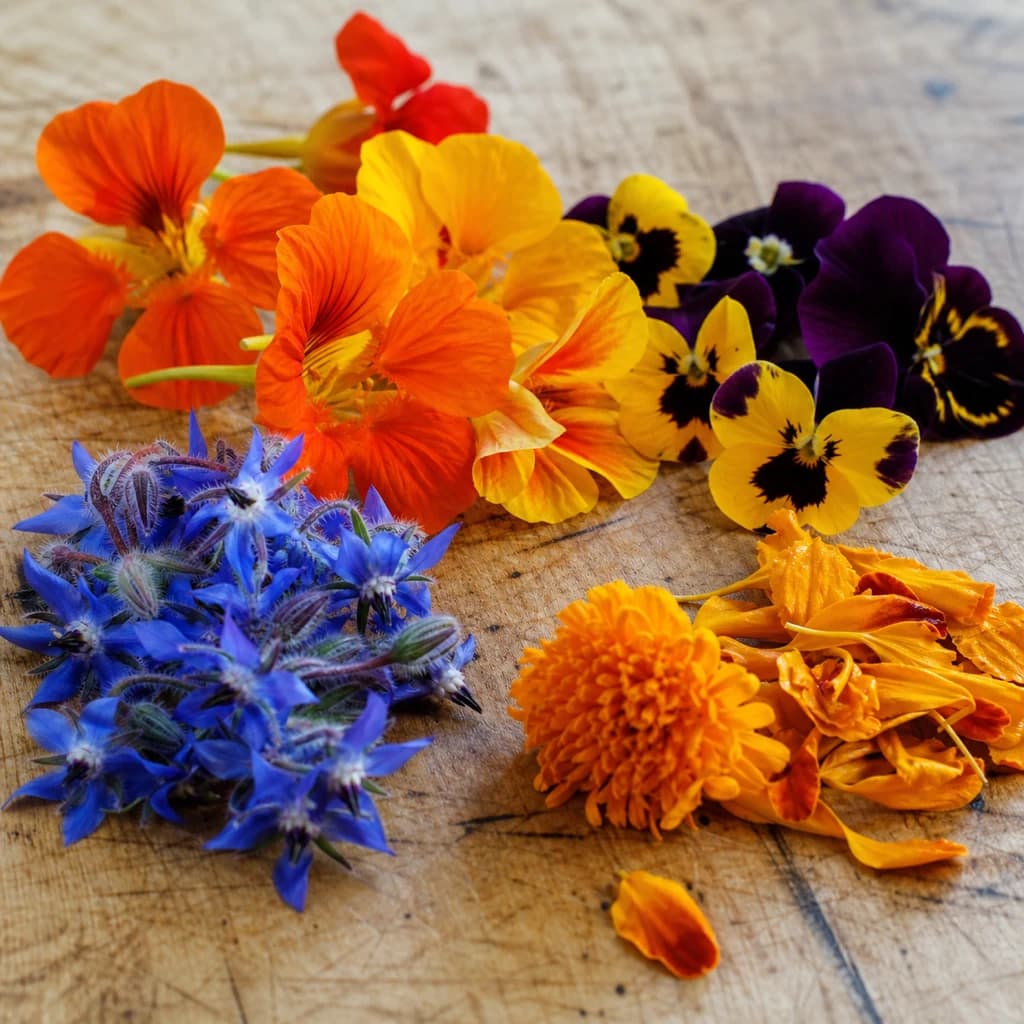
Nasturtium, pansy, borage, and marigold blossoms — the four most common edible flowers.
Showing multiple distinct species together teaches readers to recognize the variety of forms edible flowers take, their range of colors, and their delicate scale.
Produce
Edible Flower
Pesticide-free blossoms used to garnish plates, salads and desserts with color.
Edible flowers are blossoms such as nasturtium, pansy, borage and marigold that are safe to eat and grown without pesticides. Chefs use them to garnish salads, cakes, cocktails and plated dishes, adding vivid color and subtle floral or peppery notes. They are delicate and added raw at the last moment.
Edible flowers are a category of culinary ingredients prized as much for their visual drama as for their often subtle, fleeting flavors. Unlike herbs or vegetables where the edible portion is the primary harvest, flowers are typically used in small quantities—a scattering of petals, a single blossom—to garnish plates, enhance presentations, and introduce nuanced tasting notes that range from peppery (nasturtium) to cucumber-fresh (borage) to intensely tart (hibiscus). Their contribution is largely sensory and aesthetic, but in skilled hands they bridge the gap between food and art, transforming a composed plate into something that feels both personal and celebratory. The key to working with them successfully is understanding that they are delicate, perishable, and demand respect in sourcing—unlike any other produce, flowers intended for the table must come from verified culinary sources, as the boundary between edible and toxic is absolute and unforgiving.
The flavor profile of edible flowers is broad but generally subtle; they read more as aromatic whispers than bold notes. Many carry forward the flavor character of their parent plant—chive blossoms taste of onion, borage of cucumber, lavender of its essential oil—while others, like rose or elderflower, offer entirely distinct floral sweetness. Their texture is typically tender, sometimes fragile, and most varieties lose both color and character when heated, which is why the majority are added fresh at the point of service. A few varieties (squash blossom, calendula) tolerate light cooking, and some (hibiscus calyces, dried chamomile) are prized for infusions rather than fresh use. Understanding these characteristics allows you to deploy them with intention rather than accident.
Seasonally, most edible flowers peak from mid-spring through early fall, though this varies by variety and climate. Nasturtiums, violas, and calendula are prolific garden producers; others like elderflower and certain orchids are foraged or specialty-cultivated. The practical cook will grow their own—nasturtiums and violas are easy, productive, and completely reliable—or source from restaurant suppliers who certify their product for culinary use. The non-negotiable rule is this: flowers must be grown specifically for consumption. Florist flowers, nursery stock, and garden center plants carry pesticide loads calibrated for ornamental use, and many common garden plants (foxglove, lily of the valley, oleander) are lethally toxic while superficially resembling edible varieties. Positive identification and trusted sourcing are not suggestions—they are the price of entry to this ingredient category.
- Measured in
- piece
- Storage
- Fridge
Types & varieties
Most widely used; vivid orange, yellow, red; peppery, mustard-like flavor; both petals and leaves are edible
Mild, faintly grassy-sweet; flat-faced, available in purple, yellow, blue, white; hold up well when candied
Petals taste slightly peppery with hints of saffron; bright orange and yellow; excellent for tinting butters and sauces
Purple pompom clusters; onion-garlic flavor; petals separate easily; best used sparingly
Mild, faintly sweet; large, hollow; often stuffed and fried or used as a vessel; harvest male flowers to allow females to fruit
Brilliant blue star-shaped blooms; cucumber flavor; petals bruise easily; best added just before serving
Intense floral-perfumed; use very sparingly; pairs with honey, lemon, berries; English (L. angustifolia) preferred over more pungent varieties
Fragrant, perfumed; use only unsprayed roses; flavor intensifies with darker color; remove bitter white base of petals
Ruby-red calyces (not the flower itself); intensely tart, cranberry-like; dried for tea, syrups, and braised dishes
Tiny white cream-colored clusters; intensely sweet-floral; almost always used in cordials, syrups, fritters; foraged or cultivated
Mildly sweet; vivid blue; delicate; often used as garnish for desserts and cocktails
Peppery-bitter leaves and mild petals; popular in East Asian cuisine; use young leaves for salad, petals for hot pots
Sourcing Safety
The single most important consideration with edible flowers is provenance. There is no margin for error when toxicity is involved, and the consequences of misidentification or pesticide exposure are severe. Flowers sold by florists, displayed at nurseries, or grown in conventional garden settings are not food—they are ornamental plants that have been treated with agricultural chemicals at levels deemed safe for decoration, not ingestion. Even flowers grown in the same bed as food crops treated with systemic pesticides can absorb those chemicals into their petals and pollen. The only acceptable sources are flowers grown explicitly for culinary use in certified organic conditions, or your own garden where you control every input. When foraging, work only with an expert who can positively identify each species in any season and growth stage; many toxic plants look like edible ones only to the untrained eye.
- Purchase only from verified culinary flower suppliers who can certify their product as food-grade
- Grow your own in raised beds or containers using organic potting mix and no fertilizers or pesticides
- Learn to identify 3–5 common toxic look-alikes in your region before foraging any wild flower
- Never assume a flower is edible because it grows in a vegetable garden or organic farm
Seasonal Availability
Most edible flowers peak during the warm months, but the exact window depends on variety and growing method. In temperate gardens, nasturtiums and violas begin producing as soon as the soil warms, often by late April, and continue until frost kills them in autumn. Calendula, borage, and chive blossoms follow on a similar schedule. Squash blossoms are available in early summer as the first fruits set. Lavender peaks in mid to late summer depending on variety. Elderflower appears briefly in late spring—typically a 2–3 week window—and must be foraged or cultivated at precisely the right moment. Dried hibiscus calyces are available year-round from specialty grocers and are the practical winter alternative when fresh blossoms are scarce.
- Succession-plant nasturtiums and violas every 3–4 weeks for continuous harvest
- Extend the season with cold frames or row covers in spring and fall
- Preserve surplus by infusing into vinegars, syrups, or drying calendula petals for year-round use
- In winter, rely on dried hibiscus and chrysanthemum (chrysanthemum tea) for floral notes
Crystallizing Flowers for Decoration
Crystallizing (or candying) flowers transforms delicate, ephemeral blossoms into durable decorative elements that can be stored for weeks and used to adorn cakes, pastries, and desserts long after fresh flowers are unavailable. The process involves brushing each petal with a thin coating of lightly whipped egg white, then dusting with ultrafine (superfine) sugar. The flowers are then dried in a dehydrator set to 95–110°F (35–43°C) or in a barely-warm oven with the door propped open for ventilation. Properly crystallized flowers should feel dry and slightly crisp to the touch within 2–4 hours and can be stored in a single layer in an airtight container with silica gel packets for up to a month. Violas and cornflowers are the most forgiving varieties to crystallize; borage and chive blossoms are too fragile for this treatment and will shatter. Always use petals only (no stems, stamens, or pistils) and ensure the flowers are completely dry before candying—any residual moisture causes the sugar to dissolve and the petals to clump.
- Use a fine artist's brush rather than your fingers to apply egg white, working from the base of each petal toward the tip
- Dust with ultrafine (caster) sugar, not standard granulated sugar, for a smooth coating that won't look grainy
- Dry crystallized flowers in a dehydrator at 95–110°F (35–43°C) for 4–6 hours for best results
- Test a single flower before crystallizing an entire batch—some varieties become too brittle or discolored
Common uses
Tips & pitfalls
- Harvest flowers in the cool of early morning, after dew has evaporated but before heat peaks; this preserves color and moisture
- Remove stamens and pistils from large flowers (roses, squash) as they can introduce bitterness or texture issues
- Use only the petals from flowers with a bitter or fibrous base (rose, hibiscus calyces); the white heel of rose petals should be snapped off
- Taste a petal before using; flavor can vary dramatically based on variety, growing conditions, and freshness
- Introduce delicate flowers like borage, chive, and cornflower at the last moment; heat collapses their color and texture rapidly
- Store different flower types separately as they release moisture at different rates and can bruise each other
- Do not wash flowers unless absolutely necessary; moisture accelerates decay. If washing is required, drip-dry on a clean towel immediately
- Grow your own in organic soil without fertilizers or pesticides for the safest, most reliable supply; nasturtiums, violas, and calendula are beginner-friendly
- When crystallizing flowers, use a very fine artist brush to apply egg white to petals, then dust with ultrafine sugar; dry in a dehydrator or very low oven (below 150°F/65°C) for several hours
- Avoid flowers from nurseries, florists, or garden centers—they are routinely treated with systemic pesticides not registered for food use
- Diuretic or medicinal herbs grown for their roots or leaves may produce inedible flowers; verify each plant individually
Nutrition
Energy
113 kJ · per 100 g
Where the calories come from
Protein
1.3g
3% DV
Carbs
6.7g
2% DV
Fat
0g
0% DV
Sodium
15mg
1% DV
Source · USDA FoodData Central · approx. Sesbania flower, raw
View on FDC →In the shops
Matched grocery products
No matched grocery products for Edible Flower yet.
Good to know
- Common varieties
- Nasturtium, Viola (pansy), Calendula, Chive blossom, Squash blossom, Borage, Lavender, Rose, Hibiscus, Elderflower, Chamomile, Cornflower, Chrysanthemum, Daylily, Pea blossom, Orchid, Sunflower (bud)
- Flavor range
- Peppery (nasturtium), onion (chive), cucumber (borage), citrus (calendula), sweet floral (rose, elderflower), tart (hibiscus), herbal (chamomile)
- Primary use
- Raw garnish; also infused into syrups, vinegars, oils, and teas
- Season
- Spring through fall; varies by variety; many grow in temperate gardens April–October
- Storage
- Refrigerate wrapped in barely damp paper towels in a sealed container; use within 1–2 days for best quality
- Toxic look-alikes
- Many non-edible flowers resemble edible ones (e.g., sweet pea vs. garden pea); positive identification is essential
- Pesticide concern
- Only flowers grown specifically for culinary use or from trusted organic sources are safe; never use florist flowers or those treated with systemic chemicals
- Yield
- 1 small handful (10–20 blossoms) from 1–2 stems of most varieties
Substitutes
- Micro herbs and sprouts — For color and visual lift; cress, micro arugula, and pea tendrils provide fresh green contrast though lack floral character
- Citrus zest — For brightness and aromatic lift; does not replicate visual effect but adds comparable sensory impact
- Herb petals (basil, dill, cilantro) — Some herb flowers are edible (basil, dill) and provide a similar delicate garnish; flavor differs but visual impact is comparable
- Colored sugar or decorative salt — For visual garnish on desserts and cocktails; no flavor contribution but excellent color contrast
Pairs with
Also called
Edible Flowers
Related
Tomato
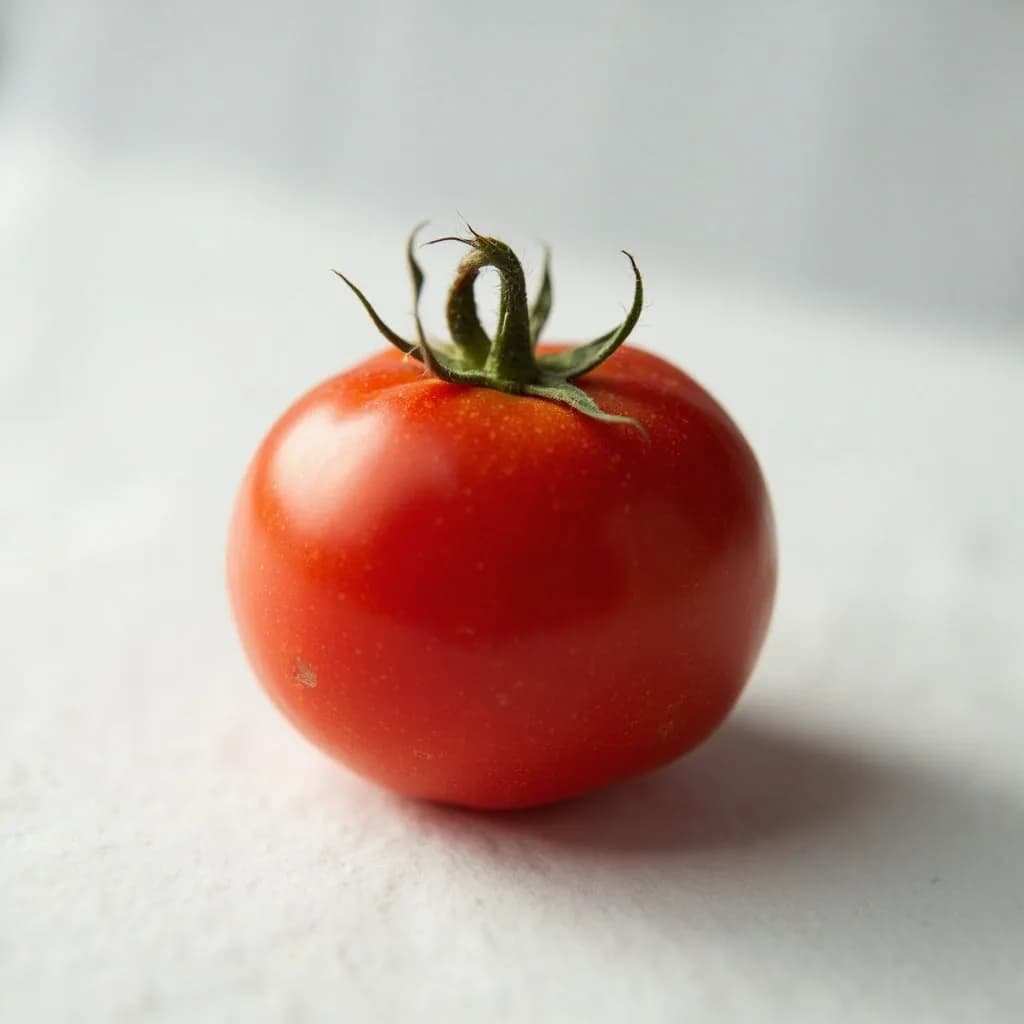
Juicy, sun-sweet fruit for sauces, salads, and slow-cooked depth
Yellow Onion
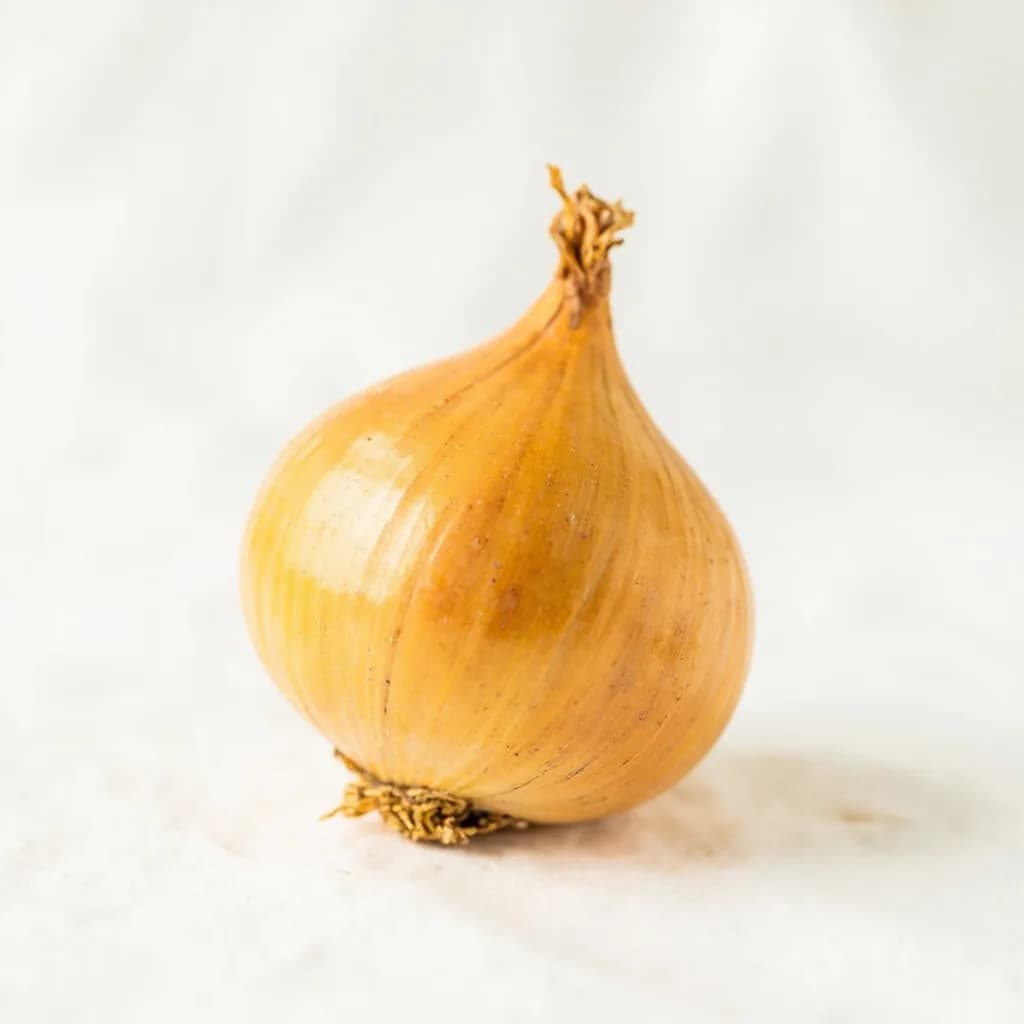
The aromatic backbone of soups, sofritos, and braises
Garlic
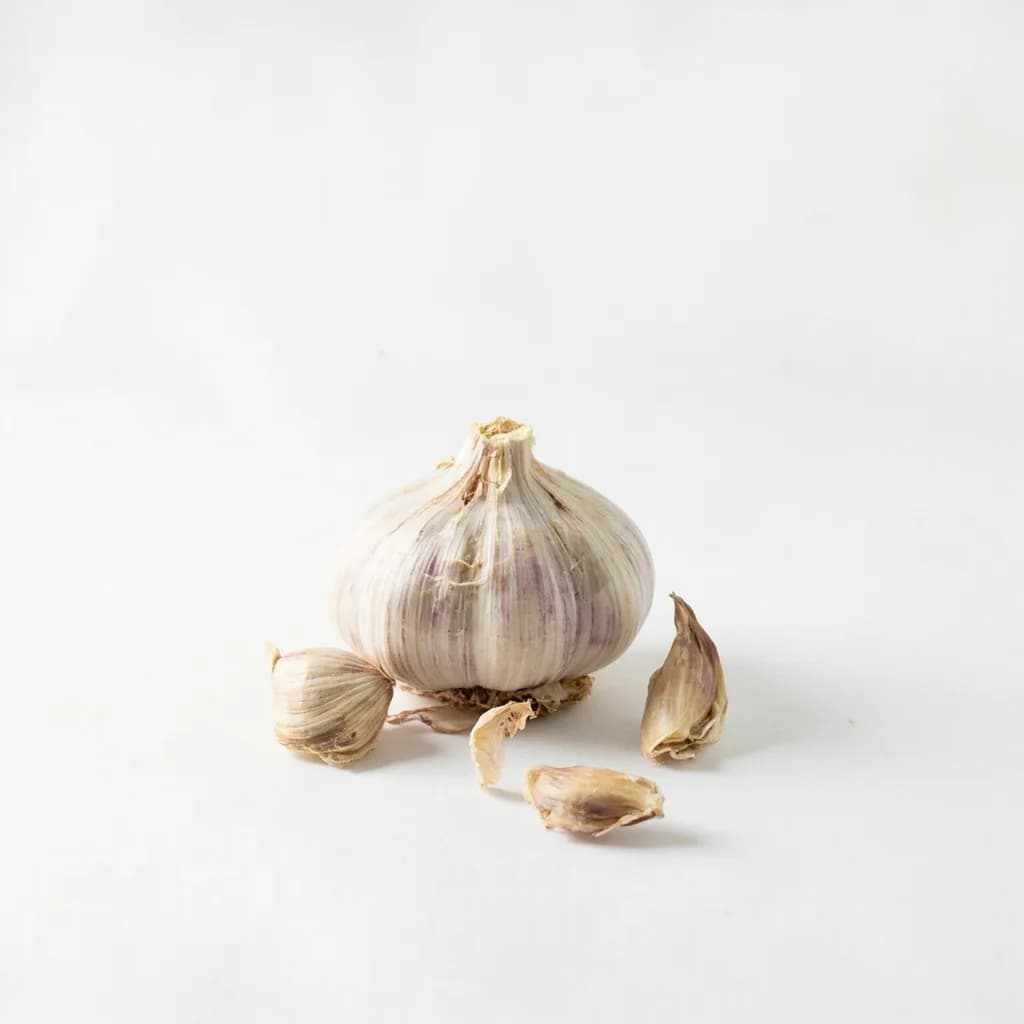
Pungent cloves that perfume nearly every savory dish
Lemon
Bright, acidic citrus that wakes up almost any dish
Potato
Humble, hearty staple — roast, mash, fry, or boil
Carrot
Sweet, crunchy root — raw, roasted, or the base of a sofrito
Cucumber
Cool, crisp, and watery — for salads, pickles, and tzatziki

Lettuce
Crisp leaves for salads, wraps, and a fresh crunch