Proteins
Grasshopper (Nsenene)
Seasonal edible bush-cricket, fried crisp as a high-protein snack in Uganda and East Africa.
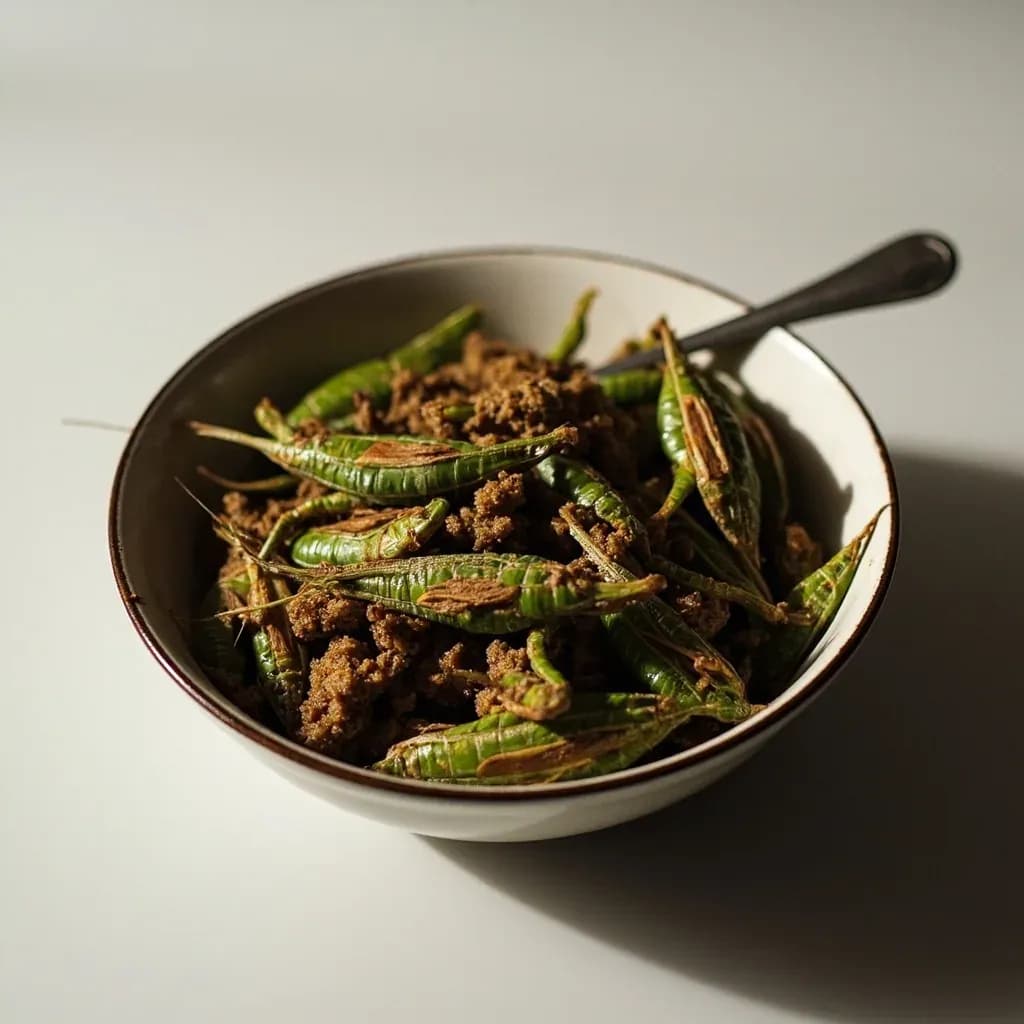
Nsenene are edible long-horned grasshoppers harvested in seasonal swarms in Uganda and neighboring countries. After their wings and legs are removed, they are pan-fried or sauteed with onions and salt until crisp, eaten as a savory, nutty snack. They are a celebrated delicacy and an important source of protein.
Nsenene (Ruspolia nitidulera and related Ruspolia species) is the seasonal edible bush-cricket that erupts across Uganda, Kenya, Tanzania, Rwanda, and Burundi during two predictable swarm periods tied to the rains — March through May and October through December. The swarms are a cultural event unto themselves: traditional songs mark the harvest, and urban markets in Kampala fill with basins of the live insects during peak season. The annual emergence represents both a critical seasonal food source and cash crop for rural communities, valued not merely as famine food but as a genuine delicacy. For the cook, Nsenene behaves like a high-protein ingredient — it crisps dramatically when fried, developing a nutty, mildly savory flavor with an earthy backbone that distinguishes it from the more neutral farmed crickets now common elsewhere. The fresh insects are extraordinarily perishable, spoiling within 24 hours unrefrigerated, which is why virtually all traditional preparations involve immediate cooking or drying. Well-fried Nsenene should be completely crisp and bone-dry; any retained moisture signals undercooking and rapid spoilage.
- Measured in
- g
- Storage
- Fridge
Allergens
Types & varieties
The swarming winged form; higher moisture content, softer body. Requires high heat and brief frying time to achieve proper crispness without steaming.
Found later in season or at different altitudes; denser body, slightly richer color when fried. Generally crisps more readily due to lower initial moisture.
Common uses
Tips & pitfalls
- Remove wings and legs before frying — tedious by hand but essential for a crisp, palatable result. A quick parboil (2–3 minutes) makes the appendages easier to pick off.
- Heat cooking oil to at least 180°C before adding Nsenene. Too-low temperature steams the insects rather than frying them, yielding soggy, greasy results that spoil quickly.
- Fry in small, single layers. Crowding the pan drops oil temperature dramatically and produces uneven, chewy results. Work in batches even if it takes longer.
- Season immediately after frying while still hot — salt and chili adhere only to warm, dry surfaces. Cold crisps will not hold seasoning.
- For sun-drying, spread on clean raised surfaces (mat or screen) in full sun. Stir every few hours to ensure even drying and prevent the bottom layer from spoiling.
- Never attempt to store fresh Nsenene longer than a few hours without refrigeration, drying, or cooking. The window is unforgiving — by the time odor develops, quality is already compromised.
- When grinding dried Nsenene into flour, toast the dry crisps briefly in a dry pan first. This intensifies the nutty flavor and ensures the flour blends smoothly into porridges or baked goods without grittiness.
Nutrition
Nutrition
No USDA FoodData Central match for Grasshopper (Nsenene) yet. We surface a per-100 g profile once a generic whole-food entry is matched and verified.
In the shops
Matched grocery products
No matched grocery products for Grasshopper (Nsenene) yet.
Good to know
- Common names
- Nsenene (Luganda/Uganda), Senene (Swahili), edible bush cricket, African edible grasshopper
- Scientific name
- Ruspolia nitidulera and related Ruspolia species
- Origin
- East Africa — Uganda, Kenya, Tanzania, Rwanda, Burundi
- Season
- Two annual swarms: March–May and October–December, corresponding with rainy seasons
- Protein content
- Approximately 40–60% protein by dry weight; also high in iron and B vitamins
- Fresh shelf life
- Spoils within 24 hours unrefrigerated; must be cooked or dried immediately after harvest
- Primary preparation
- Deep-fried until crisp; also roasted or sun-dried for preservation and later grinding into flour
- Flavor and texture
- Nutty, mildly savory, slightly earthy; crisp and crunchy when properly fried
Substitutes
- Chapulines (Mexican grasshoppers) — Closest texture and nutty flavor profile; smaller and more uniform in size, requiring shorter frying time. Season more aggressively to approximate Nsenene's earthiness.
- Farmed crickets — More neutral, slightly milder flavor; may need additional seasoning. Fry at same temperature but check for crispness earlier as they are smaller.
- Dried shrimp — Completely different flavor family but provides similar savory, salty, crunchy protein element in stir-fried or fried applications.
- Sautéed mushrooms — For vegetarian dishes, provides umami depth and textural contrast, though no protein density match. Use in bean or grain bowls where Nsenene would normally appear.
Pairs with
Also called
Nsenene · Edible Grasshopper · Bush Cricket
Appears in these dishes
Related

Egg
The kitchen's everything ingredient — bind, leaven, enrich, or fry

Chicken Breast
Lean, quick-cooking white meat for everyday dinners

Ground Beef
Versatile minced beef for burgers, ragù, tacos, and meatballs

Pork Loin
Lean, tender roasting cut that stays juicy with care

Salmon
Rich, rosy fish that roasts, grills, or cures beautifully

Egg White
Pure protein that whips to airy peaks for meringue and more

Egg Yolk
Rich, golden yolk for custards, mayonnaise, and pasta

Quail Egg
Tiny, speckled eggs for garnishing and elegant bites