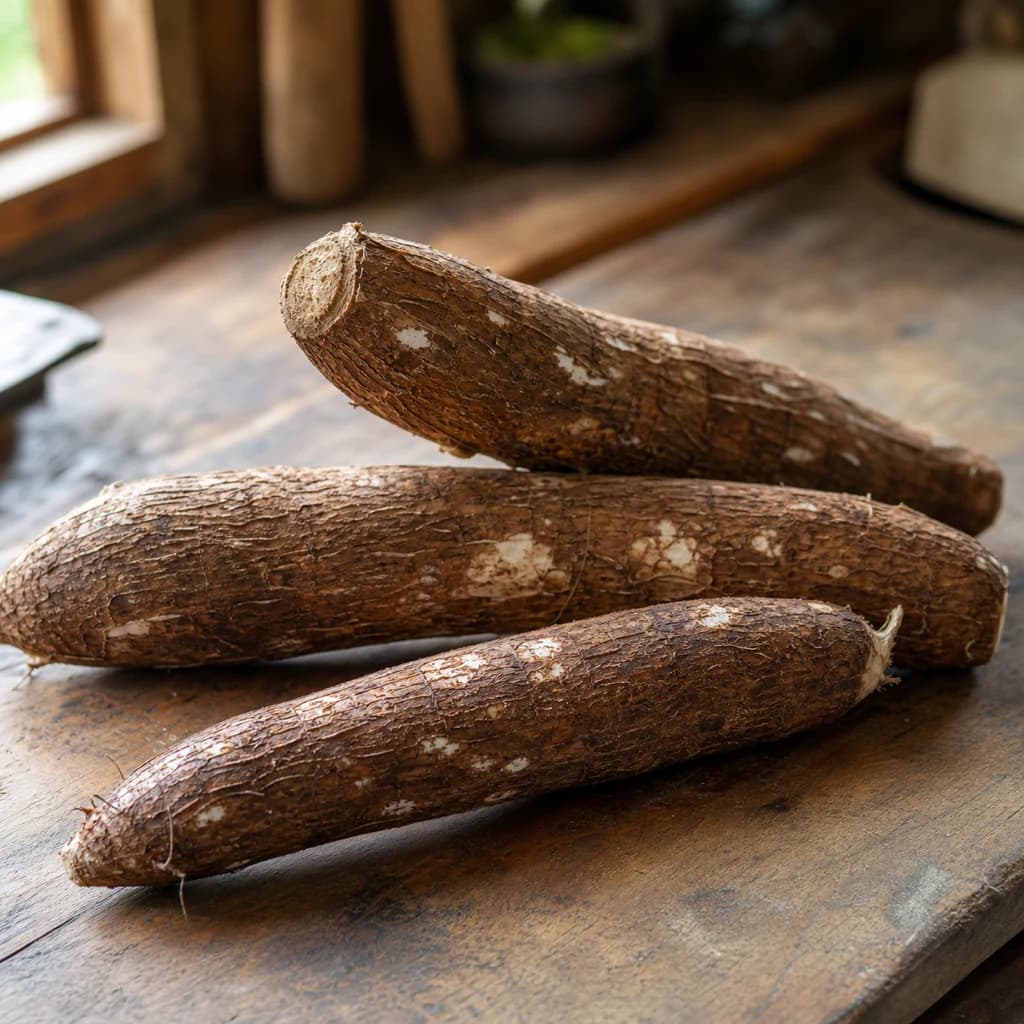
Natural form
Whole cassava tubers showing rough brown bark-like skin and tapered cylindrical shape.
Teaches readers to identify cassava in its raw, unprocessed state at a market or in a kitchen before prep.
Produce
Tapioca Root (Cassava)
Starchy cassava tuber boiled, fried, or mashed as a staple carbohydrate across the tropics.
Tapioca root is the starchy tuber of the cassava plant, with rough brown bark-like skin and dense white flesh. A major staple in South India, Africa, South America, and Southeast Asia, it is boiled and mashed (Keralan kappa), fried into chips, or grated for fritters and puddings. It must always be cooked, as raw cassava contains natural cyanogenic compounds that cooking removes.
Tapioca root—known as cassava, yuca, manioc, or mandioca depending on region—is one of the world's most important staple crops, providing more calories per hectare than rice, wheat, or maize. Domesticated in South America roughly 10,000 years ago, it now feeds over 800 million people across Africa, Asia, and the Americas. The large cylindrical tuber features a tough brown skin and white flesh that ranges from mild and slightly sweet to nutty; its neutral flavor makes it remarkably versatile, absorbing and complementing whatever it is cooked with.
In the kitchen, a critical distinction separates the whole root from its extracted starch. Cassava root must be peeled—removing both the brown exterior and the thin pinkish layer beneath, which carries the highest concentration of cyanogenic compounds—and cooked thoroughly before eating. The extracted starch, called tapioca, functions entirely differently: it acts as a thickener, binder, or is shaped into pearls for desserts and beverages. This dual nature means tapioca starch cannot replace fresh cassava in recipes calling for the root as a vegetable, and vice versa.
Fresh cassava spoils quickly, lasting only a week or two at room temperature. Selecting firm roots with no soft spots, mold, or cracking is essential—never use roots with a bitter smell, as this may indicate dangerous residual cyanide from improper processing. The tuber develops a woody central core as it matures; larger specimens require coring before cooking, as this fibrous center never softens properly.
- Measured in
- g
- Storage
- Pantry
Types & varieties
Lower cyanide content; can be boiled and eaten after simple peeling; most common in Latin American markets
Higher cyanide content; requires grating, pressing, and extended cooking or fermentation; used primarily for starch and flour production
Orange-fleshed variety with higher beta-carotene content; same preparation as sweet cassava
West African processed product: grated, fermented, pressed, and toasted; sold in markets alongside fresh roots
Understanding Cyanide Risk
Cassava's cyanogenic glycosides—linamarin and lotaustralin—convert to hydrogen cyanide when the root's cells are damaged. Sweet cassava varieties contain low enough levels that thorough cooking eliminates risk. Bitter varieties require more involved processing: grating, pressing to remove liquid, and extended heat exposure. Never rely on visual inspection alone to assess cyanide content; always cook cassava thoroughly regardless of variety. Symptoms of cyanide poisoning include dizziness, headache, and nausea. When in doubt about source or variety, opt for processed forms like tapioca starch, which have been rendered safe through industrial processing.
- Always peel completely—skin carries highest cyanide concentration
- Brief boiling is insufficient; cook until fork-tender throughout
- Bitter cassava requires pressing and extended cooking—do not shortcut this process
- Source from reputable suppliers; improperly processed cassava can retain dangerous cyanide levels
Cassava vs. Tapioca: Knowing the Difference
In the kitchen, confusing the root with its starch creates problems. Cassava root is cooked as a vegetable—boiled, fried, or mashed—much like a potato. Tapioca is the purified starch extracted from the root, sold as pearls, flour, flakes, or starch. Tapioca starch thickens sauces, gravies, and puddings; tapioca pearls add chew to bubble tea and desserts; cassava flour (also called yuca flour or tapioca flour) serves as a gluten-free baking substitute. Each behaves differently and cannot substitute for the others in all applications. When a recipe calls for 'tapioca' but you have fresh cassava, you need to cook the root and adapt the dish accordingly—and the reverse requires extracting or purchasing starch.
- Cassava root = vegetable; tapioca starch = thickener/binder
- Tapioca pearls = dessert and beverage texturizer
- Cassava flour = gluten-free baking flour, distinct from tapioca starch
- Check product labels: 'pre-cooked' flour is ready to use, raw flour requires cooking
Common uses
Tips & pitfalls
- Always peel cassava completely—the brown skin and a thin pinkish layer directly beneath must be removed; the skin contains the highest concentration of cyanogenic compounds
- Cut into manageable sections first, then peel with a heavy vegetable peeler or knife; the roots are often 1–2 feet long and can be unwieldy
- Never eat raw cassava—brief boiling is insufficient; cook until completely tender throughout, at least 20–30 minutes of boiling or 45 minutes of baking
- Test doneness by piercing with a fork; the flesh should offer no resistance before proceeding with frying or further preparation
- For fried preparations, partially cook first, then fry at 350°F (175°C) until golden and crispy on the outside
- Remove the central woody core if present—larger roots develop a fibrous center that doesn't soften even with extended cooking
- When buying fresh, select firm roots with no soft spots, mold, or cracking; avoid any with a bitter smell, which may indicate residual cyanide
- For cassava flour in baking, verify it is labeled as 'pre-cooked' for immediate use; raw cassava flour behaves differently and requires cooking
Nutrition
Energy
669 kJ · per 100 g
Where the calories come from
Protein
1.4g
3% DV
Carbs
38.1g
14% DV
Fat
0.3g
0% DV
Fiber
1.8g
6% DV
Sugars
1.7g
of which
Sodium
14mg
1% DV
Source · USDA FoodData Central · Cassava, raw
View on FDC →In the shops
Matched grocery products
No matched grocery products for Tapioca Root (Cassava) yet.
Good to know
- Scientific Name
- Manihot esculenta
- Origin
- South America (Brazil and Paraguay), domesticated ~10,000 years ago
- Family
- Euphorbiaceae (spurge family)
- Form
- Large cylindrical tuber, brown bark-like skin, white flesh; 1–2 feet long, 2–3 lbs typical
- Flavor
- Mild, slightly sweet, nutty; neutral enough to take on accompanying flavors
- Toxicity
- Raw roots contain cyanogenic glycosides; must be peeled and cooked thoroughly before eating
- Storage
- 1–2 weeks at cool room temperature; up to 1 week refrigerated; freeze-cook-frozen for months
- Yield
- One medium root yields ~1.5–2 cups diced flesh; starch extraction ~25% of root weight
- Prep Time
- 15–20 minutes to peel and cube; 20–45 minutes to cook depending on method
Substitutes
- Potato — Closest texture and mild flavor; cook times similar; use 1:1 substitution in most applications
- Sweet Potato — Slightly sweeter; works well in fried or boiled preparations; cook times comparable
- Taro Root — Similar starchy texture; requires longer cooking; substitute 1:1 in boiled or fried dishes
- Cornstarch — Best starch substitute for thickening; use 1:1 for tapioca starch in sauces and puddings
- Arrowroot Powder — Clearer results in sauces; substitute equal amounts for tapioca starch
Pairs with
Also called
Kappa · Cassava · Yuca · Manioc
Appears in these dishes
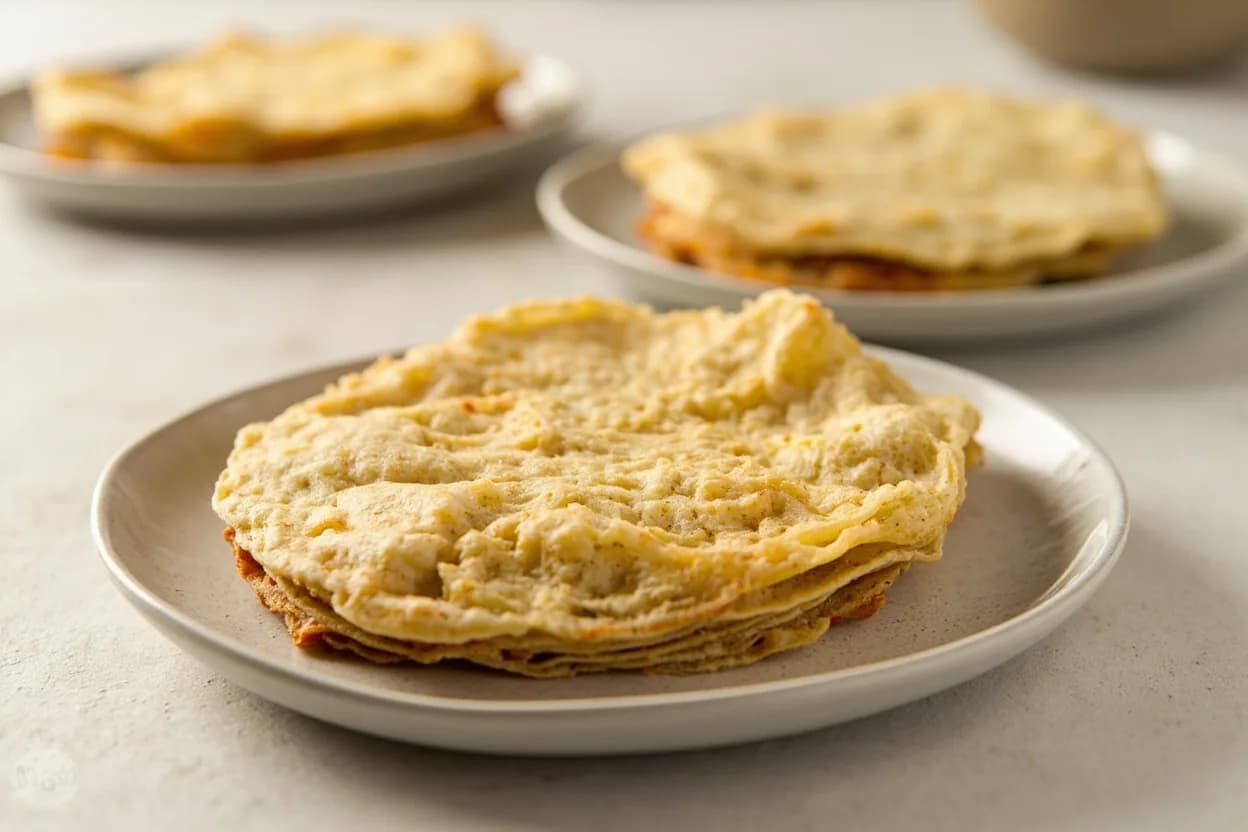
Related
Tomato
Juicy, sun-sweet fruit for sauces, salads, and slow-cooked depth
Yellow Onion
The aromatic backbone of soups, sofritos, and braises
Garlic
Pungent cloves that perfume nearly every savory dish
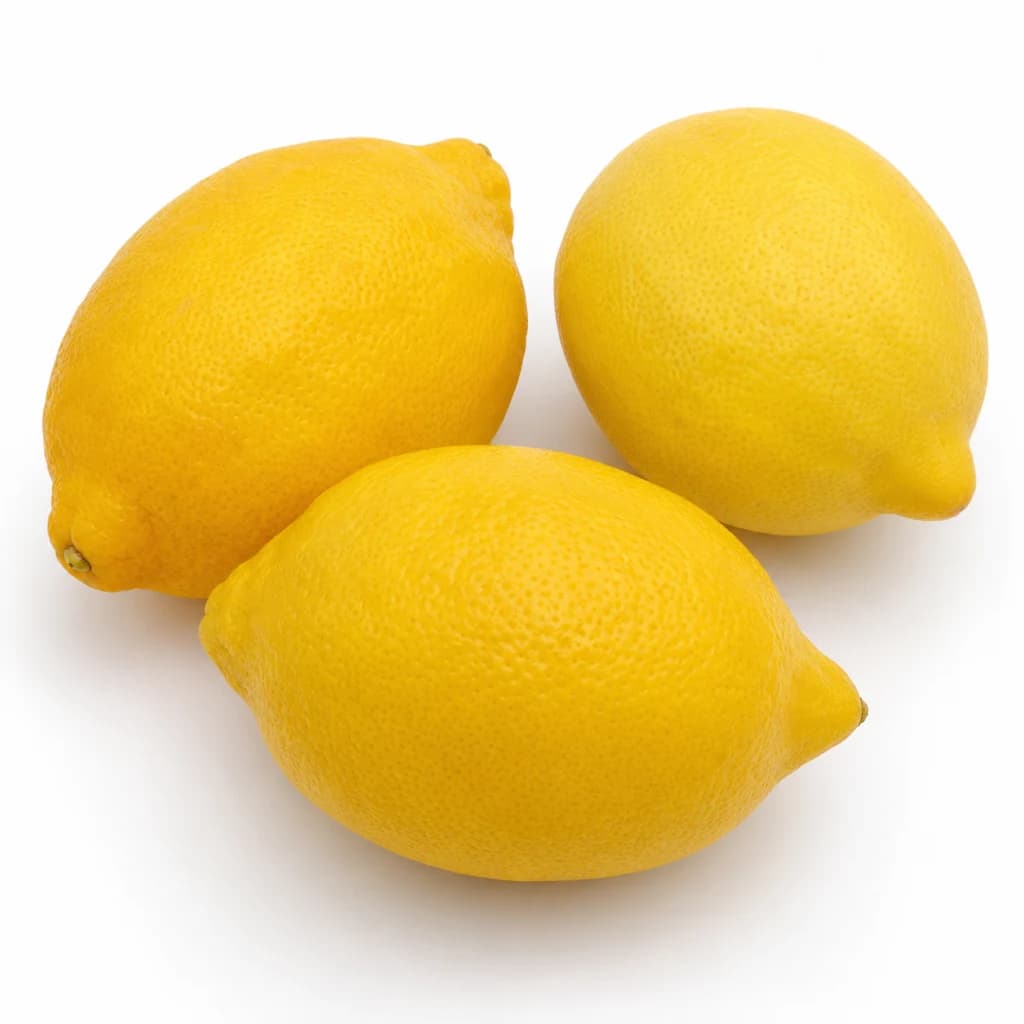
Lemon
Bright, acidic citrus that wakes up almost any dish
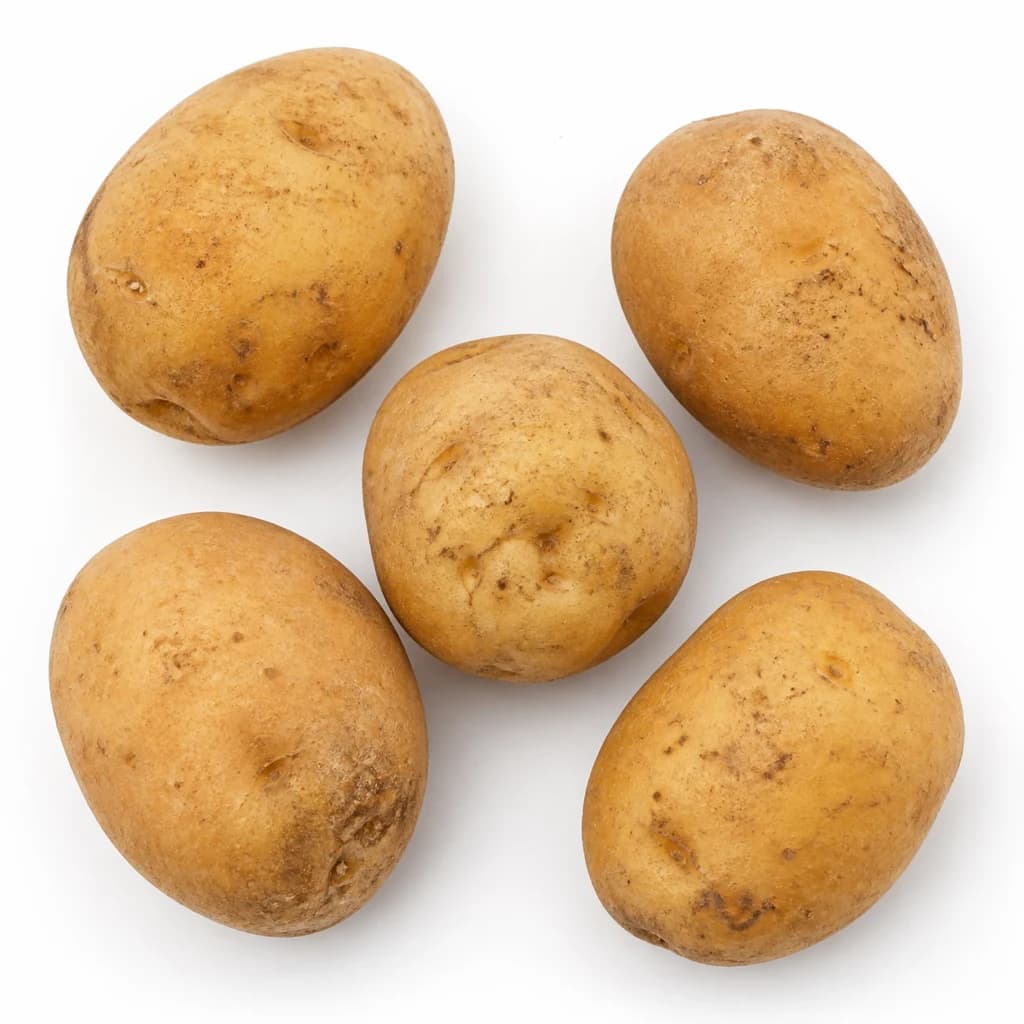
Potato
Humble, hearty staple — roast, mash, fry, or boil
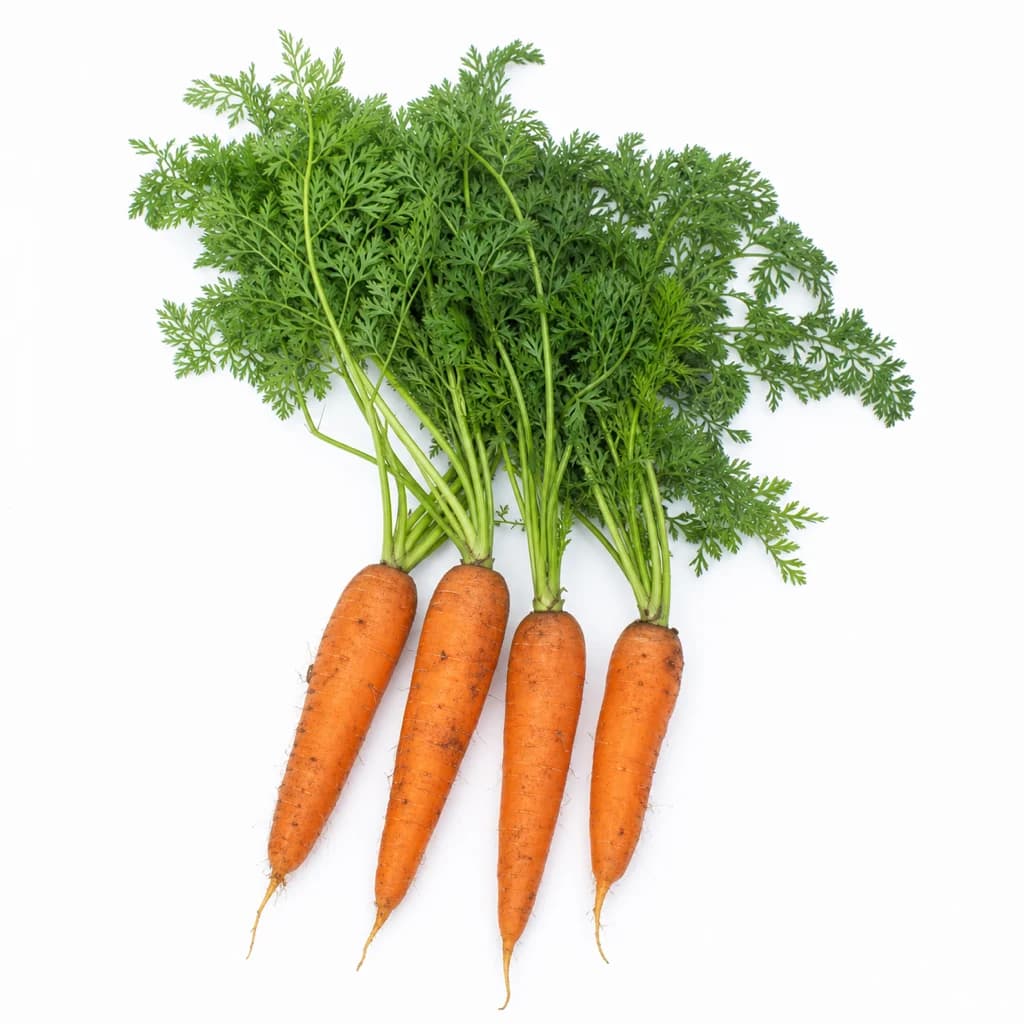
Carrot
Sweet, crunchy root — raw, roasted, or the base of a sofrito
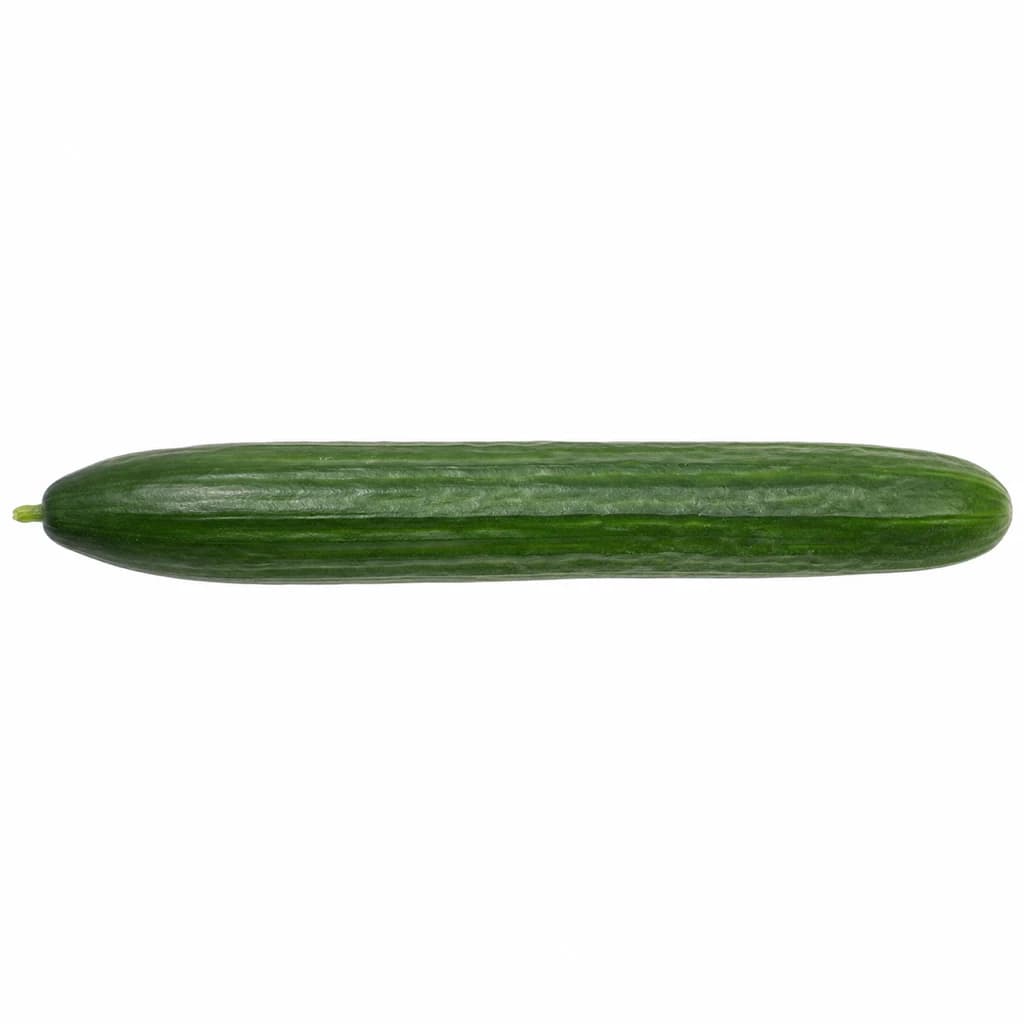
Cucumber
Cool, crisp, and watery — for salads, pickles, and tzatziki

Lettuce
Crisp leaves for salads, wraps, and a fresh crunch