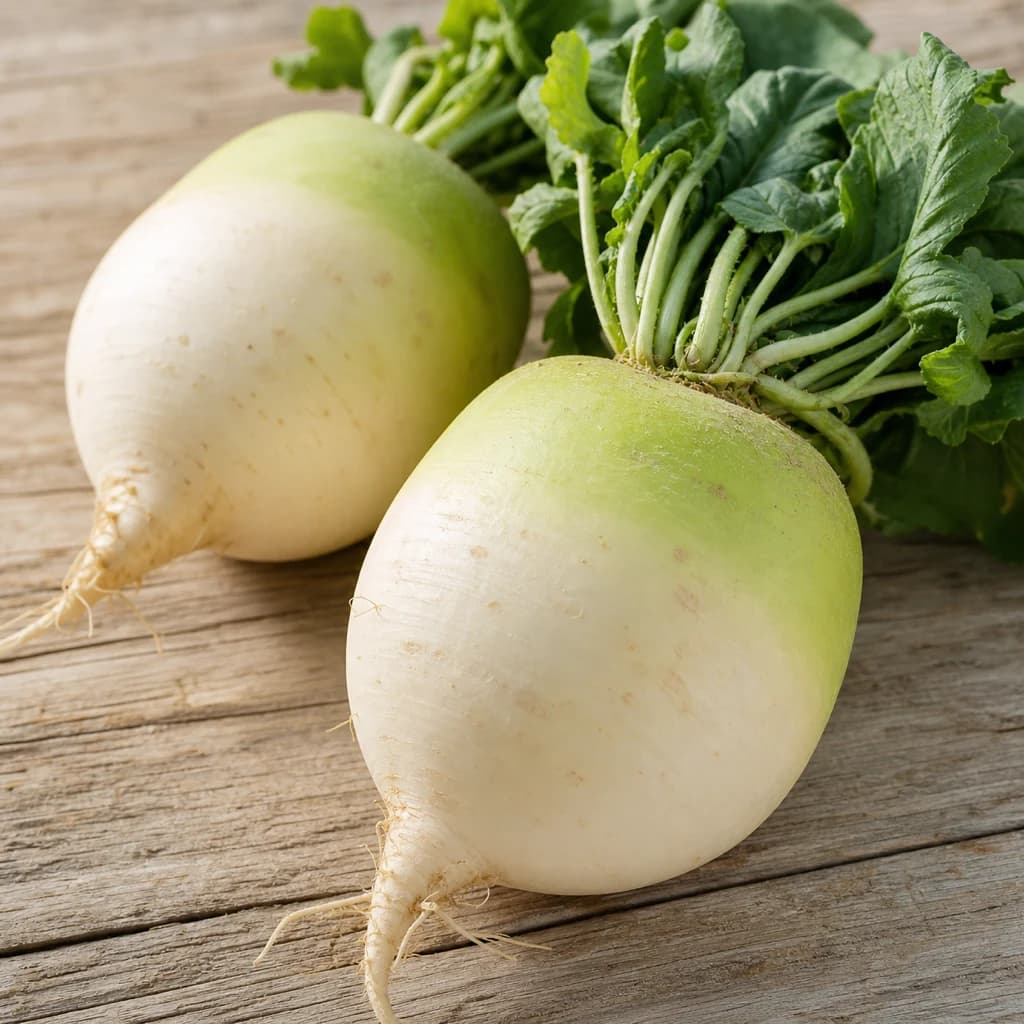
Natural form
Whole Korean radish showing its stout shape, pale green shoulder, and white body.
Establishes the unmistakable silhouette, color gradient, and size that distinguish mu from daikon or Western radishes.
Produce
Korean Radish (Mu)
Stout pale-green daikon-type radish central to kimchi, soups and stews.
Korean radish, or mu, is a stout firm radish with white flesh and a pale green shoulder, crisper and sweeter than common daikon. It is a cornerstone of Korean cooking, cut into cubes for kkakdugi kimchi, sliced into soups and stews, or pickled. Its dense flesh holds up to long simmering while absorbing flavor.
Korean radish (mu, 무) is a distinct cultivar of Raphanus sativus developed and refined over centuries on the Korean peninsula. Unlike its more watery Japanese cousin, Korean mu is notably denser, firmer, and more assertive in flavor—pungent and mildly spicy when raw, becoming sweetly mellow when cooked. Its squat, round to oblong shape (typically 10–20 cm in diameter) features white skin with characteristic pale-green shoulders where the vegetable was exposed to sunlight during growth, a visual cue that indicates sweeter, more developed flesh. This firm texture makes mu uniquely suited to Korean cooking's demands: it holds its shape through long simmers in soups like tteokguk, resists turning mushy in fermented kimchi brines, and provides the satisfying crunch essential for dishes like kkakdugi.
In Korean culinary tradition, mu is far more than a vegetable—it is a foundational ingredient that appears at virtually every meal, from the breakfast table to the dinner spread. Its versatility spans fresh preparations like tangy salads dressed with sesame and gochugaru, lightly pickled banchan, slow-braised jjim dishes with deep soy-based sauces, and even fresh juice prized for its digestive properties. Korean home cooks rely on mu's unique balance of peppery bite and textural resilience, qualities that distinguish it from all other radish varieties and make it irreplaceable in Korean cuisine.
Mu belongs to the Brassicaceae (mustard) family and is available year-round in Korean markets, with peak season running October through February when the radishes are sweetest and most flavorful. Properly stored in a cool, dark, well-ventilated space, whole mu keeps 2–4 weeks; wrapped in paper towel inside a perforated bag in the refrigerator, up to three weeks. Select firm, dense specimens that feel heavy for their size—the denser the radish, the better it will hold up in cooking and the more concentrated its flavor.
- Measured in
- piece
- Storage
- Fridge
Types & varieties
Round variety; the workhorse of kimchi production
Small, round; prized for pickling and fresh use
Larger, oblong; standard market variety
Traditional variety from Gyeongju region; known for exceptional texture
Round, white with green shoulders; the standard culinary variety
Salting for Kimchi
Proper salting is essential for kkakdugi and other kimchi preparations. This step firms the radish flesh, removes excess water that would dilute the seasoning, and creates the right texture for fermentation.
- Cut into uniform cubes (2–2.5 cm) for even salting and consistent texture
- Salt generously—about 1 tablespoon per 500g of cubed radish
- Toss with salt and let stand 30–60 minutes until beads of moisture appear on the surface
- Rinse briefly and squeeze out excess water before seasoning with gochugaru and other ingredients
- Skipping this step results in watery kimchi that ferments unevenly and lacks crunch
Choosing Mu for Specific Dishes
Not all mu is interchangeable. The variety and condition of radish matters depending on your intended use.
- For kkakdugi (cubed kimchi): Choose firm, dense Cheongnyong or Boseok; texture is paramount
- For dongchimi (water kimchi): Use large Daeha or Seoul-type; the clear broth is the star
- For soups and stews: Any variety works; larger radishes are economical
- For quick pickles and fresh salads: Small Boseok has the best texture raw
- For braising (jjim): Larger oblong types hold shape through long cooking
Common uses
Tips & pitfalls
- Select firm, dense radishes that feel heavy for their size; avoid any that are soft, spongy, or have surface cracks
- The green shoulders indicate sun exposure and typically mean sweeter, more developed flavor—buy accordingly
- Peel only if the skin looks wrinkled or the radish is older; young mu has edible, nutritious skin
- When preparing for kimchi, salt the cubed radish generously and let it drain 30–60 minutes before seasoning; this firms the texture and removes excess water
- For raw preparations, cut just before serving; exposed flesh oxidizes and loses its crisp texture if held too long
- Korean radish holds its shape better in long-cooked dishes than Japanese daikon, which can turn mushy—do not substitute one-for-one in braises
- Store away from apples and pears, which emit ethylene gas that accelerates spoilage
- When substituting Japanese daikon, use slightly less and add a pinch of sugar to approximate the sweetness
Nutrition
Energy
67 kJ · per 100 g
Where the calories come from
Protein
0.7g
1% DV
Carbs
3.4g
1% DV
Fat
0.1g
0% DV
Fiber
1.6g
6% DV
Sugars
1.9g
of which
Sodium
39mg
2% DV
Source · USDA FoodData Central · Radishes, raw
View on FDC →In the shops
Matched grocery products
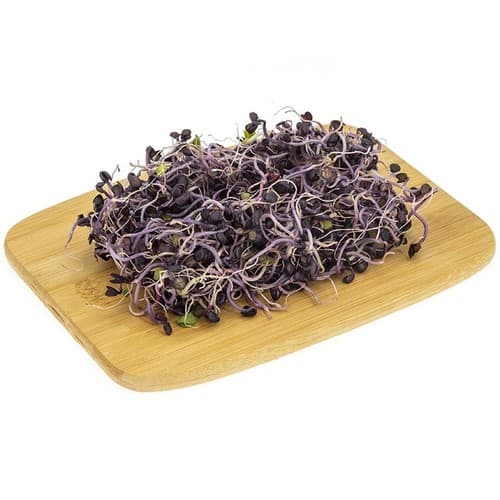 €1.69
€1.69Organic Purple Radish Sprouts in 50g Tray
BROT D'OR · kg · Bonpreu
Good to know
- Scientific name
- Raphanus sativus var. longipinnatus
- Korean name
- Mu (무)
- Family
- Brassicaceae (mustard family)
- Shape
- Round to oblong; typically 10–20 cm (4–8 in) in diameter
- Raw flavor
- Pungent, mildly spicy, slightly sweet; more assertive than daikon
- Cooked flavor
- Mildly sweet, clean; loses pungency entirely
- Peak season
- October through February
- Shelf life
- 2–4 weeks in cool storage; up to 3 weeks refrigerated
Substitutes
- Japanese Daikon — Closest substitute; milder flavor and slightly softer texture when cooked; use 1:1
- Black Radish — Firmer, more pungent; peel before use; better suited for cooked applications
- White Icicle Radish — Smaller, spicier; suitable for quick pickles and fresh use; not ideal for slow cooking
Pairs with
Also called
Mu · Korean Daikon
Related

Tomato
Juicy, sun-sweet fruit for sauces, salads, and slow-cooked depth

Yellow Onion
The aromatic backbone of soups, sofritos, and braises

Garlic
Pungent cloves that perfume nearly every savory dish

Lemon
Bright, acidic citrus that wakes up almost any dish

Potato
Humble, hearty staple — roast, mash, fry, or boil

Carrot
Sweet, crunchy root — raw, roasted, or the base of a sofrito

Cucumber
Cool, crisp, and watery — for salads, pickles, and tzatziki

Lettuce
Crisp leaves for salads, wraps, and a fresh crunch