Natural form
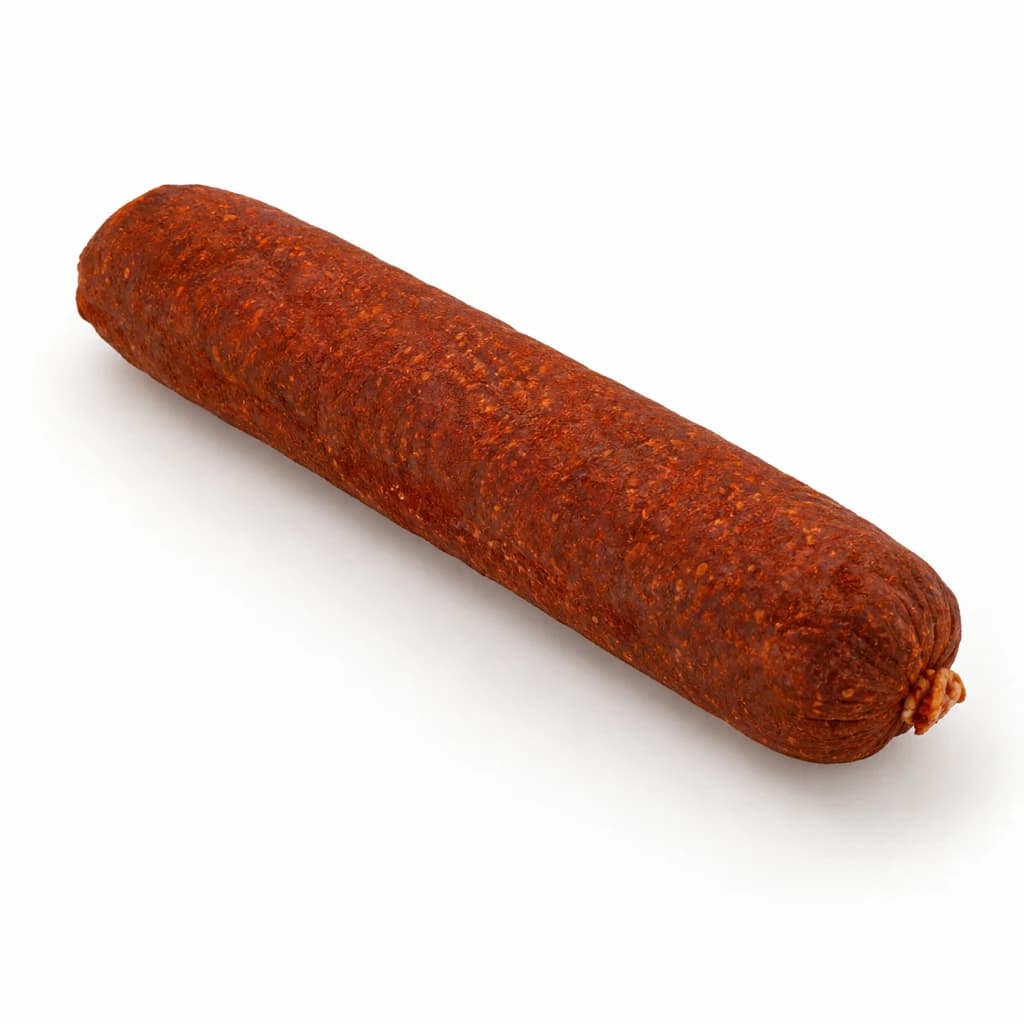
A whole cured pork loin coated in deep red paprika rub, showing its cylindrical shape and firm exterior.
Shows the whole muscle form, characteristic paprika-red casing color, and firm cured exterior that distinguish lomo embuchado from other charcuterie.
Proteins
Lomo Embuchado
Spanish dry-cured pork loin seasoned with paprika and garlic, sliced thin like ham.
Lomo embuchado is a Spanish charcuterie made from a whole pork loin rubbed with paprika, garlic and salt, then cured and air-dried for weeks. It is served sliced paper-thin as a tapa, on bread, or alongside cheese. Leaner than chorizo, it has a deep, smoky-sweet pimentón flavor and firm texture.
Lomo embuchado is a traditional Spanish dry-cured pork loin made from the longissimus dorsi muscle, the same tender loin that runs along the spine. Unlike chorizo, which uses ground or chopped meat stuffed into casing, lomo embuchado preserves the whole muscle, yielding a firm, sliceable piece with a smooth, even texture. The loin is dry-salted, then seasoned with pimentón (Spanish paprika—sweet, smoked, or hot depending on regional preference), garlic, and often oregano, before being encased in natural or synthetic casing and hung to air-dry. The result is a deeply savory, mildly spiced cured meat with a striking reddish-orange exterior from the pimentón and a dark pink, uniformly colored interior.
This product is particularly associated with two regions: Extremadura, where village-cellared artisanal versions cured with smoked pimentón are a point of regional pride, and Galicia, where local paprika varieties and traditional methods produce a distinctive style. Commercial versions dominate supermarket shelves across Spain and are readily available internationally in vacuum-sealed packages. The cured loin is ready to eat without cooking—slice thin against the grain and serve as you would prosciutto or jamón serrano. In the kitchen, it performs differently than fermented sausages: because it is a whole muscle with intact fibers, it stays tender when sliced thin, holds its shape in salads and sandwiches, and doesn't render fat into dishes the way chorizo does. The fat cap, when present, is fully edible and contributes richness.
Quality varies enormously. Mass-produced supermarket lomo tends toward excessive salt and inconsistent curing—sometimes undercured at the center, sometimes bone-dry at the edges. Artisanal Extremaduran and Galician versions, cured slowly in cool cellars, develop a more complex flavor: the paprika integrates fully, the garlic mellows into the background, and the texture becomes supple rather than chalky. When shopping, look for even coloration, a slight sheen, and the absence of any grayish edges or off odors. Once sliced, the clock runs: wrap tightly and consume within a few weeks for the best experience.
- Measured in
- g
- Storage
- Fridge
Types & varieties
Standard air-dried version; the most common commercial form, typically cured 4–8 weeks
Seasoned in adobo (paprika, garlic, oregano, and often wine) before curing; more intensely flavored and deeply colored
Galician-style; traditionally uses Galicia's distinct paprika varieties; IGP Lacón is a related but distinct Galician product made from the foreleg rather than the loin
Extremaduran style; the region most famous for this product; typically uses smoked pimentón and artisan cellars for longer curing
Lomo embuchado vs. other Spanish cured meats
Understanding what sets lomo embuchado apart from other Spanish charcuterie helps you use it correctly. Chorizo uses ground pork seasoned with pimentón and stuffed into intestine casing—the texture is coarse, the fat is distributed throughout, and it renders fat when cooked. Jamón serrano and Iberian ham come from the hind leg, are cured for months to years, and have a distinct nutty, buttery flavor from the fat marbling of Iberian pigs. Lomo embuchado occupies a middle ground: it is a whole muscle like ham, but smaller and quicker to cure, with a more uniform, lean texture and the characteristic paprika-and-garlic seasoning of Extremaduran and Galician tradition.
- Lomo = whole muscle; chorizo = ground meat in casing
- Lomo is leaner than chorizo and doesn't render fat when heated
- Jamón serrano is cured from the hind leg; lomo is from the tenderloin ( loin)
- Lomo is typically ready to eat after 4–8 weeks; jamón requires months to years
Choosing quality: what to look for
The difference between artisanal and industrial lomo embuchado is stark enough to warrant careful selection. Industrial versions, while serviceable, often suffer from rushed curing, excessive salt to compensate for uneven drying, and paprika that hasn't fully integrated, leaving a raw, powdery texture on the palate. Artisanal Extremaduran lomo, by contrast, cures slowly in traditional stone or brick cellars where temperature and humidity fluctuate with the seasons, developing a more complex flavor and a supple texture that bends rather than crumbles when sliced.
- Look for even reddish-orange coloration throughout the exterior casing
- Avoid packages with any grayish or greenish discoloration at the edges
- Press gently: artisanal lomo gives slightly; industrial lomo may feel chalky or overly firm
- Smell: there should be no ammonia, sourness, or staleness—only savory, porky aroma with paprika warmth
- If buying whole piece rather than pre-sliced, ask your purveyor for a sample slice to check texture and flavor
Common uses
Tips & pitfalls
- Bring to room temperature before slicing; cold lomo is difficult to cut thinly and the flavors are muted when cold
- Use a long, sharp slicing knife or a meat slicer set to the thinnest setting; a serrated knife tears rather than shears the muscle fibers
- Slice against the grain for the most tender texture—the grain runs lengthwise along the loin, so slice crosswise
- If the exterior casing or binding twine is present, remove it cleanly before slicing; the casing is not edible
- Commercial vacuum-sealed slices last longer than hand-sliced portions; re-wrap sliced portions promptly in airtight wrap to prevent drying
- The fat cap, if present, is fully edible and adds flavor—do not trim it before serving thin slices
- Avoid packages with any off smell, slimy texture, or grayish discoloration at the edges—these indicate age, improper storage, or bacterial contamination
- When serving on a charcuterie board, let the slices unfurl slightly at room temperature rather than stacking them rigidly; this releases the aroma
Nutrition
Energy
1238 kJ · per 100 g
Where the calories come from
Protein
13.6g
27% DV
Carbs
3.8g
1% DV
Fat
25.1g
32% DV
Fiber
0g
0% DV
Sugars
0g
of which
Sodium
788mg
34% DV
Source · USDA FoodData Central · approx. Sausage, pork, chorizo, link or ground, raw
View on FDC →In the shops
Matched grocery products
No matched grocery products for Lomo Embuchado yet.
Good to know
- Origin
- Spain, particularly associated with Extremadura and Galicia
- Primary protein
- Pork loin (longissimus dorsi muscle)
- Curing method
- Dry-curing with salt, then seasoning with pimentón and garlic, air-dried in casing
- Typical curing time
- 4 to 12 weeks, depending on size and style (artisanal versions lean toward the longer end)
- Color
- Deep reddish-orange exterior from pimentón; dark pink to red interior when sliced
- Typical weight
- 500 g to 1.5 kg per piece
- Storage
- Wrap in cloth or paper; store in refrigerator. Once sliced, keep airtight. Consume within several weeks of slicing.
- Flavor profile
- Savory, porky, mildly smoky from pimentón, garlicky, slightly spiced; lean and tender when sliced thin
Substitutes
- Jamón serrano — Cured from the hind leg; leaner and saltier than lomo; texture is similar when sliced thin, though the flavor lacks paprika and garlic notes
- Lacón galego — IGP Galician cured pork shoulder; fattier and broader in shape; direct regional substitute with similar curing tradition but different texture and fat content
- Lonza italiana (lonza di maiale) — Italian dry-cured pork loin; seasoned with pepper rather than paprika, so the flavor profile differs noticeably; texture and sliceability are comparable
- Pancetta tesa (flat pancetta) — Rolled and dried; fattier and less spiced than lomo; acceptable in cooked preparations but lacks the characteristic paprika flavor for raw service
Pairs with
Also called
Chorizo Paprika Sausage · Cured Pork Loin
Related
Egg
The kitchen's everything ingredient — bind, leaven, enrich, or fry
Chicken Breast
Lean, quick-cooking white meat for everyday dinners

Ground Beef
Versatile minced beef for burgers, ragù, tacos, and meatballs
Pork Loin
Lean, tender roasting cut that stays juicy with care

Salmon
Rich, rosy fish that roasts, grills, or cures beautifully

Egg White
Pure protein that whips to airy peaks for meringue and more

Egg Yolk
Rich, golden yolk for custards, mayonnaise, and pasta

Quail Egg
Tiny, speckled eggs for garnishing and elegant bites