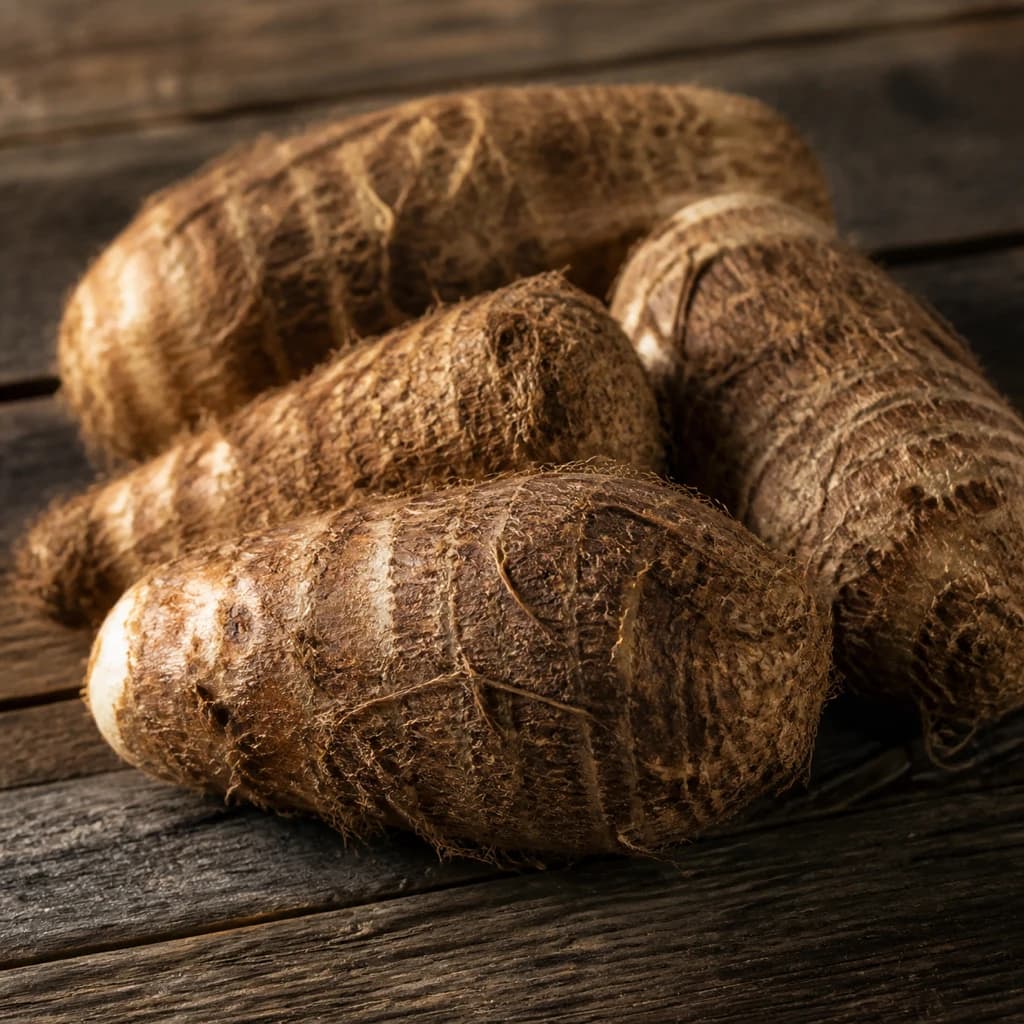
Natural form
Whole malanga tubers showing their signature shaggy brown skin and irregular elongated shape.
Shows the reader exactly what to look for when selecting malanga at a market — its distinctive rough, hairy exterior and earthy brown color.
Produce
Malanga
Hairy starchy tropical tuber with nutty flavor, used in Caribbean stews and fritters.
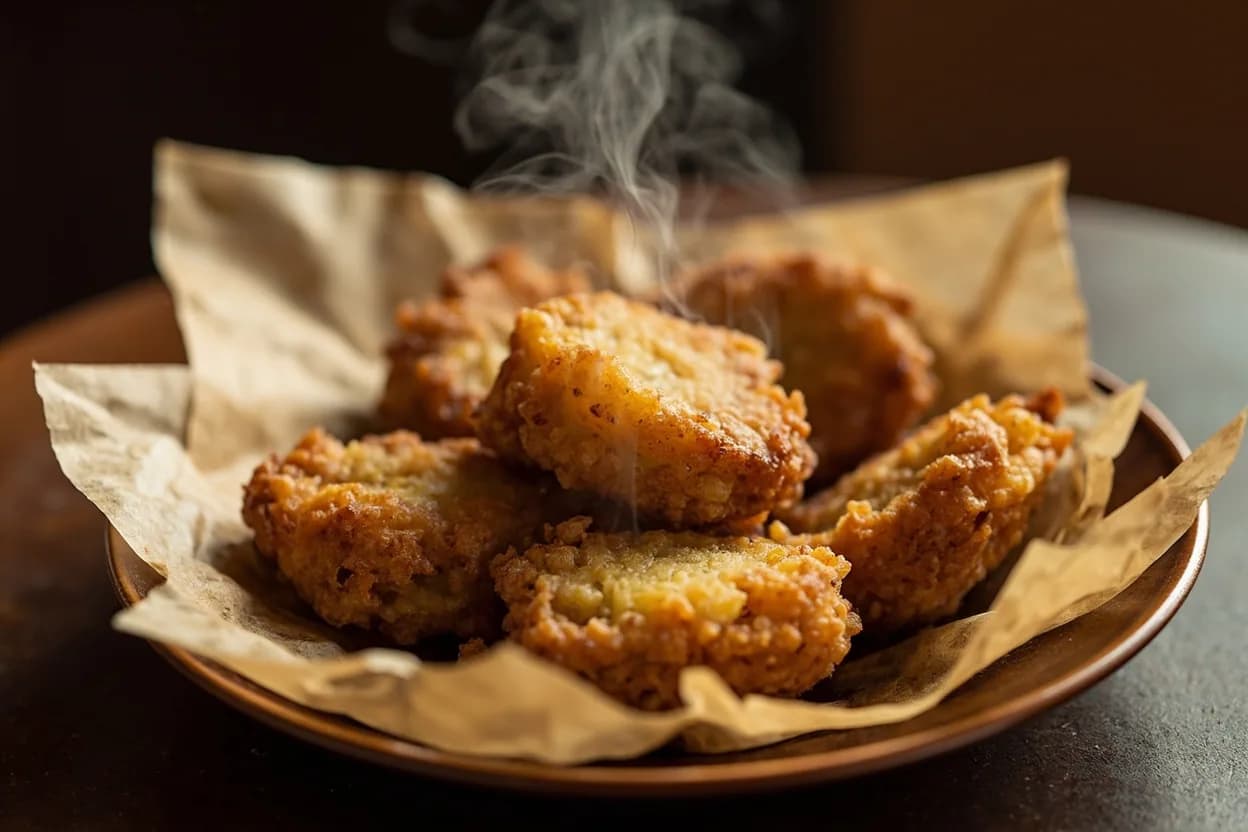
Malanga is a starchy tropical root with shaggy brown skin and crisp white, yellow or pink flesh, related to taro. It has an earthy, nutty flavor and is boiled, mashed, fried into fritters, or added to Caribbean and Latin American soups and stews like sancocho. It must be cooked, never eaten raw, and is valued as an easily digestible starch.
Malanga is a starchy tuber from the Xanthosoma genus, one of the oldest cultivated crops in the Americas, grown by indigenous peoples throughout the Caribbean and tropical regions long before European contact. It belongs to the Araceae family alongside taro, but they are botanically distinct—U.S. markets typically reserve the name "taro" for Colocasia varieties, while "malanga" refers to Xanthosoma. The root grows oblong to spherical with irregular knobs, covered in a thin but hairy, rough brown skin that must be completely removed before cooking. The white-to-creamy-yellow flesh, sometimes streaked with pink or purple near the skin, offers a nutty, earthy, slightly sweet flavor more assertive than potato, with a dense, firm, slightly dry texture that holds its shape remarkably well under long simmering.
In Caribbean cuisine, particularly Puerto Rican cooking where it is called yautía, malanga is considered one of the fundamental starchy vegetables alongside yuca and ñame. It is indispensable in the legendary sancocho de siete mares—a complex seafood stew that traditionally includes seven different sea creatures. Beyond stews, malanga's high resistant starch content and superior fiber compared to potato make it a nutritious choice, while its dense flesh provides satisfying body in soups, purees, and fried applications. The tuber is never eaten raw: calcium oxalate crystals throughout the raw flesh and skin cause skin irritation and can damage mucous membranes.
The irregular shape and hairy skin of malanga present the cook with the ingredient's main practical challenges. The knobs and crevices around the root's surface trap skin fragments that a standard swivel peeler easily misses; a paring knife gives far better control. Once peeled, malanga oxidizes quickly and should be submerged immediately in cold water with a squeeze of lemon or lime. The flesh firms up considerably during cooking—cut pieces 20–30% smaller than you would cut potato when substituting in stews, and do not overcook or the texture turns gluey. When raw, it can carry a slightly bitter edge that boiling eliminates before any frying application.
- Measured in
- g
- Storage
- Pantry
Types & varieties
Most common variety; white flesh, neutral flavor, versatile for all preparations
Yellow-fleshed; slightly sweeter, more moist; excellent for purees and desserts
Purple-tinged flesh; more starchy; used in traditional dishes, adds color
Understanding the naming confusion
Malanga goes by many names across regions and markets, which can lead to confusion at the grocery store or market. In Puerto Rico, it is called yautía. In parts of Latin America and West Africa, it is referred to as cocoyam—though African cocoyam may also describe Colocasia varieties. The term taro is applied to the related but botanically distinct Colocasia esculenta. In U.S. specialty markets, "malanga" typically indicates Xanthosoma varieties while "taro" indicates Colocasia. When substituting between them, expect slightly different textures and flavors: Colocasia taro has a more pronounced coconut-like note. Regional cookbooks may use these terms interchangeably, so identify the Xanthosoma descriptor when seeking true malanga for Caribbean recipes.
- Yautía: Puerto Rican and Dominican name for malanga
- Cocoyam: Caribbean and West African term for Xanthosoma; may also include Colocasia varieties
- Taro: botanical name for Colocasia esculenta; distinct species from malanga (Xanthosoma)
- Check for Xanthosoma specifically when seeking true malanga for Caribbean stews and fritters
Common uses
Tips & pitfalls
- Peel aggressively—the hairy skin contains irritants and is inedible. A swivel peeler often skips the crevices around the root's irregular knobs; use a paring knife for thorough removal.
- Wear gloves when peeling raw malanga; the flesh and especially the hairy skin can cause skin irritation in sensitive individuals, and the calcium oxalate crystals aggravate mucous membranes.
- To prevent browning after peeling, submerge immediately in cold water with a squeeze of lemon or lime juice; change the water daily if storing.
- Always boil before frying if making chips or fritters—partial cooking ensures even crispness and removes any bitterness from the raw tuber.
- Do not overcook; malanga becomes gluey past the point of doneness. Test with a skewer: tender but still offering slight resistance, about 15–20 minutes depending on cube size.
- When substituting in stews, cut pieces 20–30% smaller than potato; it cooks slightly slower to center and firms up more during simmering.
- Refrigerated whole malanga develops a sweet, fermented note within 2–3 weeks—use before this for savory dishes.
Nutrition
Nutrition
No USDA FoodData Central match for Malanga yet. We surface a per-100 g profile once a generic whole-food entry is matched and verified.
In the shops
Matched grocery products
No matched grocery products for Malanga yet.
Good to know
- Scientific name
- Xanthosoma sagittifolium (primary commercial species)
- Family
- Araceae (arum family)
- Origin
- Tropical Americas and Caribbean; cultivated since pre-Columbian times
- Shape
- Oblong to spherical corm with irregular knobs; typically 10–25 cm long
- Flavor
- Nutty, earthy, slightly sweet; more assertive than potato
- Texture cooked
- Dense, firm, slightly dry; holds shape well in soups
- Yield
- Approximately 75–80% edible after peeling
- Storage
- Unpeeled: cool, dark, dry place 1–2 weeks. Peeled: refrigerate in water with lemon juice, change daily, up to 1 week
- Key caution
- Never eaten raw; contains calcium oxalate crystals that irritate skin and mucous membranes
Substitutes
- Taro — Closest texture and behavior; slightly more coconut-like flavor; use 1:1
- Yucca (cassava) — Similar starchy character but grainier texture; excellent for chips and fried applications; use 1:1
- Sweet potato — Accessible substitute for mashing or stews; sweeter, softer; reduce cooking time if added raw
- Yellow plantain — For frying applications; sweeter, less starchy; best for tostones-style fritters
Pairs with
Also called
Quequisque · Yautía · Cocoyam · Tannia
Appears in these dishes
Related

Tomato
Juicy, sun-sweet fruit for sauces, salads, and slow-cooked depth

Yellow Onion
The aromatic backbone of soups, sofritos, and braises

Garlic
Pungent cloves that perfume nearly every savory dish

Lemon
Bright, acidic citrus that wakes up almost any dish

Potato
Humble, hearty staple — roast, mash, fry, or boil

Carrot
Sweet, crunchy root — raw, roasted, or the base of a sofrito

Cucumber
Cool, crisp, and watery — for salads, pickles, and tzatziki

Lettuce
Crisp leaves for salads, wraps, and a fresh crunch