Baking
Marzipan
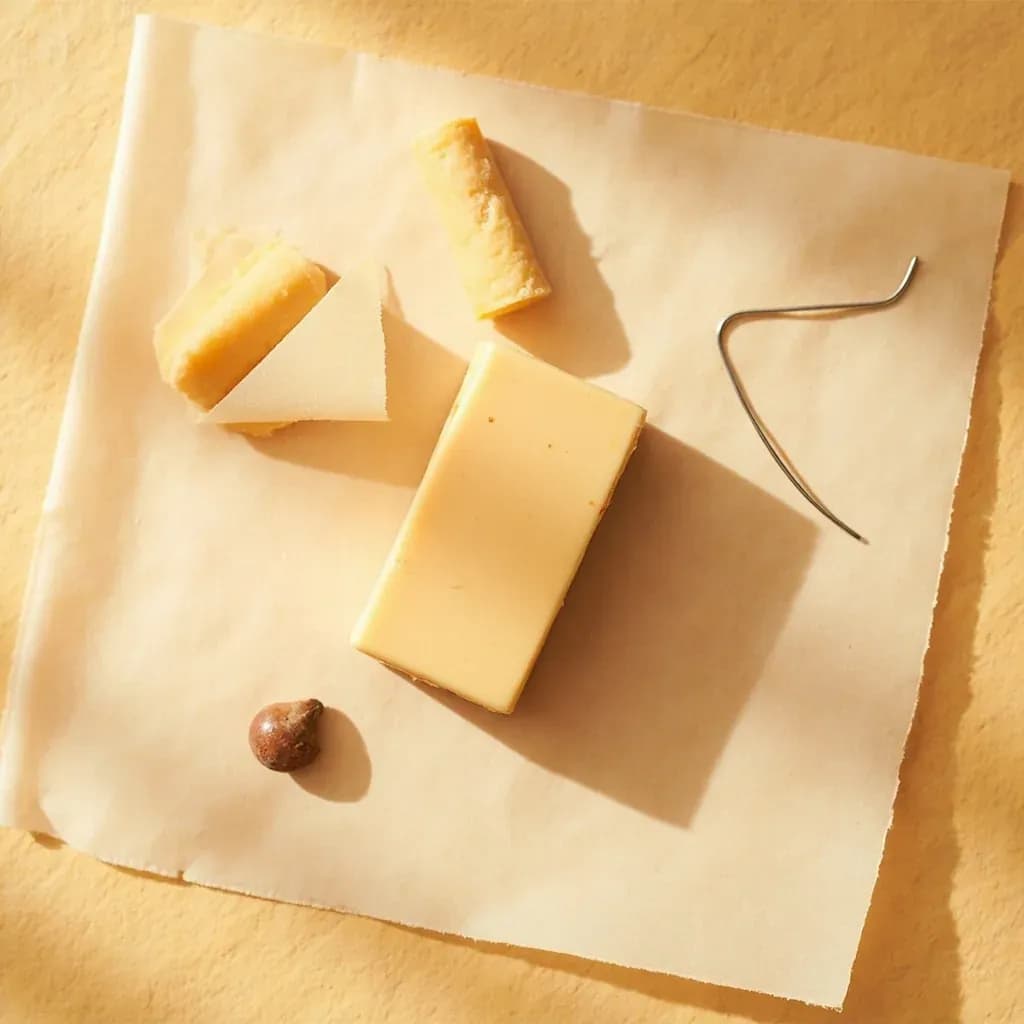
Pliable almond-and-sugar paste that rolls into smooth cake coverings and molded sweets; firmer and almond-richer than almond paste.
Marzipan is a dense, pliable paste of finely ground sweet almonds bound with sugar and a small amount of binder such as egg white, glucose, or corn syrup. True marzipan uses roughly equal weights of almonds and sugar, giving it the body to be rolled paper-thin without tearing or molded into shapes that hold a clean impression. Warm and slack when worked, it firms up quickly at cool room temperature.
The flavor is intensely nutty and sweet, with a faint bitter-almond perfume from natural benzaldehyde in the nuts; Mediterranean versions add a thread of rose water or orange-blossom water, and bakers sometimes perfume it with citrus zest or a measure of warm spice.
In the kitchen it pulls double duty: as a structural layer that seals and flavors dense fruit cakes beneath fondant or royal icing, and as a sculpting medium for figures, fruits, and holiday sweets. Its low water and high sugar content make it almost a preserved food — wrapped tightly, it keeps for weeks on the counter and travels well.
- Measured in
- g
- Storage
- Pantry
Allergens
Find it in
Suits
Types & varieties
German PGI product with around 70% almonds; oily, dense, and pliable, traditionally kneaded rather than rolled.
Spanish PGI marzipan often made with raw almonds and shaped into small figures, fishes, or wedding sweets.
Softer paste often perfumed with citrus zest or rose water; the base for cassata Siciliana filling and panforte.
Budget cousin made from apricot or peach kernels instead of almonds; similar handling, faintly more bitter, common in inexpensive Christmas stollen.
Firmer commercial blend, sometimes with extra sugar or gum, formulated to hold sculpted flowers, fruits, and figures at room temperature.
Egg white folded into almond meal and powdered sugar produces a paler, smoother paste than the raw processor method.
Marzipan vs. almond paste
The two are close cousins and the names are often used interchangeably in American recipes, but they behave differently in the kitchen and are not always substitutable.
- Almond paste is softer, looser, and grainier; it is meant to be folded into batter or used as a filling, not rolled or modeled.
- Marzipan has roughly equal parts almond and sugar and a smoother, drier texture that rolls cleanly to 3 mm and holds shape under a knife or mold.
- If you only have almond paste and need to roll or model, knead in powdered sugar a tablespoon at a time until the paste holds an impression without slumping.
- For baked fillings (frangipane, almond croissants, batons), almond paste is the better choice — marzipan there tastes drier and feels waxy.
- For covering cakes or sculpting figures, marzipan is the right pick; almond paste will slump and weep through fondant.
Traditional confections
Marzipan carries a long lineage of holiday and celebration sweets across Europe and the Mediterranean, each region leaving its own fingerprint.
- Catalan panellets: small marzipan domes rolled in pine nuts, coated in egg, and baked, traditionally for All Saints' Day.
- Sicilian frutta di Martorana: marzipan sculpted into remarkably realistic miniature fruits, painted with food color, served at weddings and on All Souls' Day.
- Spanish figurillas de mazapán: small figures and animals shaped from Toledo-style marzipan for Christmas and baptisms.
- German Lübecker Marzipanbrot: a dense, bread-shaped loaf of high-almond marzipan, often dipped in dark chocolate.
- Italian cassata Siciliana: a ricotta cake with a marzipan shell that encases the ricotta filling like a second rind.
- British Simnel cake: a fruit cake topped with a flat disc of marzipan in the middle and eleven marzipan balls on top, traditionally for Mothering Sunday and Easter.
Common uses
Tips & pitfalls
- Dust the work surface and rolling pin with cornstarch or powdered sugar, never flour — flour toughens marzipan and leaves a starchy taste.
- Knead until the paste warms slightly in the hands before rolling; cold marzipan cracks at the edges and resists the pin.
- If the paste sticks, chill it 15 minutes and continue; if it cracks, knead in a few drops of warm water or corn syrup, a drop at a time.
- Press plastic wrap directly onto any marzipan not in active use; exposed surface hardens into a leathery skin within minutes.
- Roll between two sheets of parchment to a uniform thickness, then lift the marzipan onto the cake on the paper for a wrinkle-free drape.
- For a bright white finish, use blanched (skinless) almonds; for deeper almond flavor, keep the skins on a small portion of the nuts.
- Avoid refrigerating a marzipan-covered cake once it is on buttercream — condensation on return to room temperature makes the surface weep and slide.
- For sculpting, knead store-bought marzipan with extra powdered sugar until it holds a fingerprint without slumping; this firm modeling paste keeps its detail at room temperature.
Nutrition
Energy
1916 kJ · per 100 g
Where the calories come from
Protein
9g
18% DV
Carbs
47.8g
17% DV
Fat
27.7g
36% DV
Fiber
4.8g
17% DV
Sugars
36.3g
of which
Sodium
9mg
0% DV
Source · USDA FoodData Central · approx. Nuts, almond paste
View on FDC →In the shops
Matched grocery products
No matched grocery products for Marzipan yet.
Good to know
- Composition
- Ground sweet almonds bound with sugar (typically confectioners' or superfine) and a small amount of binder such as egg white, glucose, or corn syrup.
- Almond-to-sugar ratio
- Standard marzipan is roughly 50/50 almonds to sugar by weight; almond paste inverts this, with more sugar than almonds, which is why marzipan is drier, firmer, and more almond-forward.
- Texture
- Smooth, pliable paste that rolls thin without tearing and holds a clean impression when molded; warms and softens with kneading.
- Flavor
- Intensely nutty and sweet with a faint bitter-almond aroma from natural benzaldehyde; perfumed versions add rose water or orange-blossom water.
- Origin
- Disputed; the confection is claimed by the Middle East (Persian roots suggested by the word 'marzaban'), by Toledo in Spain, and by Italian traditions in Venice and Sicily.
- European standards
- The EU's marzipan directive defines 'marzipan' as containing at least 25% almonds and no more than 57% sugar; Lübecker Marzipan (PGI) requires a minimum of about 70% almonds.
- Yield
- Roughly 250 g (9 oz) covers a 20 cm (8 in) round cake at 3–4 mm thickness.
- Shelf life
- Wrapped tightly in plastic, 2–4 weeks at cool room temperature; up to 3 months refrigerated; several months frozen.
- Food safety note
- Raw almonds can carry Salmonella; pasteurized or heat-blanched almonds are the safer choice, especially for uncooked marzipan.
Substitutes
- Almond paste — Higher in sugar and softer; fine in fillings but too soft to roll or model — stiffen with extra powdered sugar if you must use it for covering.
- Persipan — Apricot- or peach-kernel paste with nearly identical handling, faintly more bitter, best in baked goods where the difference is masked.
- Fondant — Smooth sugar paste that rolls and covers cakes similarly but lacks almond flavor and is much sweeter; tint and flavor with almond extract to approximate marzipan.
- DIY almond-and-sugar paste — Blend 1 part ground almonds with 1 part powdered sugar plus a beaten egg white or a tablespoon of glucose; workable for small jobs, less silky than true marzipan.
Pairs with
Also called
almond paste · mazapán · marzapane · modeling almond paste
Appears in these dishes

Related

All-Purpose Flour
The do-anything flour for bread, cakes, sauces, and dredging

Bread Flour
High-protein flour for chewy, well-risen breads
Whole Wheat Flour
Nutty, whole-grain flour for hearty breads and bakes
Cake Flour
Fine, low-protein flour for tender, delicate cakes
Almond Flour
Nutty, gluten-free flour for macarons and tender bakes

Baking Powder
All-in-one leavener for fluffy cakes, pancakes, and biscuits

Baking Soda
Pure leavener that needs acid to lift — and tenderize
Yeast
Living leaven that makes bread rise and dough come alive