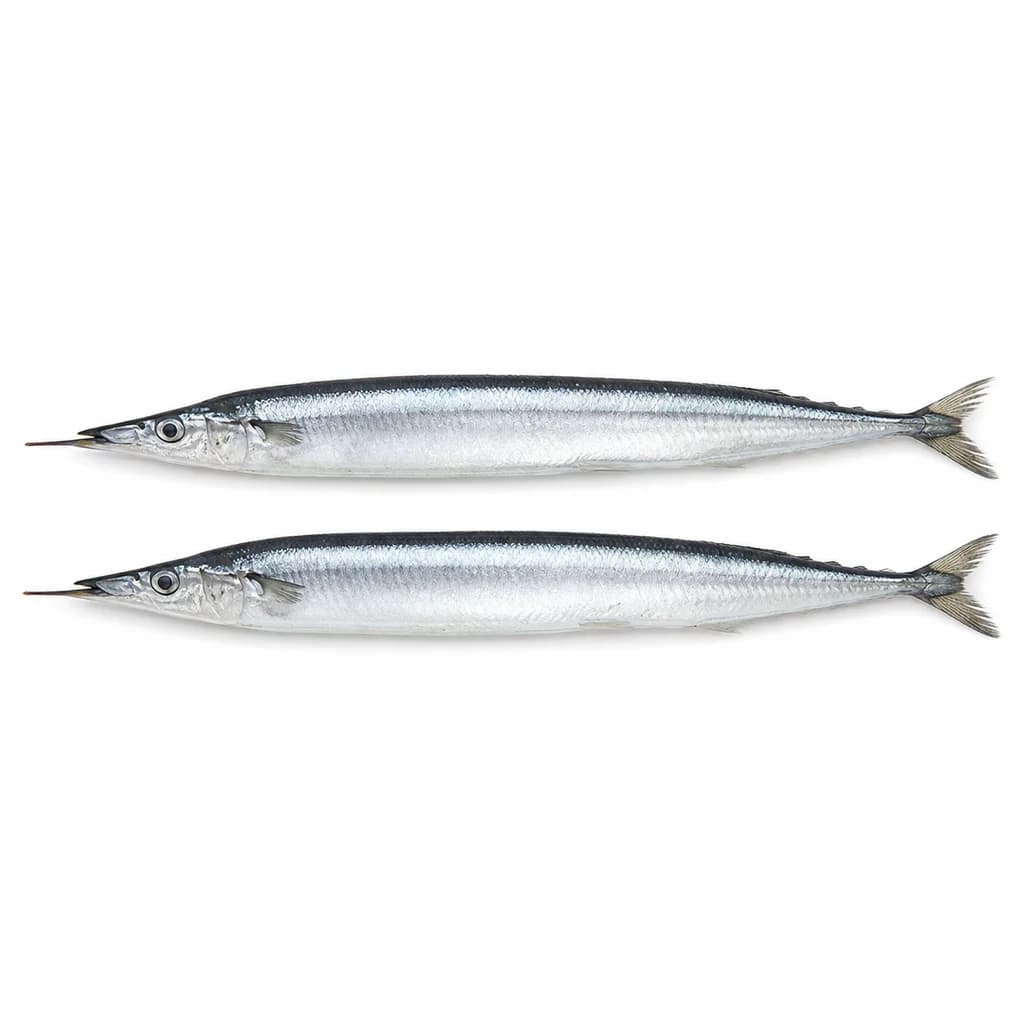
Natural form
Whole fresh Pacific saury: slender silver fish with distinctive beak-like snout.
Shows the fish's unmistakable elongated silhouette, metallic coloring, and pointed jaw that distinguish it from other small fish.
Proteins
Pacific Saury (Kkongchi)
Slender, oily silver fish grilled whole or simmered in East Asian cooking.
Pacific saury is a slim, silvery oily fish abundant in autumn off Japan and Korea. It is most often grilled whole with salt (sanma) or braised, and also sold canned. The rich, fatty flesh has a strong savory flavor and is traditionally eaten with grated daikon and citrus.
Pacific Saury (Cololabis saira) is a slender, silver-skinned fish that commands extraordinary seasonal reverence across Northeast Asia. Known as sanma (秋刀魚) in Japan and kkongchi in Korea, its Japanese name literally translates to 'autumn sword fish' — a direct reference to both its peak season and its distinctive blade-like silhouette. The fish's cultural status rivals that of matsutake mushroom or sweetfish during its brief autumn window, when spawning-ready stocks reach their maximum fat content, transforming what could be a mundane fish into something genuinely exceptional.
The saury's defining characteristic is its exceptionally high lipid content — 10–20% by weight — which peaks in autumn as the fish feeds voraciously before reproduction. This fat renders spectacularly under high heat, basting the flesh from within and creating the deeply savory, almost buttery quality that makes grilled saury (shioyaki) the canonical preparation across Japan and Korea. The flesh is firm with a fine flake, offering a rich, oily taste that is pronounced but not overpowering when properly cooked. Its short lifespan and fast growth rate make it a sustainable choice; well-managed stocks in Japanese and Korean waters carry MSC certification where available.
The fish presents real challenges to unfamiliar cooks: its pungent aroma when cooking (particularly noticeable with less-fresh specimens), the small, bony structure requiring careful eating, and its easy overcooking. These are not obstacles but parameters — score the fish before grilling, cook over high heat to render the fat rather than steam it, and serve immediately with accompaniments like daikon oroshi or sansho pepper that cut through the richness. Master these fundamentals and you'll understand why this humble fish inspires such devotion.
- Measured in
- g
- Storage
- Fridge
Allergens
Types & varieties
The most celebrated variety; Hokkaido and Iwate landings are especially prized for their exceptional fat content and sweet, clean flavor.
Slightly leaner than Japanese stocks but still rich; the standard grilling fish in Korean home cooking.
Smaller specimens with a more pungent flavor; underutilized commercially; increasingly available at Asian markets on the West Coast.
Why Autumn Matters
The saury's oil content is not constant — it fluctuates dramatically with the seasons and the fish's reproductive cycle. In autumn, as the fish prepares to spawn, it feeds heavily on plankton and small crustaceans, accumulating fat reserves that translate directly into flavor and texture when cooked. A September saury is a fundamentally different ingredient than a February saury: the former practically bastes itself on the grill, while the latter can taste lean and unremarkable. Seek out the freshest autumn specimens for the best results.
Addressing the Aroma
Many Western cooks are put off by saury's pronounced cooking aroma, which can register as 'fishy' to unfamiliar noses. This is not a quality defect but rather a function of freshness and preparation. Fresh saury smells far less aggressively than older specimens. Additionally, a 15-minute brine in salted water (roughly 3% salinity) before cooking significantly reduces volatile odor compounds without affecting flavor. Korean cooks routinely employ this technique.
Common uses
Tips & pitfalls
- Buy the freshest available: eyes should be clear and bulging, gills bright red, and the flesh should bounce back firmly when pressed.
- Scale just before cooking, not hours ahead — the skin bruises easily and the fish dries out faster once descaled.
- For grilling whole: score the thickest part of the body on both sides to allow fat to render and heat to penetrate evenly.
- Do not overcook: saury is done when the flesh turns opaque throughout and the backbone pulls away cleanly; it goes from perfect to dry in under a minute.
- If grilling on a wire rack, oil the rack well — saury's skin sticks readily due to its high fat content.
- In Korean cooking, soaking briefly in salted water (15 minutes) before grilling reduces the strong 'fishy' aroma some people object to.
- The milt and roe are considered delicacies in Japan; grill them separately or add to the grill alongside the fish.
Nutrition
Nutrition
No USDA FoodData Central match for Pacific Saury (Kkongchi) yet. We surface a per-100 g profile once a generic whole-food entry is matched and verified.
In the shops
Matched grocery products
No matched grocery products for Pacific Saury (Kkongchi) yet.
Good to know
- Scientific name
- Cololabis saira
- Also called
- Saury, mackerel pike, sanma (Japan), kkongchi or gguksae (Korea), autumn knife fish (China)
- Habitat
- North Pacific; abundant near Japan, Korea, and the US West Coast (Oregon to California)
- Peak season
- Autumn (September–November in the Northern Hemisphere)
- Typical size
- 15–40 cm (6–16 inches) long; 50–200 grams
- Fat content
- High; 10–20% lipid, making it excellent for grilling
- Flavor profile
- Rich, oily, slightly pronounced fish taste; meat is firm with a fine flake
- Shelf life
- 1–2 days fresh on ice; up to 3 months frozen
- Nutritional highlight
- Excellent source of omega-3 fatty acids, vitamin D, selenium, and protein
- Sustainability
- Fast-growing, short-lived species; managed stocks in Japan and Korea; look for MSC-certified sources
Substitutes
- Mackerel (blue or Atlantic) — Similar oil content and firm texture; slightly stronger flavor; use 1:1 in most preparations.
- Bluefish — Comparable fat content and richness; best when grilled or broiled; adjust for stronger, more assertive taste.
- Sardines (Pacific or European) — Smaller and milder; work well for pan-frying or grilling whole; reduce cooking time accordingly.
- Spanish mackerel — Good substitute in Japanese preparations; slightly firmer texture holds up well to high-heat grilling.
Pairs with
Also called
Saury · Kkongchi · Sanma
Related
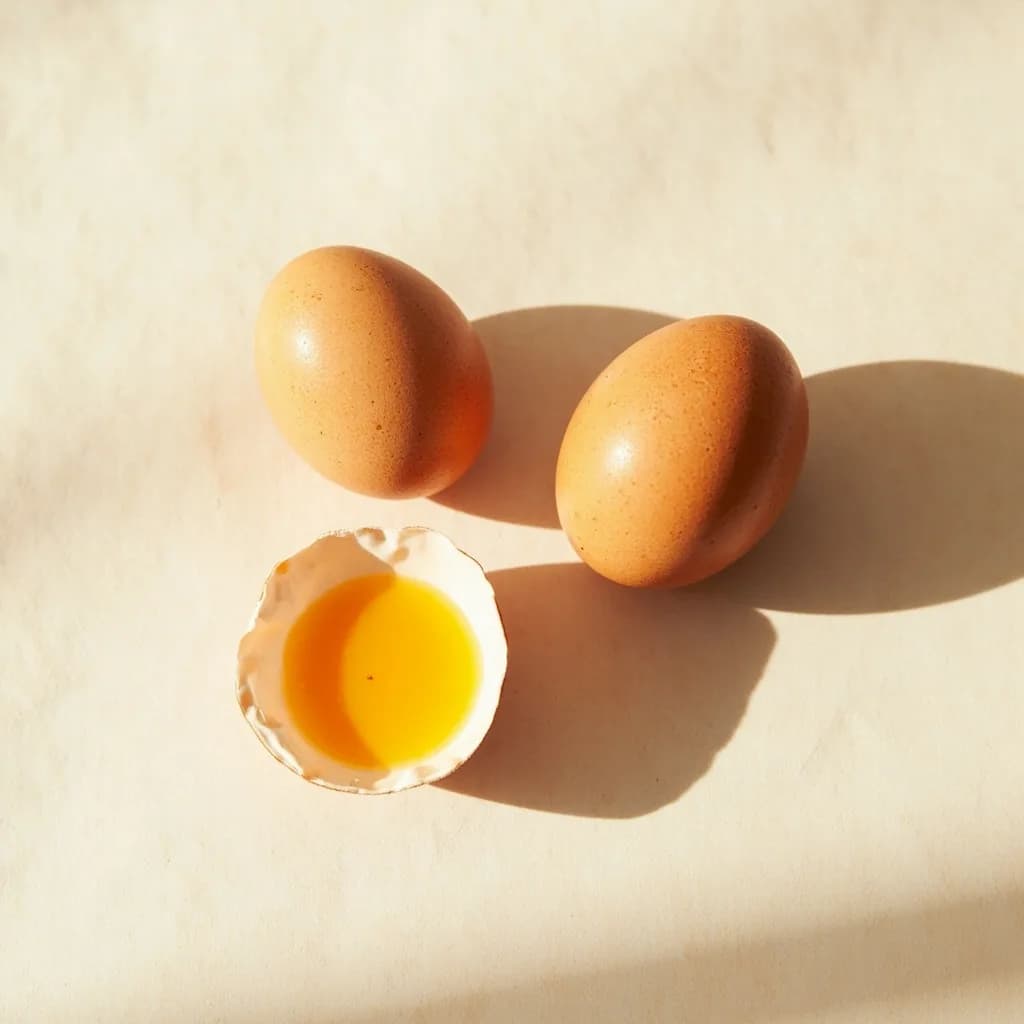
Egg
The kitchen's everything ingredient — bind, leaven, enrich, or fry
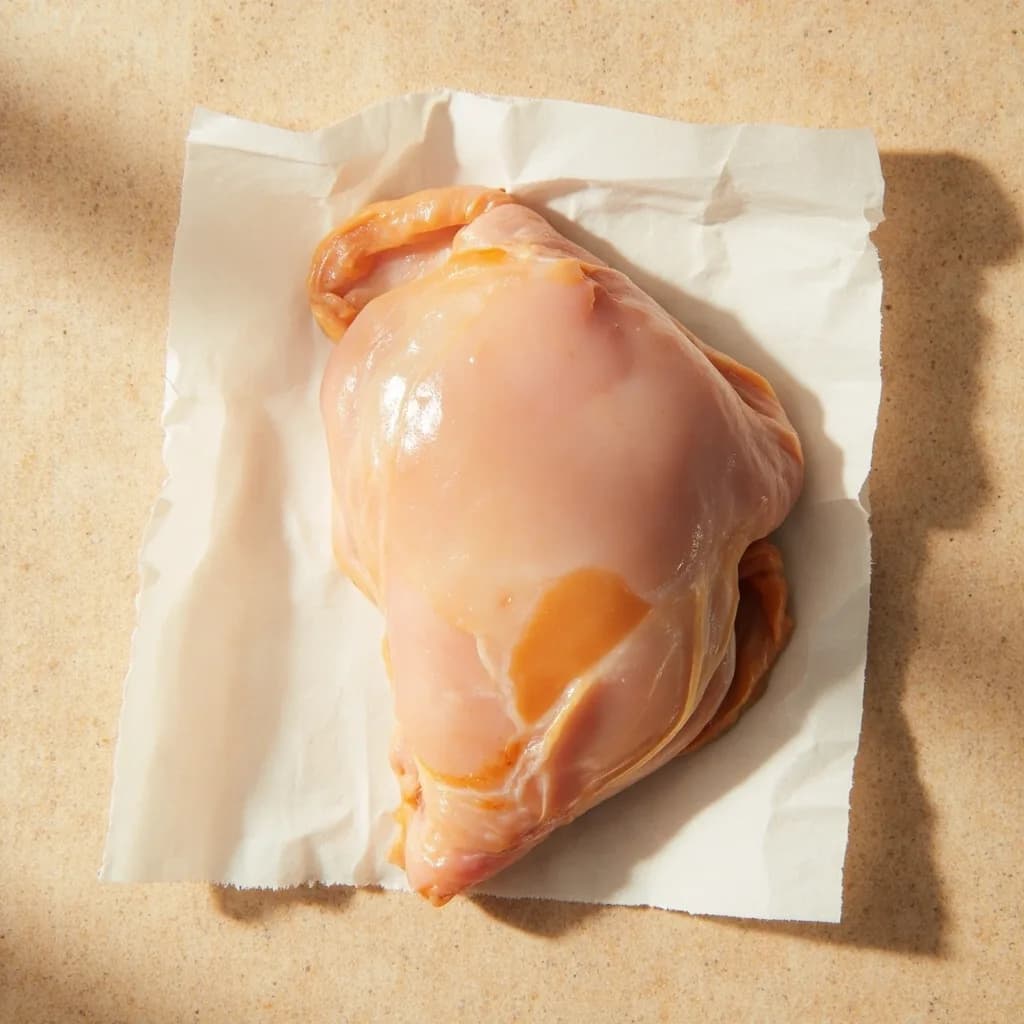
Chicken Breast
Lean, quick-cooking white meat for everyday dinners

Ground Beef
Versatile minced beef for burgers, ragù, tacos, and meatballs
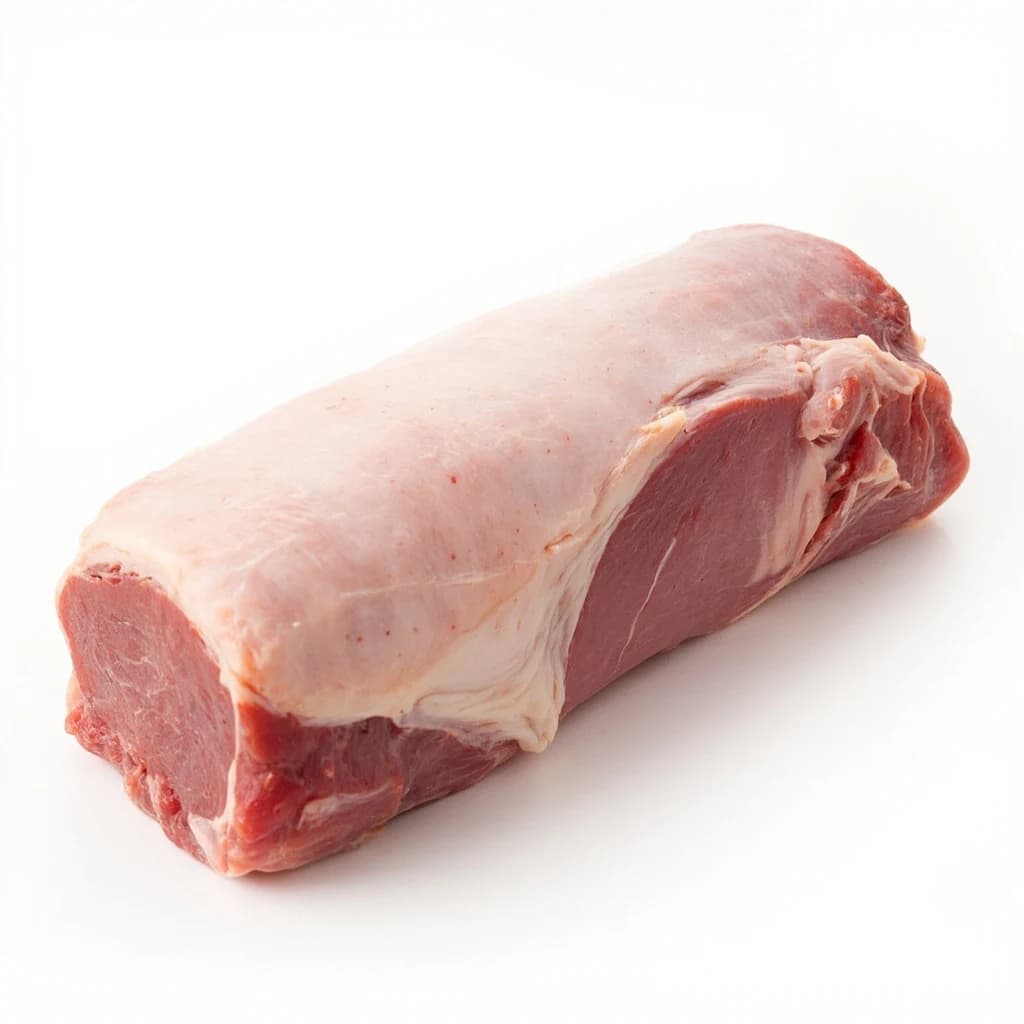
Pork Loin
Lean, tender roasting cut that stays juicy with care
Salmon
Rich, rosy fish that roasts, grills, or cures beautifully

Egg White
Pure protein that whips to airy peaks for meringue and more
Egg Yolk
Rich, golden yolk for custards, mayonnaise, and pasta

Quail Egg
Tiny, speckled eggs for garnishing and elegant bites