Proteins
Canned Luncheon Meat (Spam)
Shelf-stable canned pork loaf, sliced and pan-fried for musubi, fried rice, and stews.
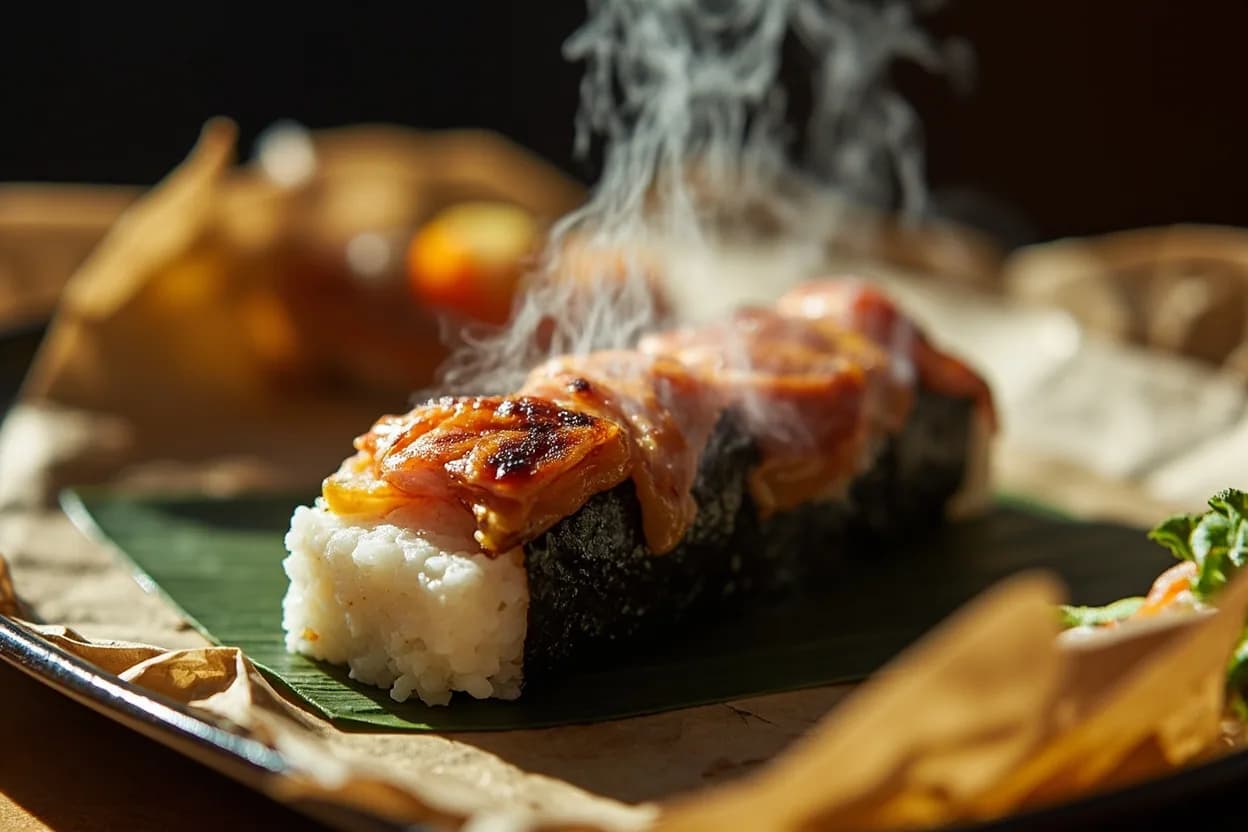
Canned luncheon meat, branded Spam, is a precooked pork-and-ham loaf sold in cans, salty and ready to eat. Slicing and pan-frying it until the edges caramelize is the classic prep, central to Hawaiian Spam musubi, Korean budae jjigae, and Filipino silog breakfasts. Its long shelf life made it a global pantry staple.
Canned luncheon meat is a fully cooked, shelf-stable pork loaf made from comminuted pork shoulder and ham, bound with salt, sugar, and sodium nitrite for preservation. The product is pre-cooked during canning, meaning it requires only reheating before eating—making it a ready-to-use protein that skips the thawing, seasoning, and cooking time of fresh meat. Its high fat content (roughly 25–30%) makes it remarkably versatile: when sliced and pan-fried, the fat renders quickly, forming a savory, slightly crisp exterior while the interior stays soft and yielding. This textural contrast is the key to understanding why luncheon meat earns its place in serious cooking: it behaves unlike fresh pork, which must be cooked through, and unlike deli ham, which is already fully set. Canned luncheon meat browns, crisps, and caramelizes. Its salty-savory-sweet balance reads as umami-forward without being intrusive, which is why it absorbs and amplifies bold accompaniments like soy sauce, gochujang, kimchi, and lime. The product's cultural reach is extraordinary: introduced by Hormel in 1937, it traveled in U.S. military rations through World War II and the Korean War, embedding itself permanently in Hawaiian, Korean, and Filipino kitchens. Today it remains one of the few canned proteins that chefs and home cooks alike treat as a genuine ingredient—not just a convenience, but a building block with distinct behavior and character. Its sodium content is genuinely high (about 790mg per 2-oz serving), so seasoning to taste and choosing lower-sodium varieties when available are practical moves, not just dietary niceties.
- Measured in
- g
- Storage
- Pantry
Types & varieties
The standard; savory-salted pork-loaf profile, the benchmark for all others
50% less fat; uses a turkey-pork blend, lighter texture
25% less sodium than original; same behavior, better for seasoning-forward dishes
Poultry-based; milder flavor, good for those avoiding red meat
Hickory-smoke flavor added; deeper, more complex pan-fry finish
Green jalapeño blended in; adds vegetable moisture and mild heat
Chili and cayenne seasoning; works in Southwestern and Asian preparations alike
Bacon-seasoned; crumbles when cooked, ideal for fried rice and bowls
Teriyaki-glazed; popular in Hawaii, reduce added sauce when cooking
Pre-cut rectangle with nori strip attached; designed specifically for musubi-making
Spanish chorizo-seasoned; bold spice, holds up in soups and skillet dishes
Comparable formulation and behavior to branded versions; regional availability varies
Common uses
Tips & pitfalls
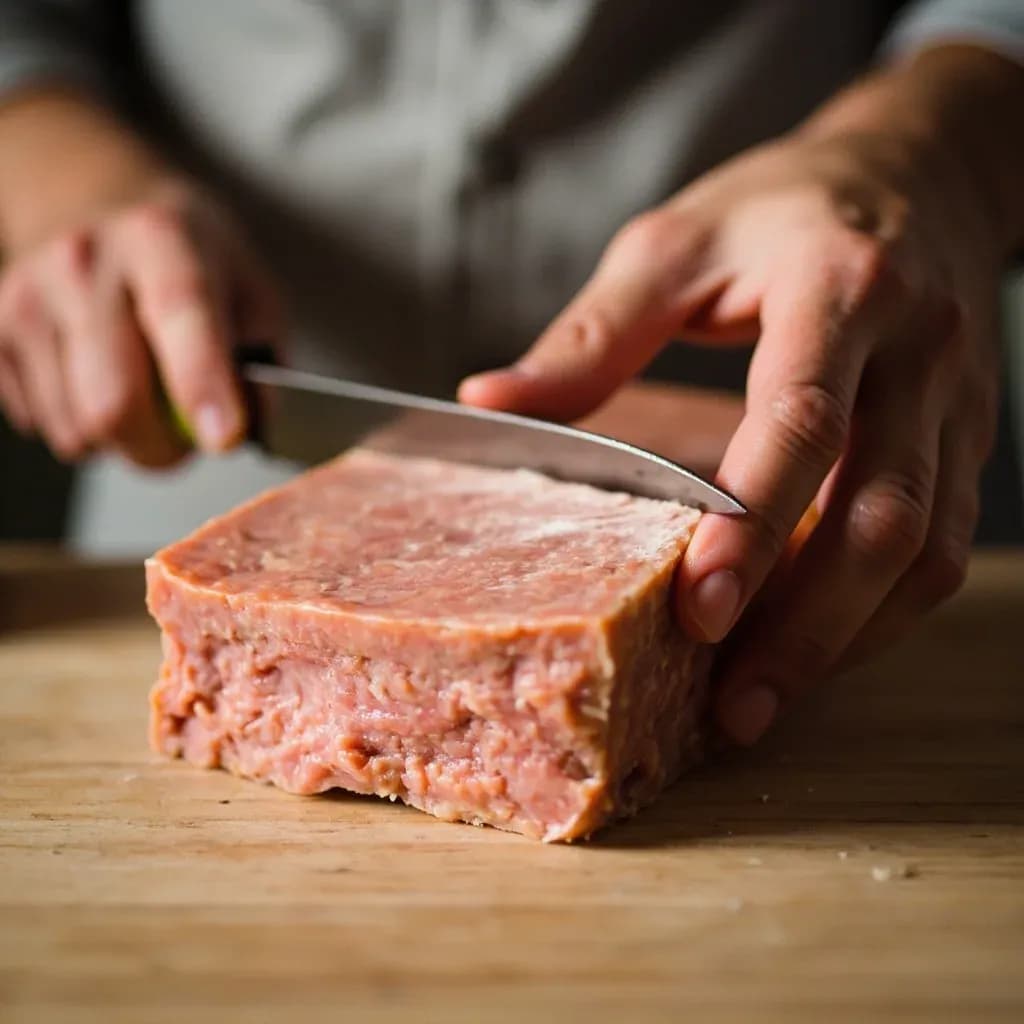
- Score before slicing: open the can and score a grid on the surface with a knife before pushing the cylinder out—you'll get clean, even portions
- Pan-fry over medium heat, not high: high heat scorches the exterior while the center stays cool; medium gives even rendering and a golden crust
- For crispy edges, do not move the slices for 2–3 minutes per side; flipping too early breaks the crust and steams rather than fries
- Blanch before grilling: boil slices 1–2 minutes first if you want visible grill marks without burning; the moisture prevents sticking and charring
- Store opened portions submerged in the rendered fat that collects in the pan; this prevents drying and keeps the meat supple for up to a week
- For musubi, spray the musubi press with oil to prevent sticking; press firmly—the rice should hold its shape without crumbling
- Season to taste: rinse or soak slices briefly in cold water if you want to reduce sodium before cooking; pat dry before frying
- Double-fry for maximum crispiness: fry once at medium heat to set, cool on a rack, then fry again at higher heat for 1–2 minutes per side
- Add luncheon meat late to soups: unlike fresh pork, it doesn't need cooking time—adding early makes it tough and dilutes flavor
- Pat slices dry before frying: surface moisture prevents browning and creates steam instead of a crust
Nutrition
Energy
1397 kJ · per 100 g
Where the calories come from
Protein
12.5g
25% DV
Carbs
2.1g
1% DV
Fat
30.3g
39% DV
Fiber
0g
0% DV
Sugars
0g
of which
Sodium
1289mg
56% DV
Source · USDA FoodData Central · approx. Luncheon meat, pork, canned
View on FDC →In the shops
Matched grocery products
No matched grocery products for Canned Luncheon Meat (Spam) yet.
Good to know
- Product Type
- Fully cooked, shelf-stable canned pork loaf
- First Introduced
- 1937 by Hormel Foods, Austin, Minnesota
- Name Origin
- "Spam" = "Spiced Ham"
- Primary Ingredients
- Pork shoulder, ham, salt, water, sugar, sodium nitrite
- Standard Can Size
- 12 oz (340g); ~3 slices per can
- Sodium (Original)
- ~790mg per 2-oz serving
- Unopened Shelf Life
- Years in a cool, dry place
- Opened Storage
- Refrigerate and use within 7–10 days
- Key Markets
- United States, Hawaii, South Korea, Philippines, Japan
- Prep Methods
- Pan-frying, grilling, deep-frying, baking, microwaving
Substitutes
- Baked ham cut into 1/2-inch slabs — Milder and less fatty; season with salt and a pinch of sugar to approximate the savory-sweet balance
- Thick-cut bacon, fried until just crisp — Provides salt, fat, and smoky flavor but a different texture; works best crumbled in fried rice or bowls
- Diced pork shoulder, pan-seared with seasoning — Cook fresh pork in oil with salt, a pinch of sugar, and a dash of soy sauce for a close savory-sweet profile
- Canadian bacon, pan-fried — Pre-cooked and similarly thick; season with soy sauce or a splash of Worcestershire after cooking
Pairs with
Also called
Spam · Pork Luncheon Meat · Tinned Meat
Appears in these dishes
Related

Egg
The kitchen's everything ingredient — bind, leaven, enrich, or fry
Chicken Breast
Lean, quick-cooking white meat for everyday dinners

Ground Beef
Versatile minced beef for burgers, ragù, tacos, and meatballs
Pork Loin
Lean, tender roasting cut that stays juicy with care

Salmon
Rich, rosy fish that roasts, grills, or cures beautifully

Egg White
Pure protein that whips to airy peaks for meringue and more

Egg Yolk
Rich, golden yolk for custards, mayonnaise, and pasta

Quail Egg
Tiny, speckled eggs for garnishing and elegant bites