Proteins
Tofu Skin (Yuba / Fuzhu)
The dried film skimmed from simmering soy milk; rehydrated and braised, fried, or wrapped in rolls.
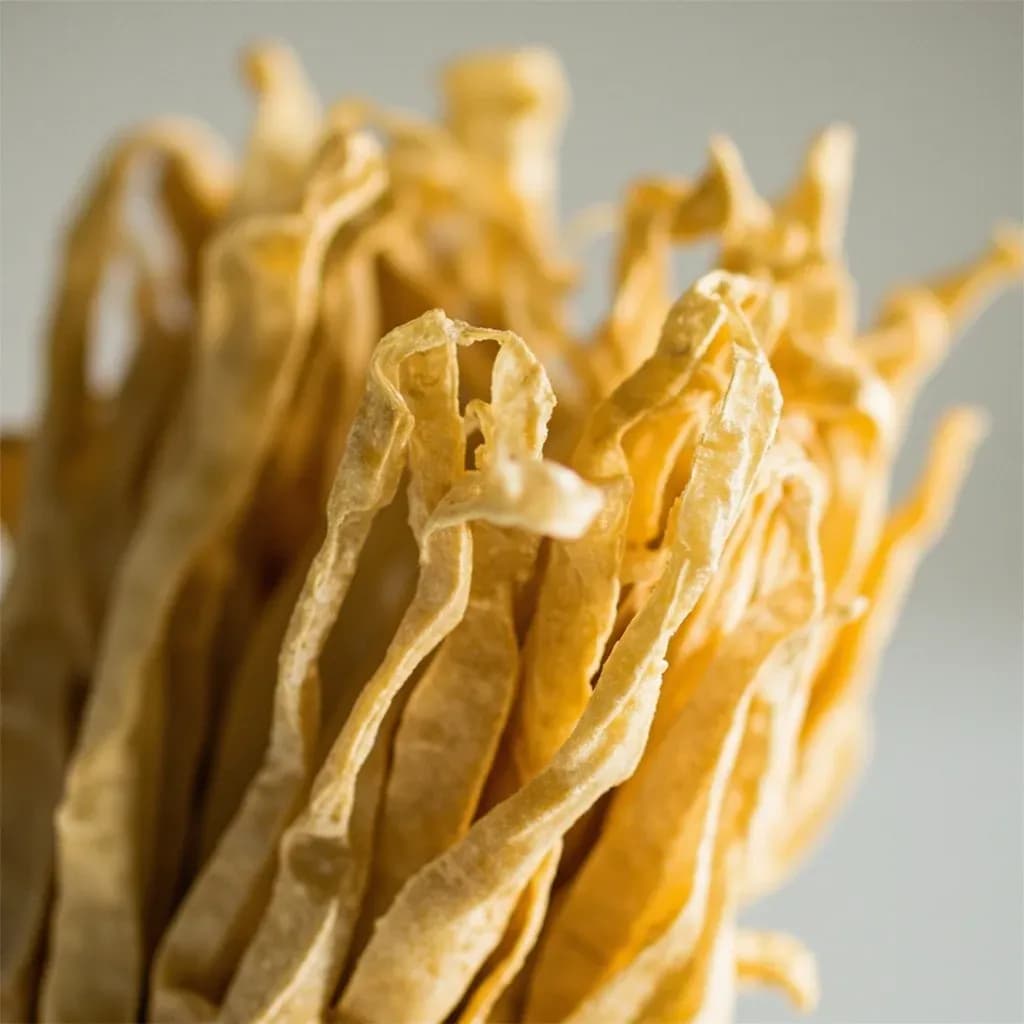
Tofu skin is the thin film that forms on the surface of heated soy milk, skimmed off and dried into sheets or sticks (fuzhu/yuba). A protein-rich staple in Chinese, Japanese, and other Asian cuisines, it is rehydrated then braised, stir-fried, deep-fried, or used to wrap fillings in vegetarian dishes. It has a delicate, slightly chewy texture and a mild, beany flavor that soaks up sauces.
Tofu skin—known as yuba in Japan and Korea, and fuzhu (腐竹) in China—is the delicate film that forms on the surface of simmering soy milk when the proteins and oils rise and coagulate. Collectors lift this skin in successive sheets as it forms, then dry it into the familiar golden-yellow sheets or rolled sticks. The result is a highly functional ingredient prized across East Asia for its remarkable ability to absorb bold seasonings while retaining a satisfying, slightly chewy texture that genuinely mimics the mouthfeel of meat when properly cooked.
Dried yuba is the most practical form for most cooks: it keeps indefinitely in an airtight container and rehydrates in 15–30 minutes, swelling to three or four times its original volume. The texture transforms from paper-dry and brittle to silky and pliable, with a subtle nutty sweetness that doesn't compete with aromatics. Fresh yuba is a specialty item—highly perishable and best used the same day—but its flavor is considered superior by connoisseurs, particularly in Kyoto cuisine where it appears in delicate simmered and dressed preparations.
What makes tofu skin extraordinary is its versatility and its role in Buddhist vegetarian cooking across China, Japan, and Korea. It can be wrapped around fillings and steamed, cut into strips and braised until it soaks up an entire sauce, fried until shatteringly crisp, or added to hot pot where it drinks in rich broth. It takes equally well to Chinese five-spice and soy-braised preparations, Japanese dashi-based simmered dishes, or Korean preparations with doenjang and sesame. Few plant proteins offer this range of applications with such a neutral, adaptable flavor base.
- Measured in
- g
- Storage
- Pantry
Allergens
Types & varieties
Thick, rolled sticks; the most common dried form; needs longer rehydration (30–45 min)
Thin, large sheets; rehydrate quickly (15–20 min); ideal for wrapping
Wet, cream-colored film; highly perishable; used same day; prized in Kyoto cuisine
Fresh yuba folded into small pouch shapes; delicate; found in specialty Asian markets
Dried yuba lightly smoked; adds savory depth; popular in Japanese cooking
Extends fresh yuba shelf life; texture slightly softer after thawing
Fresh vs. Dried: Which to Use
Dried tofu skin is the workhorse of most kitchens. It keeps for months in an airtight container and rehydrates reliably, making it the practical choice for daily cooking. Fresh yuba, by contrast, is a luxury ingredient—its flavor is more pronounced and its texture more tender, but it spoils within hours. In Chinese and Japanese markets, you may find fresh yuba sold in refrigerated cases; use it the same day for best results. Frozen yuba offers a compromise: it preserves the fresh qualities while extending shelf life, though the texture softens slightly upon thawing.
- Dried is best for: braising, frying, stir-frying, soups, and hot pot
- Fresh is best for: delicate Kyoto-style simmered dishes, cold appetizers, and when you want the purest yuba flavor
- Frozen is best for: long-term storage of fresh yuba; thaw gently in the refrigerator overnight
Common uses
Tips & pitfalls
- Store dried yuba airtight in the freezer for longest shelf life (up to 1 year); refrigerator is fine too.
- Rehydrate in lukewarm water 15–30 minutes until pliable but still firm; do not over-soak or it turns mushy and falls apart.
- Press rehydrated sheets gently between towels to remove excess water before cooking for better browning and braising results.
- Cut dried sticks lengthwise with kitchen shears to create flat sheets for wrapping.
- When frying yuba strips, work in small batches; they crisp in seconds and burn fast—stay at the stove.
- Add yuba to braises or soups in the last 10–15 minutes of cooking to retain its pleasant chew.
- Fresh yuba sheets tear easily; handle with dry hands and layer carefully when rolling.
- The soaking liquid from rehydrating yuba is flavorful—use it as a light vegetable stock or discard after use.
Nutrition
Energy
243 kJ · per 100 g
Where the calories come from
Protein
2.6g
5% DV
Carbs
12.4g
5% DV
Fat
0.1g
0% DV
Fiber
2.5g
9% DV
Sodium
10mg
0% DV
Source · USDA FoodData Central · approx. Potatoes, raw, skin
View on FDC →In the shops
Matched grocery products
 €1.90
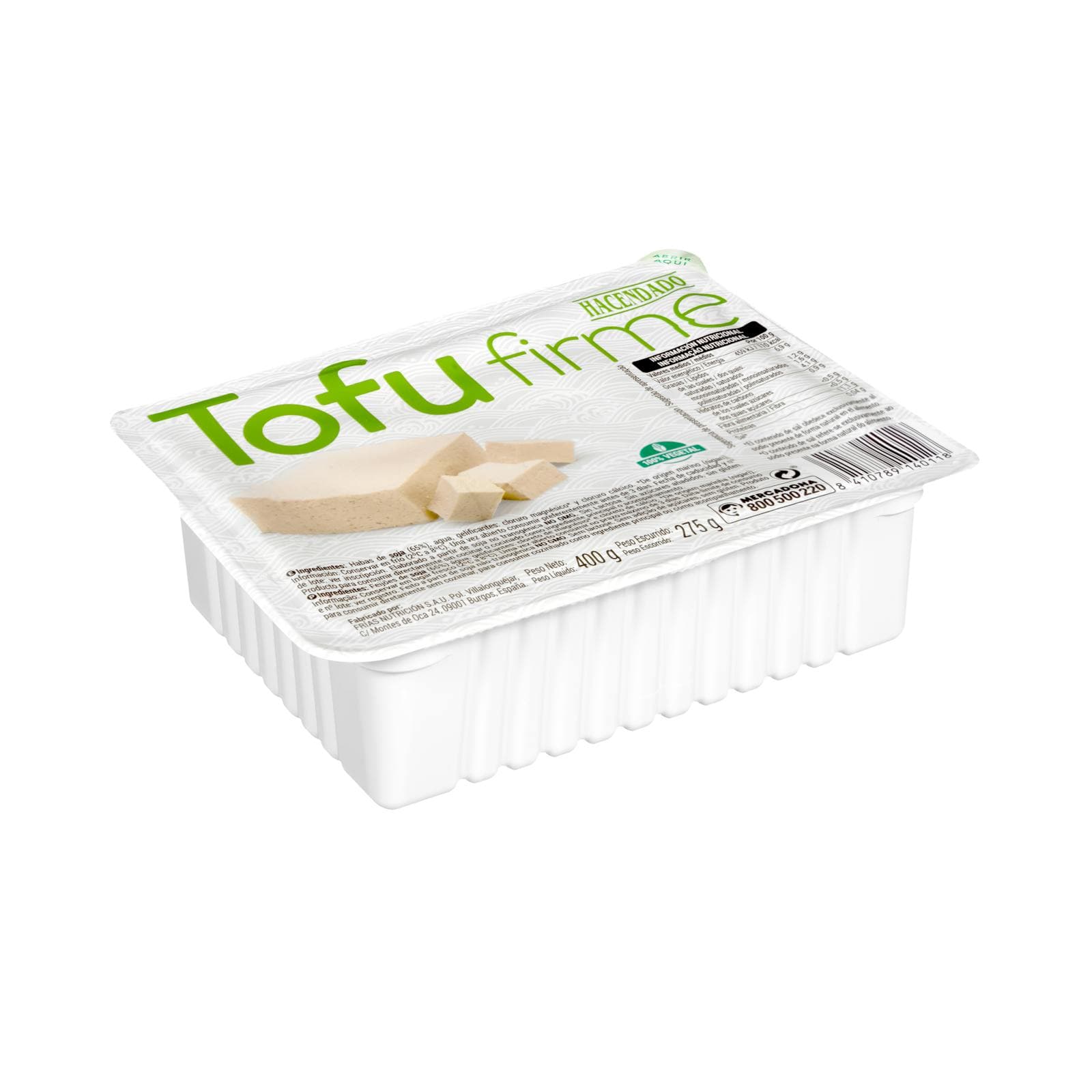
€1.90Firm Tofu
Hacendado · 400 g · Mercadona
 €2.45
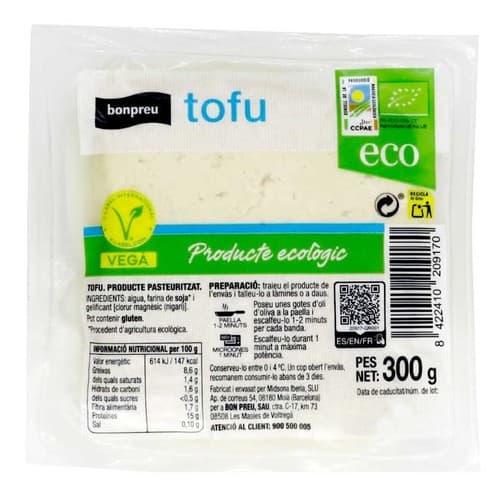
€2.45Bonpreu Organic Tofu
BONPREU · kg · Bonpreu
 €2.99
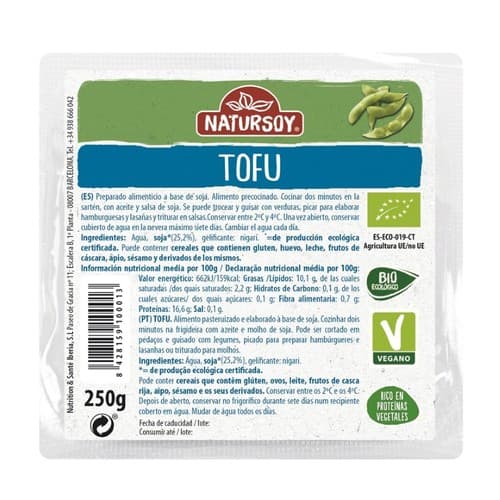
€2.99Natursoy Fresh Organic Tofu
NATURSOY · kg · Bonpreu
Good to know
- Origin
- China (Han dynasty); also central to Japanese cuisine; used in Korean cuisine
- Form
- Fresh (perishable, use same day) or dried (6–12 months sealed in cool, dark place)
- Flavor
- Mild, nutty, slightly sweet soy; takes on seasoning easily
- Texture
- Paper-like when fresh/dried; silky, slightly chewy when rehydrated; crisps beautifully when fried
- Protein
- High; approximately 45–50 g per 100 g when dried
- Rehydration time
- 15–30 minutes in warm water; do not soak longer or it turns mushy
- Yield
- Dried: swells 3–4× volume when rehydrated
- Difficulty
- Easy to work with; requires gentle handling when fresh
Substitutes
- Rice paper wrappers (banh trang) — Similar delicate texture; requires no rehydration; best for fresh spring rolls
- Bean thread noodles (glass noodles) — Different texture but absorbs flavors similarly; good for braises
- Unflavored tofu sheets — Essentially the same product; may be labeled differently in some markets
- Spring roll wrappers — Sturdier; not a close match but works for fried rolls
- Kombu (dried kelp) — Completely different flavor but can wrap and steam; not a true substitute
Pairs with
Also called
Tofu Skin (腐竹) · Yuba · Fuzhu · Bean Curd Skin · Beancurd Sheets
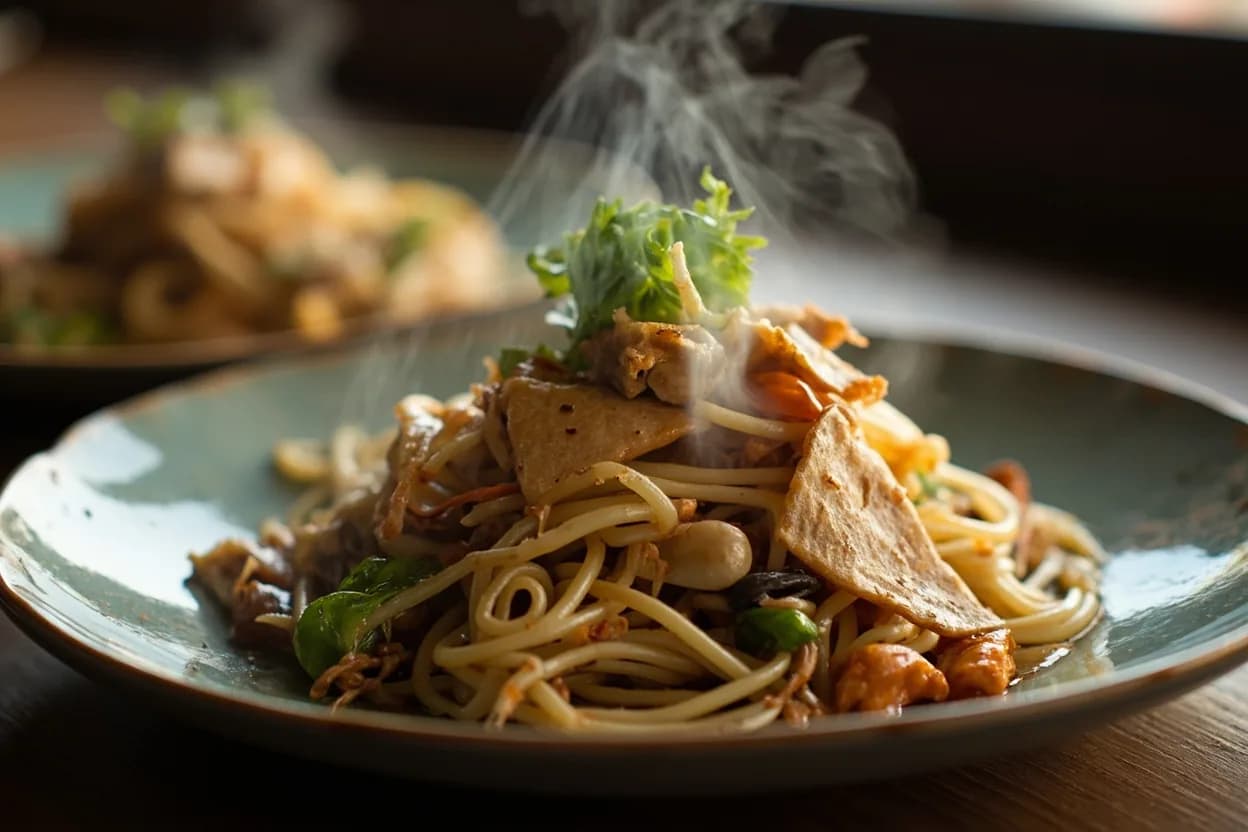
Appears in these dishes
Related
Egg
The kitchen's everything ingredient — bind, leaven, enrich, or fry
Chicken Breast
Lean, quick-cooking white meat for everyday dinners

Ground Beef
Versatile minced beef for burgers, ragù, tacos, and meatballs
Pork Loin
Lean, tender roasting cut that stays juicy with care
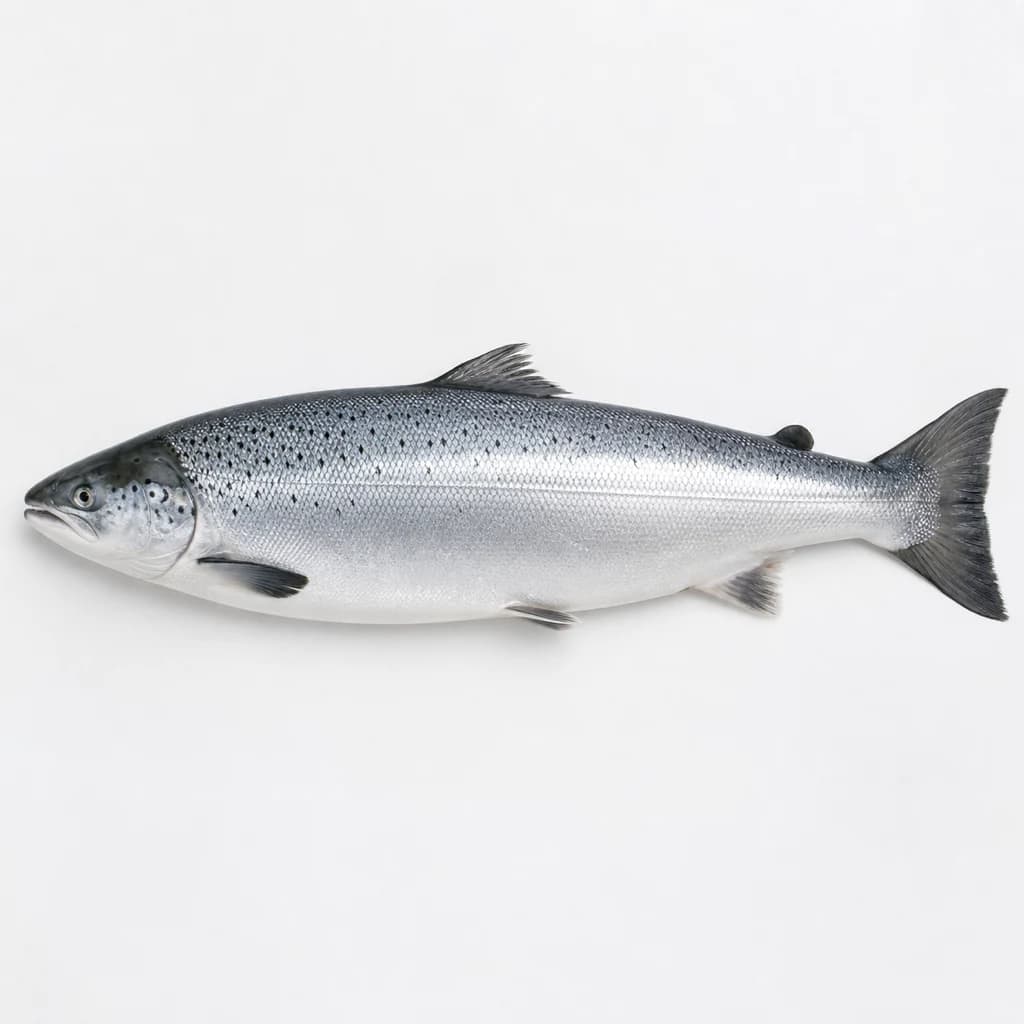
Salmon
Rich, rosy fish that roasts, grills, or cures beautifully

Egg White
Pure protein that whips to airy peaks for meringue and more
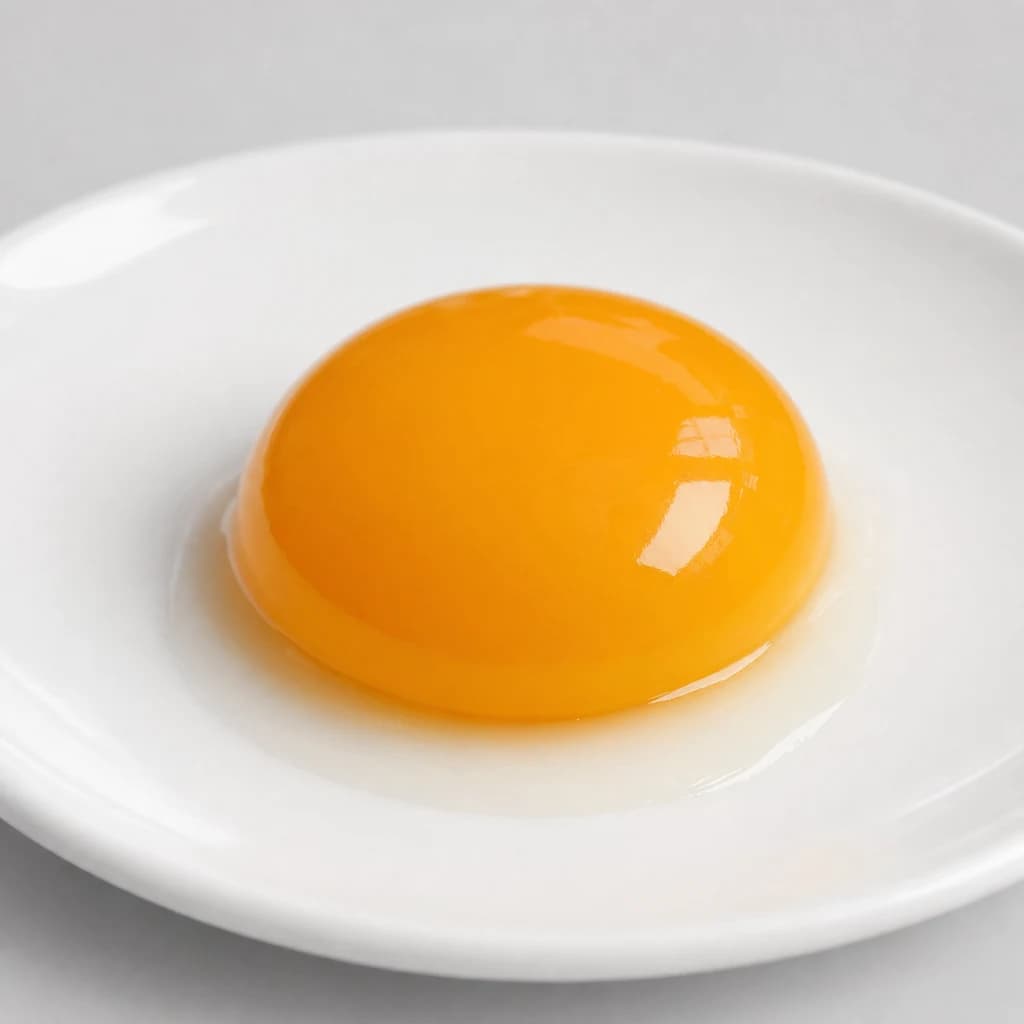
Egg Yolk
Rich, golden yolk for custards, mayonnaise, and pasta

Quail Egg
Tiny, speckled eggs for garnishing and elegant bites