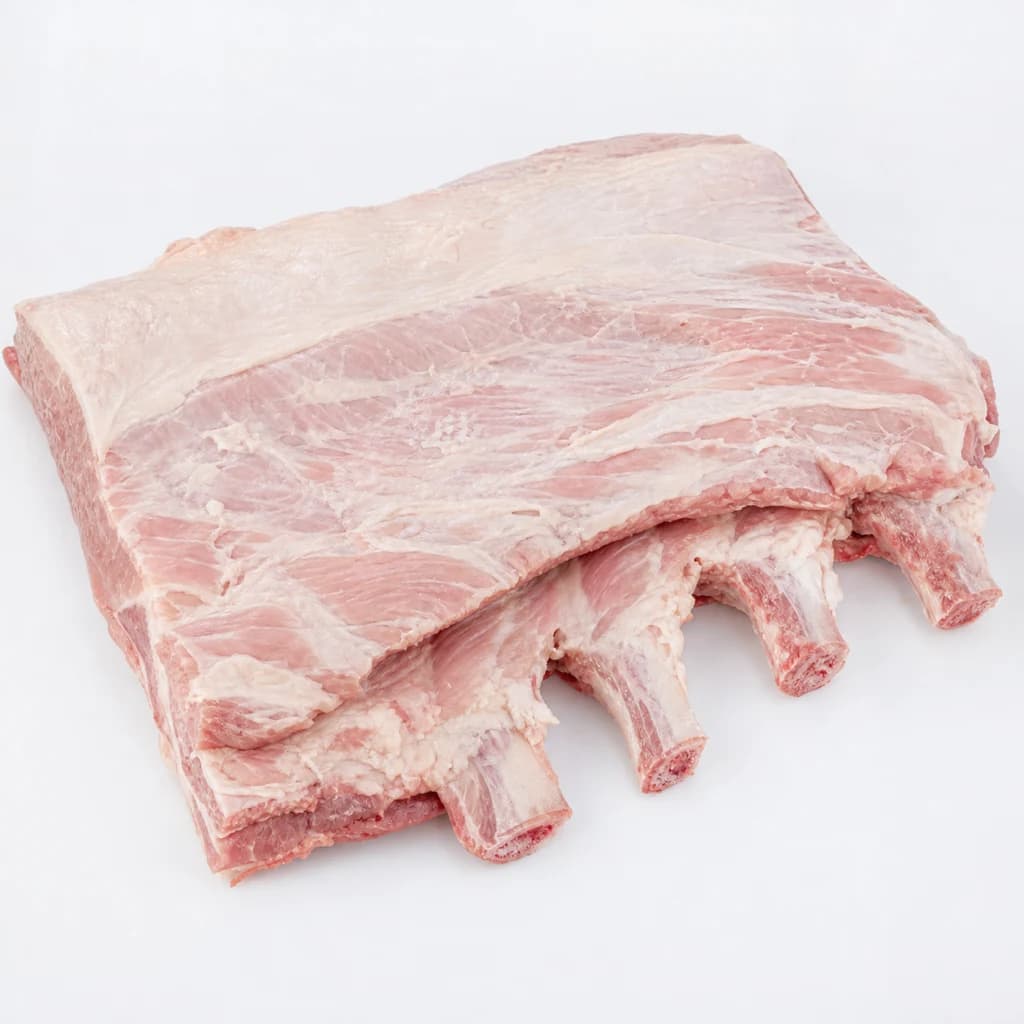
Natural form
Bone-in veal breast showing the layered fat and meat structure of the raw cut.
Shows the distinctive bone-in slab form, pale pink flesh, and layered fat that define raw veal breast and distinguish it from beef cuts.
Proteins
Veal Breast
Affordable, layered cut of young-calf chest, ideal for slow braising or stuffing and roasting.
Veal breast is a fatty, layered cut from the chest of a calf, with a pocket that is often stuffed before slow roasting or braising. The connective tissue breaks down with long, moist cooking into a tender, succulent result. It is a thrifty cut common in Italian, Jewish and French home cooking.
Veal breast comes from the lower chest of a young calf, typically 4–8 months old, and is one of the most structurally distinctive cuts in the animal. Its defining feature is a natural layered architecture—alternating bands of lean meat, fat, and connective tissue stacked in sheets that, when cooked properly, yield incredibly tender portions with an almost laminated texture. When the ribs and membrane are removed, this cut leaves behind a rare natural pocket, one of the few pre-existing pouches in the whole animal, making it exceptionally suited for stuffing. The cut carries significant collagen throughout, which converts to gelatin during long, moist cooking, producing a rich, unctuous sauce almost by itself. Its flavor is delicate and mildly sweet, milder than mature beef, and it absorbs accompanying aromatics without overwhelming them. In Italian cuisine it forms the base for braciole di vitello and appears in Piedmontese bollito misto; in Jewish cooking it is a traditional stuffed breast for holiday meals. Though one of the least expensive veal cuts, it rewards patience and correct technique with results that easily rival more costly loin or leg cuts. The breast demands 3–4 hours of low, wet heat to fully break down its connective tissue, and it is this cooking requirement—not any inherent toughness—that makes it a cut for deliberate cooks rather than weeknight meals.
- Measured in
- g
- Storage
- Fridge
Types & varieties
Membrane and bones removed to create a natural pocket for stuffing; most common preparation for roasts
Includes ribs and sternum; better structure for braising; often tied for roasting
Thin, quick-cooking slices taken from the thinner portions; requires very short cooking time
Rib ends exposed for elegant presentation; used for special-occasion stuffed roasts
Why the Breast Demands Patience
The breast contains more connective tissue per cubic inch than almost any other cut, and that connective tissue is almost entirely collagen. Collagen begins to convert to gelatin at around 160°F, but the process is gradual and requires sustained moisture to complete. A breast pulled from the oven at 165°F will be chewy and tight; one held at 185–190°F for hours will shred apart with almost no resistance. This is not a cut to rush with high heat. The layered structure also means that heat penetrates unevenly—thicker portions near the sternum take considerably longer than the tapered edges, so always probe multiple spots with a thermometer rather than relying on a single reading or a time estimate.
- Pull at 185–190°F internal, not 160–165°F as you might for a steak
- Budget 3–4 hours for a bone-in breast, slightly less for a denuded piece
- The fat layers render and baste the meat from within during long braising—no need to baste manually
The Stuffing Pocket: Working with the Natural Cavity
The pocket left after the ribs and sternum cartilage are removed is one of the breast's most valuable attributes, but it is not infinitely strong. The membrane that lines the interior of the pocket is thin and can tear if overfilled or sewn carelessly. A properly stuffed breast, tied at 1.5-inch intervals, will hold its shape when sliced and present cleanly on the plate. Underfilling is the more common home-cooking error: the roll collapses, and the stuffing dries out because there is too much exposed surface area relative to the meat's natural fat content. Aim for a generously filled pocket—within reason—and trust the connective tissue to hold it together.
- Run your fingers along the inside of the pocket to find and remove any remaining cartilage chips
- Secure with kitchen twine at 1.5-inch intervals; butcher's knots are not necessary, a simple loop tie is sufficient
- If the pocket tears, patch it with a thin slice of the breast's own membrane, stitched in place with kitchen twine
Common uses
Tips & pitfalls
- Score the skin-side membrane deeply in a crosshatch pattern if cooking bone-in—this allows fat to render and prevents the piece from curling during braising
- Always sear on all sides in hot fat before adding liquid; the Maillard reaction builds flavor base and improves finished texture
- Use a meat thermometer: pull the breast at 185–190°F for braising (collagen fully converted); anything below 180°F risks dry, stringy results
- Rest the cooked breast 15–20 minutes, tented loosely with foil, before slicing; this allows juices to redistribute throughout the dense tissue
- If stuffing, secure with kitchen twine at 1.5-inch intervals to prevent the filling from falling out during roasting
- For a cleaner pocket when boning, work between the rib bones with a boning knife, staying close to the sternum to avoid puncturing the meat
- Marinate overnight in buttermilk or dairy-based marinades to mildly tenderize and add subtle tang before braising or roasting
- When freezing raw breast, wrap tightly in plastic wrap then aluminum foil, pressing out all air to prevent freezer burn on the exposed fat
Nutrition
Energy
824 kJ · per 100 g
Where the calories come from
Protein
18.6g
37% DV
Carbs
0g
0% DV
Fat
13.1g
17% DV
Fiber
0g
0% DV
Sugars
0g
of which
Sodium
103mg
4% DV
Source · USDA FoodData Central · approx. Veal, ground, raw
View on FDC →In the shops
Matched grocery products
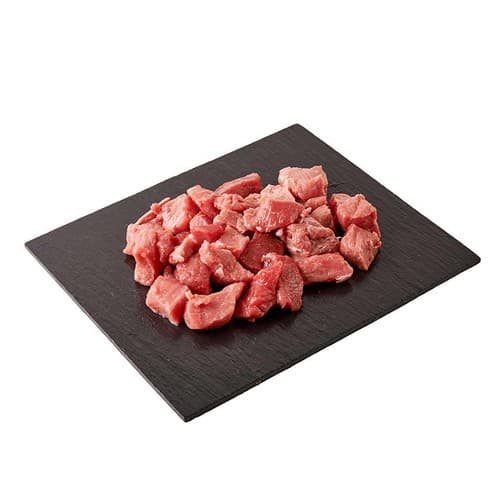 €6.50
€6.50Veal Stew
BONPREU DE L'ERA · ud · Bonpreu
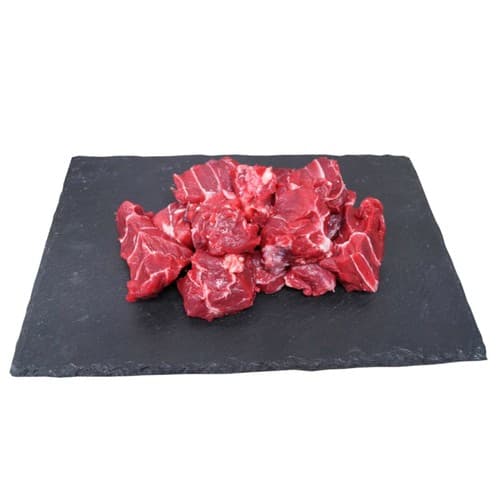 €7.76
€7.76Veal Stew
BONPREU DE L'ERA · ud · Bonpreu
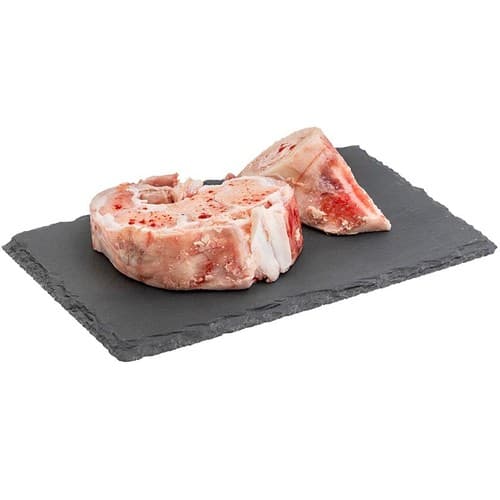 €2.25
€2.25Veal Bones
BONPREU · kg · Bonpreu
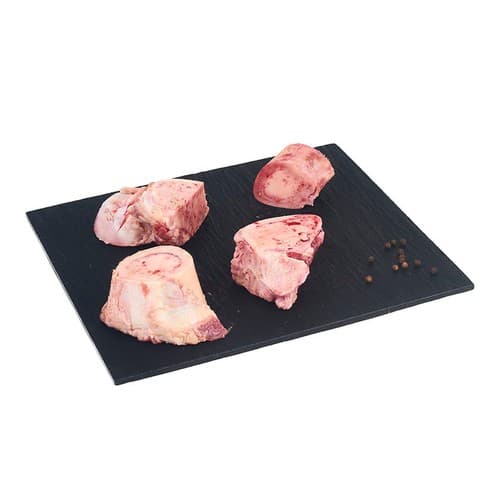 €3.20
€3.20Veal Bones
BONPREU DE L'ERA · kg · Bonpreu
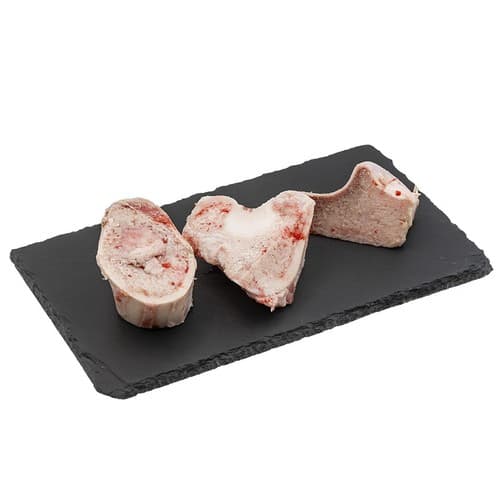 €3.45
€3.45Veal Bones
BONPREU · kg · Bonpreu
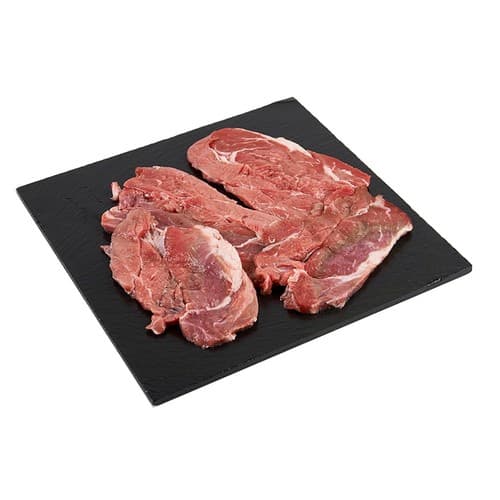 €6.60
€6.60Veal Steak
BONPREU DE L'ERA · ud · Bonpreu
Good to know
- Source
- Lower chest/breast section of a young calf, typically 4–8 months old
- Cut type
- Boning primal or forequarter; sold bone-in or denuded (pocket created)
- Typical weight
- 2–5 lbs (0.9–2.3 kg) boneless; 4–8 lbs bone-in
- Fat content
- High marbling relative to lean meat; layered fat and connective tissue between muscle groups
- Primary challenge
- Abundant collagen; requires long, moist heat to fully tenderize
- Flavor profile
- Delicate, sweet veal flavor; milder than mature beef; absorbs accompanying aromatics well
- Best season
- Year-round; peak quality from winter through early spring
- Shelf life
- 2–3 days refrigerated (36–40°F); up to 4 months frozen at 0°F or below
- Cooked yield
- Approximately 65–70% after braising; negligible shrinkage when properly cooked
- Cost
- One of the least expensive veal cuts; significantly cheaper than loin or leg cuts
Substitutes
- Beef brisket — Closest texture and fat distribution; requires 30–40% longer cooking time due to older animal; larger portion size
- Pork shoulder — Comparable collagen content and fat ratio; similar cooking time; more pronounced pork flavor
- Lamb breast — Similar layered structure; best for Mediterranean and Middle Eastern preparations; slightly gamier flavor
- Boneless short ribs — Denser meat with good marbling; excellent for braising but lacks the natural pocket for stuffing; cut across the grain for serving
Pairs with
Also called
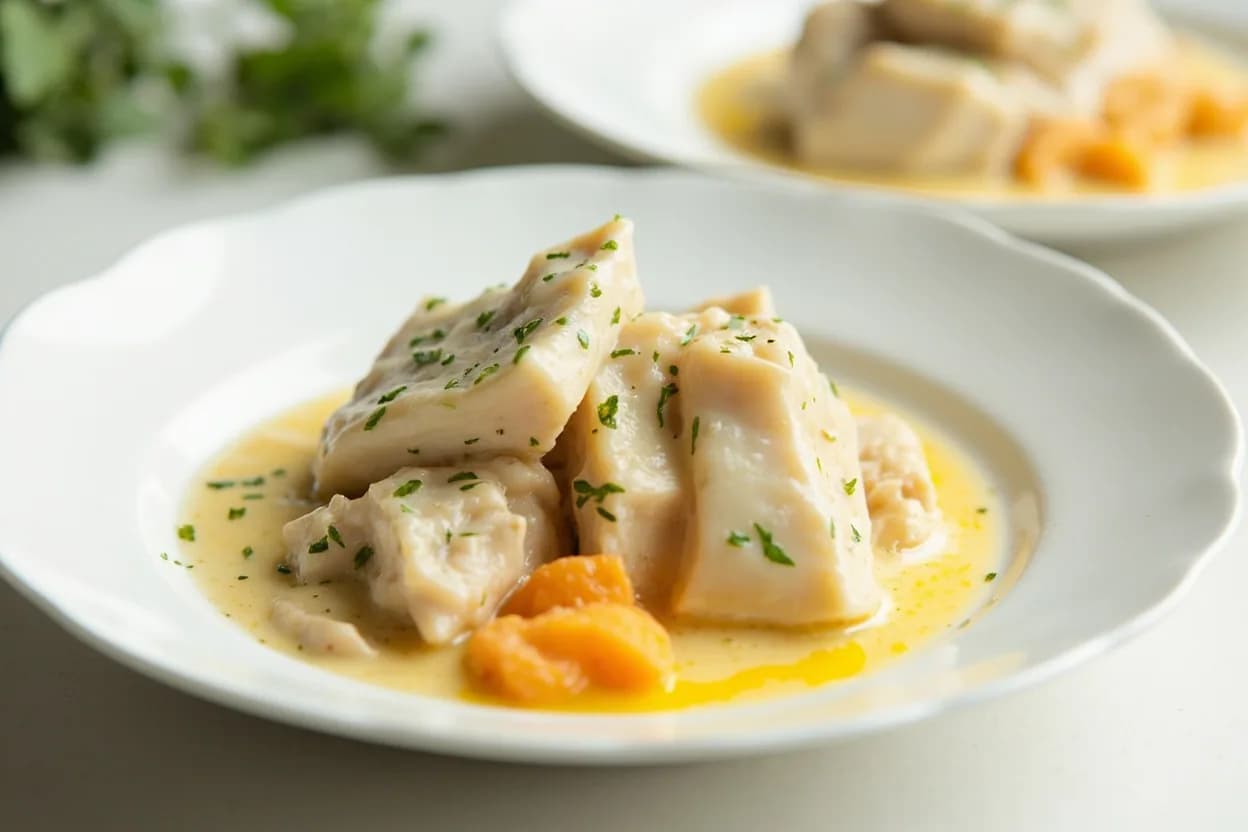
Stuffed Veal Breast · Breast of Veal
Appears in these dishes
Related
Egg
The kitchen's everything ingredient — bind, leaven, enrich, or fry
Chicken Breast
Lean, quick-cooking white meat for everyday dinners

Ground Beef
Versatile minced beef for burgers, ragù, tacos, and meatballs
Pork Loin
Lean, tender roasting cut that stays juicy with care
Salmon
Rich, rosy fish that roasts, grills, or cures beautifully

Egg White
Pure protein that whips to airy peaks for meringue and more
Egg Yolk
Rich, golden yolk for custards, mayonnaise, and pasta

Quail Egg
Tiny, speckled eggs for garnishing and elegant bites